Little Armored Ones

Taking advantage of a few days before a volunteer commitment on the coast of Louisiana we decided to drive up the Natchez Trace Parkway in Mississippi.  The weather turned bitter cold making it difficult for us to want to leave the warm confines of Lil’Squatch’s cab. So it seemed the a drive was a good way to pass the time anyway.  Starting the trip from Natchez we took in what we could of the historic town, most noted for it’s wealth prior to the civil war.
The “Trace” is a popular drive in the spring when the magnolias are in bloom or in autumn when the leaves are adding a different kind of color to the drive. Being winter there was hardly anyone on the road for long stretches. It’s also possibly the best paved road in MS. Making this stretch the ideal drive for our little guy. Even though the speed limit is 50 we dawdled around 35. This speed was perfect for taking in the bare wooded surroundings. Several people mentioned how they enjoy woods in the winter because you can see back into what is otherwise a well vegetated stand of trees and vines. There are many stops on the Trace that highlight Native American life, plantation life and famous civil war battles. The parkway itself highlights the old dirt route used regularly from 1800-1820 but was most likely in use long before that as a Native American trading route. I kept seeing fluttering in the woods but when I looked harder nothing was there. There is a lot of residual energy in these old woods, a lot of stories to tell and histories to haunt them.

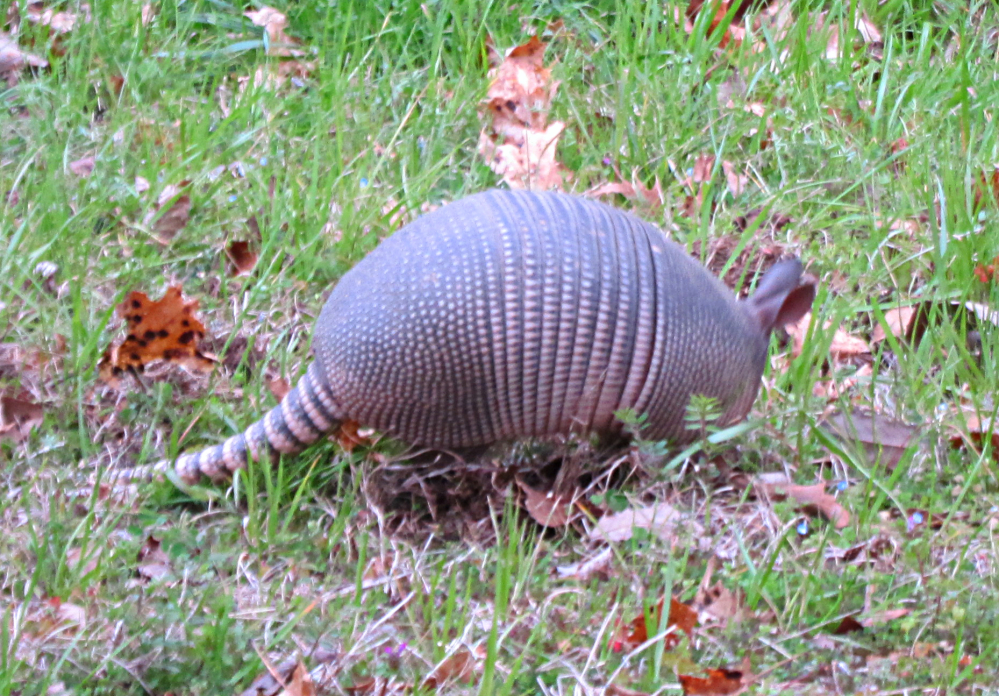
20150225_Armadillo20150225_Armadillo

20150225_Armadillo

However, there is a relative new comer here too and we saw some right on the side of the road. Armadillos! I’ve only seen Armadillos on the road in another capacity and it wasn’t as cute as what I saw before me rummaging in the soils looking for bugs to eat. The one we stopped next to paid us no nevermind as we giggled and took pictures. Such silly animals grunting and shuffling along. The nine banded armadillo, the only kind in the US, has made its way up through Texas from central America only in the last 200 years and they are slowly expanding their range upwards. Roadways have actually helped them expand their range even if they do call them a “Texas Speed Bumps”. These animals breed at a healthy rate producing four identical quadruplets almost every litter and can have up to 15 litters in a lifetime.   Contrary to popular belief these particular armadillos don’t roll up into a ball (only the three banded species do) but their armor does protect their soft undersides.

While some people think they are a pest because they tear up their lawns others think they are a tasty pork like meat. However, it turns out they also can carry leprosy and you’re more likely to catch it from eating them than from just touching them. Personally I just think they are cute and am glad that I finally got to see one in its element instead of just being a poor little critter in the road.
Little Armored Ones

Taking advantage of a few days before a volunteer commitment on the coast of Louisiana we decided to drive up the Natchez Trace Parkway in Mississippi.  The weather turned bitter cold making it difficult for us to want to leave the warm confines of Lil’Squatch’s cab. So it seemed the a drive was a good way to pass the time anyway.  Starting the trip from Natchez we took in what we could of the historic town, most noted for it’s wealth prior to the civil war.

The “Trace” is a popular drive in the spring when the magnolias are in bloom or in autumn when the leaves are adding a different kind of color to the drive. Being winter there was hardly anyone on the road for long stretches. It’s also possibly the best paved road in MS. Making this stretch the ideal drive for our little guy. Even though the speed limit is 50 we dawdled around 35. This speed was perfect for taking in the bare wooded surroundings. Several people mentioned how they enjoy woods in the winter because you can see back into what is otherwise a well vegetated stand of trees and vines. There are many stops on the Trace that highlight Native American life, plantation life and famous civil war battles. The parkway itself highlights the old dirt route used regularly from 1800-1820 but was most likely in use long before that as a Native American trading route. I kept seeing fluttering in the woods but when I looked harder nothing was there. There is a lot of residual energy in these old woods, a lot of stories to tell and histories to haunt them.

However, there is a relative new comer here too and we saw some right on the side of the road. Armadillos! I’ve only seen Armadillos on the road in another capacity and it wasn’t as cute as what I saw before me rummaging in the soils looking for bugs to eat. The one we stopped next to paid us no nevermind as we giggled and took pictures. Such silly animals grunting and shuffling along. The nine banded armadillo, the only kind in the US, has made its way up through Texas from central 20150225_ArmadilloAmerica only in the last 200 years and they are slowly expanding their range upwards. Roadways have actually helped them expand their range even if they do call them a “Texas Speed Bumps”. These animals breed at a healthy rate producing four identical quadruplets almost every litter and can have up to 15 litters in a lifetime.   Contrary to popular belief these particular armadillos don’t roll up into a ball (only the three banded species do) but their armor does protect their soft undersides.

While some people think they are a pest because they tear up their lawns others think they are a tasty pork like meat. However, it turns out they also can carry leprosy and you’re more likely to catch it from eating them than from just touching them. Personally I just think they are cute and am glad that I finally got to see one in its element instead of just being a poor little critter in the road.

I Swear I’m Not A Birder

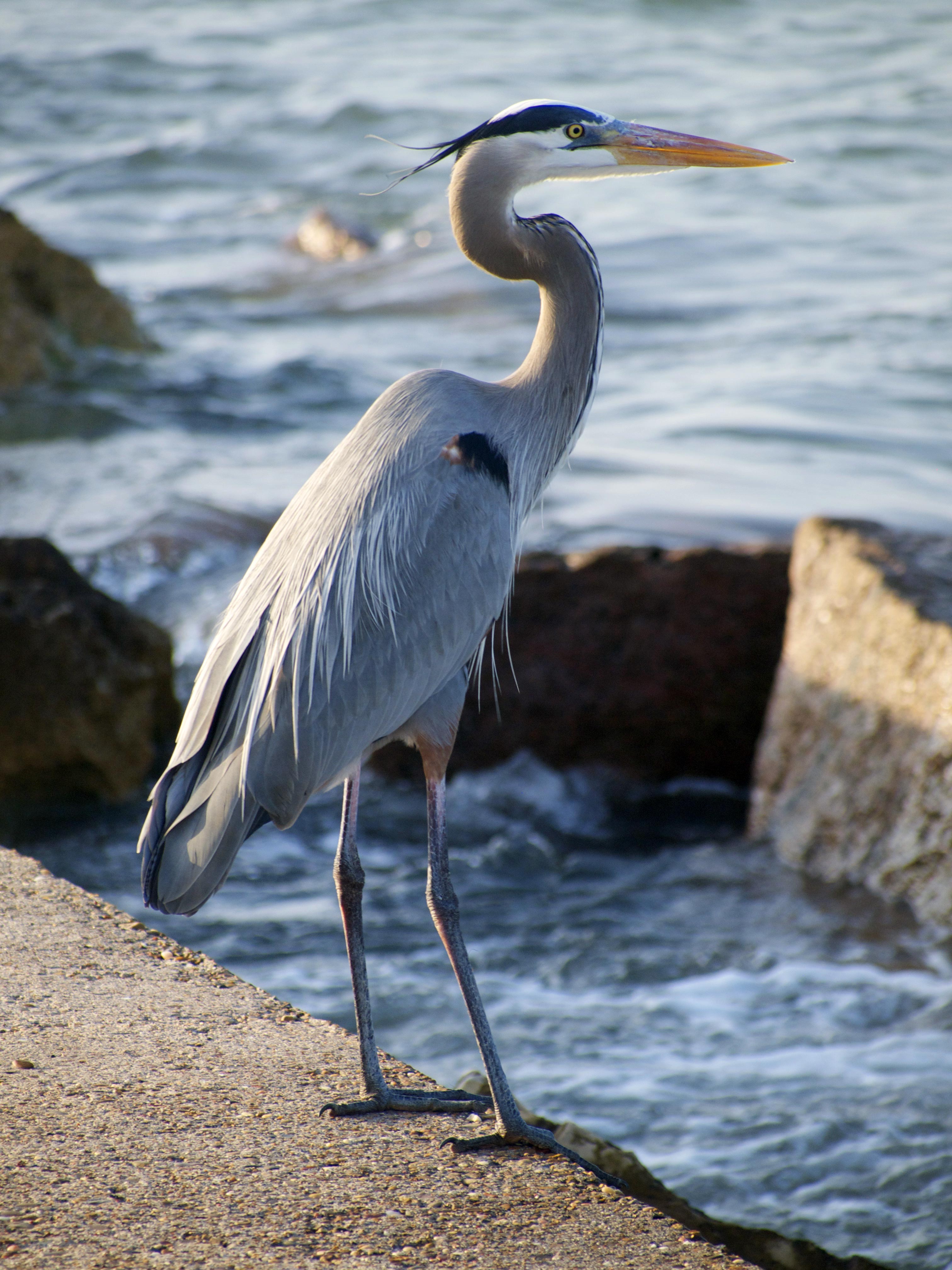
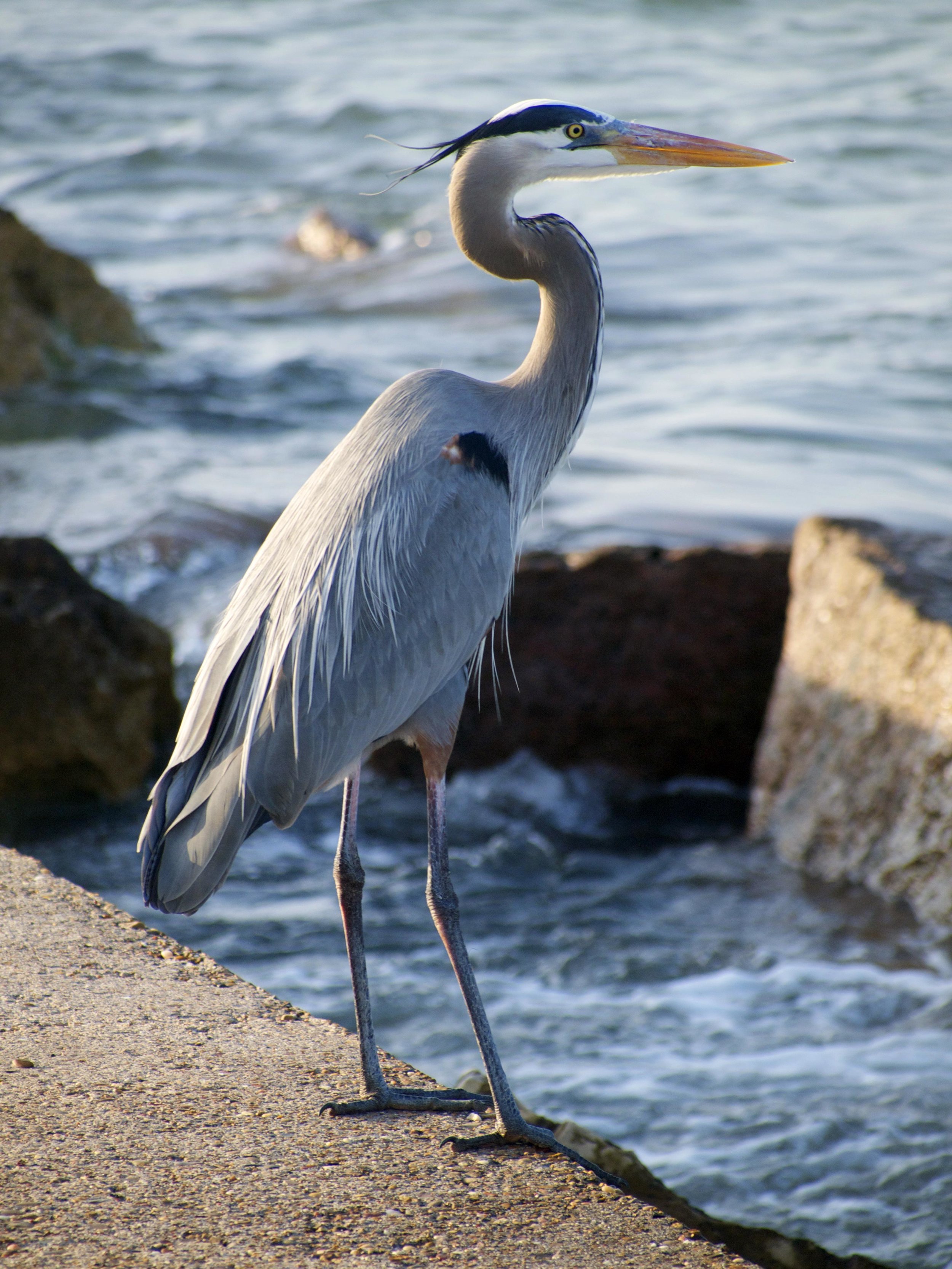
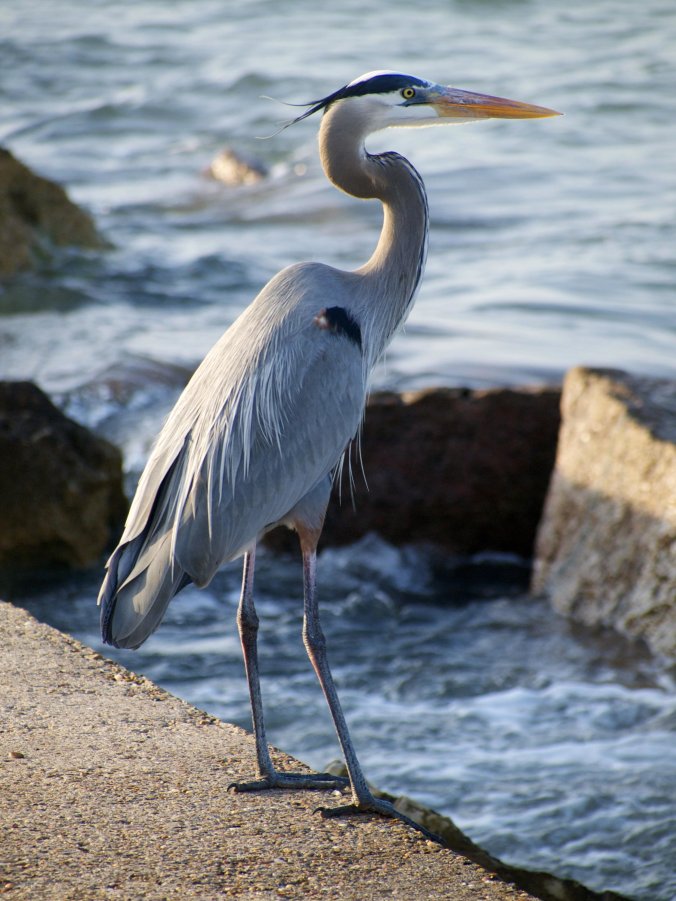
Great Blue Heron - Photo by Tim GillerGreat Blue Heron - Photo by Tim Giller

Great Blue Heron – Photo by Tim Giller

There have been a number of clues in these pages that I might have more than a casual interest in birds. I suppose I should just own up to the label of being a birder just as I got attached to my bike messenger nickname, “nice tim”. Neither of these titles will do much for my gritty urban street cred, but I guess I won’t worry about that because even though I’m feeling a whole new kind of roadtrip gritty, I’m not currently urban. So yes I’ll admit that I do a lot of bird watching. However I don’t really go out “birding”. I spend a lot of time outdoors for many reasons and the chance to see wildlife is one of the most important. Birds simply make themselves the most available and I imagine this is what attracts people to bird watching. You don’t even have to go outside to observe birds; by just looking out almost any window most of us can spot one within minutes. They are possibly the most animated and vocal expression of the fact that nature is always at hand.

Being able to fly they inspire our admiration and envy bringing us stories from afar with their songs. And, like the two of us, many do travel far to spend time in Texas. Because of it’s size, shape and diverse habitats an impressive variety of birds spend time here. It creates a sort of funnel for exotic birds that move north from the tropics or from even farther into South America. In summer, a number of birds go no further than the Rio Grande Valley or the Chisos Mountains in Big Bend. Wintertime brings birds that have nested and raised young in the far north. These travelers, north and south are remarkable survivors and for millennia have had no reason to concern themselves with political boundaries. Today their ancient flyways have become gauntlets with safe havens harder to come by as development has reduced and degraded their rest stops.

In Port Aransas we got the chance to participate in The Whooping Crane Festival, a celebration of a species that tells this story well. The tallest bird on the continent, a bird that needs a little bit of space, it was nearly wiped out, down to a couple dozen birds in the 1940’s. This animal is definitely walking the edge of survival. We’ve set aside some space for it on both ends of it’s migration and done breeding programs that have brought their numbers up but we have to hope that we haven’t pushed it to far. Nature can’t often respect our limited boundaries.

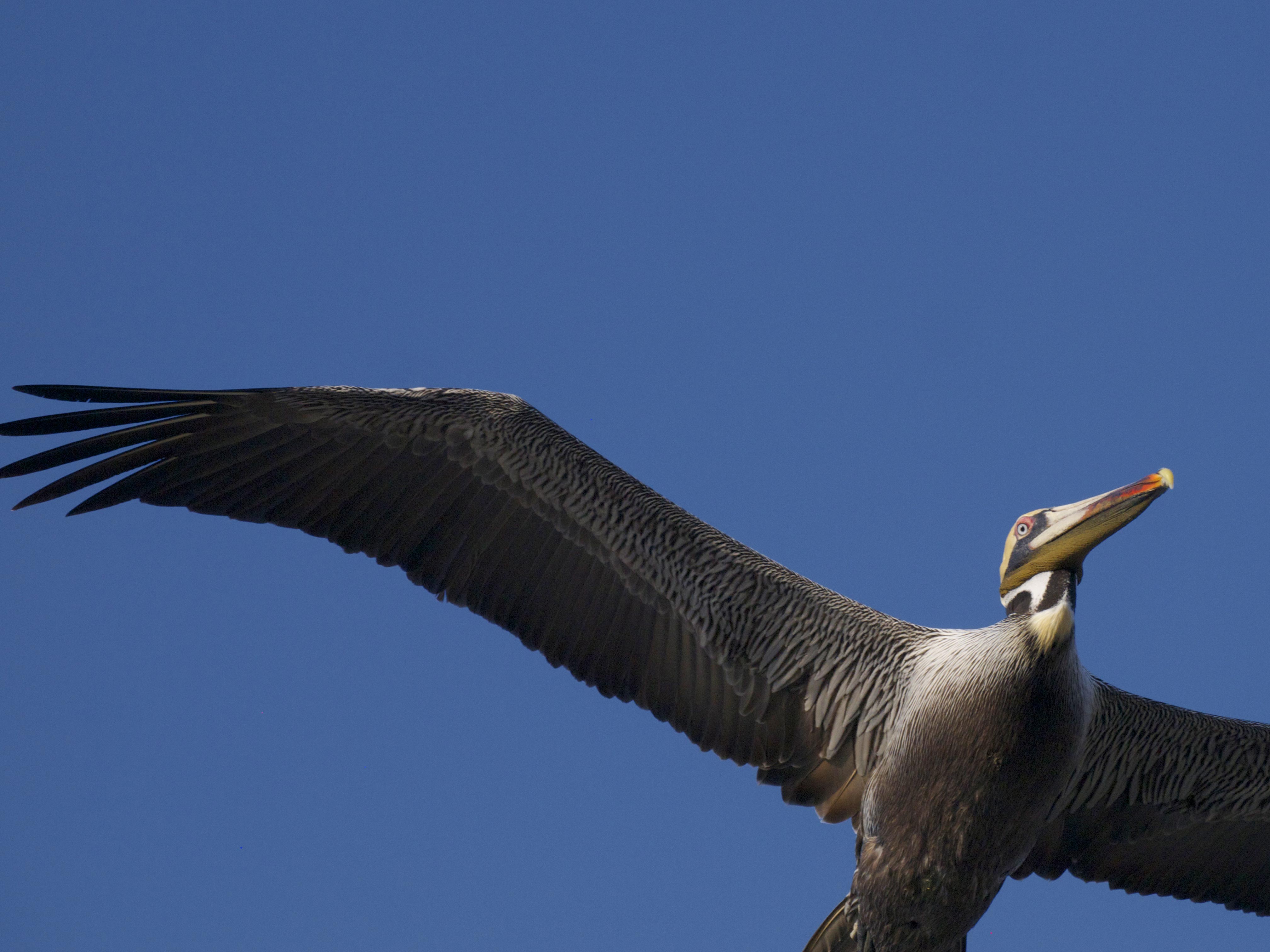
Brown Pelican - Photo by Tim GillerBrown Pelican - Photo by Tim Giller

Brown Pelican – Photo by Tim Giller

There is a sacrifice I suppose for the gift of flight; a certain vulnerability of body, a dependence on the larger world to be intact when you decide to come down to land. At a desert lake in Nevada I once held a recently dead barn owl. It was a beautiful creature, it’s feathers and body still possessed the lithe and tight smoothness that allowed it to silently traverse the night sky. In my hands though the body felt too insubstantial. It was as if only part of its form existed in the same world with me, but that there was another more substantial aspect that was held in some other universe.

I Swear I’m Not A Birder

Great Blue Heron - Photo by Tim Giller

Great Blue Heron – Photo by Tim Giller

There have been a number of clues in these pages that I might have more than a casual interest in birds. I suppose I should just own up to the label of being a birder just as I got attached to my bike messenger nickname, “nice tim”. Neither of these titles will do much for my gritty urban street cred, but I guess I won’t worry about that because even though I’m feeling a whole new kind of roadtrip gritty, I’m not currently urban. So yes I’ll admit that I do a lot of bird watching. However I don’t really go out “birding”. I spend a lot of time outdoors for many reasons and the chance to see wildlife is one of the most important. Birds simply make themselves the most available and I imagine this is what attracts people to bird watching. You don’t even have to go outside to observe birds; by just looking out almost any window most of us can spot one within minutes. They are possibly the most animated and vocal expression of the fact that nature is always at hand.

Being able to fly they inspire our admiration and envy bringing us stories from afar with their songs. And, like the two of us, many do travel far to spend time in Texas. Because of it’s size, shape and diverse habitats an impressive variety of birds spend time here. It creates a sort of funnel for exotic birds that move north from the tropics or from even farther into South America. In summer, a number of birds go no further than the Rio Grande Valley or the Chisos Mountains in Big Bend. Wintertime brings birds that have nested and raised young in the far north. These travelers, north and south are remarkable survivors and for millennia have had no reason to concern themselves with political boundaries. Today their ancient flyways have become gauntlets with safe havens harder to come by as development has reduced and degraded their rest stops.

In Port Aransas we got the chance to participate in The Whooping Crane Festival, a celebration of a species that tells this story well. The tallest bird on the continent, a bird that needs a little bit of space, it was nearly wiped out, down to a couple dozen birds in the 1940’s. This animal is definitely walking the edge of survival. We’ve set aside some space for it on both ends of it’s migration and done breeding programs that have brought their numbers up but we have to hope that we haven’t pushed it to far. Nature can’t often respect our limited boundaries.

Brown Pelican - Photo by Tim Giller

Brown Pelican – Photo by Tim Giller

There is a sacrifice I suppose for the gift of flight; a certain vulnerability of body, a dependence on the larger world to be intact when you decide to come down to land. At a desert lake in Nevada I once held a recently dead barn owl. It was a beautiful creature, it’s feathers and body still possessed the lithe and tight smoothness that allowed it to silently traverse the night sky. In my hands though the body felt too insubstantial. It was as if only part of its form existed in the same world with me, but that there was another more substantial aspect that was held in some other universe.