Conversations worth having

We’ve got a library on Squatch. These are books that Tim selected before we left. It’s a good selection that should go well with the theme of our trip. When I finished a John Muir book I picked Rachel Carson’s Silent Spring. I wanted a female author and the book is so famous in it’s tale. I knew it’d be heavy but I wasn’t prepared for just how wounded I would feel when reading about the effects of DDT and other broad spectrum organochlorides. At first glance it might seem that it should be a read of how we learned from our mistakes and in a way it is. On the other hand when we look at the list of herbicides and insecticides currently in play it’s easy to see that we really really didn’t.

And I’m getting double dose. We’ve been listening to a podcast called Best of Natural History Radio from BBC radio. They did a series where a man named Brent Westwood reads from his diaries that he’s kept for the last 40 years about wildlife he’s seen and recorded in his local patch (of land). This patch is in North Worcestershire and he’s lived near it his whole life. The series is broken down in the different sections of the patch and it usually goes something like this; he reads from his diary an early passage and then perhaps a second time later in life and then follows up with what he’s seeing most recently. Sadly they all almost play out the same way. He sees several of a kind of bird is excited about it and then over the course of the last 40 years they disappear. He often states that he doesn’t expect to ever see that particular bird ever again. I’m not one to shy away from heavy topics but this double whammy is a bit much, even for me. I don’t plan to cover heavy topics here too often however, I can’t help but think about how if the US stopped using DDT in 1972 and we have all these good stories to tell because of it (pelicans, bald eagles, peregrine falcons, robins etc) then why has this man recorded massive declines in birds at his local patch in the last 15 years? Nine times out of ten you can look no farther than habitat loss. But what is habitat? Or rather what three things make a “habitat”? We were recently asked this very question on a birding van tour on Padre Island National Seashore. I answered correctly when I said “food, water, shelter” but I hadn’t actually thought of habitat as three things until that very moment. I always thought in terms of shelter. Loss of chaparral, rain forest, open desert, coral reefs. These are places. They are three dimensional places though. They go up and down. From the fungus on the roots to the bears up above they create a chain of creatures. Creatures that all rely on each other for food, water and sometimes shelter. Growing up we were taught the “food chain” and now they call it more accurately the “food web”. I call it ecological Jenga. It’s easy to say well we’re cutting out habitat to build homes and have more land to farm but what of the land around the home and the farms themselves? What are we farming now that wasn’t as much of an issue when Brent started his data diary? Neonicotinoids. Specifically seeds that are coated with them before planting. The whole plant from roots to pollen is a toxic buffet for anything that tries to eat it. The problem is that birds eating the insects that ate the poisoned plant then suffer. As do the bees that visit these plants with pollens. Even worse for birds is when they eat the seeds directly. Study after study is showing that this is becoming a huge problem. Like I said I’m not afraid to read and talk about these heavy issues.

20150221_Pelican_PtAransasHowever, this time I needed a lift and I got one this last weekend at the Whooping Crane Festival in Port Aransas. In Silent Spring Rachel Carson refers to different people who contacted her about the effects of DDT. They weren’t scientists or farmers or birders or any kind of specialist. These were just folks who noticed that the birds from their backyards were gone. They didn’t sing the song of spring and the silence was deafening. I’m mean we all kind of notice birds don’t we? From herons and seagulls to hawks and doves. People notice birds whether or not they are “into” birds. So when they’re gone something seems amiss.

At the Whooping Crane Festival people come from all over the world. It’s not a giant turn out but it’s good. Here is a bird that was down to just 15 birds in 1960 and now there are almost 600. It’s been a big effort between two countries and a whole migratory path. We were able to volunteer in a very small way for the festival   sure that folks made it to their van tour for two morning tours. We had also toured the trade show. It was during this time that I was reminded that there is not just a conversation going but there is action because of these conversations. One table at the trade show I stopped to chat with a fellow from Texas forestry who has a passion for helping Port Aransas deal with the Brazilian Pepper tree invasions. They’ve come up with a plan to try and eradicate them from Port Aransas (and hopefully beyond) that will be a lot of work but should be easy to implement. Before I chatted with him he was talking to a woman from Michigan who listed off a few of her local invasives. Our first volunteer opportunity on the trip was pulling the invasive bufflegrass from Saguaro National Park and before that Tim and I put our backs into pulling invasives out of San Francisco. Invasives are a hot topic and people are working hard (sweat and all) to deal with them as best we can. In between van tours we talked with a woman who works at the Chamber of Commerce who has gone through Texas Naturalist Program. We chatted briefly on how nice the wildlife viewing is in Port Aransas and the National Sea shore further south. It was nice to be reminded that eco tourism is not just for Chile and Costa Rica but right here in the states we still have good patches of land that people come from all over to partake in. And folks seem to be really understanding that we need to keep patches connected or try to reconnect them through corridors that help maintain healthy populations. And I know that there is some talk about pesticides and that the Neonicotinoids are not just being used on big Ag but that we can buy them at our local hardware store and may not even realize how harmful they are to the very things we’re probably trying to attract to our yards. It may take a law to get these harmful pesticides off farms but, we have choices in our yards and in our neighborhoods to avoid pesticides, herbicides and invasives. Keeping these things out of our yards creates (keeps?) habitat. There are whole migration paths where folks have planted specific plants for birds and butterflies that have kept these creatures from extinction. We can work with our local communities and figure out ways to grow our towns and cities in efforts that work with the natural areas in and around them. And while my thoughts on us being on the verge of an ecological revolution might be a bit too hopeful it does seem possible if we keep these topics, and how we can help, on the tips of our tongues.
Pier Sunset

A colorful surprise

BigBend_DesertMarigoldBigBend_DesertMarigold

BigBend_DesertMarigold

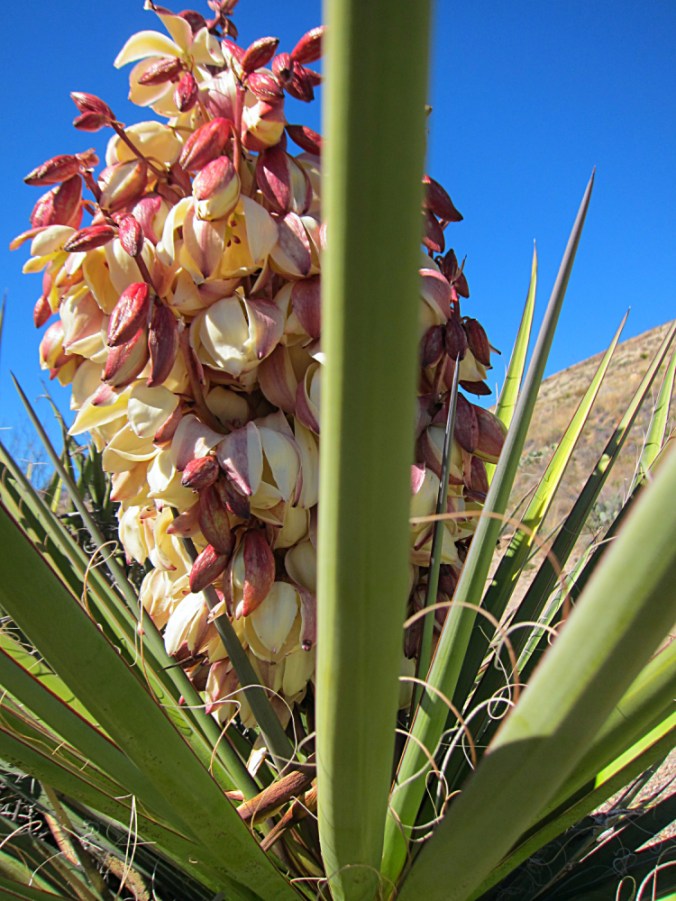
BigBend_TorreyYuccaBigBend_TorreyYucca

BigBend_TorreyYucca

“Flowers!” I exclaimed. I like flowers as much as the next flower liking person but, it’s not typical me to get so excited and my sudden outburst startled Tim. It was just at that moment realized that I hadn’t seen a wild flower for over five weeks. Coastal California doesn’t necessarily give you much time to miss flowers. At almost any time of year there is one to see in full bloom. Last week right after a soggy night we woke up in the clouds.
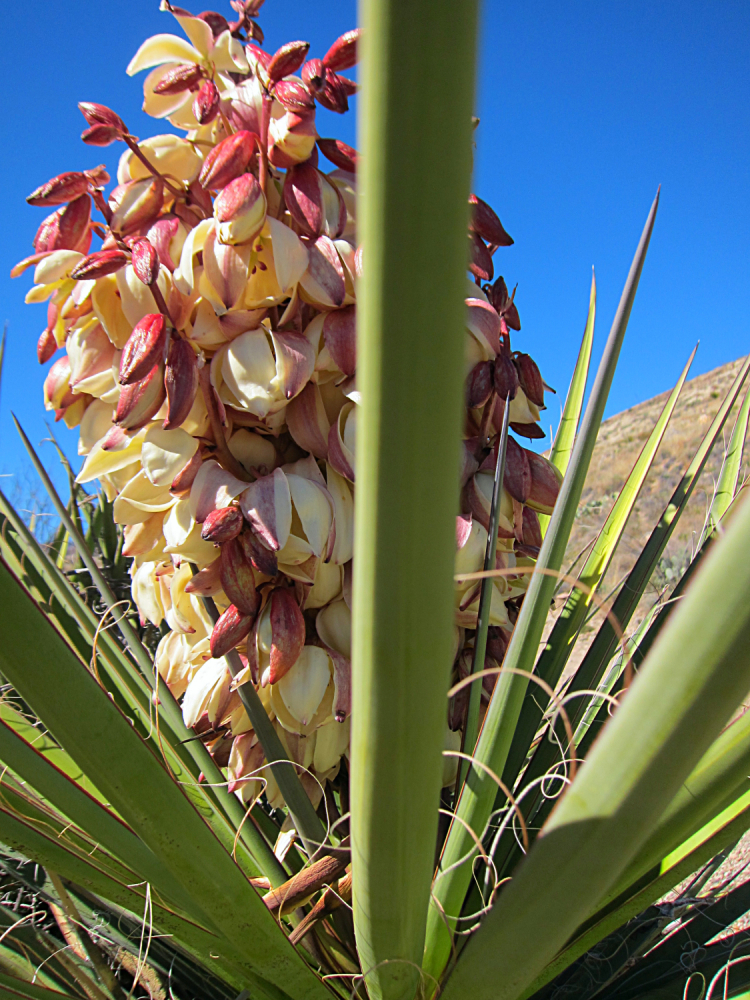
As we drove from the Guadalupe Mountains down into the west Texas valley below we could smell, windows rolled up and all, the strong resinous scent of the creosote plantation spread out before us. I didn’t think too much of this rain as we’ve had rain on and off all winter, as to be expected. Yet there we were a few days later driving along the fluid international border in Rio Grande Ranch State Park where I saw the flowers that got me so excited. Bright yellow Desert Marigolds (Baileya multiradiata) and deep purple Bluebonnet Lupines (Lupinus havardii) standing tall as if spring hit as soon as I turned the calendar to February. I wondered then at the psychology of flowers. I thought about how each year as we go through the cycle of the seasons. We watch the trees and shrubs die back, the days become darker, colder, shorter. It doesn’t take a study to tell me that the effect of wildflowers is simply a rebirth of the land. We’ve been through many spots where I could imagine a warm summer day with fully leaved trees creating a dappled sun effect on hikes that currently felt a little like walking towards the witches house in the woods with dark tree trunks and spiky branches protruding into the trails. We’ve seen the bare branches of ocotillos, acacias and mesquites outside with pictures and videos of the bright pops of a blooming desert inside many of the visitor centers. Flowers also mean the warmth of sun. For the past several days we’ve been in Big Bend National Park soaking up the warm sun and flowers. We’ve seen Bi-colored Mustards (Nerisyrenia camporum), Mock Vervain (Glandularia bipinnatifida), blooming creosote and yuccas and many more yellows, whites, purples and pinks amongst all the greens and browns. With flowers comes pollinators and the many colors of butterflies flitting about didn’t disappoint either.

Even though no one needs a study to tell us that flowers (generally) make us happy I did look into it and it turns out that Rutgers recently published a scientific study on the emotional impact of flowers. The findings show that flowers trigger positive emotions and lower stress levels. So yeah, duh. I thought I’d also look into butterflies since there were so many around and was reminded that the greek word for butterfly is “phyche” and that it’s the root of the word psychology. This all seemed very significant for me because January was pretty dark, cold and often times frustrating as we learned the ropes of life on the road. The rebirth of color is showing up in more places than just the ground under my feet.

As we head out of Big Bend tomorrow we begin desert departure. The weather took a dramatic turn this afternoon and I can feel the next storm blowing in as Squatch rocks in the wind. I’m sure there are many more beautiful floral surprises and springs ahead in our journey east.

A colorful surprise

BigBend_DesertMarigold“Flowers!” I exclaimed. I like flowers as much as the next flower liking person but, it’s not typical me to get so excited and my sudden outburst startled Tim. It was just at that moment realized that I hadn’t seen a wild flower for over five weeks. Coastal California doesn’t necessarily give you much time to miss flowers. At almost any time of year there is one to see in full bloom. Last week right after a soggy night we woke up in the clouds.

As we drove from the Guadalupe Mountains down into the west Texas valley below we could smell, windows rolled up and all, the strong resinous scent of the creosote plantation spread out before us. I didn’t think too much of this rain as we’ve had rain on and off all winter, as to be expected. Yet there we were a few days later driving along the fluid international border in Rio Grande Ranch State Park where I saw the flowers that got me so excited. Bright yellow Desert Marigolds (Baileya multiradiata) and deep purple Bluebonnet Lupines (Lupinus havardii) standing tall as if spring hit as soon as I turned the calendar to February. I wondered then at the psychology of flowers. I thought about how each year as we go through the cycle of the seasons. We watch the trees and shrubs die back, the days become darker, colder, shorter. It doesn’t take a study to tell me that the effect of wildflowers is simply a rebirth of the land. We’ve been through many spots where I could imagine a warm summer day with fully leaved trees creating a dappled sun effect on hikes that currently felt a little like walking towards the witches house in the woods with dark tree trunks and spiky branches protruding into the trails. We’ve seen the bare branches of ocotillos, acacias and mesquites outside with pictures and videos of the bright pops of a blooming desert inside many of the visitor centers. Flowers also mean the warmth of sun. For the past several days we’ve been in Big Bend National Park soaking up the warm sun and flowers. We’ve seen Bi-colored Mustards (Nerisyrenia camporum), Mock Vervain (Glandularia bipinnatifida), blooming creosote and yuccas and many more yellows, whites, purples and pinks amongst all the greens and browns. With flowers comes pollinators and the many colors of butterflies flitting about didn’t disappoint either.BigBend_TorreyYucca

Even though no one needs a study to tell us that flowers (generally) make us happy I did look into it and it turns out that Rutgers recently published a scientific study on the emotional impact of flowers. The findings show that flowers trigger positive emotions and lower stress levels. So yeah, duh. I thought I’d also look into butterflies since there were so many around and was reminded that the greek word for butterfly is “phyche” and that it’s the root of the word psychology. This all seemed very significant for me because January was pretty dark, cold and often times frustrating as we learned the ropes of life on the road. The rebirth of color is showing up in more places than just the ground under my feet.

As we head out of Big Bend tomorrow we begin desert departure. The weather took a dramatic turn this afternoon and I can feel the next storm blowing in as Squatch rocks in the wind. I’m sure there are many more beautiful floral surprises and springs ahead in our journey east.

A Walk in the Desert

Ocotillo SpikesOcotillo Spikes

Ocotillo Spikes

Commonly when folks talk about the desert the words formidable, harsh, dry and dull come into the conversation. And sure, it can those things but, the desert is also breathtakingly beautiful and I have the utmost respect for those that call the desert home. On a clear day in the desert the horizon is the only thing stopping your eyes from seeing further. Once one gets to know the desert it’s anything but dull. It’s a land of creative evolution. A desert is defined as a place that receives less than ten inches of water (on average) per year. So the birds, animals and plants had to adapt to get and store water as best as possible as soon as it comes and then make it last as long as possible. Birds, like the roadrunner, often only get water from what they eat. This is the same for the kangaroo rat who also doesn’t sweat in order to keep as much water as possible. Birds and animals are usually active at night when temperatures are cooler. This is also true many of the plants that call the desert home. In order for photosynthesis to take place plants need sun light, carbon dioxide and water. However, the sun is also very drying. Some plants wait until night to absorb carbon dioxide (CAM photosynthesis). They can also “idle” in that they can go for periods of time with no photosynthesis production during very dry times. Plants will have protective waxy leaves and some lean into the sun so as little as possible will be exposed during the day. Many of the plants employ roots that spread out along the desert floor so that when it rains they can soak up the water where it lands. Others have long roots deep into the ground or only grow by seasonal streams. The creosote bush has both deep roots and long shallow roots. The hard part for these plants is not necessarily waiting for the rains it’s protecting the stored water from thirsty predators. Shrubs, like creosote, tend to taste very bad and don’t get munched on unless animals are feeling pretty desperate. Other plants, a good many other plants, developed spikes, spines and claws. Walking through the desert there is no avoiding them try as we might. As your probably read poor Tim really got it good. After spending the last four weeks in the desert I have gotten my fair share of pokes, stabs and grabs. Even the trees have thorns. One fella we met back at our volunteer day at Saguaro mentioned how he could tell it was a mesquite tree that got him while walking in the dark by the way it stabbed him. Reading the Big Bend park paper a quote from an old rancher on the mesquite went like this “It’s the devil with roots. It scabs my cows, spooks my horses and gives little shade”. On a couple of our walks Tim could tell where I was simply by where the direction of my “ow f@*#!” was coming. Whether it was a cholla, a prickly or the very grabby cat’s claw shrub (also known as the wait-a-minute) poking at me. I thought I’d best this little sticky shrub by wearing jeans instead of hiking pants and all I managed to do was give it more to grab onto. Some yuccas have serrated leaves like a saw and agaves that have us both convinced that it kill ya if you landed on it. I also read that while spikes are an obvious protection against predation, some spikes are so thick they help shade the plant as well. Many barrel shaped cacti spikes squeeze together as the plant loses it’s water and so the spikes offer a thicker armor in a time of need.
This doesn’t really stop predation though, in fact the Javalina’s hard palate make prickly pear refreshing snack. Many birds can get between the spikes to both nibble away at and nest in a cactus. The cactus wren can even remove spikes as needed to be able to fly in and out of their home cholla with ease. Tim and I even saw a cow nipping at a cholla. For Native Americans living off the desert they not only ate many of the plants they used their fibers for weaving and sewing, roots for soap, saps for medicines, and flowers for teas. The Mescalero Apache take their name after a sweet, fibrous treat called mescal made from baking parry’s agave. They made a beer like drink from it and a liquor (fondly known as tequila now). When they weren’t eating or drinking from the plant they dipped their spears and arrowheads in its juices. The juices can cause extreme and immediate dermatitis. As long as there was a known water source the desert was a place of abundance for those willing to be intimate with its subtleties and appreciate its extremes.

Driving from the Mojave, to the Sonoran and now into the Chihuahuan deserts we’ve seen the sometimes slight and sometimes great differences. From low desert to high desert to up into the juniper and oak forests and back down again, even in winter, the desert is hardly dull and I’m a little sad we’ll be leaving it behind soon.

DesertDesert

Desert

A Walk in the Desert

Commonly when folks talk about the desert the words formidable, harsh, dry and dull come into the conversation. And sure, it can those things but, the desert is also breathtakingly beautiful and I have the utmost respect for those that call the desert home. On a clear day in the desert the horizon is the only thing stopping your eyes from seeing further. Once one gets to know the desert it’s anything but dull. It’s a land of creative evolution. A desert is defined as a place that receives less than ten inches of water (on average) per year. So the birds, animals and plants had to adapt to get and store water as best as possible as soon as it comes and then make it last as long as possible. Birds, like the roadrunner, often only get water from what they eat. This is the same for the kangaroo rat who also doesn’t sweat in order to keep as much water as possible. Birds and animals are usually active at night when temperatures are cooler. This is also true many of the plants that call the desert home. In order for photosynthesis to take place plants need sun light, carbon dioxide and water. However, the sun is also very drying. Some plants wait until night to absorb carbon dioxide (CAM photosynthesis). They can also “idle” in that they can go for periods of time with no photosynthesis production during very dry times. Plants will have protective waxy leaves and some lean into the sun so as little as possible will be exposed during the day. Many of the plants employ roots that spread out along the desert floor so that when it rains they can soak up the water where it lands. Others have long roots deep into the ground or only grow by seasonal streams. The creosote bush has both deep roots and long shallow roots. The hard part for these plants is not necessarily waiting for the rains it’s protecting the stored water from thirsty predators. Shrubs, like creosote, tend to taste very bad and don’t get munched on unless animals are feeling pretty desperate. Other plants, a good many other plants, developed spikes, spines and claws. Walking through the desert there is no avoiding them try as we might. As your probably read poor Tim really got it good. After spending the last four weeks in the desert I have gotten my fair share of pokes, stabs and grabs. Even the trees have thorns. One fella we met back at our volunteer day at Saguaro mentioned how he could tell it was a mesquite tree that got him while walking in the dark by the way it stabbed him. Reading the Big Bend park paper a quote from an old rancher on the mesquite went like this “It’s the devil with roots. It scabs my cows, spooks my horses and gives little shade”. On a couple of our walks Tim could tell where I was simply by where the direction of my “ow f@*#!” was coming. Whether it was a cholla, a prickly or the very grabby cat’s claw shrub (also known as the wait-a-minute) poking at me. I thought I’d best this little stiOcotillo Spikescky shrub by wearing jeans instead of hiking pants and all I managed to do was give it more to grab onto. Some yuccas have serrated leaves like a saw and agaves that have us both convinced that it kill ya if you landed on it. I also read that while spikes are an obvious protection against predation, some spikes are so thick they help shade the plant as well. Many barrel shaped cacti spikes squeeze together as the plant loses it’s water and so the spikes offer a thicker armor in a time of need.

This doesn’t really stop predation though, in fact the Javalina’s hard palate make prickly pear refreshing snack. Many birds can get between the spikes to both nibble away at and nest in a cactus. The cactus wren can even remove spikes as needed to be able to fly in and out of their home cholla with ease. Tim and I even saw a cow nipping at a cholla. For Native Americans living off the desert they not only ate many of the plants they used their fibers for weaving and sewing, roots for soap, saps for medicines, and flowers for teas. The Mescalero Apache take their name after a sweet, fibrous treat called mescal made from baking parry’s agave. They made a beer like drink from it and a liquor (fondly known as tequila now). When they weren’t eating or drinking from the plant they dipped their spears and arrowheads in its juices. The juices can cause extreme and immediate dermatitis. As long as there was a known water source the desert was a place of abundance for those willing to be intimate with its subtleties and appreciate its extremes.

Driving from the Mojave, to the Sonoran and now into the Chihuahuan deserts we’ve seen the sometimes slight and sometimes great differences. From low desert to high desert to up into the juniper and oak forests and back down again, even in winter, the desert is hardly dull and I’m a little sad we’ll be leaving it behind soon.

Desert

The National Monument You’ve Never Heard About

It turns out that south central New Mexico is a lot more dynamic than I had previous understood. I’d been to New Mexico before and did a grand 1100 mile, three day tour from south to north and back again with two girl friends. It was a lot of driving and a whole lot of fun and I loved every inch of New Mexico. Even though my friend had been living in the town of Las Cruces we were only in and out in order to see other places. In my and Tim’s travels we met a couple who mentioned the museum in Deming NM and so we made a point to check it out. They have great displays of early life in Deming and are rightfully famous for their collection of Mogollon pottery. It’s worth a detour if you’re in the area.
We also ended up spending at least one more day than we meant to in Las Cruces. Such a chain of events took place and we had the chance to talk to some wonderful people that we realized if we didn’t just leave we could be there for the rest of the year exploring all it had to offer in nearby outdoor activities. For our second night in town we ditched the over priced rv park and headed for a the nearby national monument to see what it was all about. The Prehistoric Trackways National Monument was founded in 2009 in order to protect what was an incredible discovery some 22 years earlier by amateur paleontologist Jerry MacDonald. He had heard from locals of a spot with good fossils. What he found is a world renowned site of fossilized tracks from the Permian Period (approx 240-280 million years ago). It’s extensive and the best example of tracks from that period ever found. Scientists from all over the world have come to study the area. The “area” is now southern New Mexico but, at the time the tracks were being created the area was mud flats along the coast of Pangea in an inland sea near the equator.

MarineFossilsMarineFossils

MarineFossils

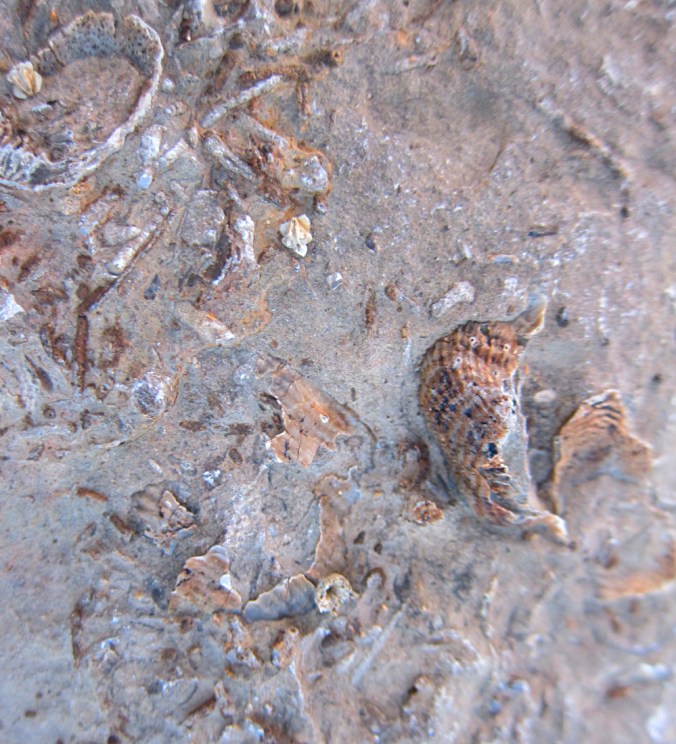
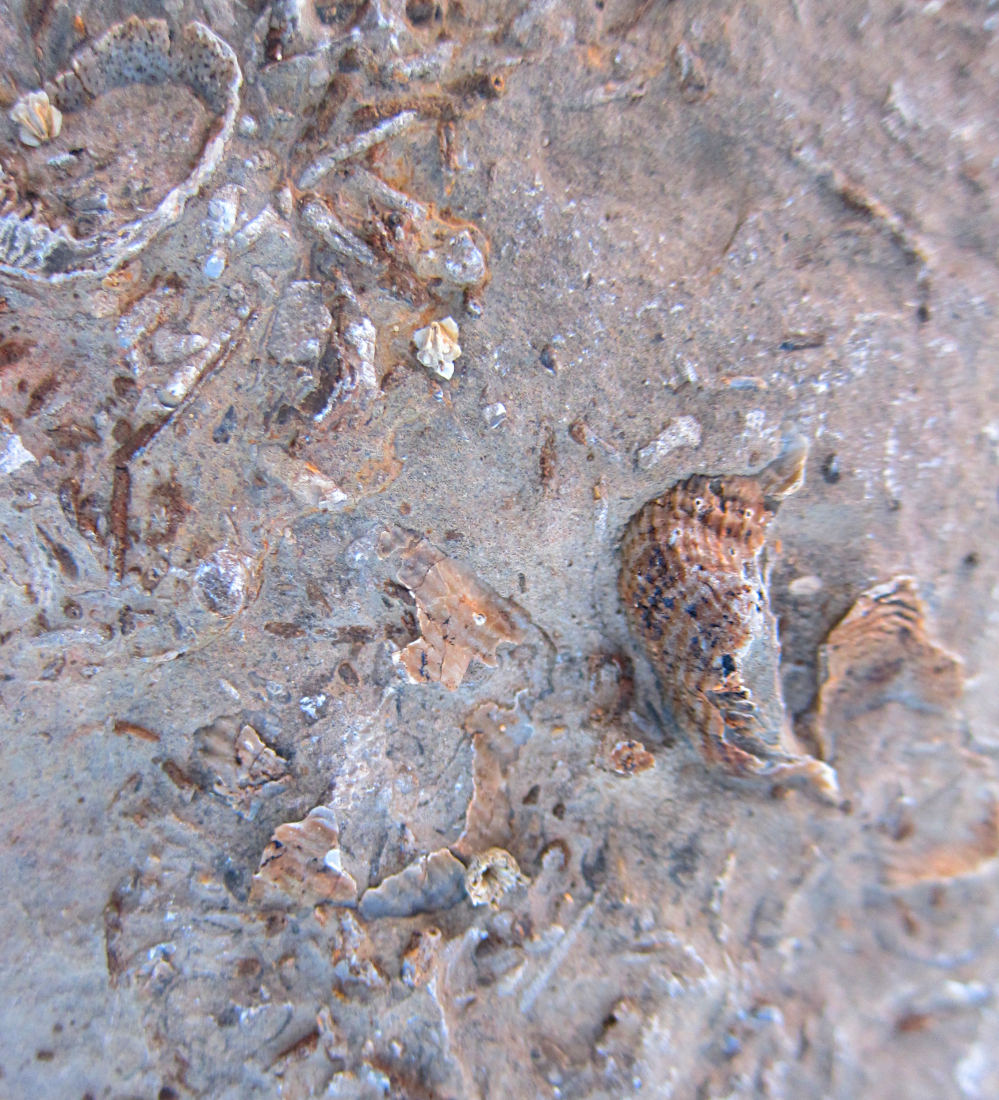
As a tourist it’s a bit of a strange place. There is no infrastructure and much of what it’s famous for has been removed to display and protect. At the trail head there are three signboards with a little bit of the information and the trail is well-marked. At the discovery site there is another sign board but nothing to really tell you where to look. Although there are still fossils, petrified wood and tracks to be found in the red stone we took a detour from the trail signs and ended up finding some marine fossils in the gray mudstone. I don’t go out of my way to research how old the rocks are that I’m seeing when I hike but when you’ve got a signboard and it’s telling you they are roughly 280 million years old it was easy to be excited at just the rocks so finding some really good marine fossils made my day.

The next day was a surprisingly abundant and unusual snow storm in Las Cruces. We had heard rain and wind all night. When it stopped we’d assumed that meant things were clearing up when in reality snow was quietly burying us on a rough dirt road. Sadly we left our camp spot earlier than we would have liked. We were taking in Lil’ Squatch for some tweaking and found ourselves without a home for several hours. I, not understanding what “wet” snow really meant, suggested that we go ahead and pass up the offered ride in favor of a slushy, no sidewalk, one mile jaunt. It turns out that the mechanic just so happened to be located around the corner from the local BLM district office. The power was out and all were leaving but, a man took pity on us and let us in for some maps. They just so happened to have a couple of the slabs from the trackways in the office and he suggested that we check out the local museum of nature and science for even better examples. He also explained that with last years Organ Mountains National Monument acquisition that the Robledo Mountains (where the tracks are found) and the Dona Ana mountains are part of that status. They’re busy trying to figure out the best way for people to gain access to these areas and how best to present the natural history to the public.

PlantfossilPlantfossil

Plantfossil

DimetrodonDimetrodon

Dimetrodon

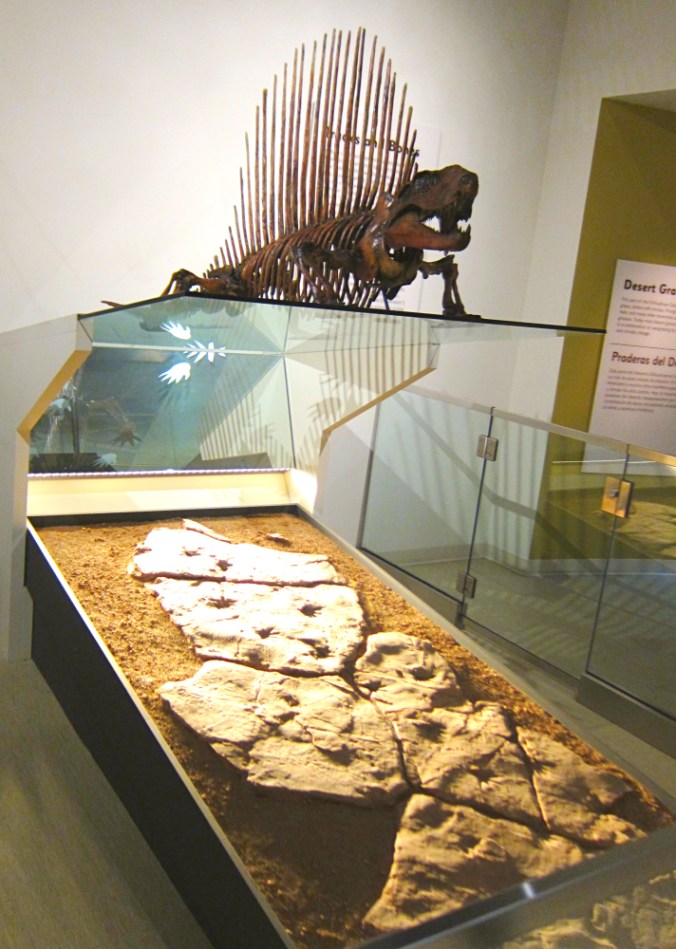
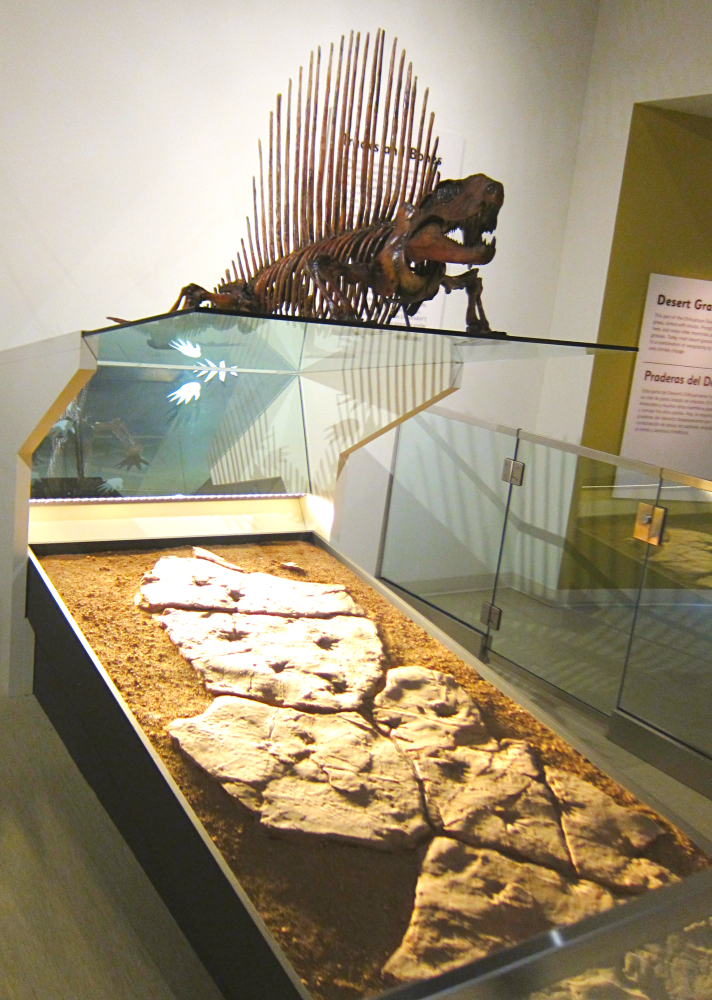
Before we headed out of town we did make a stop at the museum. It’s a new facility and they have two nicely done displays. First was a good example of the Dimetrodon skeleton that had been put together before the tracks were found and below it are the fossil tracks believed to be made by this pelycosaur. The tracks helped them realize that the animal had walked much more upright than previously understood. A long track laid out in the middle of the room also had an interactive screen where you press a list of questions and videos of Jerry MacDonald answering them played. Listening to his well delivered answers and looking at the displays brought it all together for me. With the Pangea map, his descriptions and the painting above that particular track I could begin to think about what is a pretty foreign ecology. (Read more details here:http://www.nature.nps.gov/geology/nationalfossilday/paleozoic_ptnm.cfm)

The National Monument You’ve Never Heard About

It turns out that south central New Mexico is a lot more dynamic than I had previous understood. I’d been to New Mexico before and did a grand 1100 mile, three day tour from south to north and back again with two girl friends. It was a lot of driving and a whole lot of fun and I loved every inch of New Mexico. Even though my friend had been living in the town of Las Cruces we were only in and out in order to see other places. In my and Tim’s travels we met a couple who mentioned the museum in Deming NM and so we made a point to check it out. They have great displays of early life in Deming and are rightfully famous for their collection of Mogollon pottery. It’s worth a detour if you’re in the area.

We also ended up spending at least one more day than we meant to in Las Cruces. Such a chain of events took place and we had the chance to talk to some wonderful people that we realized if we didn’t just leave we could be there for the rest of the year exploring all it had to offer in nearby outdoor activities. For our second night in town we ditched the over priced rv park and headed for a the nearby national monument to see what it was all about. The Prehistoric Trackways National Monument was founded in 2009 in order to protect what was an incredible discovery some 22 years earlier by amateur paleontologist Jerry MacDonald. He had heard from locals of a spot with good fossils. What he found is a world renowned site of fossilized tracks from the Permian Period (approx 240-280 million years ago). It’s extensive and the best example of tracks from that period ever found. Scientists from all over the world have come to study the area. The “area” is now southern New Mexico but, at the time the tracks were being created the area was mud flats along the coast of Pangea in an inland sea near the equator.

As a tourist it’s a bit of a strange place. There is no infrastructure and much of what it’s famMarineFossilsous for has been removed to display and protect. At the trail head there are three signboards with a little bit of the information and the trail is well-marked. At the discovery site there is another sign board but nothing to really tell you where to look. Although there are still fossils, petrified wood and tracks to be found in the red stone we took a detour from the trail signs and ended up finding some marine fossils in the gray mudstone. I don’t go out of my way to research how old the rocks are that I’m seeing when I hike but when you’ve got a signboard and it’s telling you they are roughly 280 million years old it was easy to be excited at just the rocks so finding some really good marine fossils made my day.

The next day was a surprisingly abundant and unusual snow storm in Las Cruces. We had heard rain and wind all night. When it stopped we’d assumed that meant things were clearing up when in reality snow was quietly burying us on a rough dirt road. Sadly we left our camp spot earlier than we would have liked. We were taking in Lil’ Squatch for some tweaking and found ourselves without a home for several hours. I, not understanding what “wet” snow really meant, suggested that we go ahead and pass up the offered ride in favor of a slushy, no sidewalk, one mile jaunt. It turns out that the mechanic just so happened to be located around the corner from the local BLM district office. The power was out and all were leaving but, a man took pity on us and let us in for some maps. They just so happened to have a couple of the slabs from the trackways in the office and he suggested that we check out the local museum of nature and science for even better examples. He also explained that with last years Organ Mountains National Monument acquisition that the Robledo Mountains (where the tracks are found) and the Dona Ana mountains are part of that status. They’re busy trying to figure out the best way for people to gain access to these areas and how best to present the natural history to the public.

PlantfossilBefore we headed out of town we did make a stop at the museum. It’s a new facility and they have two nicely done displays. First was a good example of the Dimetrodon skeleton that had been put together before the tracks were found and below it are the fossil tracks believed to be made by this pelycosaur. The tracks helped them realize that the animal had walked much more upright than previously understood. A long track laid out in the middle of the room also had an interactive screen where you press a list of questions and videos of Jerry MacDonald answering them played. Listening to his well delivered answers and looking at the displays brought it all together for me. With the Pangea map, his descriptions and the painting above that particular track I could begin to think about what is a pretty foreign ecology. (Read more details here:http://www.nature.nps.gov/geology/nationalfossilday/paleozoic_ptnm.cfm)Dimetrodon

Sky Islands

Last year was a mad dash of effort. Time flew by and many things we imagined doing slipped off the list as time slipped out of our hands. It’s as if the accordion bellows of life were at full compression. It’s just a couple of weeks into 2015 and I already feel the accordion expanding out out out. These two weeks of driving around Southern Arizona seem like a month. It’s beautiful down here in ways I did not think to expect. It didn’t take long for me to guess correctly that this area was still part of the basin and range province. Wide valleys are dotted and even corralled by the tell-tell north/south trending mountain ranges. Down here they call these mountains “Sky Islands”. Much like an island the flora and fauna are cut off from the surrounding mountain ranges. While they might have similar climates and life forms many of these plants, birds and animals have no way of connecting with each other because the valleys are too wide and too warm. Others take advantage of the riparian streams and washes, using them like a kind of bird and animal highway. These streams allow for food and protective cover they just can’t get in the high desert valleys that provide not much more than grasses, yucca and cactus.
This wasn’t always the case. Roughly 8,000-4,000 years ago the climate used to be much cooler and wetter down in, what is now, the desert southwest. These valleys were once verdant meadows surrounded by pines and firs. As the climate warmed the plants and animals moved up to cooler elevations that matched their life needs. Trees and plants that have higher water needs tend to only grow on north facing slopes. Further back in time these mountains used to be neighbors. During a period where the west coast experienced subduction the land rippled together. There was volcanic activity and uplift. After the subduction was complete many years of water and wind weathering shaped the mountains to what we see now. The land, much like those accordion bellows, began to spread away from each other. You can actually read a pretty good synopsis on wikipedia about this here: http://en.wikipedia.org/wiki/Basin_and_Range_Province

Alligator JuniperAlligator Juniper

Alligator Juniper

After several nights of enjoying the valleys and canyons of the area we made our way up to explore one of these sky islands, Chiricahua National Monument in eastern Arizona. We got to our campsite at 12:30, made a quick lunch and hit the trail. I’m not sure I meant to sign up for an eight mile hike but, it was worth it either way. Even at camp we are already away from the valley shrubs and grasses and into some real trees. There is juniper, oaks and for the first time in a long while I got to smell some pine. Seeing all these made me feel at home. It’s hard not to compare to my beloved California. As we walked and looked up at the rhyolite formations that the Chiricahua Apache called “standing up rocks” I said how I felt like I was at the crossroads of Yosemite and Bryce. After that I tried to really see the place for it’s own merit. Looking a little closer at some of the juniper trees I noticed their unique bark that gives them their name of alligator juniper since the bark looks much like the skin of an alligator. I also saw the yucca, agave and prickly pear mixed in with the manzanitas and sycamores. What Tim thought was a pinon jay was actually a gray breasted or “Mexican” jay. We’ve yet to see the javalina or elusive coatimundi, we’re not likely to see those in California outside of a zoo (we finally saw a javalina the next day!). The beautiful doe we saw when we started on the trail was an Arizona white-tailed deer and not ubiquitous black-tailed deer. I kept making a point to think this way, even as things felt and smelled familiar. As we crept up higher and started our way on the switchbacks that lead to the Heart of Rocks loop I stopped in my tracks. Even though I’d not only seen pictures but, had also been looking at them over the course of our walk I was struck by just how incredible these rock formations were up close. There is no question of why this is a special place worth protecting (and why the Apache fought so hard to keep it). The rocks are a reddish gray with covering of bright neon green lichen. They’ve weathered in such ways one can’t help seeing familiar shapes within the rocks. Like the pretty aptly named duck on a rock. The CCC (Civilian Conservation Corp) did much work here and it’s easy to tell in the way the trail is built and even the naming of the formations. Small signs are posted near formations with names just as they were in the 1930’s. Thankfully it appears that some of the less than PC names are no longer posted.

As we move into New Mexico I hope to explore more into the strange yet familiar world of mountains that surround deserts. This time with fresh eyes ready to see what is unique and special. And leaving southern Arizona I have a new appreciation for the area I knew so little of. I suppose that’s the whole point of this effort.

ChiricahuaChiricahua

Chiricahua

Sky Islands

Last year was a mad dash of effort. Time flew by and many things we imagined doing slipped off the list as time slipped out of our hands. It’s as if the accordion bellows of life were at full compression. It’s just a couple of weeks into 2015 and I already feel the accordion expanding out out out. These two weeks of driving around Southern Arizona seem like a month. It’s beautiful down here in ways I did not think to expect. It didn’t take long for me to guess correctly that this area was still part of the basin and range province. Wide valleys are dotted and even corralled by the tell-tell north/south trending mountain ranges. Down here they call these mountains “Sky Islands”. Much like an island the flora and fauna are cut off from the surrounding mountain ranges. While they might have similar climates and life forms many of these plants, birds and animals have no way of connecting with each other because the valleys are too wide and too warm. Others take advantage of the riparian streams and washes, using them like a kind of bird and animal highway. These streams allow for food and protective cover they just can’t get in the high desert valleys that provide not much more than grasses, yucca and cactus.

This wasn’t always the case. Roughly 8,000-4,000 years ago the climate used to be much cooler and wetter down in, what is now, the desert southwest. These valleys were once verdant meadows surrounded by pines and firs. As the climate warmed the plants and animals moved up to cooler elevations that matched their life needs. Trees and plants that have higher water needs tend to only grow on north facing slopes. Further back in time these mountains used to be neighbors. During a period where the west coast experienced subduction the land rippled together. There was volcanic activity and uplift. After the subduction was complete many years of water and wind weathering shaped the mountains to what we see now. The land, much like those accordion bellows, began to spread away from each other. You can actually read a pretty good synopsis on wikipedia about this here: http://en.wikipedia.org/wiki/Basin_and_Range_Province

Alligator JuniperAfter several nights of enjoying the valleys and canyons of the area we made our way up to explore one of these sky islands, Chiricahua National Monument in eastern Arizona. We got to our campsite at 12:30, made a quick lunch and hit the trail. I’m not sure I meant to sign up for an eight mile hike but, it was worth it either way. Even at camp we are already away from the valley shrubs and grasses and into some real trees. There is juniper, oaks and for the first time in a long while I got to smell some pine. Seeing all these made me feel at home. It’s hard not to compare to my beloved California. As we walked and looked up at the rhyolite formations that the Chiricahua Apache called “standing up rocks” I said how I felt like I was at the crossroads of Yosemite and Bryce. After that I tried to really see the place for it’s own merit. Looking a little closer at some of the juniper trees I noticed their unique bark that gives them their name of alligator juniper since the bark looks much like the skin of an alligator. I also saw the yucca, agave and prickly pear mixed in with the manzanitas and sycamores. What Tim thought was a pinon jay was actually a gray breasted or “Mexican” jay. We’ve yet to see the javalina or elusive coatimundi, we’re not likely to see those in California outside of a zoo (we finally saw a javalina the next day!). The beautiful doe we saw when we started on the trail was an Arizona white-tailed deer and not ubiquitous black-tailed deer. I kept making a point to think this way, even as things felt and smelled familiar. As we crept up higher and started our way on the switchbacks that lead to the Heart of Rocks loop I stopped in my tracks. Even though I’d not only seen pictures but, had also been looking at them over the course of our walk I was struck by just how incredible these rock formations were up close. There is no question of why this is a special place worth protecting (and why the Apache fought so hard to keep it). The rocks are a reddish gray with covering of bright neon green lichen. They’ve weathered in such ways one can’t help seeing familiar shapes within the rocks. Like the pretty aptly named duck on a rock. The CCC (Civilian Conservation Corp) did much work here and it’s easy to tell in the way the trail is built and even the naming of the formations. Small signs are posted near formations with names just as they were in the 1930’s. Thankfully it appears that some of the less than PC names are no longer posted.

As we move into New Mexico I hope to explore more into the strange yet familiar world of mountains that surround deserts. This time with fresh eyes ready to see what is unique and special. And leaving southern Arizona I have a new appreciation for the area I knew so little of. I suppose that’s the whole point of this effort.

Chiricahua

Endangered, to be or not to be?

Would you visit a National Monument if the most foreign thing you saw was people on ladders painting the flowers with pollen?
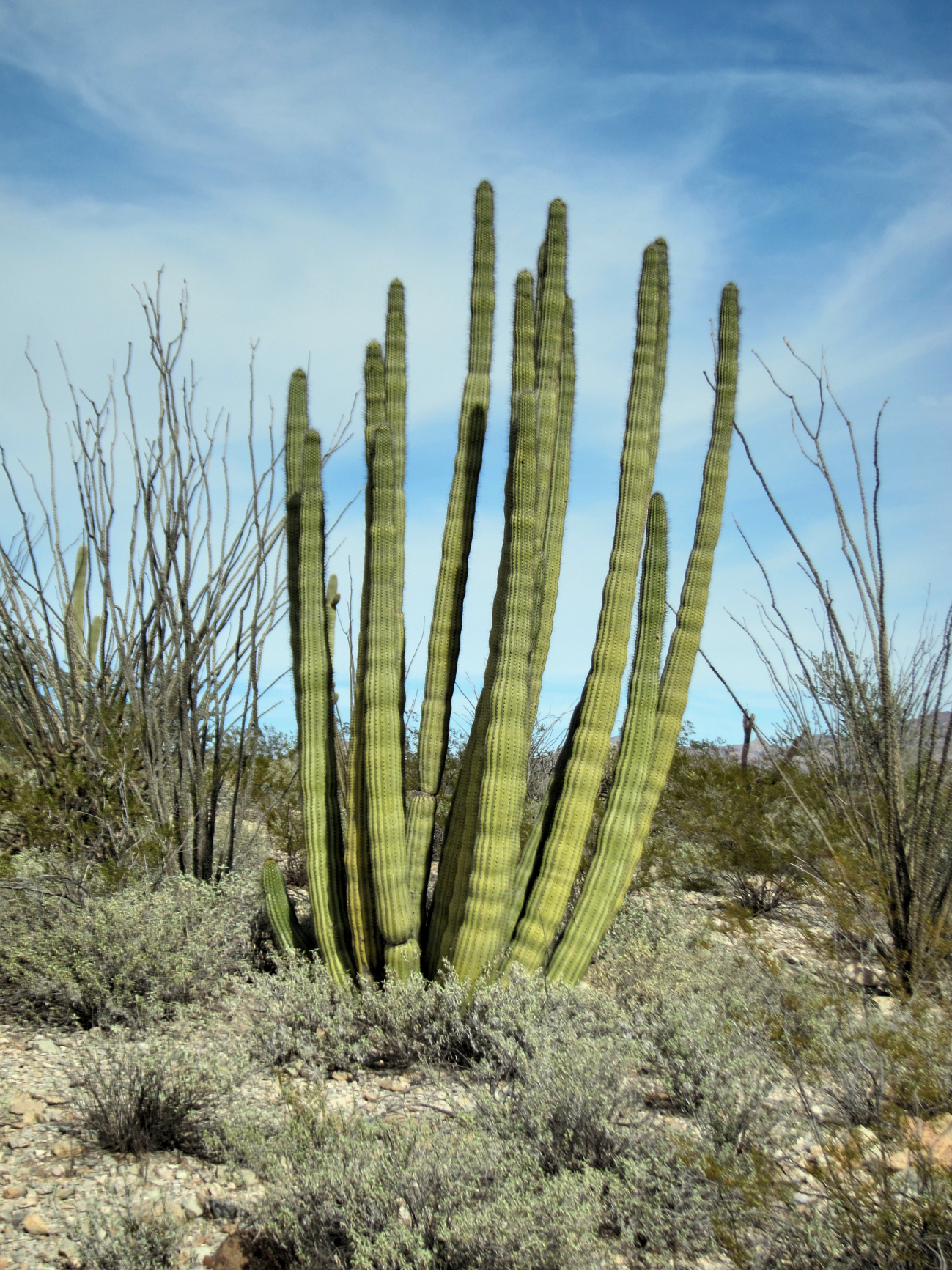
On our recent visit to Organ Pipe Cactus National Monument we could not help to be taken aback at just how lush, green and full of life this desert forest is. As most know, or think of, the desert as a dry dusty place where there is abundant sun, little rain and is short on bio-diversity. The Sonoran is the exception, especially within the park. In just a short walk we saw saguaro, organ pipe, hedgehog, and coleville’s cactus, desert ironwood, palo verde trees, quail, flickers, gila woodpeckers, cactus wren, jack rabbits, cottontails and much to my surprise deer! This is a desert rich in variety. One can only imagine that this continues to the south since this park is at the northern range of many of these plants and trees.

After only spending a couple of days there it seemed incredible that this little pocket has even survived all that has been thrown at it over the last 200 years. At a time when ranching was just about the only way to make a living in the west a few tough souls attempted to do just that however failed due to lack of year round water sources. Not surprisingly the cattle severely damaged the natural eco system. Over the years since grazing the desert has had a nice bounce back. Driving in from the north west we passed a large mine outside of the town of Ajo, AZ. This mine was so large the tailings create their own mountain plateau. Shortly after passing the mine driving towards Why, AZ you start to pass signs for the Barry Goldwater air force bombing range. The American military bombs the desert because there is “nothing out there”. It was not unusual to hear the jets flying past the park even in just our short visit. To the south, about 7 miles from the entrance to the park, is the Mexican/American border. I’m not going to cover the politics here but, due to several factors this means that the open desert is an opportunistic place for those seeking better pay or good money trafficking into America. Human and vehicle traffic through the park created roads and damaged the eco system in several places. Fairly recently the park put in a 30 mile stretch of vehicle barricades that still allows for animals, including the endangered Sonoran Pronghorn to still pass through. Due to these immigration attempts and trafficking the presence of border patrol is to be expected. Within the park there is border patrol unit with horses, ATVs, drones and a helicopter to patrol the park itself. All of this is just to give you an idea of what this little plot of land is up against.

It’s easy to put all that out of your mind when you look at this beautiful place, especially the pictures of the desert in full bloom. A majority of the plants take the monsoon rains of the summer to blossom. This includes the namesake Organ Pipe Cactus. These cacti can live up to 150 years and their first blossom shows up at around 35 years of age. This has been an interesting fact to mull over because I myself am 35 years old. The organ pipe cactus has white flowers and blooms only at night giving off a sweet scent. Come mid morning the next day and the flower is closing up its pollen shop. The lesser long nose bat uses this time in the summer to travel north to have and grow their babies at a roost in the park. Feeding on the pollen and fruit of both the Saguaro and the Organ Pipe cactus while cross pollinating the plants. There is an excellent graph showing this relationship found in the park newspaper here: http://www.nps.gov/orpi/planyourvisit/upload/http___imrcms-nps-doi-net_orpi_planyourvisit_loader.pdf .  The Organ Pipe is not listed as endangered but the bat is. Like the good and wise John Muir is quoted “When we try to pick out anything by itself, we find it hitched to everything else in the Universe.”. If there is no bat to do the heavy lifting of pollinating the cactus how long will it take the cactus to die off? I heard a story about an apple growing region in China where they use such toxic pesticides it killed all the bees. No bees, no apples? Nope, instead there are people who are now employed to take to the trees with cups filled with pollen and paint brushes to do the pollinating the bees did for free. In true Chinese diligence they pollinate all the flowers of every tree. The human pollination process is said to have increased the production of apples by 30%. Can the trees sustain that heavy of production? What if there are subtleties that the bees and bats can smell that makes them skip over less ideal flowers? Just like a female bird selects for health and vitality in her male suitors perhaps the bats select the best flowers. The fact is that these plants and bats co evolved and most likely need each other to survive. Human interference might temporarily improve upon nature but, will alter it in ways that we cannot foresee. This is a common story throughout the world and this is only one example. However, I can’t help feel that my take away from this particular story is the connection between our bombing practice just north and the desperation of our neighbors to the south. It’s hard for me to decide who causes more damage to this sensitive desert eco-system. It’s important to remember that nature is not something that happens “over there” while we lives our lives “over here”. Our tax dollars both own the open land of the federal government and the military that is tasked to protect it. Americans have bought the gift that is large tracks of land set aside for our enjoyment but, nature does not begin and end at their borders.

OPC_OPCNMOPC_OPCNM

OPC_OPCNM