Obscured

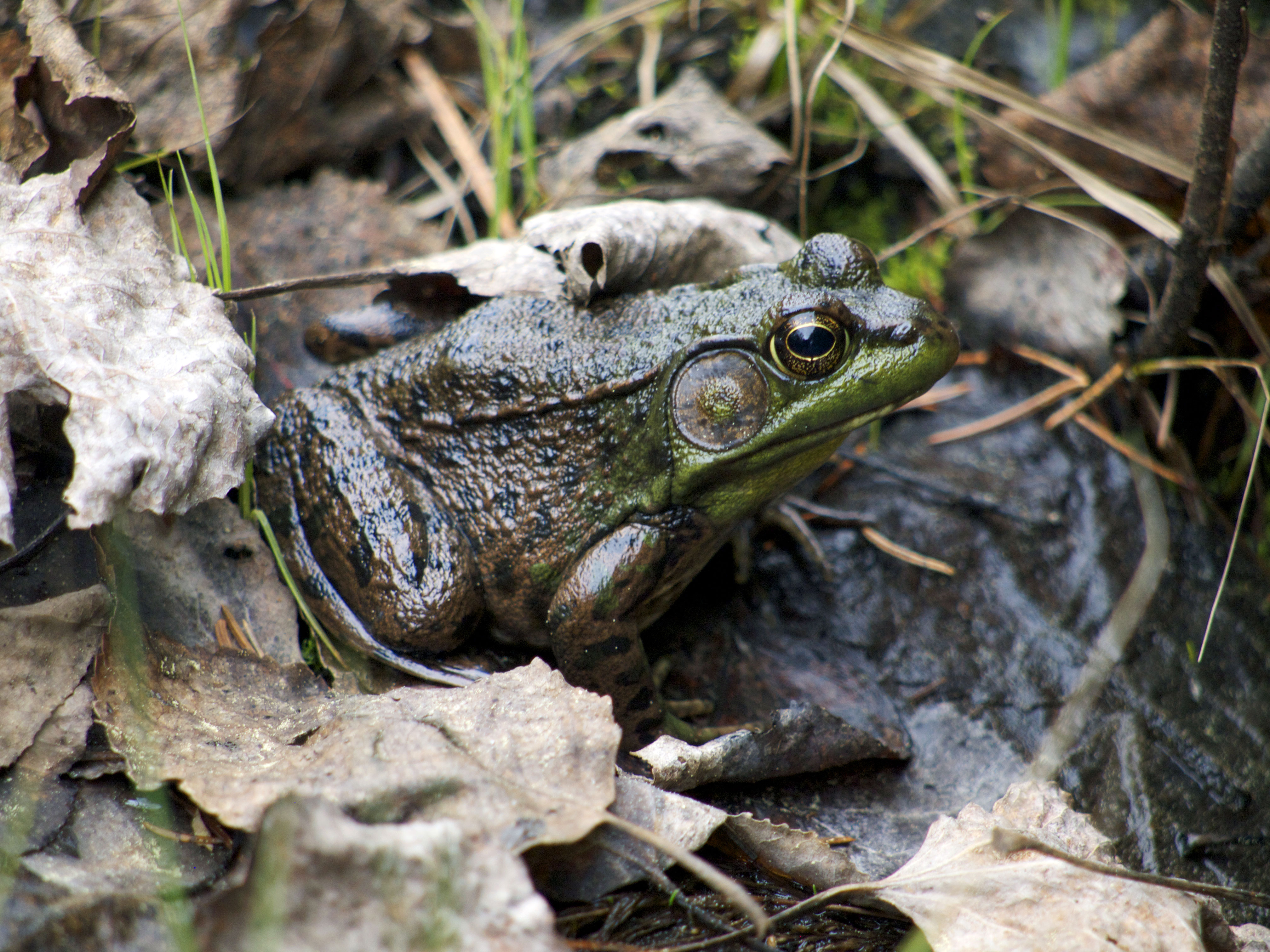
Frog, Algonquin P.P. Ontario - Photo by Tim GillerFrog, Algonquin P.P. Ontario - Photo by Tim Giller

Frog, Algonquin P.P. Ontario – Photo by Tim Giller

If I didn’t know any better I’d say that we’d just heard somebody trying to start a lawnmower. The nearest lawn must be at least 30 miles away and I couldn’t imagine anyone dragging a mower deep into this dense forest, but Canadians have their own way of doing things so who knows? An abrupt “thrufp, thrufp, thrufp” from the opposite side of the trail made Rachael jump as I got just a glimpse of some sort of wild-chicken-bird maneuvering through the impenetrable trees. Wildlife is so often experienced as that thing you know to be there but is just beyond your resolution. A sound, a footprint, scat, clues to the existence of a being that chooses to remain hidden. I could see how legends begin of creatures lurking in forests or skulking beneath waves, showing themselves only long enough to leave a startled impression in our minds that may grow with each retelling into a full scale beast worthy of a folk tale. We strained our eyes through trees too closely packed to venture into but this creature had vanished, blending into its surroundings leaving us to our imaginations. Later research led us to the Ruffed Grouse and the motor sound was a male drumming its wings to impress the ladies. I was kind of impressed myself.

Algonquin Provincial Park in Ontario has no doubt produced many wildlife encounters for its visitors. It’s a place where the dark spruces of the northern boreal forest blend with the deciduous eastern hardwoods in a thick mosaic of trees. These trees surround an extensive network of lakes and streams most commonly traversed by canoe, a classic Canadian wildland that supports moose, black bear, beaver and hundreds of wolves. It also has some smaller creatures and we could hear them. We kept seeing them out of the corner of our eyes leaping into the trailside ponds as we walked by. We had to be looking right at them. They would jump from under our noses just when we thought nothing was there. I was just looking at that spot. Getting down on our hands and knees, peering into the pond at mysterious gelatinous egg sacks one swam right up to me. This bronze frog and I looked into each others eyes for just a moment before it realized its mistake and dove away, hiding under the leaf litter which covered the sandy bottom of this tea colored pool. I learned what we were looking for and now I could spot them. I had to attempt their game of being very still first and then scanning the water’s edge. It’s a game I couldn’t win but I was able to score a few points. They were literally a still as stones, blending in with skin the texture of moist rock and the color of wet leaves, holding their amphibian breath.

Lake Kioshkokwi - Photo By Tim GillerLake Kioshkokwi - Photo By Tim Giller

Lake Kioshkokwi – Photo By Tim Giller

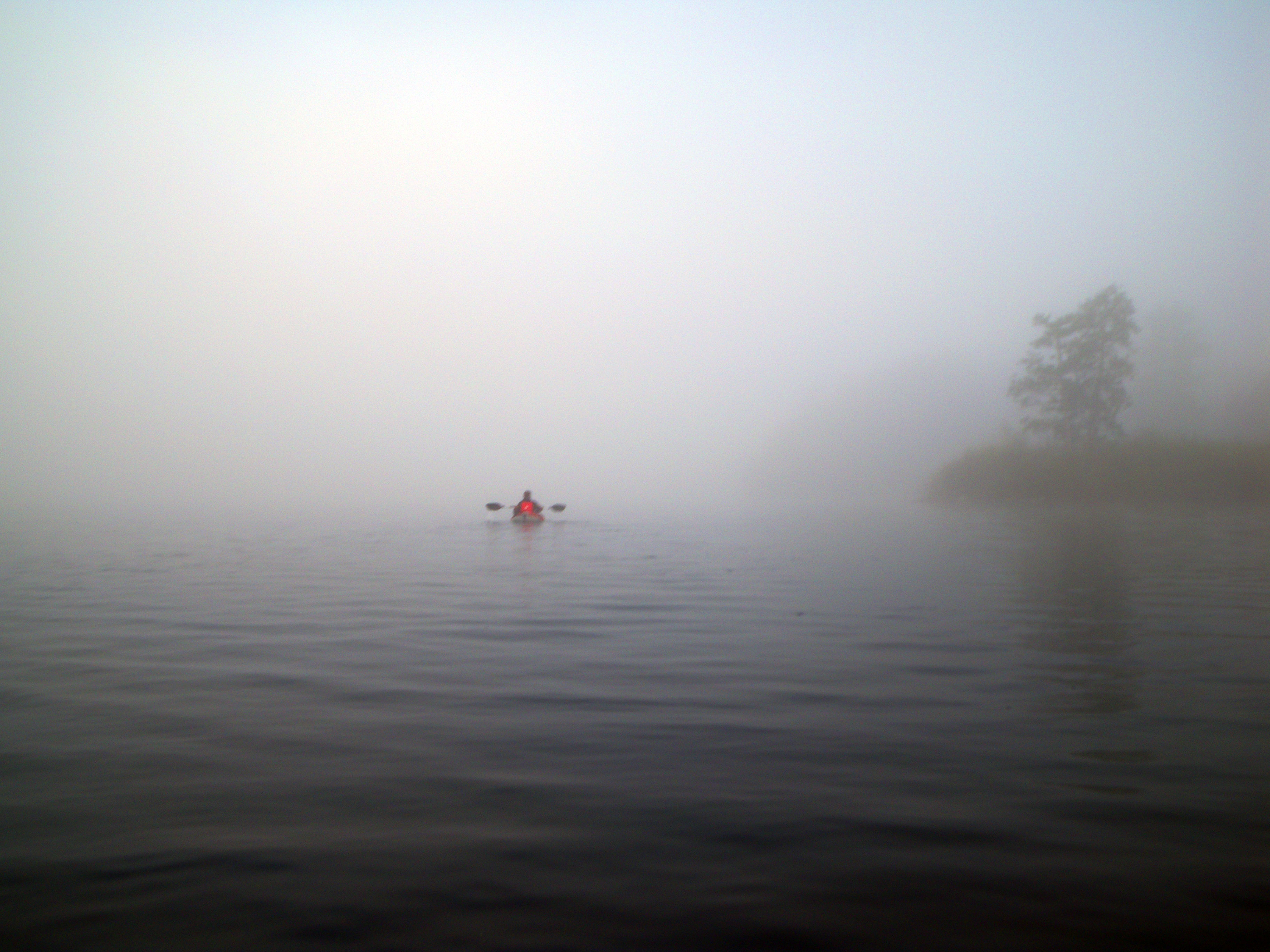
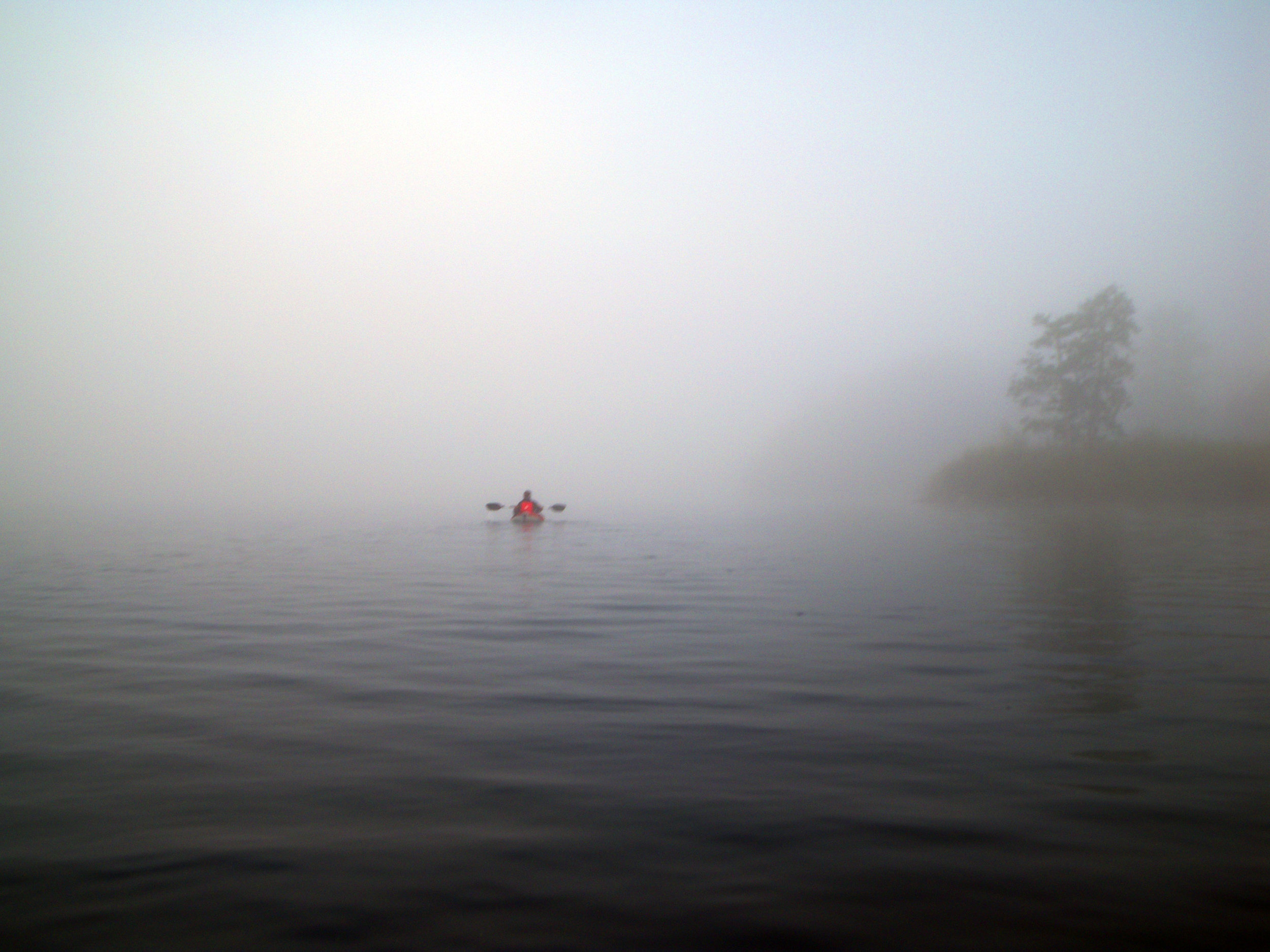
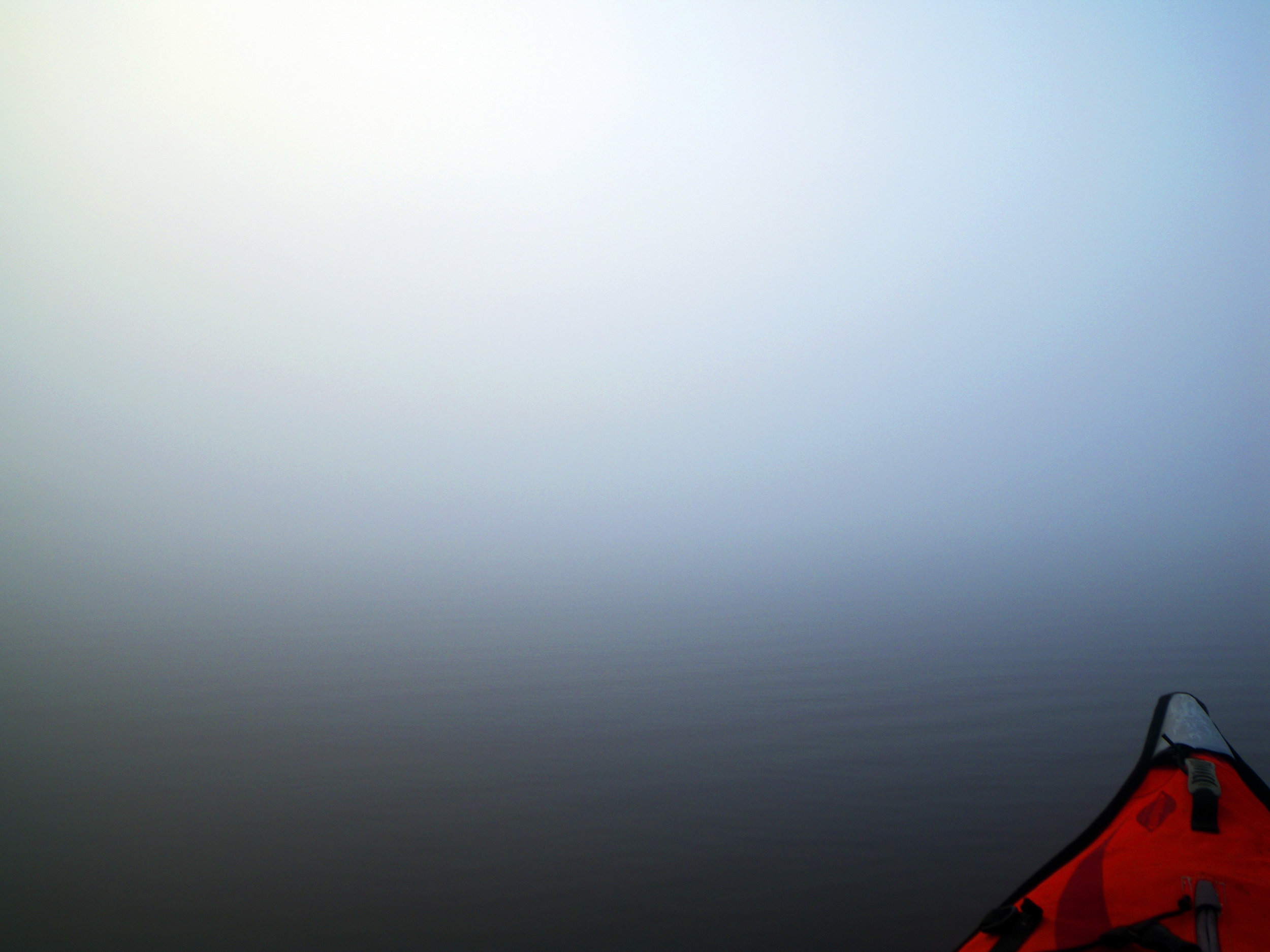
The next morning before dawn as we creased the glassy surface of Lake Kioshkokwi with our kayaks there were almost no clues to what wildlife might be surrounding us. The fish that had been breaking the surface the evening before were now still. The insects had been subdued by the chill. With a heavy fog settled on the lake there was little chance of seeing anything. As we paddled further onto the lake even the shoreline became obscured and the sun was not yet high enough to penetrate the mist. In this dim light the world became an undifferentiated landscape of grey water blending into grey air. And it was quiet. Except for the birds. I first noticed the hammering of a woodpecker who had found a resonant tree, most likely a large long-dead snag and it sent a strong base drum beat across the water. The growing daylight brings the chorus of birdsong. My novice ear could pick out just a few, a Swainson’s thrush, the gulls. What I longed to hear was the eerie sound of the loon. Some creatures clearly evoke more mystery than others and have more spiritual power. The call of a loon on a northern lake has the impact of seeing the Milky Way after months under urban lights. Without knowing anymore than what you are immediately experiencing, you can feel vastness. We intuitively know that the heavens are much larger than our earthbound existence just as the cry of this lovely bird hits some note within us confirming that there are ancient languages beyond our imagination. For innumerable summers these birds have returned north to find a lake to grace with their call. We knew they were out there sequestered nearby on some fogbound bay. We had seen a mated pair on their evening rounds the two previous nights. They cruised past our campsite keeping each other company as they dove for fish. Their calls had put us to bed. They were silent this morning but at least we were confident they were out there beyond our vision. Theirs is a sound that no matter how many times you’ve heard it you’ll long to hear it just once more.

Ruffed Grouse sound: http://www.allaboutbirds.org/guide/Ruffed_Grouse/sounds

Common Loon Sound: http://www.allaboutbirds.org/guide/common_loon/sounds
Lake Kioshkokwi - Photo By Tim GillerLake Kioshkokwi - Photo By Tim Giller

Lake Kioshkokwi – Photo By Tim Giller

Obscured

If I didn’t know any better I’d say that we’d just heard somebody trying to start a lawnmower. The nearest lawn must be at least 30 miles away and I couldn’t imagine anyone dragging a mower deep into this dense forest, but Canadians have their own way of doing things so who knows? An abrupt “thrufp, thrufp, thrufp” from the opposite side of the trail made Rachael jump as I got just a glimpse of some sort of wild-chicken-bird maneuvering through the impenetrable trees. Wildlife is so often experienced as that thing you know to be there but is just beyond your resolution. A sound, a footprint, scat, clues to the existence of a being that chooses to remain hidden. I could see how legends begin of creatures lurking in forests or skulking beneath waves, showing themselves only long enough to leave a startled impression in our minds that may grow with each retelling into a full scale beast worthy of a folk tale. We strained our eyes through trees too closely packed to venture into but this creature had vanished, blending into its surroundings leaving us to our imaginations. Later research led us to the Ruffed Grouse and the motor sound was a male drumming its wings to impress the ladies. I was kind of impressed myself.

Frog, Algonquin P.P. Ontario - Photo by Tim Giller

Frog, Algonquin P.P. Ontario – Photo by Tim Giller

Algonquin Provincial Park in Ontario has no doubt produced many wildlife encounters for its visitors. It’s a place where the dark spruces of the northern boreal forest blend with the deciduous eastern hardwoods in a thick mosaic of trees. These trees surround an extensive network of lakes and streams most commonly traversed by canoe, a classic Canadian wildland that supports moose, black bear, beaver and hundreds of wolves. It also has some smaller creatures and we could hear them. We kept seeing them out of the corner of our eyes leaping into the trailside ponds as we walked by. We had to be looking right at them. They would jump from under our noses just when we thought nothing was there. I was just looking at that spot. Getting down on our hands and knees, peering into the pond at mysterious gelatinous egg sacks one swam right up to me. This bronze frog and I looked into each others eyes for just a moment before it realized its mistake and dove away, hiding under the leaf litter which covered the sandy bottom of this tea colored pool. I learned what we were looking for and now I could spot them. I had to attempt their game of being very still first and then scanning the water’s edge. It’s a game I couldn’t win but I was able to score a few points. They were literally a still as stones, blending in with skin the texture of moist rock and the color of wet leaves, holding their amphibian breath.

Lake Kioshkokwi - Photo By Tim Giller

Lake Kioshkokwi – Photo By Tim Giller

The next morning before dawn as we creased the glassy surface of Lake Kioshkokwi with our kayaks there were almost no clues to what wildlife might be surrounding us. The fish that had been breaking the surface the evening before were now still. The insects had been subdued by the chill. With a heavy fog settled on the lake there was little chance of seeing anything. As we paddled further onto the lake even the shoreline became obscured and the sun was not yet high enough to penetrate the mist. In this dim light the world became an undifferentiated landscape of grey water blending into grey air. And it was quiet. Except for the birds. I first noticed the hammering of a woodpecker who had found a resonant tree, most likely a large long-dead snag and it sent a strong base drum beat across the water. The growing daylight brings the chorus of birdsong. My novice ear could pick out just a few, a Swainson’s thrush, the gulls. What I longed to hear was the eerie sound of the loon. Some creatures clearly evoke more mystery than others and have more spiritual power. The call of a loon on a northern lake has the impact of seeing the Milky Way after months under urban lights. Without knowing anymore than what you are immediately experiencing, you can feel vastness. We intuitively know that the heavens are much larger than our earthbound existence just as the cry of this lovely bird hits some note within us confirming that there are ancient languages beyond our imagination. For innumerable summers these birds have returned north to find a lake to grace with their call. We knew they were out there sequestered nearby on some fogbound bay. We had seen a mated pair on their evening rounds the two previous nights. They cruised past our campsite keeping each other company as they dove for fish. Their calls had put us to bed. They were silent this morning but at least we were confident they were out there beyond our vision. Theirs is a sound that no matter how many times you’ve heard it you’ll long to hear it just once more.

Ruffed Grouse sound: http://www.allaboutbirds.org/guide/Ruffed_Grouse/sounds

Common Loon Sound: http://www.allaboutbirds.org/guide/common_loon/sounds
Lake Kioshkokwi - Photo By Tim Giller

Lake Kioshkokwi – Photo By Tim Giller

Busy Bodies

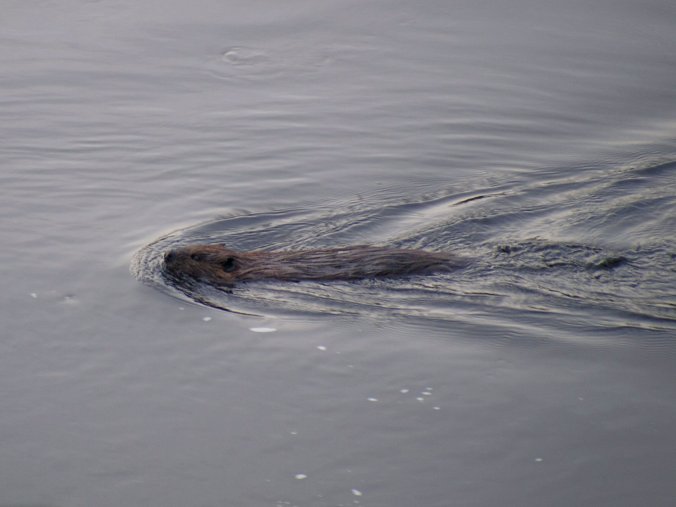
Photo by Tim GillerPhoto by Tim Giller

Photo by Tim Giller

By the time my eyes landed on the movement in the water that Tim had pointed to it slapped it’s tail and dove under the water. After a few minutes the head reemerged and kept it’s course up the chocolate milk water of the Green River in Canyonlands National Park. We were out for a five day float and, ignorantly, a beaver is the last wild animal I had expected to see in this expanse of desert. Previously, I had tried in vain to see the beaver family that had taken up residence in downtown Martinez, CA. They caused quite a stir one year when the flooding from their dam almost reached the local shops’ doorways. After we learned that there was a very active little beaver near Sagehen Creek Field Station, where we camped for our California Naturalists class last summer, Tim and I made a point to get out to the valley early before breakfast to see if we could catch a glimpse before they burrowed in for the day. It was easy enough to find the fresh cut stumps along the stream’s path, the many willow branches that had fallen off his haul while being dragged towards the beaver’s lodges or dams and the watery game trails meant to keep him safe in the water where they can keep a steady 6-mph clip with their oil slicked fur and webbed back feet. Once we felt confident that we had found the most active spot we settled in for a quiet wait to no avail. The next morning we aimed even earlier and copped a squat. For a brief fleeting moment we saw a little brown head skimming the water before it dove back down.

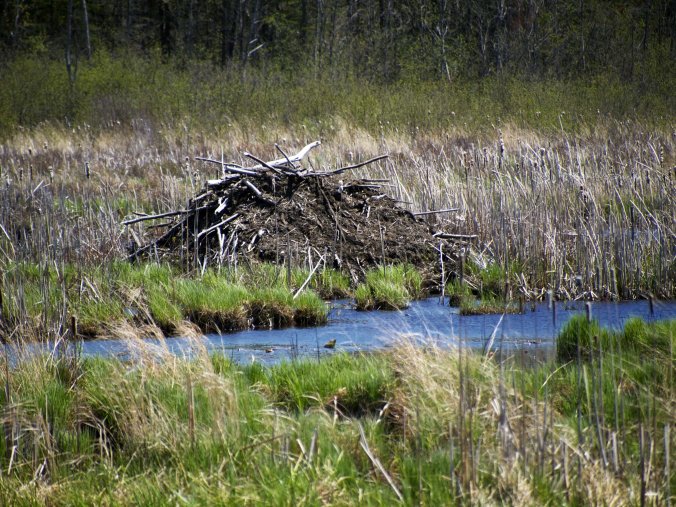
DamDam

Dam

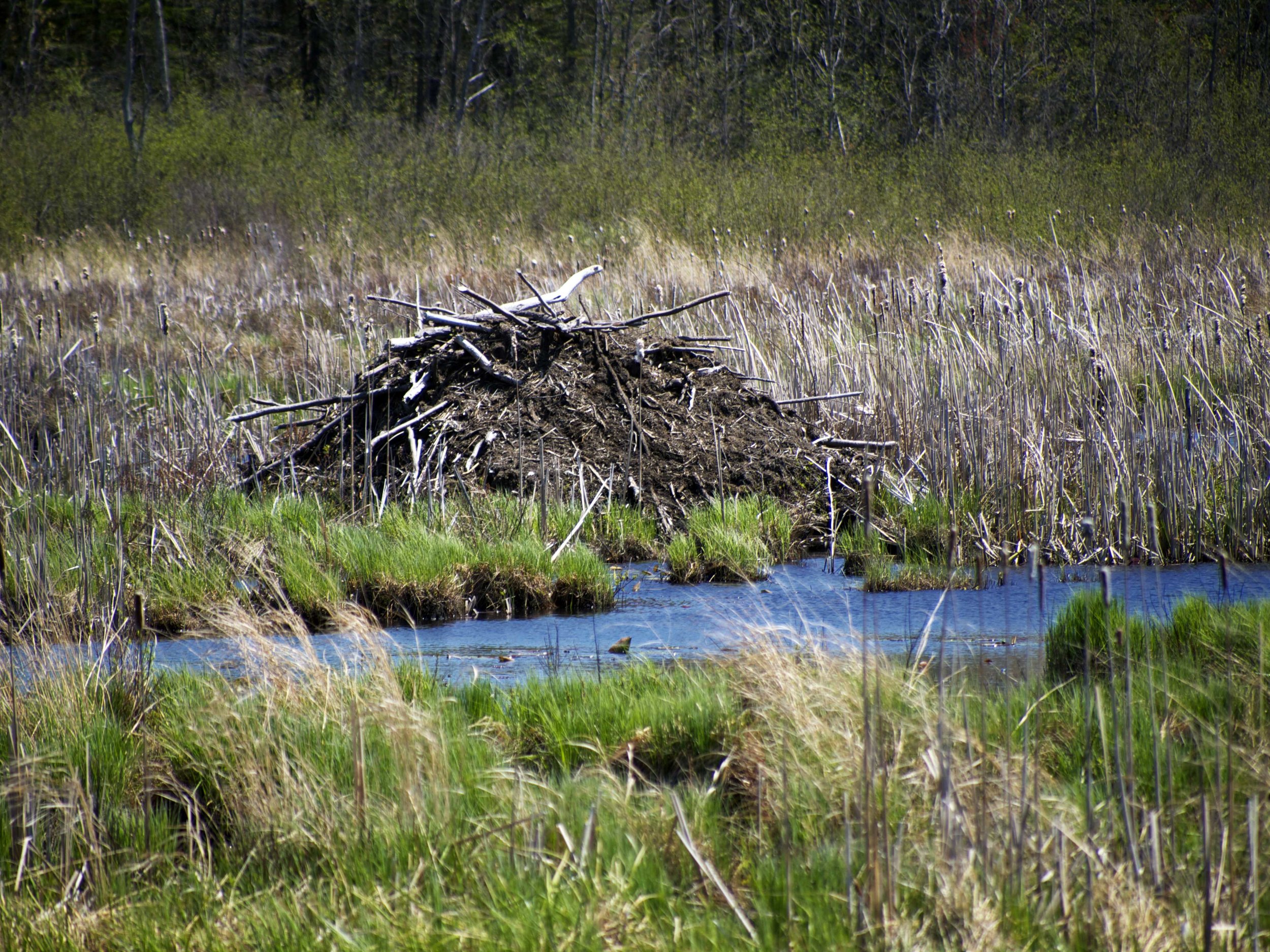
Beavers are perfectly designed for their watery life with clear membranes to protect their eyes and valves to close their ears and nostrils. They also have skin flaps to seal their mouths around their front incisors so that they can still carry branches while under water. Amazingly they can stay under water for a full 15 minutes before needing to come up for air. Vigilant and accomplished engineers the beaver builds dams (some up to 100ft long!) along streams and rivers to slow the water for both protecting the lodge down river and to mellow and deepen the water for better swimming. Beavers play a vital role in creating meadows by this backing up of the water. The meadows keep the trees from filling in or it kills them off by drowning them out. The meadows and pools are habitat for insects and aquatic plants. Fish and frogs eat the insects, moose and fowl eat the aquatic plants. The fish and frogs are also a food source for predatory birds. The lodges themselves are masterfully designed usually with two water entrances not only for them to come and go safely but it makes for a good swimming hole for baby beavers, who take to the water within an hour of being born. Having a second hole makes for an easy exit should the beaver’s #1 predator, the river otter, make an appearance.

Like many thick furred animals they were hunted in astounding numbers during a time when beaver fur was quite the fashion. Beavers are a great come back story in that, with protection and reintroduction, they have managed since the 1940’s to fill back in their original North American range. To the point where some consider them a pest of sorts. The range is massive. They can be found in almost all of Canada and the US except most of Florida, Nevada, Southern California and the tree-less tundra of the north.

Most likely because of their initial abundance the beaver started showing up on everything from the first Canadian coat of arms to magazine titles. In 1975 Canada bestowed the beaver the honor of becoming an official symbol of their sovereignty. Driving along highway 17 from Ottawa to Sault Ste Marie we point out a lodge to each other every km or so. Thankfully we didn’t see any roadside, if you catch my drift. Walking along the River Aux Sable from our campsite at Chutes Provincial Park I catch a swirl of brown fur in the water below the hill we’re standing on. Tim catches it at the same time and we still our pace and sort of hide amongst the trees hoping it’ll pop back up with us unnoticed. Sure enough after a few patient minutes there’s our beaver chug, chug, chugging up the river. One could easily see his little paddle slipping slightly from side to side to steer his course. At one point he moves past a branch and then doubles back to check it out before moving on again. It seemed it was more the effort of trying to avoid notice while moving up river and not our “camouflaging” in the trees that had him paying us no nevermind. He didn’t even seem fazed much by the ruckus of the folks camped out in the group camp, there to enjoy celebrating the “May long weekend” rather than really take in the nature swimming right past them. After several minutes we moved on not wanting to stress him out, after all his night was just beginning and as beaver nights go he surely had a lot of work to do.

Beavers are still trapped, mostly for a food source. Those that know say the meat is tasty and the paddle is considered a delicacy. I have a lot of respect for those that are able to feed themselves off what the land provides them, and make use of all the parts. Still though when I found myself running my fingers through a magnificently thick and soft beaver pelt hung up for sale in a small town supply store in the U.P. the very next day, I couldn’t help but feel conflicted about the life that once was. I guess I have an extra soft spot for nature’s engineers.

Busy Bodies

Photo by Tim Giller

Photo by Tim Giller

By the time my eyes landed on the movement in the water that Tim had pointed to it slapped it’s tail and dove under the water. After a few minutes the head reemerged and kept it’s course up the chocolate milk water of the Green River in Canyonlands National Park. We were out for a five day float and, ignorantly, a beaver is the last wild animal I had expected to see in this expanse of desert. Previously, I had tried in vain to see the beaver family that had taken up residence in downtown Martinez, CA. They caused quite a stir one year when the flooding from their dam almost reached the local shops’ doorways. After we learned that there was a very active little beaver near Sagehen Creek Field Station, where we camped for our California Naturalists class last summer, Tim and I made a point to get out to the valley early before breakfast to see if we could catch a glimpse before they burrowed in for the day. It was easy enough to find the fresh cut stumps along the stream’s path, the many willow branches that had fallen off his haul while being dragged towards the beaver’s lodges or dams and the watery game trails meant to keep him safe in the water where they can keep a steady 6-mph clip with their oil slicked fur and webbed back feet. Once we felt confident that we had found the most active spot we settled in for a quiet wait to no avail. The next morning we aimed even earlier and copped a squat. For a brief fleeting moment we saw a little brown head skimming the water before it dove back down.

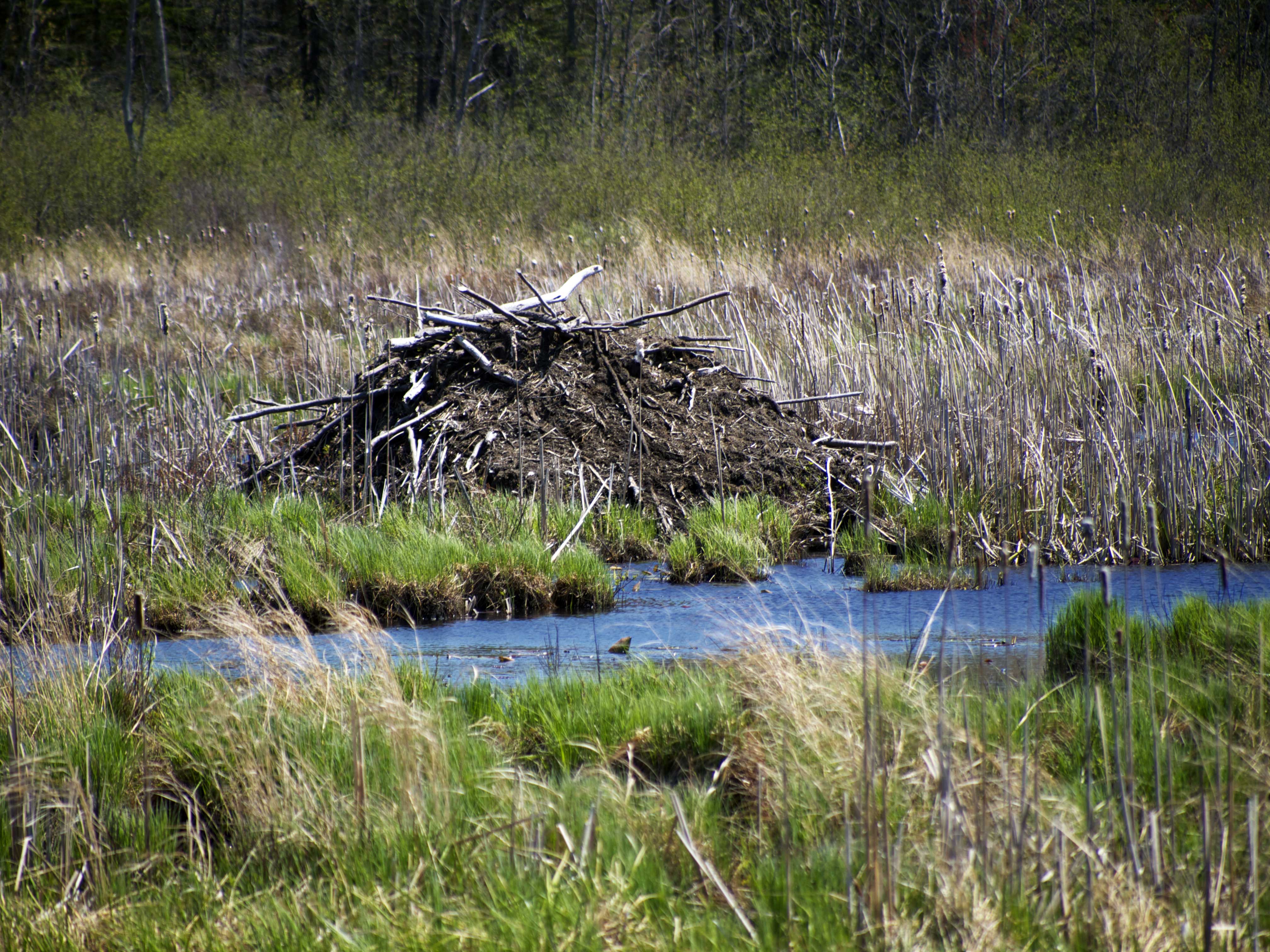
Dam

Beaver Lodge – By Tim Giller

Beavers are perfectly designed for their watery life with clear membranes to protect their eyes and valves to close their ears and nostrils. They also have skin flaps to seal their mouths around their front incisors so that they can still carry branches while under water. Amazingly they can stay under water for a full 15 minutes before needing to come up for air. Vigilant and accomplished engineers the beaver builds dams (some up to 100ft long!) along streams and rivers to slow the water for both protecting the lodge down river and to mellow and deepen the water for better swimming. Beavers play a vital role in creating meadows by this backing up of the water. The meadows keep the trees from filling in or it kills them off by drowning them out. The meadows and pools are habitat for insects and aquatic plants. Fish and frogs eat the insects, moose and fowl eat the aquatic plants. The fish and frogs are also a food source for predatory birds. The lodges themselves are masterfully designed usually with two water entrances not only for them to come and go safely but it makes for a good swimming hole for baby beavers, who take to the water within an hour of being born. Having a second hole makes for an easy exit should the beaver’s #1 predator, the river otter, make an appearance.

Like many thick furred animals they were hunted in astounding numbers during a time when beaver fur was quite the fashion. Beavers are a great come back story in that, with protection and reintroduction, they have managed since the 1940’s to fill back in their original North American range. To the point where some consider them a pest of sorts. The range is massive. They can be found in almost all of Canada and the US except most of Florida, Nevada, Southern California and the tree-less tundra of the north.

Most likely because of their initial abundance the beaver started showing up on everything from the first Canadian coat of arms to magazine titles. In 1975 Canada bestowed the beaver the honor of becoming an official symbol of their sovereignty. Driving along highway 17 from Ottawa to Sault Ste Marie we point out a lodge to each other every km or so. Thankfully we didn’t see any roadside, if you catch my drift. Walking along the River Aux Sable from our campsite at Chutes Provincial Park I catch a swirl of brown fur in the water below the hill we’re standing on. Tim catches it at the same time and we still our pace and sort of hide amongst the trees hoping it’ll pop back up with us unnoticed. Sure enough after a few patient minutes there’s our beaver chug, chug, chugging up the river. One could easily see his little paddle slipping slightly from side to side to steer his course. At one point he moves past a branch and then doubles back to check it out before moving on again. It seemed it was more the effort of trying to avoid notice while moving up river and not our “camouflaging” in the trees that had him paying us no nevermind. He didn’t even seem fazed much by the ruckus of the folks camped out in the group camp, there to enjoy celebrating the “May long weekend” rather than really take in the nature swimming right past them. After several minutes we moved on not wanting to stress him out, after all his night was just beginning and as beaver nights go he surely had a lot of work to do.

Beavers are still trapped, mostly for a food source. Those that know say the meat is tasty and the paddle is considered a delicacy. I have a lot of respect for those that are able to feed themselves off what the land provides them, and make use of all the parts. Still though when I found myself running my fingers through a magnificently thick and soft beaver pelt hung up for sale in a small town supply store in the U.P. the very next day, I couldn’t help but feel conflicted about the life that once was. I guess I have an extra soft spot for nature’s engineers.