Hail Cocktail Party

Spanish Peaks, CO - Photo by Tim GillerSpanish Peaks, CO - Photo by Tim Giller

Spanish Peaks, CO – Photo by Tim Giller

Leaving the Pawnee Grasslands we were listing to starboard because we had a stiff crosswind from the southeast. As we approached Fort Collins we met up with a strong and gusty headwind out of the west pushing down off the Rockies onto the prairie. These converging winds whipped up dust devils and stench across cattle feedlots forcing me to grip the wheel more tightly and downshift. Our little box on wheels can really get pushed around. Ominous thunderclouds dominated the sky and we had entered “Hail Alley”, not to be confused with the nearby “Tornado Alley”. This is a tough neighborhood.

Badlands National Park - Photo by Tim GillerBadlands National Park - Photo by Tim Giller

Badlands National Park – Photo by Tim Giller

Our ground level experience is a smaller scale representation of bigger phenomena and some of the most dynamic weather on the planet. This nice hot day on the prairie was heating up some moist air blown up from the Gulf of Mexico. As this rises to meet cold dry air rushing off the western mountains any and all chaotic thunderstorm participants can show up. Moisture rises into colder upper air condensing and building into massive expanding 40,000 ft towers of cumulonimbus thunderheads. Sheets of rain can develop, often as ethereal virga curtains across a horizon so dry that they evaporate before reaching the ground. If updraft winds are steady and strong the condensing water is held aloft in subfreezing air forming hailstones. When that vertical wind holds at over 100 mph those stones can become baseballs or bigger before they outgrow that wind and fall disastrously to earth. All this water changing states and moving through the clouds creates huge amounts of static electricity and brings some loud and flashy cohorts to the party, lightning shortly followed by his boisterous partner thunder. These are all overshadowed if a tornado shows up. The high speed winds meeting at opposing angles creates a log roll of air that when tilted vertically makes a force so devastating that we have yet contrive a sturdy enough device to accurately measure it.

With these characters in mind, we were grateful to have a cozy home to arrive at, though Nancy cautioned us that her property had twice been hit by lightning with some unpleasant consequences. I decided to go out and cover our solar panels in case those consequences included icy foul balls from the sky. Curious about the what the meteorologists had to say about all this we cut on the TV to find that the local station had preempted everything to show one of their storm-chasers tracking an active supercell a couple hours south of us. We watched live as a dark grey funnel dropped to the ground forming a tornado as our videographer wisely put his vehicle in reverse to find safer ground. The drama continued for over an hour and thankfully no one was harmed. Shutting off the television didn’t end the show with lightning flashes brightening the darkened house into the wee hours.

Hailstones, Fort Collins, CO - Photo by Tim GillerHailstones, Fort Collins, CO - Photo by Tim Giller

Hailstones, Fort Collins, CO – Photo by Tim Giller

The morning broke to another crisp clear Colorado day. However it was warm and that brings the key player in all this. Heat is the driver of this atmospheric activity and as the wide prairie bakes in the sun that energy inspires another round of afternoon puffy clouds. I had been thinking about how the previous day all we got was wet and that maybe I should uncover the panels and put the tarp away. I guess I hadn’t noticed that the puffy clouds had brought some friends and that they had all grown up into puffy white mountains. No sooner had I folded back most of the protective covering than I heard the first metallic “clinks”. Before I could confirm that sound, something cold and hard bounced off the back of my head. I got the tarp back on and was under the cover of Nancy’s garage just in time enjoy the chaos of a hundred thousand frozen nickels and quarters pummeling the neighborhood, wild sounds of hail impacting metal, wood, concrete and asphalt, bouncing and rebounding. As they began to collect it occurred to me that this is a lot of underutilized ice. So I got a glass, a little gin and a splash of bitters.  How often does one get a chance to have a cocktail served over natural ice cubes from the gods?
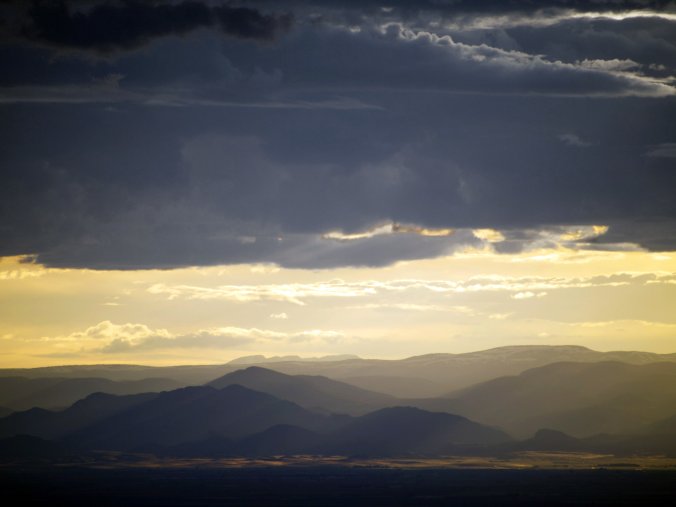
San Luis Valley, CO - Photo by Tim GillerSan Luis Valley, CO - Photo by Tim Giller

San Luis Valley, CO – Photo by Tim Giller

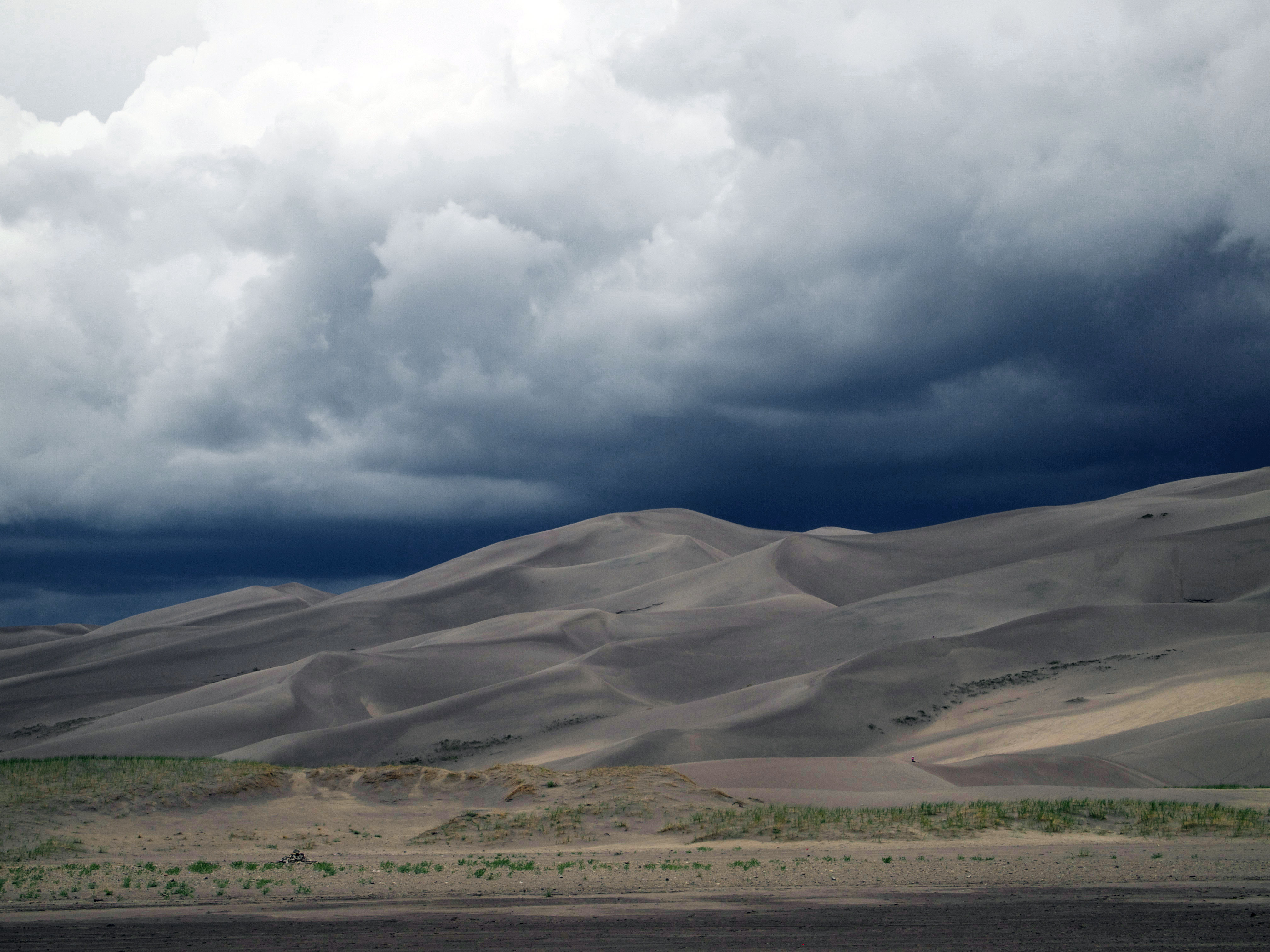
Great Sand Dunes National Park - Photo by Tim GillerGreat Sand Dunes National Park - Photo by Tim Giller

Great Sand Dunes National Park – Photo by Tim Giller

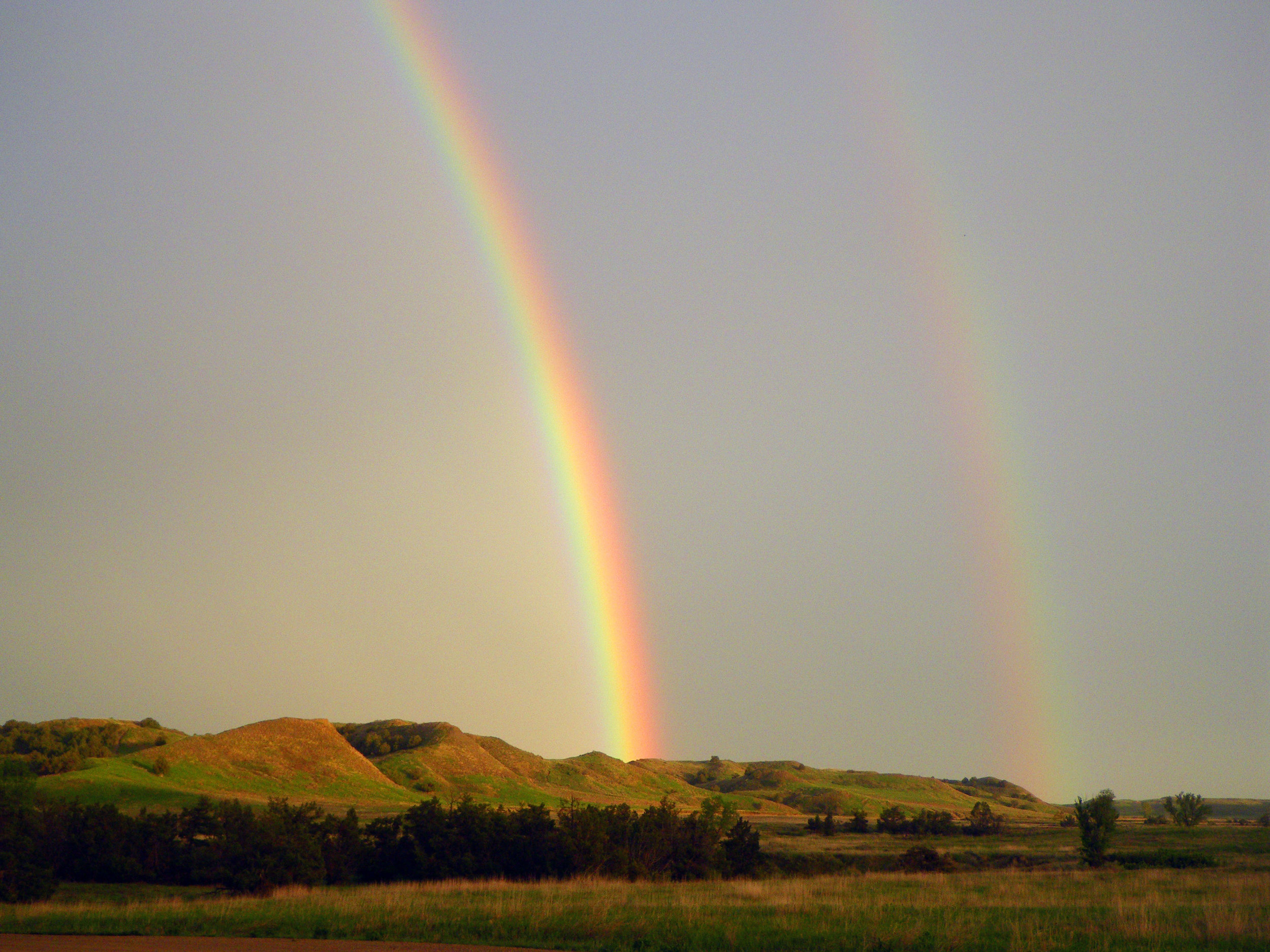
Springtime in the Rockies means that this is an almost daily cycle. Each afternoon mythical castles of white clouds are built up then blown away overnight. Days later in the wide San Luis valley we had perhaps the best venue for the performance. Sitting in a hot spring on the north end of the valley our stage was 70 miles wide framed by the San Juan Mountains on stage right, the Sangre de Cristo Range on the left. Fast moving thunderheads extending from the valley rim to the Jet Stream cruised across the landscape, their dark underbellies shooting white thunderbolts to the ground every few miles, alternating with the strobing purple of interior cloud lightning. With the sun dropping behind the mountains the towering clouds remain illuminated by the last rays of the day. Billowing folds of pastel pink and peach and constantly morphing domes of richer oranges and reds. All this drama could make you forget that there is still another quiet member of our party. A rainbow must always arrive as a surprise guest, pleasantly catching the corner of our eye as the last low rays of sun sneak under the clouds of a darkening sky.

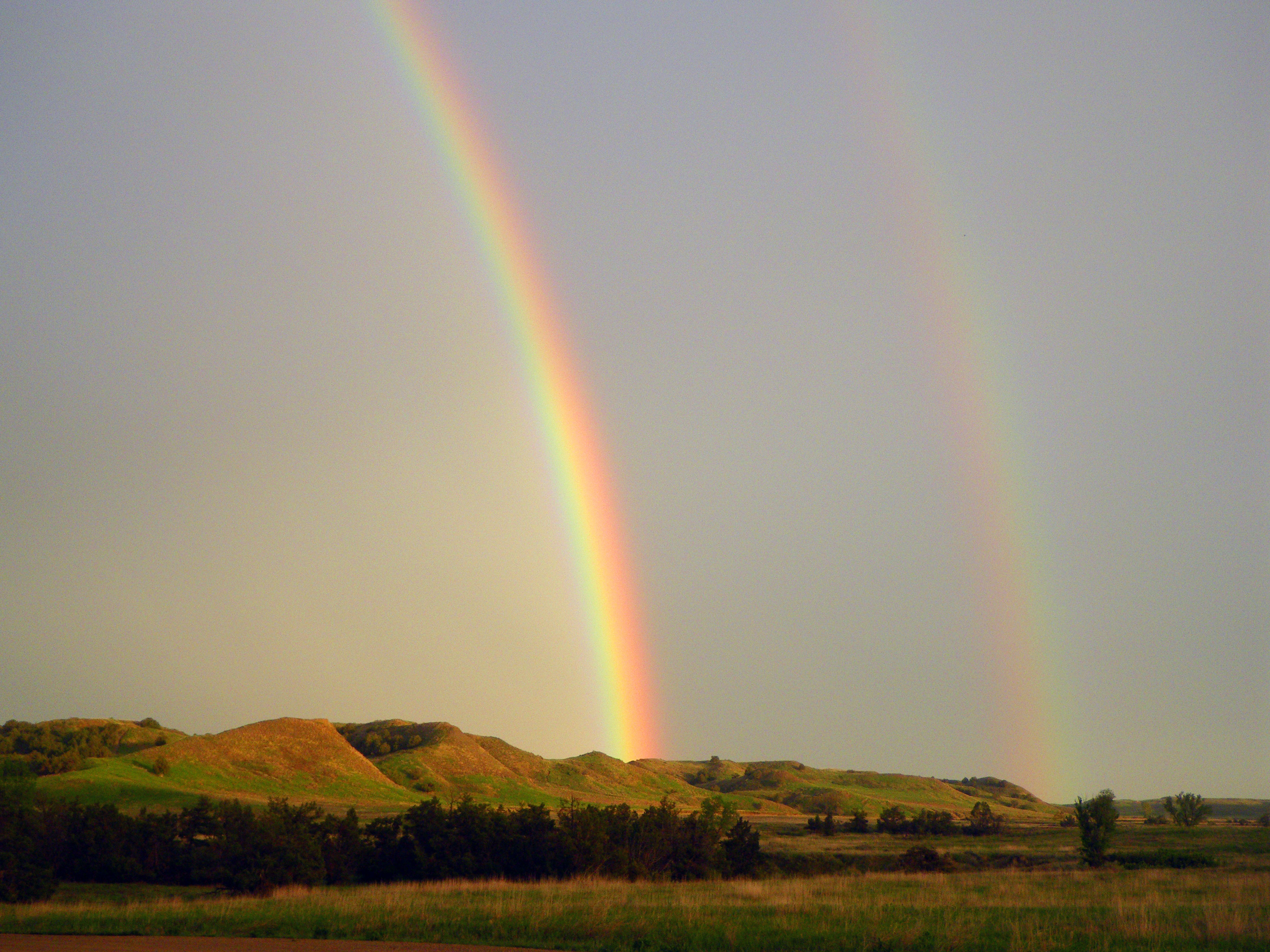
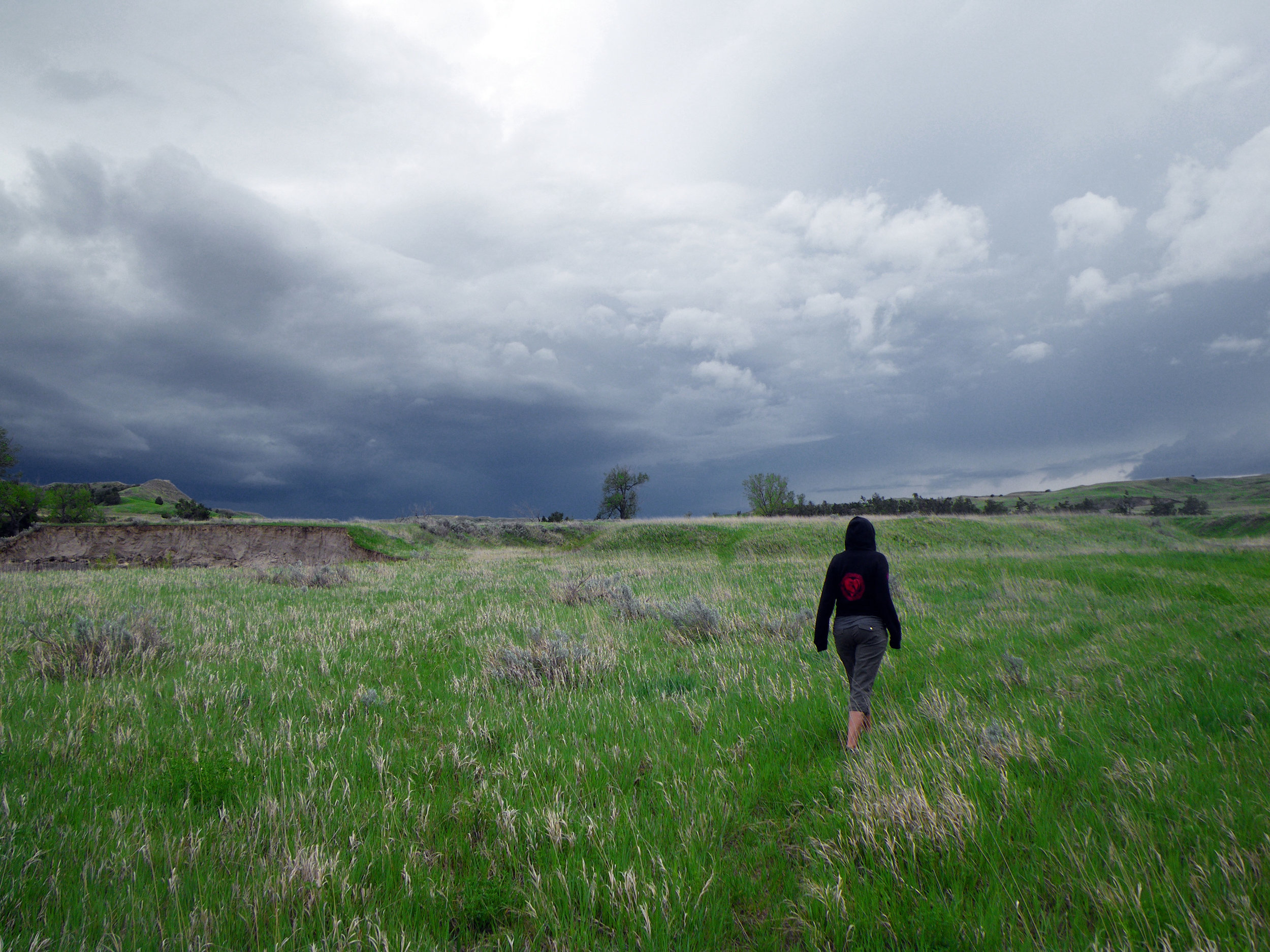
Badlands National Park, SD - Photo by Tim GillerBadlands National Park, SD - Photo by Tim Giller

Badlands National Park, SD – Photo by Tim Giller

Hail Cocktail Party

Spanish Peaks, CO - Photo by Tim Giller

Spanish Peaks, CO – Photo by Tim Giller

Leaving the Pawnee Grasslands we were listing to starboard because we had a stiff crosswind from the southeast. As we approached Fort Collins we met up with a strong and gusty headwind out of the west pushing down off the Rockies onto the prairie. These converging winds whipped up dust devils and stench across cattle feedlots forcing me to grip the wheel more tightly and downshift. Our little box on wheels can really get pushed around. Ominous thunderclouds dominated the sky and we had entered “Hail Alley”, not to be confused with the nearby “Tornado Alley”. This is a tough neighborhood.

Badlands National Park - Photo by Tim Giller

Badlands National Park – Photo by Tim Giller

Our ground level experience is a smaller scale representation of bigger phenomena and some of the most dynamic weather on the planet. This nice hot day on the prairie was heating up some moist air blown up from the Gulf of Mexico. As this rises to meet cold dry air rushing off the western mountains any and all chaotic thunderstorm participants can show up. Moisture rises into colder upper air condensing and building into massive expanding 40,000 ft towers of cumulonimbus thunderheads. Sheets of rain can develop, often as ethereal virga curtains across a horizon so dry that they evaporate before reaching the ground. If updraft winds are steady and strong the condensing water is held aloft in subfreezing air forming hailstones. When that vertical wind holds at over 100 mph those stones can become baseballs or bigger before they outgrow that wind and fall disastrously to earth. All this water changing states and moving through the clouds creates huge amounts of static electricity and brings some loud and flashy cohorts to the party, lightning shortly followed by his boisterous partner thunder. These are all overshadowed if a tornado shows up. The high speed winds meeting at opposing angles creates a log roll of air that when tilted vertically makes a force so devastating that we have yet contrive a sturdy enough device to accurately measure it.

With these characters in mind, we were grateful to have a cozy home to arrive at, though Nancy cautioned us that her property had twice been hit by lightning with some unpleasant consequences. I decided to go out and cover our solar panels in case those consequences included icy foul balls from the sky. Curious about the what the meteorologists had to say about all this we cut on the TV to find that the local station had preempted everything to show one of their storm-chasers tracking an active supercell a couple hours south of us. We watched live as a dark grey funnel dropped to the ground forming a tornado as our videographer wisely put his vehicle in reverse to find safer ground. The drama continued for over an hour and thankfully no one was harmed. Shutting off the television didn’t end the show with lightning flashes brightening the darkened house into the wee hours.


Hailstones, Fort Collins, CO - Photo by Tim Giller

Hailstones, Fort Collins, CO – Photo by Tim Giller

The morning broke to another crisp clear Colorado day. However it was warm and that brings the key player in all this. Heat is the driver of this atmospheric activity and as the wide prairie bakes in the sun that energy inspires another round of afternoon puffy clouds. I had been thinking about how the previous day all we got was wet and that maybe I should uncover the panels and put the tarp away. I guess I hadn’t noticed that the puffy clouds had brought some friends and that they had all grown up into puffy white mountains. No sooner had I folded back most of the protective covering than I heard the first metallic “clinks”. Before I could confirm that sound, something cold and hard bounced off the back of my head. I got the tarp back on and was under the cover of Nancy’s garage just in time enjoy the chaos of a hundred thousand frozen nickels and quarters pummeling the neighborhood, wild sounds of hail impacting metal, wood, concrete and asphalt, bouncing and rebounding. As they began to collect it occurred to me that this is a lot of underutilized ice. So I got a glass, a little gin and a splash of bitters.  How often does one get a chance to have a cocktail served over natural ice cubes from the gods?

San Luis Valley, CO - Photo by Tim Giller

San Luis Valley, CO – Photo by Tim Giller

Great Sand Dunes National Park - Photo by Tim Giller

Great Sand Dunes National Park – Photo by Tim Giller

Springtime in the Rockies means that this is an almost daily cycle. Each afternoon mythical castles of white clouds are built up then blown away overnight. Days later in the wide San Luis valley we had perhaps the best venue for the performance. Sitting in a hot spring on the north end of the valley our stage was 70 miles wide framed by the San Juan Mountains on stage right, the Sangre de Cristo Range on the left. Fast moving thunderheads extending from the valley rim to the Jet Stream cruised across the landscape, their dark underbellies shooting white thunderbolts to the ground every few miles, alternating with the strobing purple of interior cloud lightning. With the sun dropping behind the mountains the towering clouds remain illuminated by the last rays of the day. Billowing folds of pastel pink and peach and constantly morphing domes of richer oranges and reds. All this drama could make you forget that there is still another quiet member of our party. A rainbow must always arrive as a surprise guest, pleasantly catching the corner of our eye as the last low rays of sun sneak under the clouds of a darkening sky.
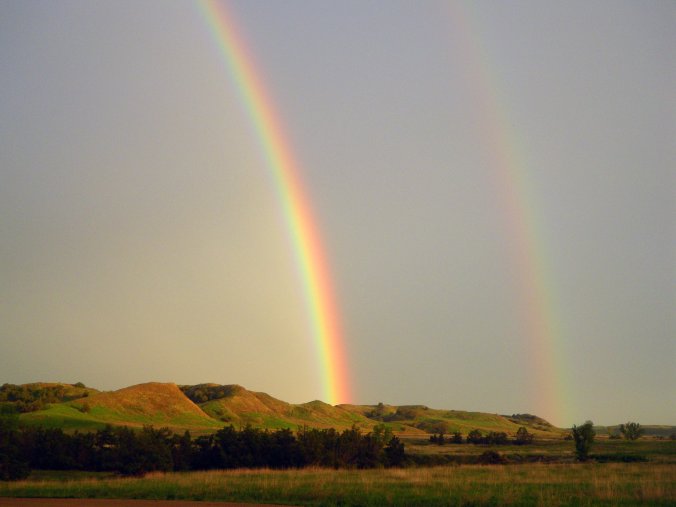
Badlands National Park, SD - Photo by Tim Giller

Badlands National Park, SD – Photo by Tim Giller


Think Twice Before Following a Bison Trail

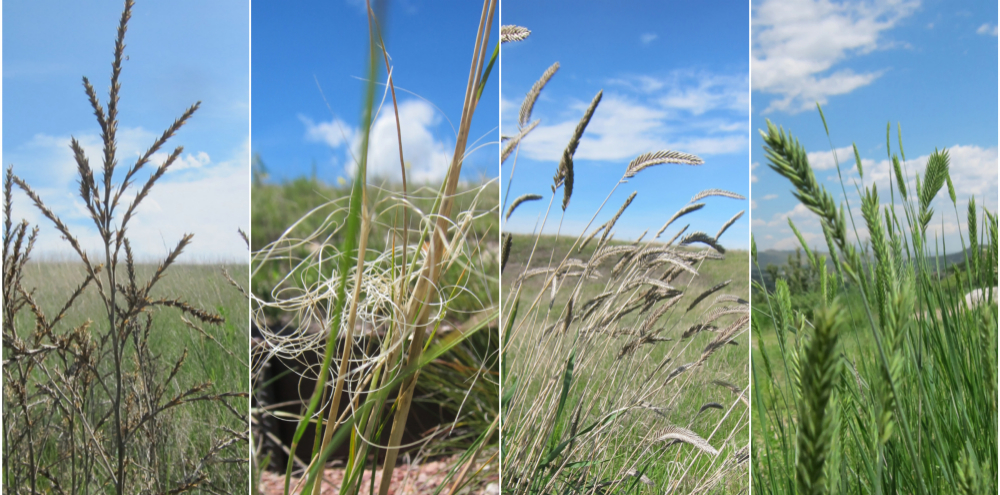
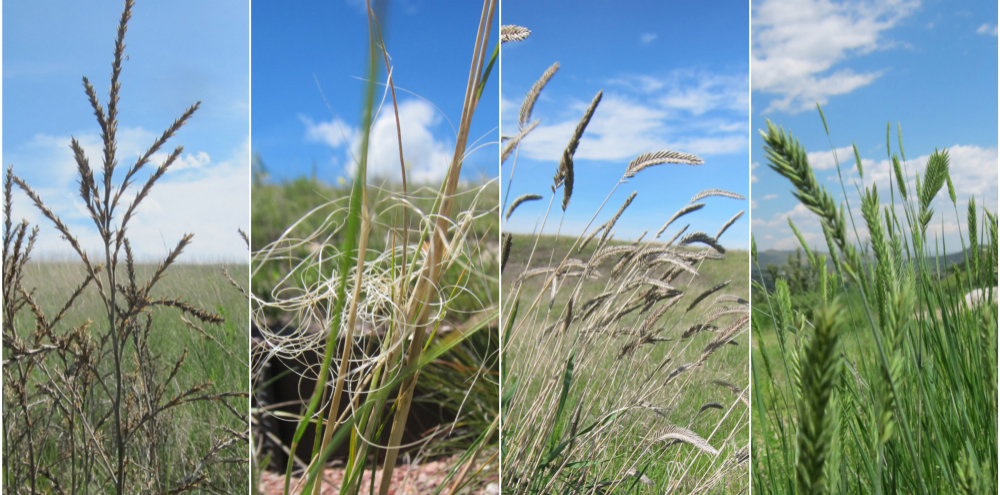
IMG_3906_Fotor_CollageIMG_3906_Fotor_Collage

IMG_3906_Fotor_Collage

There are images in the American psyche that are as iconic as apple pie and baseball. The image of a plains indian in the throws of a bison hunt and the image of the Great Plains homesteader squinting their eyes in a sunny hundred mile stare bracing themselves against the unfettered prairie winds. These images are as gone as the prairie itself. As to why things are the way they are here in central United States is as complex as the history is deep. Our short visit to and through the landscapes of the grasslands that remain could not do it justice in this format. I will say that in the face of all that is ecologically and politically wrong magical moments can still happen. I want to share two such moments.
In Sheyenne National Grasslands in the south east corner of North Dakota on an eight mile loop trail around the oak savannah of Hankinson Hills the sight of about ten white pelicans in their typical v formation caught our attention. Being the large and strong winged birds they are we could hear the movement of the air as they went overhead. Just about the time the squadron passed us they began to break formation and swirl and dance up through the air. “What are they doing?”, I whispered. While it’s common for pelicans to ride the thermals I had never seen this before and something about the beauty of these large birds gliding above made me gulp back tears.

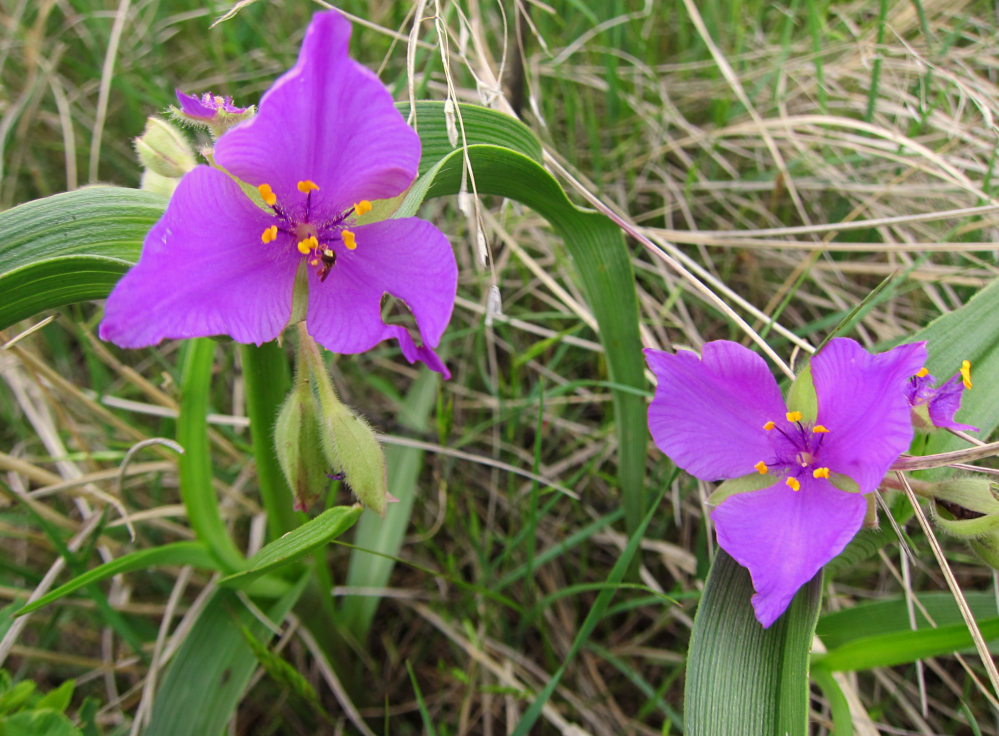
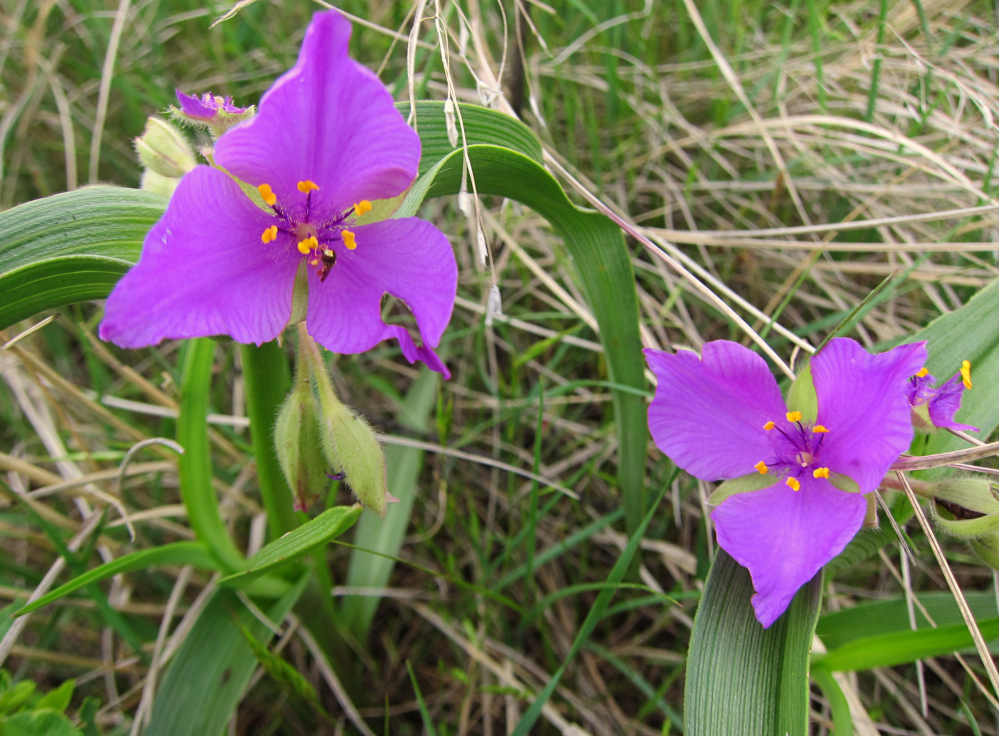
Purple FlowersPurple Flowers

Purple Flowers

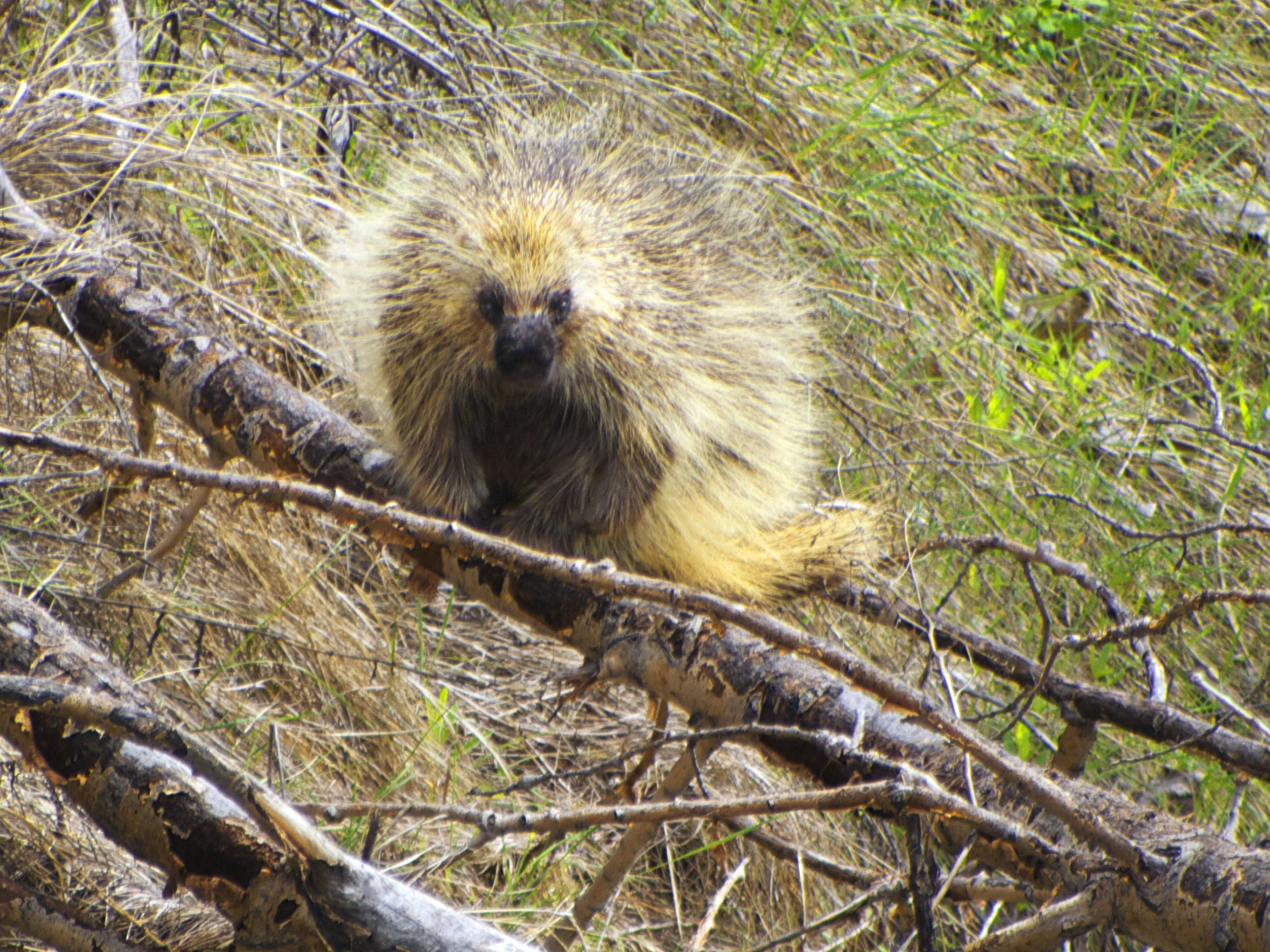
After Sheyenne we headed to Badlands National Park in South Dakota. There is the iconic badlands to drive and hike through but there is also the wilderness area to the west and two other units that are within the Pine Ridge reservation to the south. Surrounding much of the park otherwise is the Buffalo Gap National Grasslands. I’ve wanted to visit Badlands ever since I saw a picture of the colorful sandstone hills that give them their name. The beauty of the colors in the rocks did not disappoint but what I really fell in love with was found west of that rugged terrain in the Sage Creek Wilderness area of the park. Life’s a bit more green over there this time of year. Within the park one is free to wander about as they wish (just bring in all your own water). After a stormy afternoon and morning watching the male Bison roam about the campground area munching grass the sky calmed and we set out on a walkabout to see what we could see. We set out in an “as the crow flies” fashion for some hills in the distance that looked to have some promising views. We quickly learned that this land belies not just it’s true topography but it’s filled with life. As we walked crickets jumped away from our feet the way water moves in a stream as you cross it, a grasshopper trying to avoid us managed to jump right into Tim with loud thwap, while avoiding bison chips we also did our best to avoid crushing all the wildflowers. When we found ourselves looking 20 feet down to the stream below we decided to try going up the hill this time since downhill last time had us crossing a few streams. As we walked up to the bend in the creek we saw a porcupine that seemed to also be out enjoying the finally shining sun resting on a fallen tree trunk up above the stream. In his very porcupine fashion he moved himself up into the protection of the cottonwood leaves, even though this technically brought him closer to where we stood.

PorcupinePorcupine

Porcupine

Moving on we saw both a kingfisher and a red headed woodpecker bouncing from tree to tree along another stream. As we walked closer to our destination we thought perhaps we might fair better by following in the bison trails instead of forging our own path. After all they’ve know this landscape for thousands of years, it’s in their DNA. This took us up and over the first hill and brought us down by a group of bachelor bison and one, very large, loner. We did our best to walk between without disturbing them as we headed towards yet another stream. There we looked across the stream to see a pair of pronghorn. At first startled to see us they quickly went about their business of eating and scratching their heads on the shrubs. Very near our desired destination we went up and over the next hill. As we came up though we found ourselves looking at a few more bison, only these were ladies that were part of the maternal herd. Even though we were a good distance away they rose in alarm. This alarmed the mama on the other side of them who looked at us over hill she was on. Up her tail went. We backed up a bit but the motions we accidentally set into to play could not be stopped. With all the ladies nearby on alert a calf wondering what the fuss was about looked over the hill at us too. We briefly saw the light brown face before mama and crew decided it was time to move on. This movement set off all the ladies and calves below them and they took off in trot to higher land. Like dominoes all the females and calves not waiting to see where the danger was took off as well. We watched and heard the ground rumble as somewhere around a couple hundred females and calves tromped their way to higher ground and away from us. On the one hand I felt guilty for having disturbed their peace, on the other this sight and everything that came with it was something of a miracle. Fifty years ago there were no bison in Badlands National Park and over a hundred years before that Americans had slaughtered an estimated 30 million bison down to just a few hundred. This incredible beast would have been gone completely from the world had it not been for a few people who thought to save them from extinction and a few that kept themselves hidden in the wilds of Yellowstone.

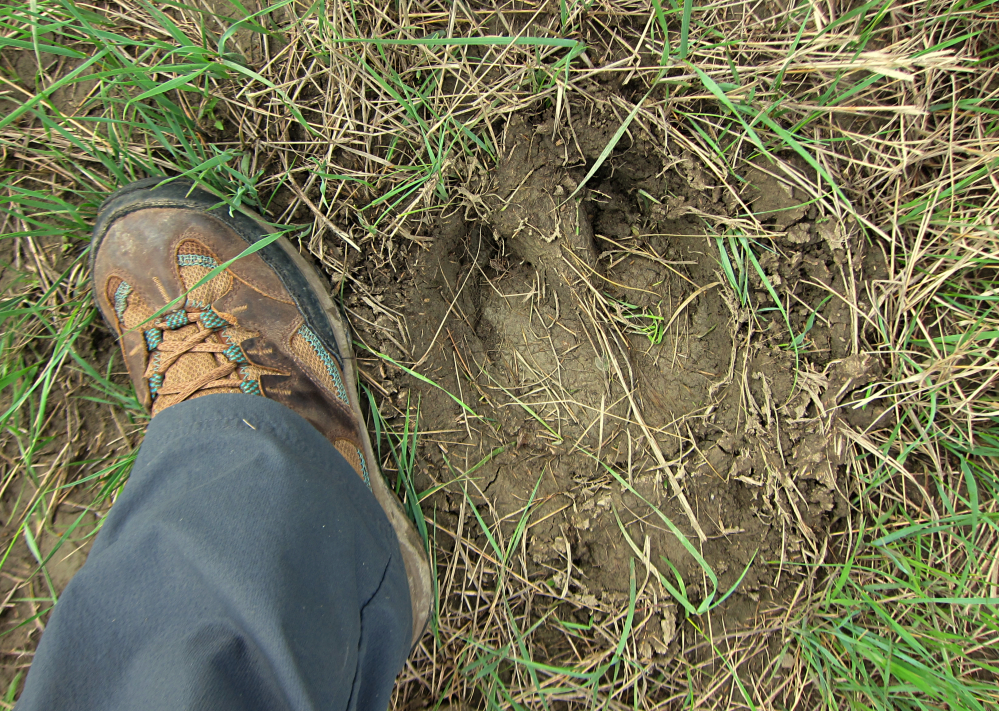
Bison HoofBison Hoof

Bison Hoof

What was once the Great Plains are now fractured, stressed, abused and incomplete grasslands spread out across the states, yet there is still life there and if you open yourself to the place it might just surprise you. Just be careful if you follow a bison trail, they’ve got big hooves to follow and you might end up seeing more than you bargained.

Think Twice Before Following a Bison Trail

IMG_3906_Fotor_CollageThere are images in the American psyche that are as iconic as apple pie and baseball. The image of a plains indian in the throws of a bison hunt and the image of the Great Plains homesteader squinting their eyes in a sunny hundred mile stare bracing themselves against the unfettered prairie winds. These images are as gone as the prairie itself. As to why things are the way they are here in central United States is as complex as the history is deep. Our short visit to and through the landscapes of the grasslands that remain could not do it justice in this format. I will say that in the face of all that is ecologically and politically wrong magical moments can still happen. I want to share two such moments.

In Sheyenne National Grasslands in the south east corner of North Dakota on an eight mile loop trail around the oak savannah of Hankinson Hills the sight of about ten white pelicans in their typical v formation caught our attention. Being the large and strong winged birds they are we could hear the movement of the air as they went overhead. Just about the time the squadron passed us they began to break formation and swirl and dance up through the air. “What are they doing?”, I whispered. While it’s common for pelicans to ride the thermals I had never seen this before and something about the beauty of these large birds gliding above made me gulp back tears.

Purple FlowersAfter Sheyenne we headed to Badlands National Park in South Dakota. There is the iconic badlands to drive and hike through but there is also the wilderness area to the west and two other units that are within the Pine Ridge reservation to the south. Surrounding much of the park otherwise is the Buffalo Gap National Grasslands. I’ve wanted to visit Badlands ever since I saw a picture of the colorful sandstone hills that give them their name. The beauty of the colors in the rocks did not disappoint but what I really fell in love with was found west of that rugged terrain in the Sage Creek Wilderness area of the park. Life’s a bit more green over there this time of year. Within the park one is free to wander about as they wish (just bring in all your own water). After a stormy afternoon and morning watching the male Bison roam about the campground area munching grass the sky calmed and we set out on a walkabout to see what we could see. We set out in an “as the crow flies” fashion for some hills in the distance that looked to have some promising views. We quickly learned that this land belies not just it’s true topography but it’s filled with life. As we walked crickets jumped away from our feet the way water moves in a stream as you cross it, a grasshopper trying to avoid us managed to jump right into Tim with loud thwap, while avoiding bison chips we also did our best to avoid crushing all the wildflowers. When we found ourselves looking 20 feet down to the stream below we decided to try going up the hill this time since downhill last time had us crossing a few streams. As we walked up to the bend in the creek we saw a porcupine that seemed to also be out enjoying the finally shining sun resting on a fallen tree trunk up above the stream. In his very porcupine fashion he moved himself up into the protection of the cottonwood leaves, even though this technically brought him closer to where we stood.

Porcupine

Moving on we saw both a kingfisher and a red headed woodpecker bouncing from tree to tree along another stream. As we walked closer to our destination we thought perhaps we might fair better by following in the bison trails instead of forging our own path. After all they’ve know this landscape for thousands of years, it’s in their DNA. This took us up and over the first hill and brought us down by a group of bachelor bison and one, very large, loner. We did our best to walk between without disturbing them as we headed towards yet another stream. There we looked across the stream to see a pair of pronghorn. At first startled to see us they quickly went about their business of eating and scratching their heads on the shrubs. Very near our desired destination we went up and over the next hill. As we came up though we found ourselves looking at a few more bison, only these were ladies that were part of the maternal herd. Even though we were a good distance away they rose in alarm. This alarmed the mama on the other side of them who looked at us over hill she was on. Up her tail went. We backed up a bit but the motions we accidentally set into to play could not be stopped. With all the ladies nearby on alert a calf wondering what the fuss was about looked over the hill at us too. We briefly saw the light brown face before mama and crew decided it was time to move on. This movement set off all the ladies and calves below them and they took off in trot to higher land. Like dominoes all the females and calves not waiting to see where the danger was took off as well. We watched and heard the ground rumble as somewhere around a couple hundred females and calves tromped their way to higher ground and away from us. On the one hand I felt guilty for having disturbed their peace, on the other this sight and everything that came with it was something of a miracle. Fifty years ago there were no bison in Badlands National Park and over a hundred years before that Americans had slaughtered an estimated 30 million bison down to just a few hundred. This incredible beast would have been gone completely from the world had it not been for a few people who thought to save them from extinction and a few that kept themselves hidden in the wilds of Yellowstone.

What was once the Great Plains are now fractured, stressed, abused and incomplete grasslands spread oBison Hoofut across the states, yet there is still life there and if you open yourself to the place it might just surprise you. Just be careful if you follow a bison trail, they’ve got big hooves to follow and you might end up seeing more than you bargained.

Keeping Warm

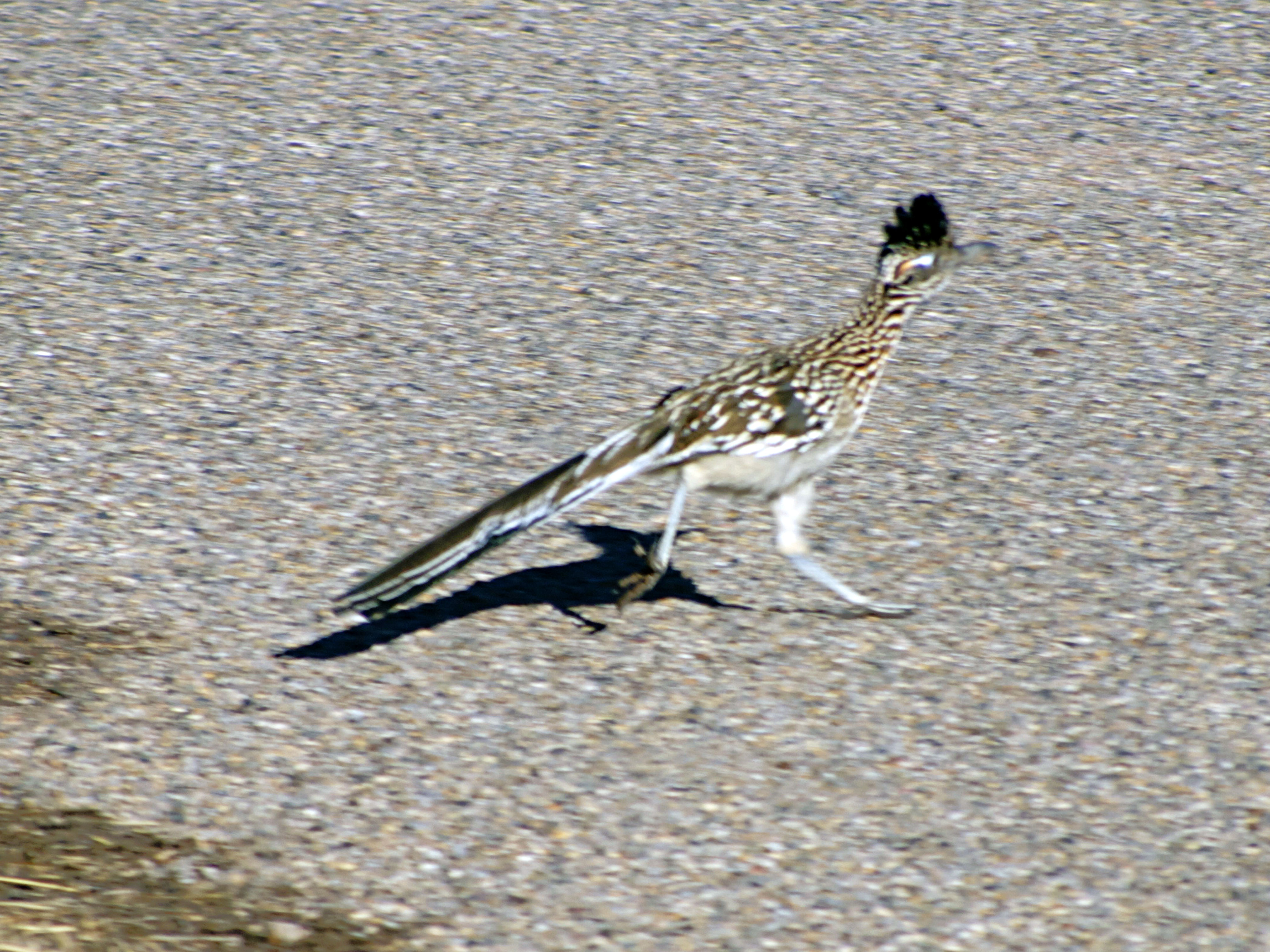
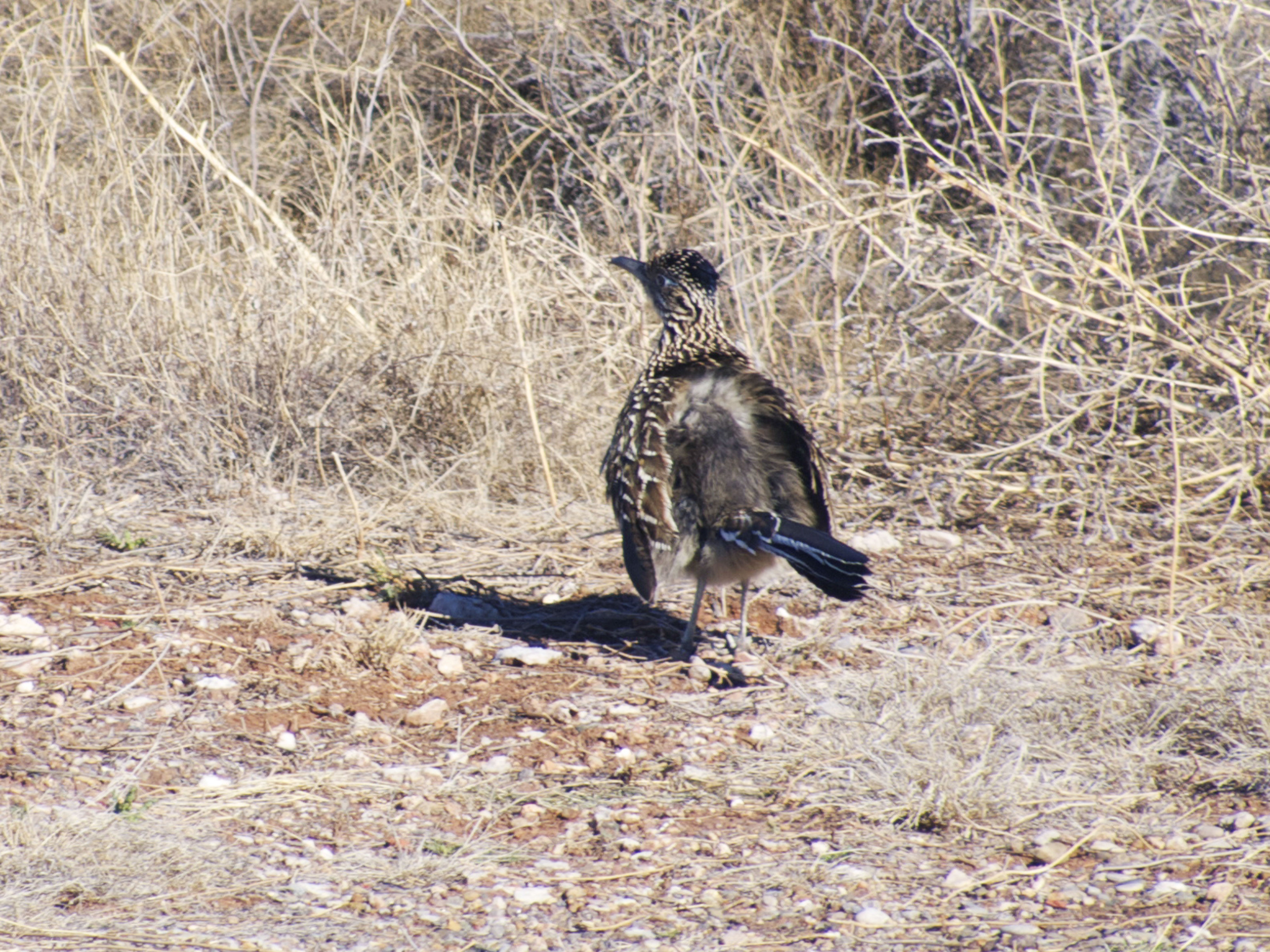
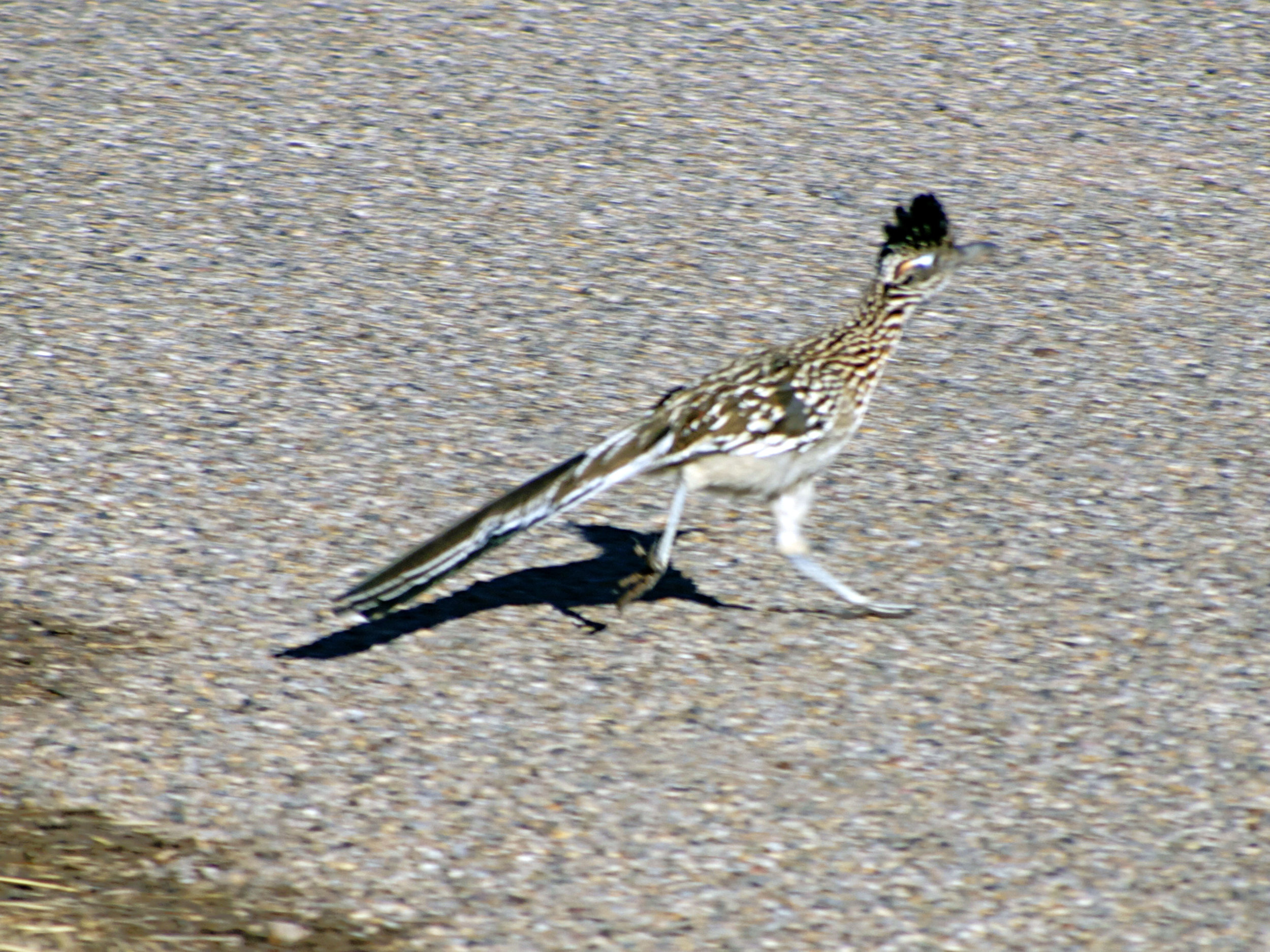
Roadrunner - Photo by Tim GillerRoadrunner - Photo by Tim Giller

Roadrunner – Photo by Tim Giller

I was beginning to feel real empathy toward ol’ Wile E Coyote and had started to wonder if Acme Co. sold wildlife cameras online. Those roadrunners are aptly named. Nine out of ten of them that we’ve seen were running across or along side the road and being able to get up to 20 mph or more were too elusive for me to photograph. The 10th bird was just causally hunting in the grass a few yards away from Lil’ Squatch the other morning proving once again that sometimes calm patience is a naturalist’s best tool.

There are lots of interesting details about North America’s largest member of the cuckoo family including the fact that they are indeed cuckoos and make sounds appropriate to that name. They also get almost all their water from the animals and plant matter that they eat and in order to conserve moisture they secrete body salt through a gland near their eyes. Roadrunners are able to eat poisonous and venomous creatures including rattlesnakes. They often do this in pairs; one distracting the snake while the other sneaks up, grabs it behind the head and then smacks it to death before swallowing. If the snake is too long you may see a roadrunner dashing around with a tail hanging from its mouth while it’s digesting.

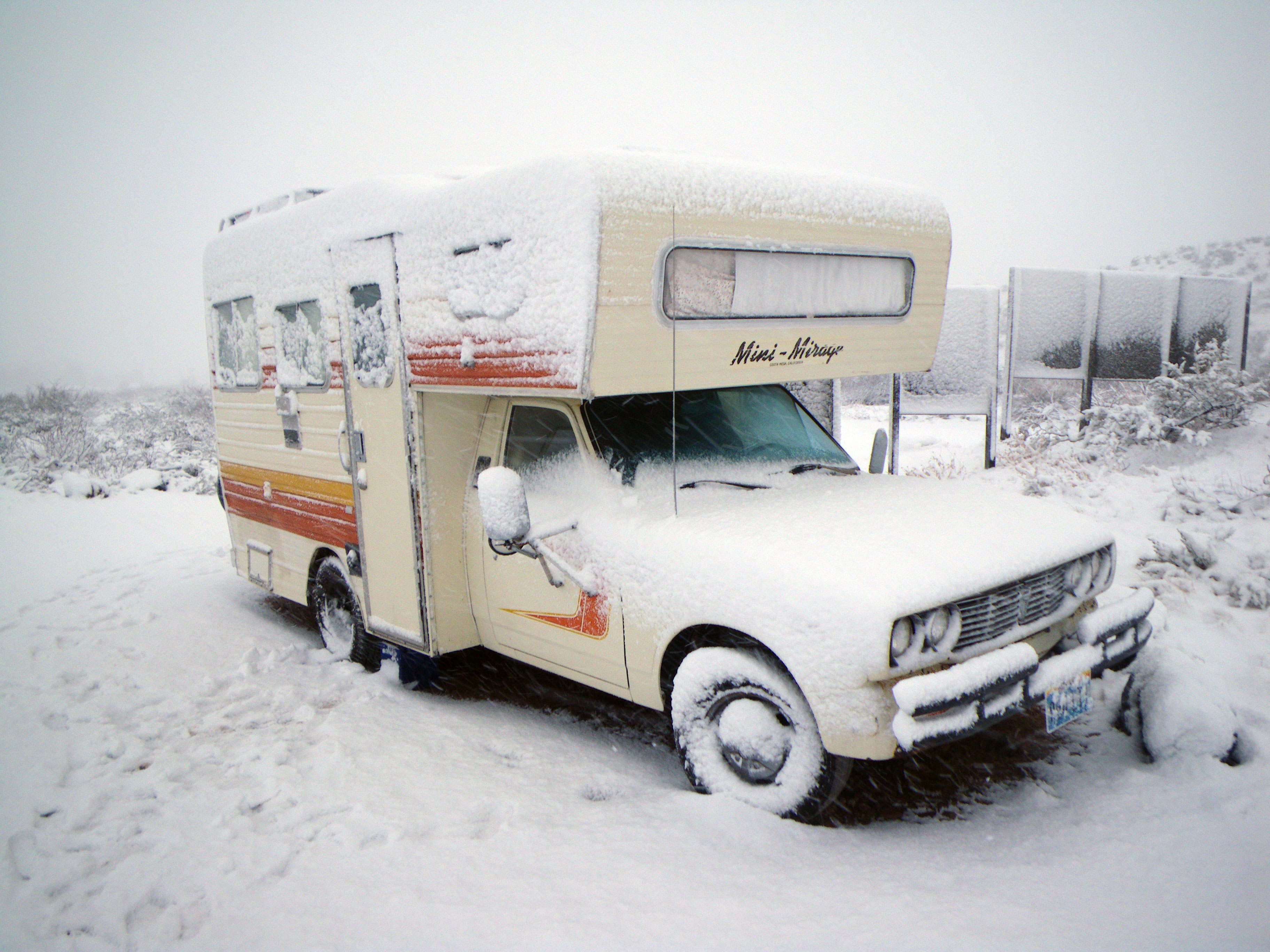
I think the most curious detail about roadrunners is that they have solar panels. I might be biased because I spent quite a few hours (and busted a few knuckles) installing solar panels on Lil’ Squatch with some help from my friend Chris. Having spent a number of subfreezing nights in our unheated and poorly insulated home we’ve also come to appreciate having good placement for the morning sun.

Snow at Prehistoric Trackways NM -Photo by Tim GillerSnow at Prehistoric Trackways NM -Photo by Tim Giller

Snow at Prehistoric Trackways NM -Photo by Tim Giller

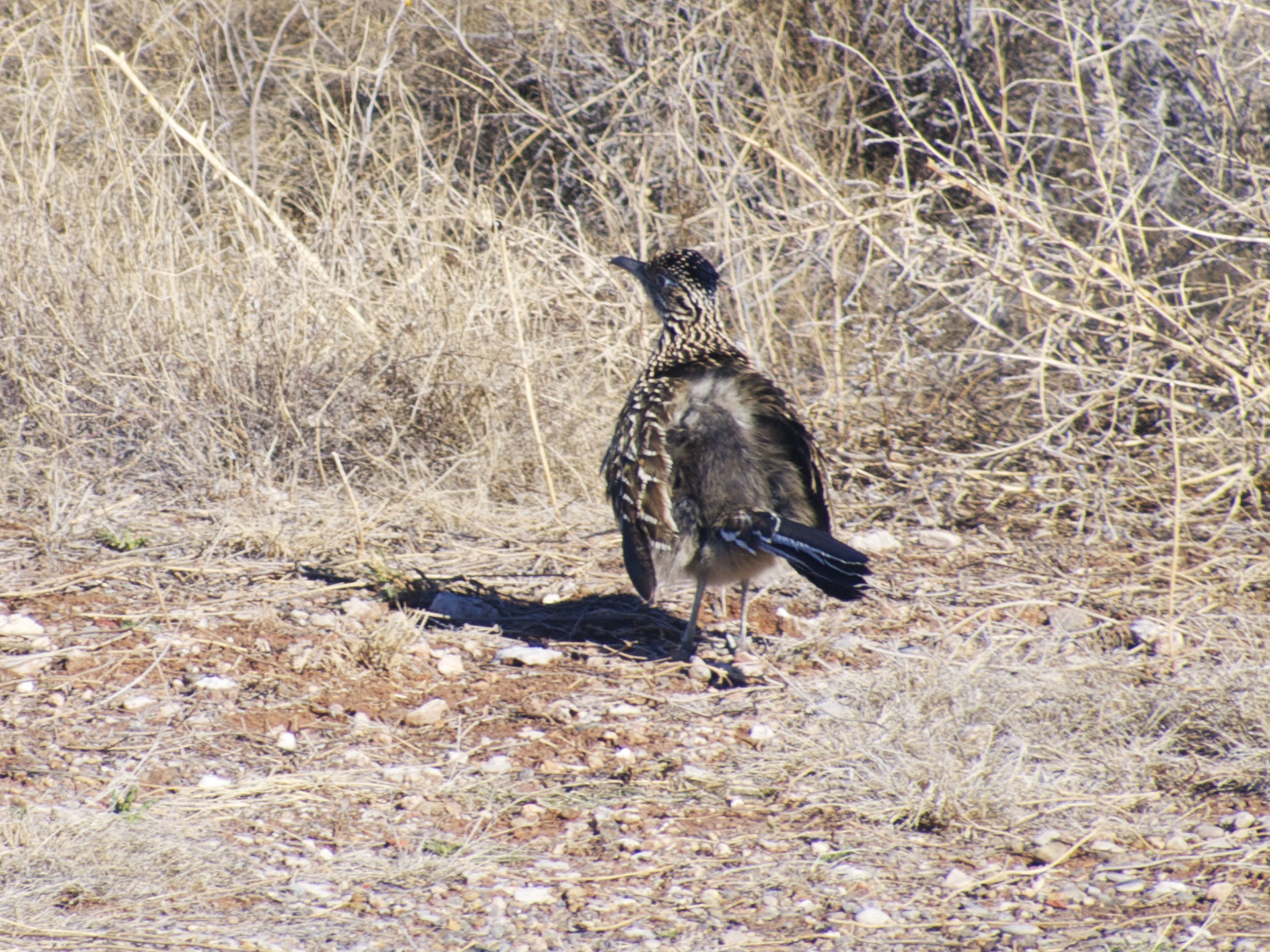
The cold can make it hard for us to get out of our cozy bed, but roadrunners go into a state of torpor, lowering their metabolism during the cold nights, and use the sun to jump start their day. On their lower back they have dark skin and they turn their tails toward the desert sun unfolding their feathers to let the solar energy warm their blood. It was a chilly morning and while I was making a second cup of coffee to get me out of my state of torpor our new friend was alternating between snatching up little critters from the grass for breakfast and flashing us his rear end toward the morning sun.

Roadrunner Solar Panels - Photo By Tim GillerRoadrunner Solar Panels - Photo By Tim Giller

Roadrunner Solar Panels – Photo By Tim Giller

Keeping Warm

I was beginning to feel real empathy toward ol’ Wile E Coyote and had started to wonder if Acme Co. sold wildlife cameras online. Those roadrunners are aptly named. Nine out of ten of them that we’ve seen were running across or along side the road and being able to get up to 20 mph or more were too elusive for me to photograph. The 10th bird was just causally hunting in the grass a few yards away from Lil’ Squatch the other morning proving once again that sometimes calm patience is a naturalist’s best tool.

Roadrunner - Photo by Tim Giller

Roadrunner – Photo by Tim Giller

There are lots of interesting details about North America’s largest member of the cuckoo family including the fact that they are indeed cuckoos and make sounds appropriate to that name. They also get almost all their water from the animals and plant matter that they eat and in order to conserve moisture they secrete body salt through a gland near their eyes. Roadrunners are able to eat poisonous and venomous creatures including rattlesnakes. They often do this in pairs; one distracting the snake while the other sneaks up, grabs it behind the head and then smacks it to death before swallowing. If the snake is too long you may see a roadrunner dashing around with a tail hanging from its mouth while it’s digesting.

I think the most curious detail about roadrunners is that they have solar panels. I might be biased because I spent quite a few hours (and busted a few knuckles) installing solar panels on Lil’ Squatch with some help from my friend Chris. Having spent a number of subfreezing nights in our unheated and poorly insulated home we’ve also come to appreciate having good placement for the morning sun.

Snow at Prehistoric Trackways NM -Photo by Tim Giller

Snow at Prehistoric Trackways NM -Photo by Tim Giller

The cold can make it hard for us to get out of our cozy bed, but roadrunners go into a state of torpor, lowering their metabolism during the cold nights, and use the sun to jump start their day. On their lower back they have dark skin and they turn their tails toward the desert sun unfolding their feathers to let the solar energy warm their blood. It was a chilly morning and while I was making a second cup of coffee to get me out of my state of torpor our new friend was alternating between snatching up little critters from the grass for breakfast and flashing us his rear end toward the morning sun.

Roadrunner Solar Panels - Photo By Tim Giller

Roadrunner Solar Panels – Photo By Tim Giller