Other Senses

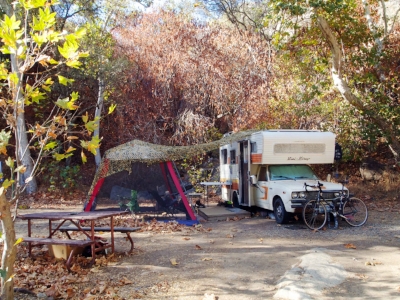
Lil' Squatch in Cricket HollowLil' Squatch in Cricket Hollow

Lil’ Squatch in Cricket Hollow

           Not being able to see anything has been surprisingly informative. Every night, when the quietude of bedtime has settled in, Cricket Hollow, the comfortable cove that Lil’ Squatch is nestled into, produces a regular sequence of mysterious sounds. The forest floor, completely covered in dried leaves, allows that not even the stealthiest creatures can move without leaving a trail of sound. The substantial and crisp California Sycamore leaves amplify, turning the skittering of a vole into a hefty animal. So far out of the dozens of times we’ve picked up a flashlight, inspired by a burst of raucousness or the snapping of a branch, we’ve seen almost nothing but the textured ground fading into the shadowed brambles. I have once caught the glistening eyeshine staring back at me from murky blackness, an animal of indefinite size, bigger than a squirrel, smaller than a coyote. Another night Rachael and I crept slowly, vainly attempting to avoid the crunch underfoot, to the base of a nearby tree. Something had shuffled up there and our light caught the fluffy orb of our local Western Screech Owl, not terribly happy to be spotlighted but otherwise disinterested in us. This put a face to a voice and settled a question we had about what had been making a deep, trilling call long into the night.
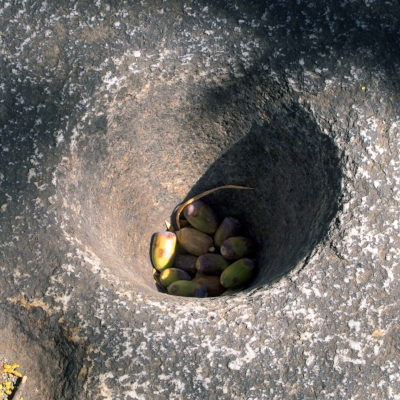
Native Patwisha Grinding RockNative Patwisha Grinding Rock

Native Patwisha Grinding Rock

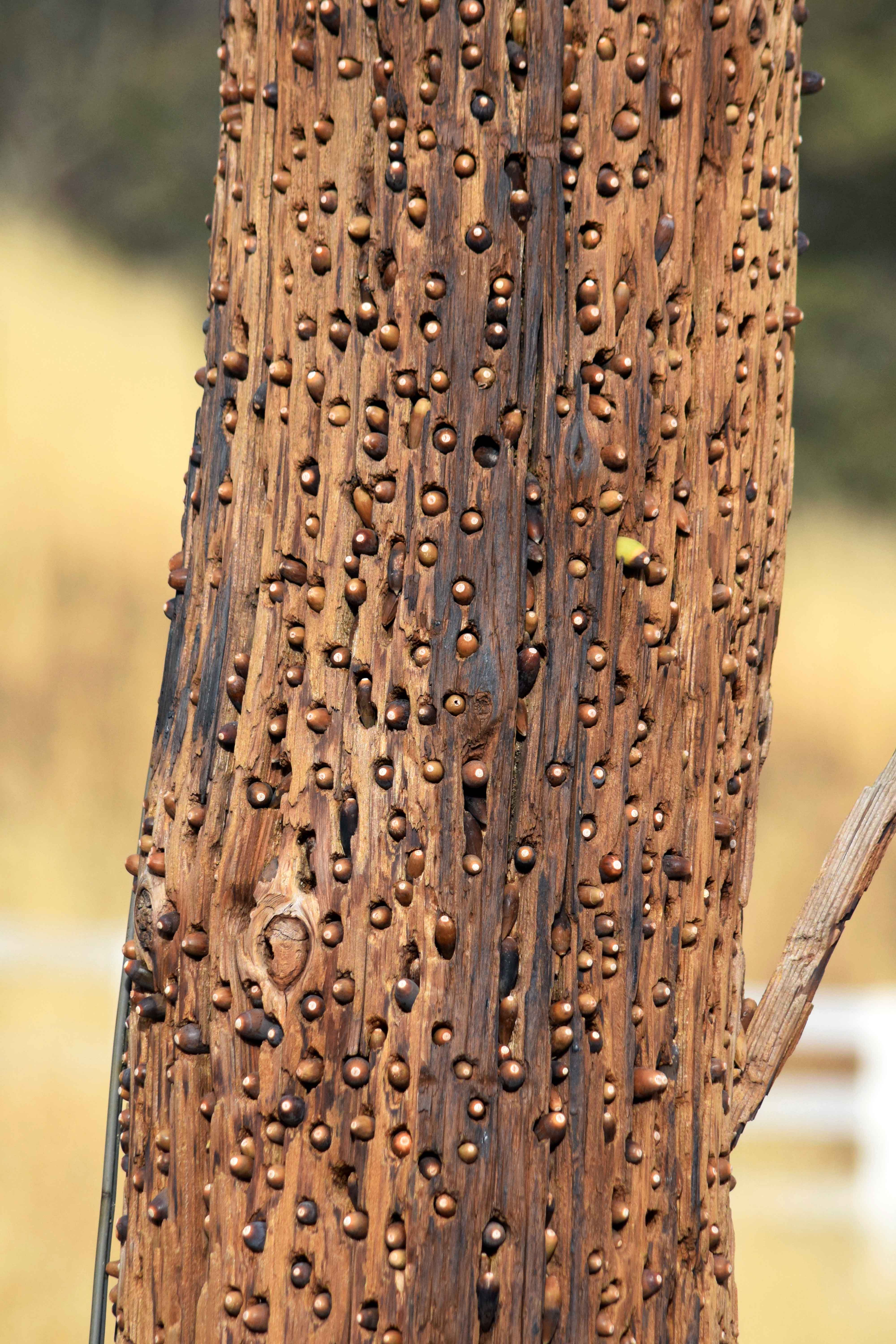
            Our daytime neighbors are communicative as well. No animal better represents the oak woodlands that are the true California landscape than the Acorn Woodpecker. Boisterous, gregarious, laughing at me all day as they gather acorns and peck holes into any and all wooden surfaces, a stump, a snag, fenceposts, telephone poles, the Park housing and outbuildings. A communal bird, they work in multi-generational groups sharing the work of collecting acorns, making caches and raising the young. Another family, a covey of California Quail pass through our yard daily, tisking nervously to each other, cooing, kicking leaves in search of bugs, taking dust baths before fussing into a nearby roost for the evening. At this point the crickets for which I assume our hollow is named kick in and if the temperature is optimum their chorus can hit decibels that drown out everybody else singing into the night.

            We didn’t need to hear or see one of our nocturnal neighbors to know he lived here. “Do you smell something?” Rachael asked. “No, …wait a minute” Not a sound or sign other than a musky scent wafting through the air. The unmistakable odor a skunk visitor was thankfully mild and short-lived. The smells of the Sierra Foothills where we live have been otherwise a pleasure. Our first walks through the sun-warmed grass and oaks of early September were filled with an evocative dry-sweet scent, dusty and vegetal. This became saturated to a deep earthy richness with the first light rains of October. The air is infused and the crispness of autumn is complimented by this hint of fragrant moisture.

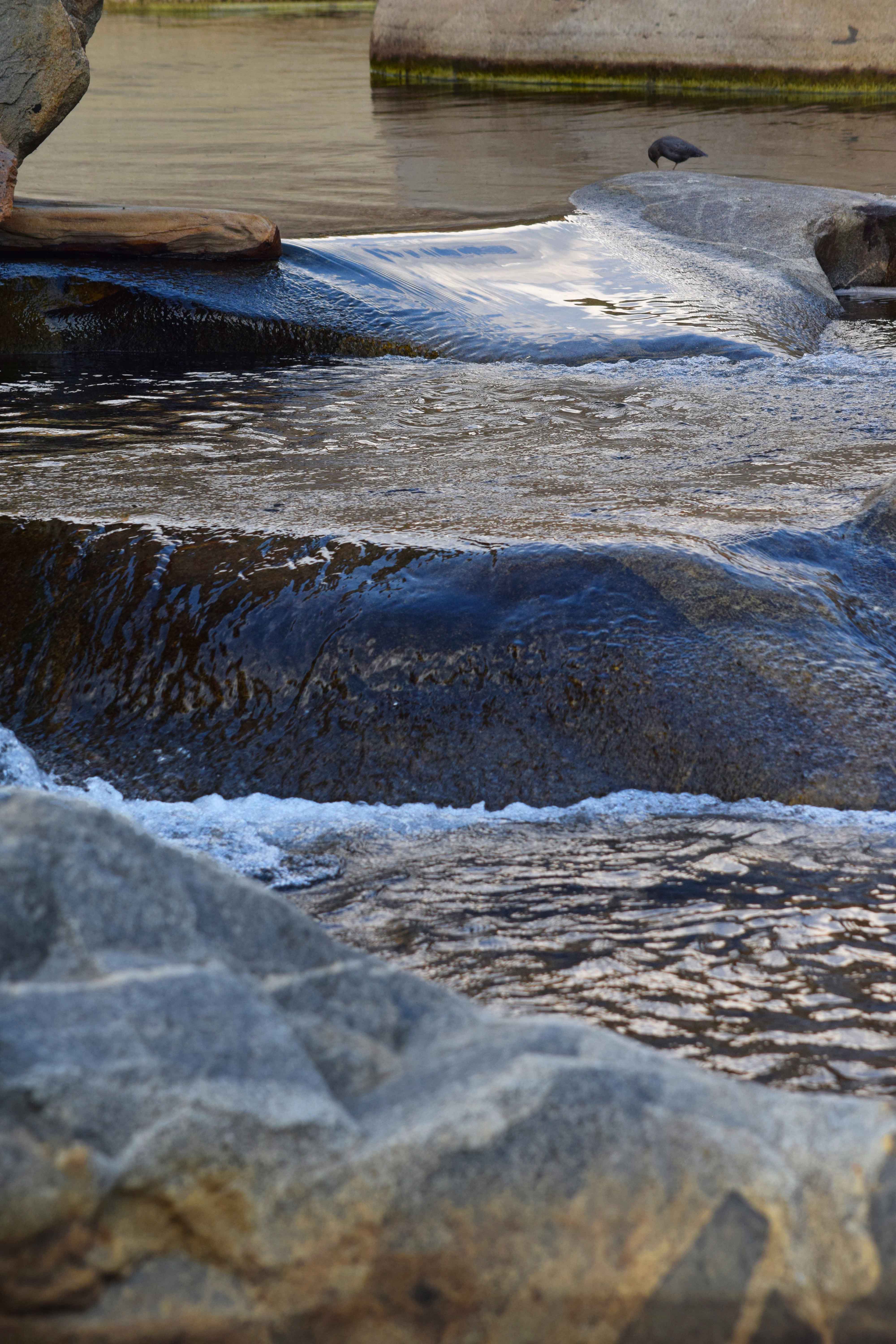
Water Ouzel, Middle Fork Kaweah RiverWater Ouzel, Middle Fork Kaweah River

Water Ouzel, Middle Fork Kaweah River

            This is a dry and scratchy land in September and October, the tail end of our Mediterranean summer. The scramble trail down to the Middle Fork of the Kaweah River can leave me with scratches earned while avoiding the more troublesome poison oak. It is well worth it. I’ve never had the pleasure of living five minutes from my choice of a half dozen perfect late summer swimming holes. Boulders of tortured metamorphic rock polished smooth by high, snow-fed, spring runoff, surround deep, dark pools of clear water. The trail dust and detritus is washed away, the temperature a perfect balance, cold enough to be exhilarating, warm enough to linger, the water enveloping the skin. I glide, High Sierra granite in the distance, multicolored woodland ridges surrounding, sand, gravel and stones at my feet.  This becomes a daily ritual, a compulsion. I haven’t been this well washed in years. Pausing, waist-deep, my feet on algae covered riverbed I feel a curious sensation. Looking down I see a school of minnows aggressively nibbling at the bits swirling around my legs, taking investigative bites of my skin and ample leg hair. This ticklish exfoliation becomes a reliable part of my routine, odd enough to keep me swimming away from the shallows.

            Once, returning home from my swim, I catch sight of another elusive neighbor. He already knows me, though we haven’t met yet. I’ve seen his scat on the abandoned trail 40 yards above our RV. He lives by his nose. With an olfactory system seven times as sensitive as a bloodhound he probably knows that I prefer dark roasted coffee and have been experimenting with homemade seitan. Fortunately he’s focused on his native food right now. Seeing me he effortlessly takes his 250 pounds to the top of a 40 foot oak tree and balanced on branches I wouldn’t trust with my weight, he is heartily feasting on the same crop of Blue Oak acorns that our woodpeckers gather. There are other neighbors we are unlikely to meet. We’re told that a Mountain Lion den is just up the drainage from our spot. If so it also knows I’m here but I’ll probably have better luck with my lottery ticket than with being able to catch sight of her. Ringtails, Badgers and Bobcats are likely out there. I know we have local foxes by their promiscuous pooping habits. It is satisfying enough to sense these presences in other ways. Getting any rare glimpse would only be a bonus.

Here’s a Video of our friend in the tree: https://www.youtube.com/watch?v=HUMq6oSC7GM

Acorn Woodpecker CacheAcorn Woodpecker Cache

Acorn Woodpecker Cache

Other Senses

Lil’ Squatch in Cricket Hollow

Not being able to see anything has been surprisingly informative. Every night, when the quietude of bedtime has settled in, Cricket Hollow, the comfortable cove that Lil’ Squatch is nestled into, produces a regular sequence of mysterious sounds. The forest floor, completely covered in dried leaves, allows that not even the stealthiest creatures can move without leaving a trail of sound. The substantial and crisp California Sycamore leaves amplify, turning the skittering of a vole into a hefty animal. So far out of the dozens of times we’ve picked up a flashlight, inspired by a burst of raucousness or the snapping of a branch, we’ve seen almost nothing but the textured ground fading into the shadowed brambles. I have once caught the glistening eyeshine staring back at me from murky blackness, an animal of indefinite size, bigger than a squirrel, smaller than a coyote. Another night Rachael and I crept slowly, vainly attempting to avoid the crunch underfoot, to the base of a nearby tree. Something had shuffled up there and our light caught the fluffy orb of our local Western Screech Owl, not terribly happy to be spotlighted but otherwise disinterested in us. This put a face to a voice and settled a question we had about what had been making a deep, trilling call long into the night.

Native Patwisha Grinding Rock

Our daytime neighbors are communicative as well. No animal better represents the oak woodlands that are the true California landscape than the Acorn Woodpecker. Boisterous, gregarious, laughing at me all day as they gather acorns and peck holes into any and all wooden surfaces, a stump, a snag, fenceposts, telephone poles, the Park housing and outbuildings. A communal bird, they work in multi-generational groups sharing the work of collecting acorns, making caches and raising the young. Another family, a covey of California Quail pass through our yard daily, tisking nervously to each other, cooing, kicking leaves in search of bugs, taking dust baths before fussing into a nearby roost for the evening. At this point the crickets for which I assume our hollow is named kick in and if the temperature is optimum their chorus can hit decibels that drown out everybody else singing into the night.

We didn’t need to hear or see one of our nocturnal neighbors to know he lived here. “Do you smell something?” Rachael asked. “No, …wait a minute” Not a sound or sign other than a musky scent wafting through the air. The unmistakable odor a skunk visitor was thankfully mild and short-lived. The smells of the Sierra Foothills where we live have been otherwise a pleasure. Our first walks through the sun-warmed grass and oaks of early September were filled with an evocative dry-sweet scent, dusty and vegetal. This became saturated to a deep earthy richness with the first light rains of October. The air is infused and the crispness of autumn is complimented by this hint of fragrant moisture.

Water Ouzel, Middle Fork Kaweah River

This is a dry and scratchy land in September and October, the tail end of our Mediterranean summer. The scramble trail down to the Middle Fork of the Kaweah River can leave me with scratches earned while avoiding the more troublesome poison oak. It is well worth it. I’ve never had the pleasure of living five minutes from my choice of a half dozen perfect late summer swimming holes. Boulders of tortured metamorphic rock polished smooth by high, snow-fed, spring runoff, surround deep, dark pools of clear water. The trail dust and detritus is washed away, the temperature a perfect balance, cold enough to be exhilarating, warm enough to linger, the water enveloping the skin. I glide, High Sierra granite in the distance, multicolored woodland ridges surrounding, sand, gravel and stones at my feet. This becomes a daily ritual, a compulsion. I haven’t been this well washed in years. Pausing, waist-deep, my feet on algae covered riverbed I feel a curious sensation. Looking down I see a school of minnows aggressively nibbling at the bits swirling around my legs, taking investigative bites of my skin and ample leg hair. This ticklish exfoliation becomes a reliable part of my routine, odd enough to keep me swimming away from the shallows.

Once, returning home from my swim, I catch sight of another elusive neighbor. He already knows me, though we haven’t met yet. I’ve seen his scat on the abandoned trail 40 yards above our RV. He lives by his nose. With an olfactory system seven times as sensitive as a bloodhound he probably knows that I prefer dark roasted coffee and have been experimenting with homemade seitan. Fortunately he’s focused on his native food right now. Seeing me he effortlessly takes his 250 pounds to the top of a 40 foot oak tree and balanced on branches I wouldn’t trust with my weight, he is heartily feasting on the same crop of Blue Oak acorns that our woodpeckers gather. There are other neighbors we are unlikely to meet. We’re told that a Mountain Lion den is just up the drainage from our spot. If so it also knows I’m here but I’ll probably have better luck with my lottery ticket than with being able to catch sight of her. Ringtails, Badgers and Bobcats are likely out there. I know we have local foxes by their promiscuous pooping habits. It is satisfying enough to sense these presences in other ways. Getting any rare glimpse would only be a bonus.

Here’s a Video of our friend in the tree: https://www.youtube.com/watch?v=HUMq6oSC7GM

Acorn Woodpecker Cache


Backyard Exploration

Backyard BugBackyard Bug

Backyard Bug

Backyard_Chicken bathBackyard_Chicken bath

Taking an ecology class at City College of San Francisco several years ago got me down on my hands and knees doing something I hadn’t really done before, dig into my own urban backyard. At the time I had a sweet studio overlooking a lush backyard and in a “only in San Francisco” experience had a view of downtown from my basement apartment. For the class I needed to start and maintain a nature journal that documented the same place over the course of the semester. Lucky for me I had a wonderful yard to enjoy. I found pill bugs under leaves, discovered a pincher bug mama and babies in a lily flower, watched a hummingbird drink from the firecracker penstemon and chase others far out of “his” yard. Because I was now always paying attention to my yard I got to see scrub jays build their nest in the bamboo. At first I thought they’d be sorry when the winds came but then I saw that they had tucked their nest in the area where the bamboo was most protected by the yucca tree and thus it swayed only a little compared to the more exposed bamboo. On my own porch I watched as hundreds of baby orb weaver spiders hatched and made their way into the world. This experience not only gave me first hand knowledge of the wilds that can happen right in the middle of an urban area but also got me back in touch with my own personal passion of earth science.

Backyard flyBackyard fly

Backyard fly

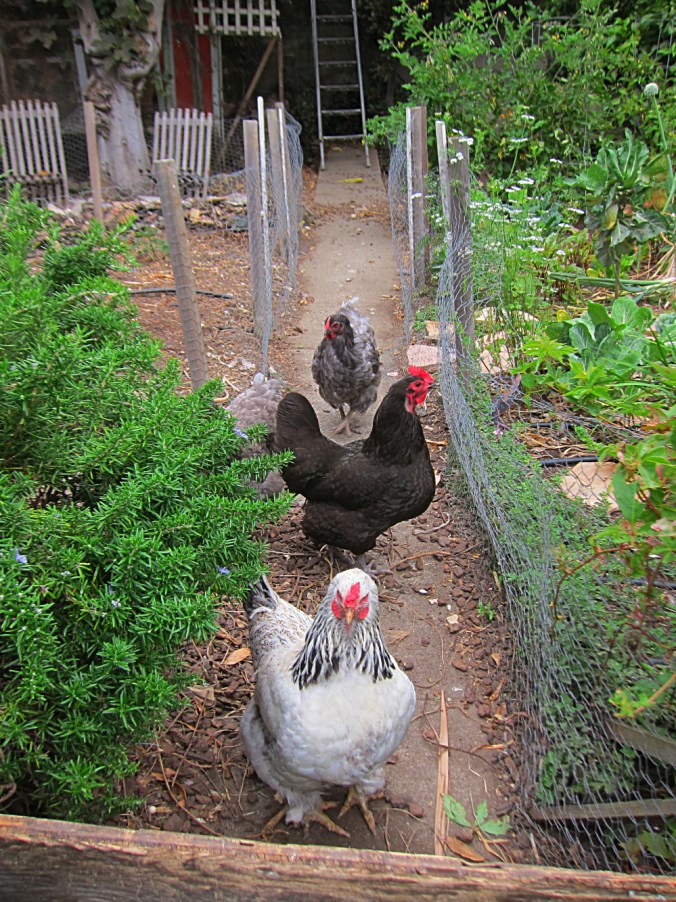
In early August some friends with a little urban homestead in Noe Vally asked me to “chicken sit” for a week. I took advantage of the midday sunny weather and spent a good portion of my week just like I had when I had my journal, looking for bugs, watching the hummingbirds and digging around in the plants while the girls scratched, pecked and enjoyed a thorough dust bathing.

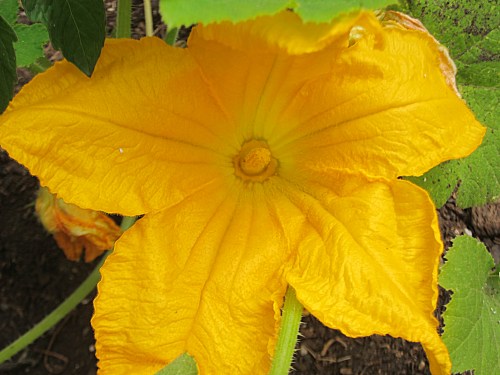
Backyard squash flowerBackyard squash flower

Backyard squash flower

Backyard chickensBackyard chickens

Backyard chickens

Backyard Exploration

Backyard BugTaking an ecology class at City College of San Francisco several years ago got me down on my hands and knees doing something I hadn’t really done before, dig into my own urban backyard. At the time I had a sweet studio overlooking a lush backyard and in a “only in San Francisco” experience had a view of downtown from my basement apartment. For the class I needed to start and maintain a nature journal that documented the same place over the course of the semester. Lucky for me I had a wonderful yard to enjoy. I found pill bugs under leaves, discovered a pincher bug mama and babies in a lily flower, watched a hummingbird drink from the firecracker penstemon and chase others far out of “his” yard. Because I was now always paying attention to my yard I got to see scrub jays build their nest in the bamboo. At first I thought they’d be sorry when the winds came but then I saw that they had tucked their nest in the area where the bamboo was most protected by the yucca tree and thus it swayed only a little compared to the more exposed bamboo. On my own porch I watched as hundreds of baby orb weaver spiders hatched and made their way into the world. This experience not only gave me first hand knowledge of the wilds that can happen right in the middle of an urban area but also got me back in touch with my own personal passion of earth science.

Backyard_Chicken bath


Backyard fly

In early August some friends with a little urban homestead in Noe Vally asked me to “chicken sit” for a week. I took advantage of the midday sunny weather and spent a good portion of my week just like I had when I had my journal, looking for bugs, watching the hummingbirds and digging around in the plants while the girls scratched, pecked and enjoyed a thorough dust bathing.

Backyard squash flower

Backyard chickens

Mojave Winds

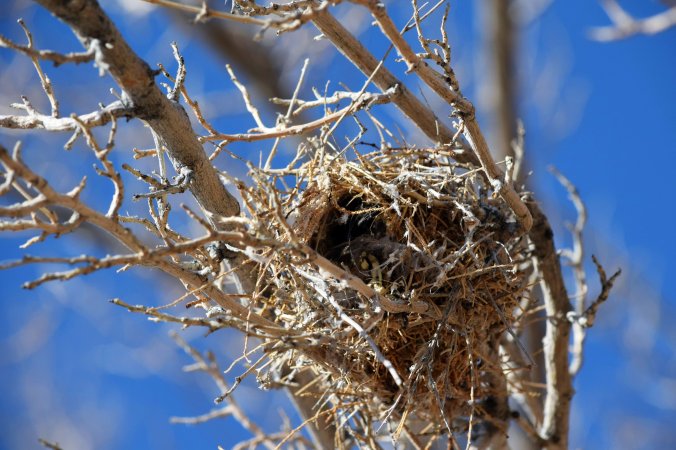
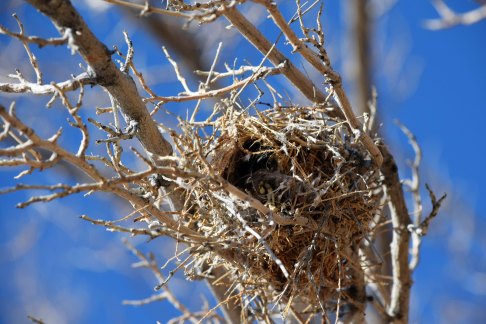
NestNest

Nest

Raven lands on the power pole and calls out the desert’s news. We sip our coffee and listen intently but we’re not surprised when he gets to the weather and croaks “hot, hot, hawt”. The morning breeze is about as cooling as standing in front of a hair dryer. I put my shirt on last not wanting to soak it through on my quarter mile bike ride before I get to work. I still show up disheveled, hair a mess and shirt untucked. First thing I do is go to the bathroom dry off and clean myself up. I appreciate my cool confines of the beautiful, historic Kelso Depot but make point of going outside and walking in the sunlight. I stay hours past closing and then suck it up and go home.
We make a point of checking the temp inside the RV when we first open the door. If it’s 100 or cooler we’re doing ok. That hasn’t happened in two weeks. It’s too hot to move but we change from our clothes and put on shorts that are 105 degrees, open a beer and melt into our camp chairs. Too hot to eat or talk let alone do anything productive. We watch a Verdin build a beautiful nest in the branches of the dead tree, that serves as our landscaping, but it seems as though all the ladies are smart enough to be in cooler climes. We watch night hawks teeter and dip catching prey. Next the bats swing by, sometimes too close to our heads. We reach out for each other and then recoil from our shared body heat.
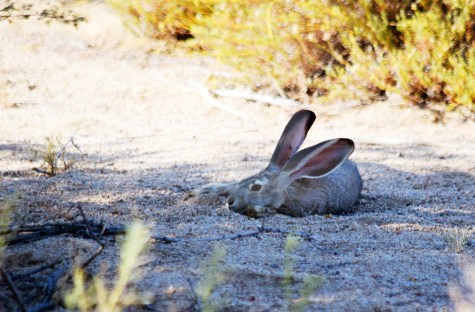
Driving back from Baker one night I go slow as much to maximize time in the air conditioned car as it is to better see the creatures of the night roads. This is their time and they do their best to run you off. We see night lizards and snakes, we see kangaroo rats by the dozens, we see scorpions doing a tango. Looking in vain for a flashlight we know isn’t there and kicking ourselves for not having boots knowing that sandals are not safe at night. This is their world and their time to own the desert lands. We see a ghostly figure scampering without a tail, a bobcat caught off guard changes course and vanishes.

A visitor chats with me about his high school friend who worked the rails in the summers in the 60’s. He tells me how they wore thick gloves because touching the metal out here would scald the skin in seconds. He says they did the work they needed to do without complaint because that’s what you did “back then”. I think they were probably tougher back then but he’s kidding himself if they did it without complaint. We are stupid animals working from dawn to dusk. The desert animals know we are stupid. They look at us with dead eyes and wonder why we move around when the sun and heat are clearly telling us to wait until later or get up earlier.

HotJackHotJack

HotJack

I can’t wait to leave. I imagine being on Ocean Beach in SF enveloped in a windy fog. I imagine undressing and feeling the cool damp air on my whole body as I run and breathe salty air. We bring up stories of when we were freezing, how painful it was to crawl into our cold bed and try to sleep. We yearn for that pain. Yet driving to our friend’s house past Joshua trees, up into the pinyon-juniper forest past sage brush and back into the cactus-yucca scrub and I can’t imagine we’re leaving. I love this place. How could I possibly be so eager to leave a place I have fallen madly in love with? Such is the life and times of a vagabond. It’s time to go but the Mojave will still be here. We’ll come back, just not in the summer.

Mojave Winds

Raven lands on the power pole and calls out the desert’s news. We sip our coffee and listen intently but we’re not surprised when he gets to the weather and croaks “hot, hot, hawt”. The morning breeze is about as cooling as standing in front of a hair dryer. I put my shirt on last not wanting to soak it through on my quarter mile bike ride before I get to work. I still show up disheveled, hair a mess and shirt untucked. First thing I do is go to the bathroom dry off and clean myself up. I appreciate my cool confines of the beautiful, historic Kelso Depot but make point of going outside and walking in the sunlight. I stay hours past closing and then suck it up and go home.

We make a point of checking the temp inside the RV when we first open the door. If it’s 100 or cooler we’re doing ok. That hasn’t happened in two weeks. It’s too hot to move but we change from our clothes and put on shorts that are 105 degrees, open Nesta beer and melt into our camp chairs. Too hot to eat or talk let alone do anything productive. We watch a Verdin build a beautiful nest in the branches of the dead tree, that serves as our landscaping, but it seems as though all the ladies are smart enough to be in cooler climes. We watch night hawks teeter and dip catching prey. Next the bats swing by, sometimes too close to our heads. We reach out for each other and then recoil from our shared body heat.

Driving back from Baker one night I go slow as much to maximize time in the air conditioned car as it is to better see the creatures of the night roads. This is their time and they do their best to run you off. We see night lizards and snakes, we see kangaroo rats by the dozens, we see scorpions doing a tango. Looking in vain for a flashlight we know isn’t there and kicking ourselves for not having boots knowing that sandals are not safe at night. This is their world and their time to own the desert lands. We see a ghostly figure scampering without a tail, a bobcat caught off guard changes course and vanishes.

A visitor chats with me about his high school friend who worked the rails in the summers in the 60’s. He tells me how they wore thick gloves because touching the metal out here would scald the skin in seconds. He says they did the work they needed to do without complaint because that’s what you did “back then”. I think they were probably tougher back then but he’s kidding himself if they did it without complaint. We are stupid animals working from dawn to dusk. The desert animals know we are stupid. They look at us with dead eyes and wonder why we move around when the sun and heat are clearly telling us to wait until later or get up earlier.

HotJack

Hot Buns

I can’t wait to leave. I imagine being on Ocean Beach in SF enveloped in a windy fog. I imagine undressing and feeling the cool damp air on my whole body as I run and breathe salty air. We bring up stories of when we were freezing, how painful it was to crawl into our cold bed and try to sleep. We yearn for that pain. Yet driving to our friend’s house past Joshua trees, up into the pinyon-juniper forest past sage brush and back into the cactus-yucca scrub and I can’t imagine we’re leaving. I love this place. How could I possibly be so eager to leave a place I have fallen madly in love with? Such is the life and times of a vagabond. It’s time to go but the Mojave will still be here. We’ll come back, just not in the summer.

Patience

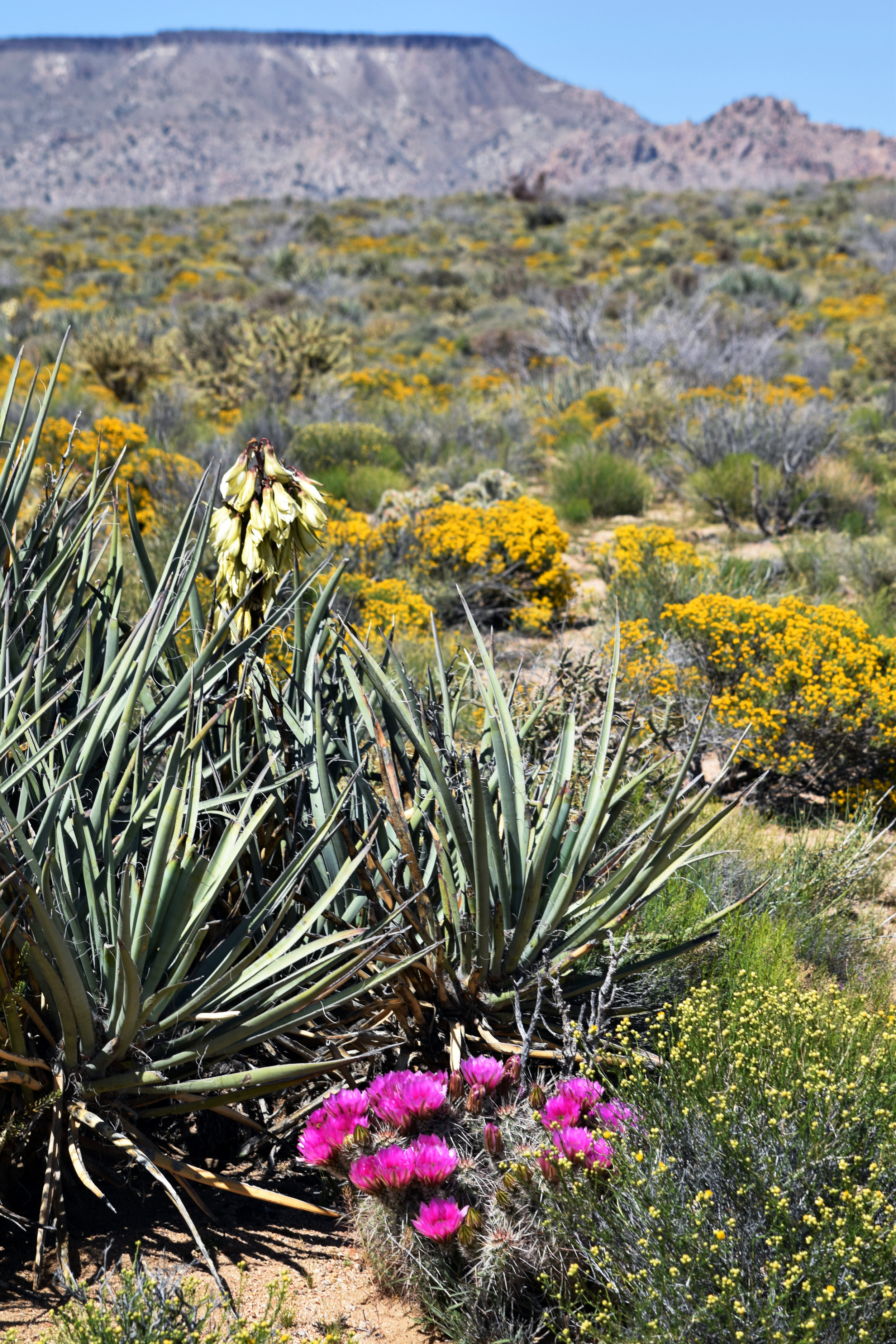
Fenner Valley, Mojave National Preserve - Photo by Tim GillerFenner Valley, Mojave National Preserve - Photo by Tim Giller

Fenner Valley, Mojave National Preserve – Photo by Tim Giller

I’ve been trying too hard to be eloquent. Maybe it’s the paradox of trying to speak about a land that keeps a lot of secrets and tells its stories subtly. It might also be that after talking to hundreds of visitors over a few days, tapping my knowledgebase and feeble attempts at wit, my narrative well has run dry. Here I can look across hundreds of square miles and know that there is not so much open water that one could even submerge their big toe. A charming trio of young Japanese men walked up to the desk with big smiles and asked, “We would like to know where we could go swimming?” I had to chuckle apologetically and suggest “The Colorado River? The Holiday Inn Vegas?” Either one a couple hours drive. This new knowledge of just what kind of exotic landscape they had found themselves in seemed to ameliorate their disappointment and they left as enthusiastically as they had come in. Inspiration, I could hope, was not about quantity and is not a reservoir of limited capacity. That perhaps like so much of the biota around me though constrained by blunt realities, imagination has rich and varied forms.

The desert might insist that we learn a few things. Willful ignorance is the dominant theme of the pioneer history in the Mojave from the Death Valley ‘49ers suffering across the one of the most difficult landscapes in the world unwilling to follow the humanitarian assistance of people who had been able to live there for generations, to today’s Vegas politicians saying with a straight face that shoving a longer straw into the diminishing punch bowl of Lake Mead can somehow allow the continued expansion of the city with the highest per-capita water consumption in the country. Our largest Southwest river can’t slake our bourgeoning thirst, grow melons in the desert, fill all those swimming pools on The Strip and still make it all the way to the Sea of Cortez. Some or all of these things will have to give. One of them regularly does.

The mythology of an empty place to relieve us of our burdens still overpowers the truth that solitude, like water, is a finite resource that has yet to be given its full value. Perhaps we will eventually know that there are no empty spaces; that all the puzzle pieces were in place long before we got here and that we are simply replacing them haphazardly and generally making places poorer for it. The fiction of a “useless” wasteland to dump in as the companion to the myth that the Earth’s bounty will provide without restraint. I’ve encountered a new mode of travel out here “in the middle of nowhere”. Daily I meet people who, as if they jumped into their car with a kidnapper’s hood over their head, made their way out to the desert and now that their telephone mysteriously doesn’t work they quite literally don’t know where they are. Captive to their own willful ignorance of place and navigation, dumped on the side of the highway with no memory of the twists and turns that got them here or how to find their way further. I don’t believe this behavior existed 5 years ago, definitely not 10. This particular ignorance is not a luxury afforded to those who have lived in this challenging environment.

The Desert Tortoise has lived in the Southwest of North America for a couple million years. It has been the creature we recognize through untold changes in the landscape. Mountains have folded upward, then spread apart opening vast basins separated by layered outcrops, forests have carpeted the hills then receded into cool canyons and high peaks sheltered from the desiccating heat of surrounding bajadas. Wetter times have filled long valley lowlands with sprawling lakes supplied by rivers that in these dryer times vanish underneath sandy flats occasionally resurfacing for short stretches at rifts in the land. Dry lakebeds and sandy washes still mark the ancient hydrology that sporadically gets revived in sudden downpours, the desert still shaped by water sometime violent, sometimes subtle.

You can see it somehow in their eyes. I wouldn’t know if it is wisdom but a purposeful clarity is communicated as if it knows what kind of emotional mess we humans find of ourselves and the tortoise can only hope we can come to know ourselves as well as it does. Here’s our Desert Tortoise Video.

It possesses a form of patience seemingly beyond our comprehension. A tortoise might have to settle for just a few months when there is enough plant matter that it can eat, its metabolism slow enough to allow dormancy for up 6 months of the year. Part of that in the winter, hibernating, the other part when heat and lack of food force them to wait for better conditions. The Mojave Desert itself follows this pulse. The twiggy brush and denned up animals of winter flourishing into spring in a fecund display of green plants and progression of colorful flowers. By mid summer that land is stilled again as weeks of cloudless sky heat and dry the land. If lucky the chance scattershot of monsoonal downpours could liven the landscape again before the year finishes and the days shorten. These limits on productivity are expressed as a kind of patience. When you can only afford to have leaves for a few months of the year, or can only open your stomata and acquire CO2 at night it may take a decade to get to full size. That Catsclaw Acacia or California Barrel Cactus is probably much older than you’d guess.

Table Top from Gold Valley - Photo by Tim GillerTable Top from Gold Valley - Photo by Tim Giller

Table Top from Gold Valley – Photo by Tim Giller

Perhaps we could be the beneficiaries of this patience. In this parable our Tortoise will eventually outlast the frenetic Jack Rabbit of our insatiable desires. In a receding tide of tract homes and big box stores we can build a tumbledown castaway’s shack from the flotsam and jetsam of all this culture. We’ll look up from our now useless screens and maybe we’d notice that all this sparseness holds more than we ever swept into all our landfills.

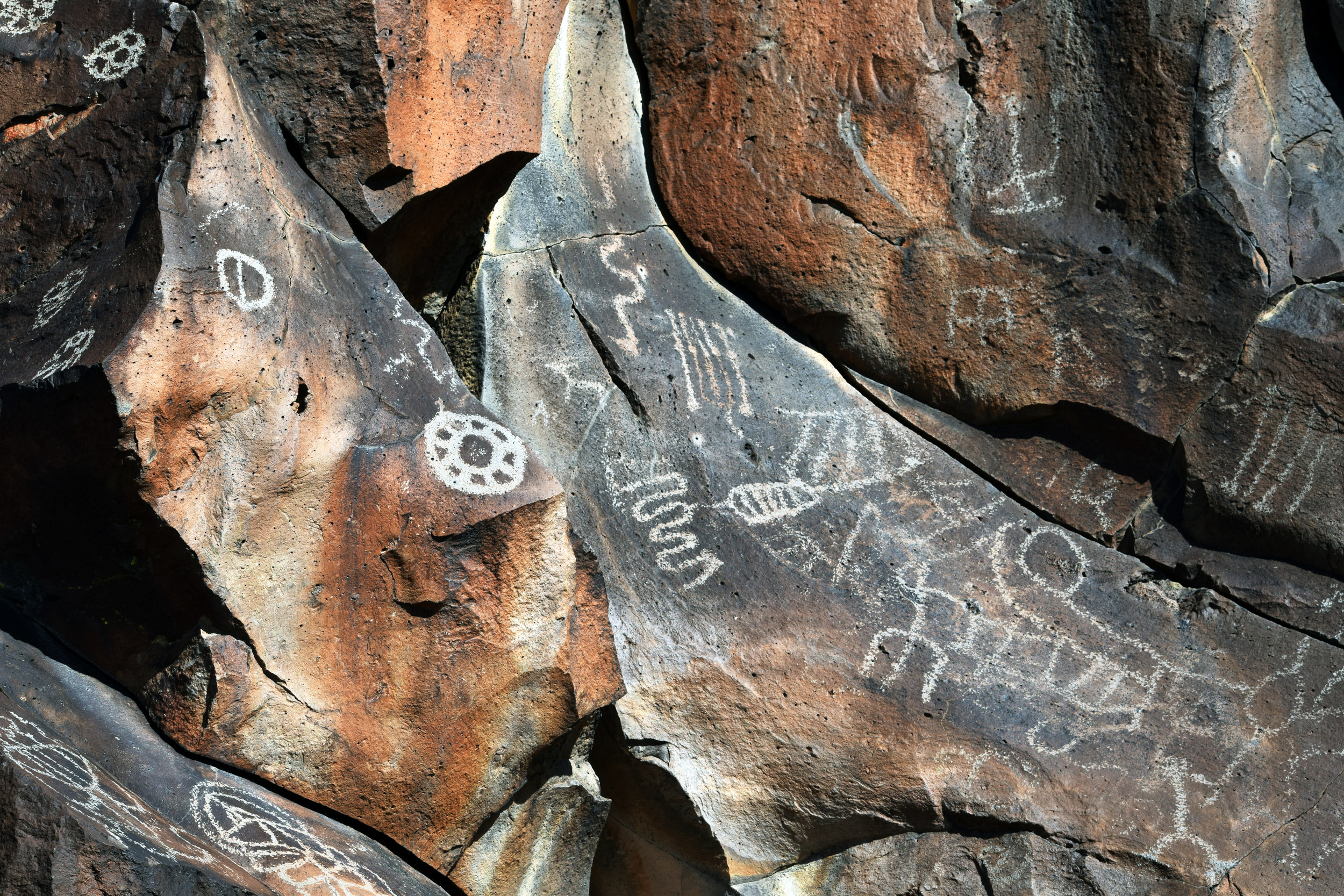
Petroglyphs, Mojave National Preserve - Photo by Tim GillerPetroglyphs, Mojave National Preserve - Photo by Tim Giller

Petroglyphs, Mojave National Preserve – Photo by Tim Giller

Patience

Fenner Valley, Mojave National Preserve - Photo by Tim Giller

Fenner Valley, Mojave National Preserve – Photo by Tim Giller

I’ve been trying too hard to be eloquent. Maybe it’s the paradox of trying to speak about a land that keeps a lot of secrets and tells its stories subtly. It might also be that after talking to hundreds of visitors over a few days, tapping my knowledgebase and feeble attempts at wit, my narrative well has run dry. Here I can look across hundreds of square miles and know that there is not so much open water that one could even submerge their big toe. A charming trio of young Japanese men walked up to the desk with big smiles and asked, “We would like to know where we could go swimming?” I had to chuckle apologetically and suggest “The Colorado River? The Holiday Inn Vegas?” Either one a couple hours drive. This new knowledge of just what kind of exotic landscape they had found themselves in seemed to ameliorate their disappointment and they left as enthusiastically as they had come in. Inspiration, I could hope, was not about quantity and is not a reservoir of limited capacity. That perhaps like so much of the biota around me though constrained by blunt realities, imagination has rich and varied forms.

The desert might insist that we learn a few things. Willful ignorance is the dominant theme of the pioneer history in the Mojave from the Death Valley ‘49ers suffering across the one of the most difficult landscapes in the world unwilling to follow the humanitarian assistance of people who had been able to live there for generations, to today’s Vegas politicians saying with a straight face that shoving a longer straw into the diminishing punch bowl of Lake Mead can somehow allow the continued expansion of the city with the highest per-capita water consumption in the country. Our largest Southwest river can’t slake our bourgeoning thirst, grow melons in the desert, fill all those swimming pools on The Strip and still make it all the way to the Sea of Cortez. Some or all of these things will have to give. One of them regularly does.

The mythology of an empty place to relieve us of our burdens still overpowers the truth that solitude, like water, is a finite resource that has yet to be given its full value. Perhaps we will eventually know that there are no empty spaces; that all the puzzle pieces were in place long before we got here and that we are simply replacing them haphazardly and generally making places poorer for it. The fiction of a “useless” wasteland to dump in as the companion to the myth that the Earth’s bounty will provide without restraint. I’ve encountered a new mode of travel out here “in the middle of nowhere”. Daily I meet people who, as if they jumped into their car with a kidnapper’s hood over their head, made their way out to the desert and now that their telephone mysteriously doesn’t work they quite literally don’t know where they are. Captive to their own willful ignorance of place and navigation, dumped on the side of the highway with no memory of the twists and turns that got them here or how to find their way further. I don’t believe this behavior existed 5 years ago, definitely not 10. This particular ignorance is not a luxury afforded to those who have lived in this challenging environment.

The Desert Tortoise has lived in the Southwest of North America for a couple million years. It has been the creature we recognize through untold changes in the landscape. Mountains have folded upward, then spread apart opening vast basins separated by layered outcrops, forests have carpeted the hills then receded into cool canyons and high peaks sheltered from the desiccating heat of surrounding bajadas. Wetter times have filled long valley lowlands with sprawling lakes supplied by rivers that in these dryer times vanish underneath sandy flats occasionally resurfacing for short stretches at rifts in the land. Dry lakebeds and sandy washes still mark the ancient hydrology that sporadically gets revived in sudden downpours, the desert still shaped by water sometime violent, sometimes subtle.

You can see it somehow in their eyes. I wouldn’t know if it is wisdom but a purposeful clarity is communicated as if it knows what kind of emotional mess we humans find of ourselves and the tortoise can only hope we can come to know ourselves as well as it does. Here’s our Desert Tortoise Video.

It possesses a form of patience seemingly beyond our comprehension. A tortoise might have to settle for just a few months when there is enough plant matter that it can eat, its metabolism slow enough to allow dormancy for up 6 months of the year. Part of that in the winter, hibernating, the other part when heat and lack of food force them to wait for better conditions. The Mojave Desert itself follows this pulse. The twiggy brush and denned up animals of winter flourishing into spring in a fecund display of green plants and progression of colorful flowers. By mid summer that land is stilled again as weeks of cloudless sky heat and dry the land. If lucky the chance scattershot of monsoonal downpours could liven the landscape again before the year finishes and the days shorten. These limits on productivity are expressed as a kind of patience. When you can only afford to have leaves for a few months of the year, or can only open your stomata and acquire CO2 at night it may take a decade to get to full size. That Catsclaw Acacia or California Barrel Cactus is probably much older than you’d guess.

Table Top from Gold Valley - Photo by Tim Giller

Table Top from Gold Valley – Photo by Tim Giller

Perhaps we could be the beneficiaries of this patience. In this parable our Tortoise will eventually outlast the frenetic Jack Rabbit of our insatiable desires. In a receding tide of tract homes and big box stores we can build a tumbledown castaway’s shack from the flotsam and jetsam of all this culture. We’ll look up from our now useless screens and maybe we’d notice that all this sparseness holds more than we ever swept into all our landfills.

Petroglyphs, Mojave National Preserve - Photo by Tim Giller

Petroglyphs, Mojave National Preserve – Photo by Tim Giller

Touch Table

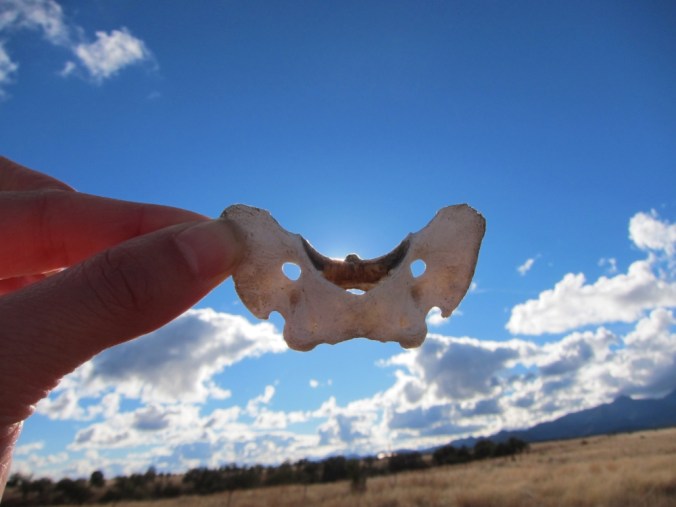
Butterfly vertebraeButterfly vertebrae

Butterfly vertebrae

While it is true that Tim and I are Visitor Center connoisseurs that interest is often in place of a real love of Nature Centers. Nature Centers tend to be exclusive to the plants and animals and not as much on the human history. Not that I don’t enjoy learning all about the park or area but I love learning about why we’d make a park in the first place which always boils down to plants, animals and geology. The other great thing about Nature Centers is you get to touch.

As a small child I loved going shopping with my mom not out of any interest in gaining new clothes, in fact I was and still am a pain in that department, but I loved to touch all the fabrics of the draped shirts and skirts. Of course us adults are constantly telling children not to touch, we don’t want them breaking anything or leaving their greasy germ filled finger prints all over. Unfortunately this is the best way for children (and adults) to learn. We learn with all our senses, just ask any blind person how important touching is to knowing. We have a touch table at our little information center at Hole-In-The-Wall and I think I’ve seen more adults go over to it than children. Without fail every single person picks up the Coyote Gourds (Cucurbita palmata). They look inside the holes and they rattle the whole ones that still have dried seeds to bounce around. Young boys love to pick up the skulls and other bones. One little guy noted the loose teeth on the deer skull and commented on how “someone’s going to get something from the tooth fairy soon!”, he was quite serious. I debated with my friend’s three year old on whether or not the coyote skull could really be from a coyote, he thought not. Others enjoy picking up the cool-to-the-touch rock core. We also have two male mule deer skulls mounted showing how they stuck together during a rutting match and died of starvation. Even though it’s not at the touch table people enjoy running their hands over the entangled antlers.

eggegg

egg

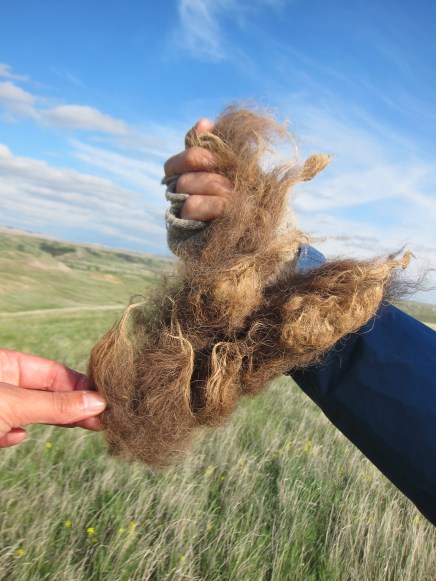
I look back to our travels of 2015 as one of the best educations I’ve ever had, that I gave myself. Naturally I learned from reading and researching the topics we’ve covered here in the blog, by using iNaturalist to research the plants and insects I photographed but also just by being outside and really looking at what I was looking at. I suppose that is what makes one a naturalist. Even in, or especially in, the age of Google there is still no substitute for making our own physical observations. Reading about the density of beaver or otter fur will never help one understand just how soft, thick and luxurious these furs are to touch. Reading or seeing on a nature show that such and such birds have clutches of 2-3 eggs a year will not tell you that these are only the eggs left in the nest. The females still make eggs that they might just leave in a parking lot for Tim to find and crush in his hands when he realizes the hard way that the rock that looked like an egg really was an egg. Looking at the spines of a Cholla one will not know that they have a skin on them. It takes a certain bored interest while waiting for a Woodrat (Neotoma lepida) to come out of its midden that I bothered to pinch at a Buckhorn Cholla (Cylindropuntia acanthocarpa) spine and had the sheath come off in my fingers. This was so interesting that I did it again and again. Prickly pear, hedgehog and barrel cactus do not have this sheath. This morning after a lizard in a yucca caught my attention I looked at the Pencil Cholla (Cylindropuntia ramosissima) below. Something about the translucent spines made me grab at them too. Sure enough the papery sheath came off and reveled the waxy dark spine. I suppose there might be some sun protection to these skins so this time I stopped at just the one.
A group of older men from Canada that spend their winters in the desert came into the information center with pockets full of rocks they’d found and were asking about a bean plant that had very spicy beans. “You ate it?!” I asked. They also told me how they ate a Cholla flower and I knew exactly where this story was going to go because I know that the flowers of Cholla Cactus’ also have spines. That was a hard won lesson. We don’t ever stop learning by touch but we do stop learning to touch when that is what we’ve been taught.

Back in December I spent a few minutes being entertained by my then 18 month old nephew on a restaurant patio so that my sister could be inside making a purchase uninhibited. He walked the patio touching just about every single thing out there. If he knew the word of the object he’d say it as he touched. If he didn’t I made a point of telling him. When he grabbed at the rosemary bush I said his name and then smelled my hands a couple of times until he realized I wanted him to smell his own hands. He got a good whiff, looked at me and exclaimed “Yum!”.

Bison FurBison Fur

Bison Fur

Touch Table

While it is true that Tim and I are Visitor Center connoisseurs that interest is often in place of a real love of Nature Centers. Nature Centers tend to be exclusive to the plants and animals and not as much on the human history. Not that I don’t enjoy learning all about the park or area but I love learning about why we’d make a park in the first place which always boils down to plants, animals and geology. The other great thing about Nature Centers is you get to touch.

IMG_2574

Vertebrae butterfly

As a small child I loved going shopping with my mom not out of any interest in gaining new clothes, in fact I was and still am a pain in that department, but I loved to touch all the fabrics of the draped shirts and skirts. Of course us adults are constantly telling children not to touch, we don’t want them breaking anything or leaving their greasy germ filled finger prints all over. Unfortunately this is the best way for children (and adults) to learn. We learn with all our senses, just ask any blind person how important touching is to knowing. We have a touch table at our little information center at Hole-In-The-Wall and I think I’ve seen more adults go over to it than children. Without fail every single person picks up the Coyote Gourds (Cucurbita palmata). They look inside the holes and they rattle the whole ones that still have dried seeds to bounce around. Young boys love to pick up the skulls and other bones. One little guy noted the loose teeth on the deer skull and commented on how “someone’s going to get something from the tooth fairy soon!”, he was quite serious. I debated with my friend’s three year old on whether or not the coyote skull could really be from a coyote, he thought not. Others enjoy picking up the cool-to-the-touch rock core. We also have two male mule deer skulls mounted showing how they stuck together during a rutting match and died of starvation. Even though it’s not at the touch table people enjoy running their hands over the entangled antlers.

eggI look back to our travels of 2015 as one of the best educations I’ve ever had, that I gave myself. Naturally I learned from reading and researching the topics we’ve covered here in the blog, by using iNaturalist to research the plants and insects I photographed but also just by being outside and really looking at what I was looking at. I suppose that is what makes one a naturalist. Even in, or especially in, the age of Google there is still no substitute for making our own physical observations. Reading about the density of beaver or otter fur will never help one understand just how soft, thick and luxurious these furs are to touch. Reading or seeing on a nature show that such and such birds have clutches of 2-3 eggs a year will not tell you that these are only the eggs left in the nest. The females still make eggs that they might just leave in a parking lot for Tim to find and crush in his hands when he realizes the hard way that the rock that looked like an egg really was an egg. Looking at the spines of a Cholla one will not know that they have a skin on them. It takes a certain bored interest while waiting for a Woodrat (Neotoma lepida) to come out of its midden that I bothered to pinch at a Buckhorn Cholla (Cylindropuntia acanthocarpa) spine and had the sheath come off in my fingers. This was so interesting that I did it again and again. Prickly pear, hedgehog and barrel cactus do not have this sheath. This morning after a lizard in a yucca caught my attention I looked at the Pencil Cholla (Cylindropuntia ramosissima) below. Something about the translucent spines made me grab at them too. Sure enough the papery sheath came off and reveled the waxy dark spine. I suppose there might be some sun protection to these skins so this time I stopped at just the one.

A group of older men from Canada that spend their winters in the desert came into the information center with pockets full of rocks they’d found and were asking about a bean plant that had very spicy beans. “You ate it?!” I asked. They also told me how they ate a Cholla flower and I knew exactly where this story was going to go because I know that the flowers of Cholla Cactus’ also have spines. That was a hard won lesson. We don’t ever stop learning by touch but we do stop learning to touch when that is what we’ve been taught.

Back in December I spent a few minutes being entertained by my then 18 month old nephew on a restaurant patio so that my sister could be inside making a purchase uninhibited. He walked the patio touching just about every single thing out there. If he knew the word of the object he’d say it as he touched. If he didn’t I made a point of telling him. When he grabbed at the rosemary bush I said his name and then smelled my hands a couple of times until he realized I wanted him to smell his own hands. He got a good whiff, looked at me and exclaimed “Yum!”.

IMG_3831

Bison fur, Badlands NP