Crepuscular

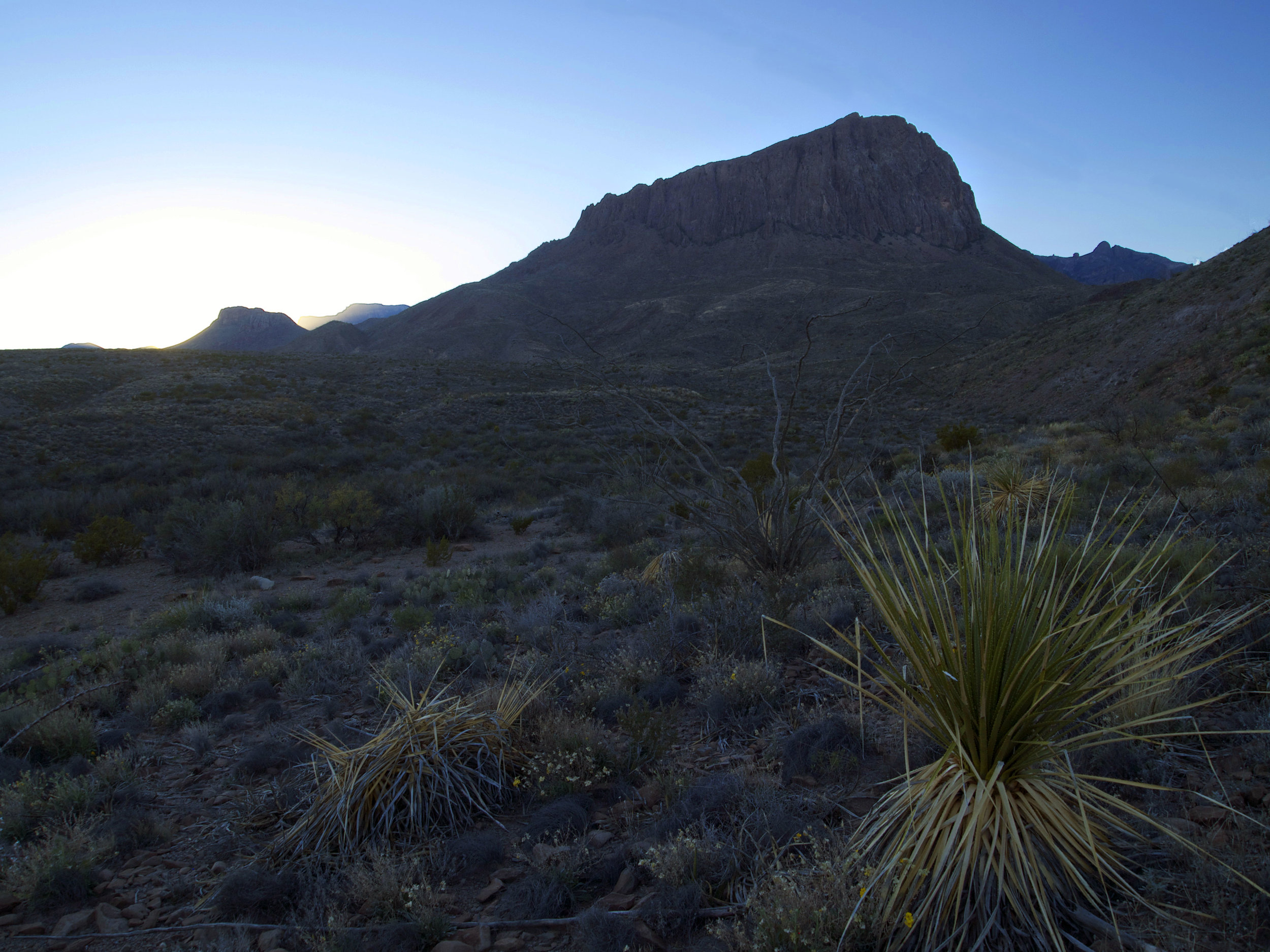
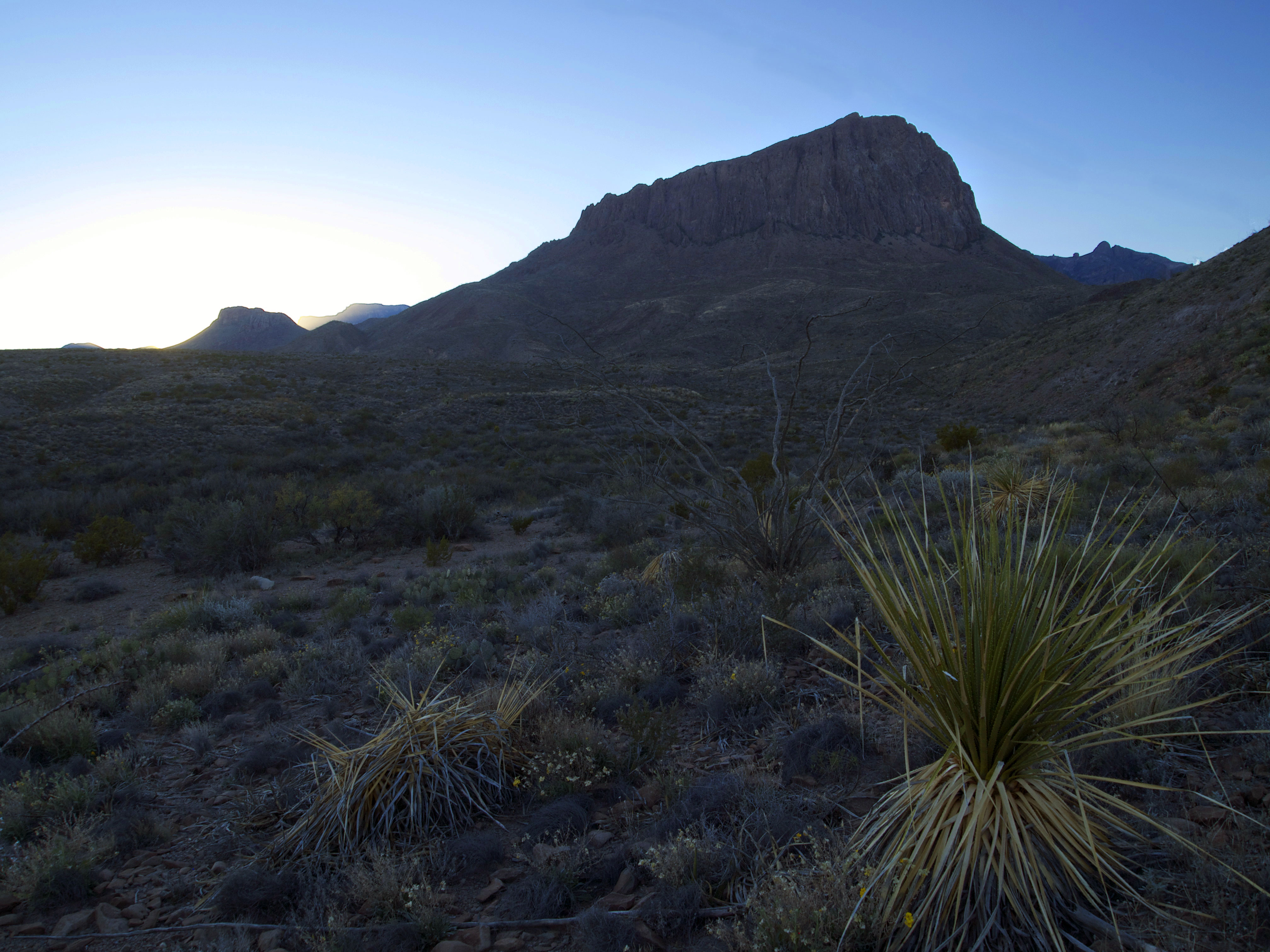
Nugent Mountain, Big Bend N.P. -Photo by Time GillerNugent Mountain, Big Bend N.P. -Photo by Time Giller

Nugent Mountain, Big Bend N.P. -Photo by Time Giller

Only a clear desert sunset sky can be so seamless. A complex landscape of buttes and mesas with the Chisos Mountains beyond has become a sharp black silhouette but rising from that is a prefect gradient, the glowing horizon of pastel yellow bleeding incrementally upward into oranges and reds eventually becoming a deep electric blue. The colors deepen imperceptibly defying measurement and obscuring time; my eyes struggle to adjust with the growing twilight. Puncturing the tapestry are the first celestial lights, Venus tonight, with Mars not far behind and over her shoulder. The varieties of daytime birds that populate the scrub and evade view have ceased their chattering end of day crescendo leaving silence in the still air. It is so silent that I can hear the leathery wings of a single bat that is breaking the perfection of the skyline, erratically hunting tiny insect prey. Soon high chirps from his companions tell me that he’s not alone. Suddenly a whirl of barely audible wing beats rises from the creosote in front of me tracing a few odd loops before abruptly becoming an oblong rock in the gravel before me. A Poorwill has mottled feathers that make it hard to distinguish in the dim light it prefers to hunt in, taking quick fights after moths then alighting back to the ground. Straining my eyes to make out this rarely seen bird I manage to notice that a Kangaroo Rat has also chosen to venture out now that the darkness has thickened. Light brown with a white belly and large black eyes, it has strong, oversized back legs that carry it around unpredictably and a long tufted tail whips along behind. If the Poorwill hadn’t drawn my eyes the other little critter would have been just another soft mysterious noise rising from the dusk.

It’s a really great word, crepuscular. From the Latin word for twilight, it refers to those creatures that are active primarily at dawn and dusk. The word has an exotic, enigmatic sound that matches these transition times between light and dark, the shadowy zone between worlds. In the desert this can be an especially useful time to be active. The heat of the day can be unforgiving for most animals and a majority of them take advantage of the cooler nighttime temperatures, especially predators. A little fella like a Kangaroo Rat avoids the daytime raptors who have gone to bed well as the nocturnal snakes who may not yet have awakened by slipping into the in between time. The subtle changes in lighting provide venue for camouflage.

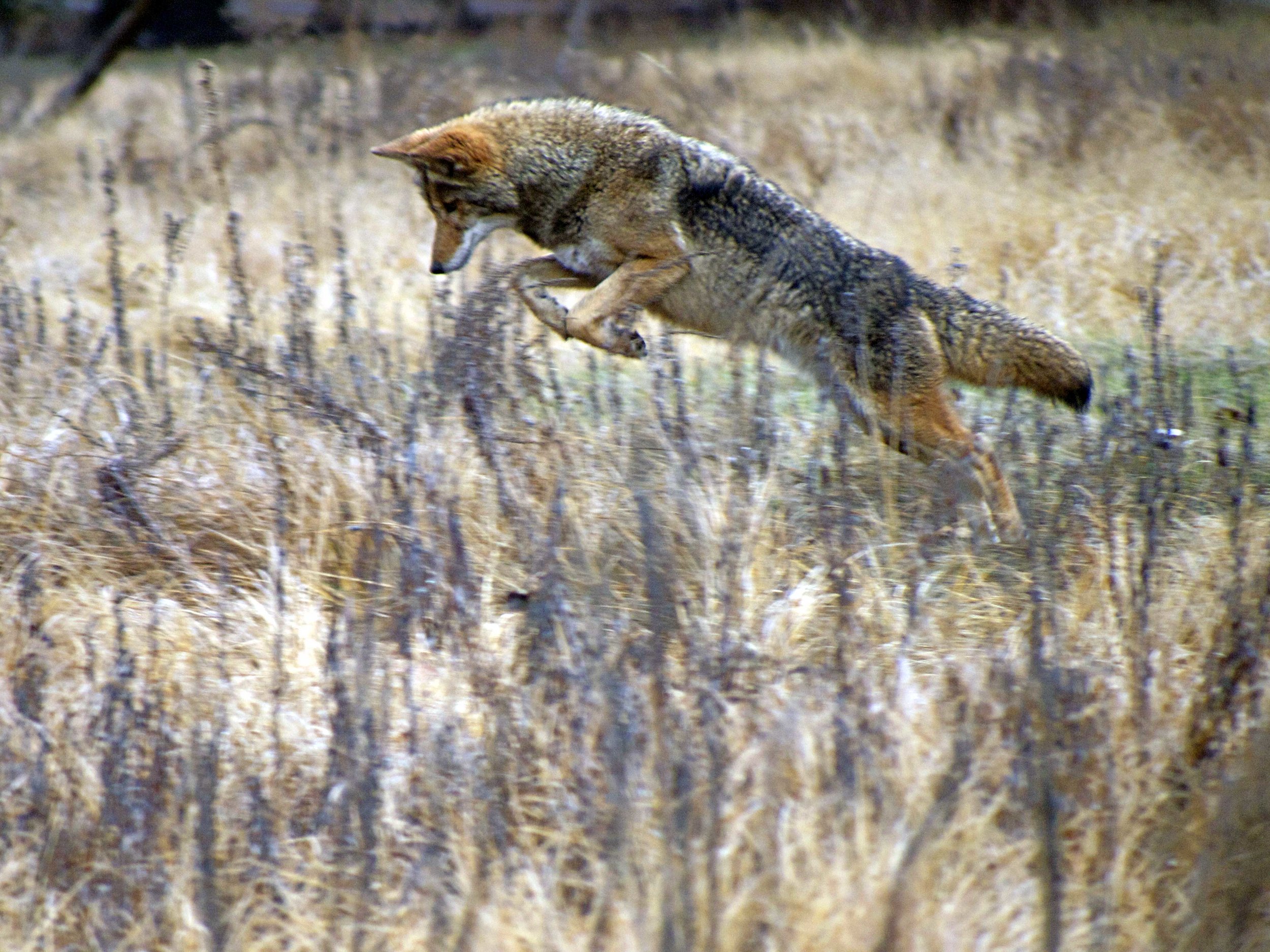
Coyote Yosemite N.P. - Photo by Tim GillerCoyote Yosemite N.P. - Photo by Tim Giller

Coyote Yosemite N.P. – Photo by Tim Giller

Wildlife doesn’t always conform to our labels though. I’ve seen owls awake at midday and like us, many diurnal creatures stay up late to finish their business. We humans clearly defy this categorization. Perhaps the coyote got his trickster reputation because of his refusal to conform to such labels. Generally considered a nocturnal animal they can be spotted at any hour, sometimes boldly making their presence known like the beautifully healthy one Rachael and I caught traipsing midday through the Presidio in San Francisco. These savvy animals also traverse the twilight period and we’ve heard their evening cackles on more evenings than not during our travels so far. Often deep into the night their yips and howls punctuate the darkness and on until the first hint of light in the east. I will never tire of this sound. At close range the disembodied laughing of coyote conversation on three sides of me does raise the hair on the back of my neck but it also ignites a primitive joy.
Crepuscular

Nugent Mountain, Big Bend N.P. -Photo by Time Giller

Nugent Mountain, Big Bend N.P. -Photo by Tim Giller

Only a clear desert sunset sky can be so seamless. A complex landscape of buttes and mesas with the Chisos Mountains beyond has become a sharp black silhouette but rising from that is a prefect gradient, the glowing horizon of pastel yellow bleeding incrementally upward into oranges and reds eventually becoming a deep electric blue. The colors deepen imperceptibly defying measurement and obscuring time; my eyes struggle to adjust with the growing twilight. Puncturing the tapestry are the first celestial lights, Venus tonight, with Mars not far behind and over her shoulder. The varieties of daytime birds that populate the scrub and evade view have ceased their chattering end of day crescendo leaving silence in the still air. It is so silent that I can hear the leathery wings of a single bat that is breaking the perfection of the skyline, erratically hunting tiny insect prey. Soon high chirps from his companions tell me that he’s not alone. Suddenly a whirl of barely audible wing beats rises from the creosote in front of me tracing a few odd loops before abruptly becoming an oblong rock in the gravel before me. A Poorwill has mottled feathers that make it hard to distinguish in the dim light it prefers to hunt in, taking quick fights after moths then alighting back to the ground. Straining my eyes to make out this rarely seen bird I manage to notice that a Kangaroo Rat has also chosen to venture out now that the darkness has thickened. Light brown with a white belly and large black eyes, it has strong, oversized back legs that carry it around unpredictably and a long tufted tail whips along behind. If the Poorwill hadn’t drawn my eyes the other little critter would have been just another soft mysterious noise rising from the dusk.

It’s a really great word, crepuscular. From the Latin word for twilight, it refers to those creatures that are active primarily at dawn and dusk. The word has an exotic, enigmatic sound that matches these transition times between light and dark, the shadowy zone between worlds. In the desert this can be an especially useful time to be active. The heat of the day can be unforgiving for most animals and a majority of them take advantage of the cooler nighttime temperatures, especially predators. A little fella like a Kangaroo Rat avoids the daytime raptors who have gone to bed well as the nocturnal snakes who may not yet have awakened by slipping into the in between time. The subtle changes in lighting provide venue for camouflage.

Coyote Yosemite N.P. - Photo by Tim Giller

Coyote Yosemite N.P. – Photo by Tim Giller

Wildlife doesn’t always conform to our labels though. I’ve seen owls awake at midday and like us, many diurnal creatures stay up late to finish their business. We humans clearly defy this categorization. Perhaps the coyote got his trickster reputation because of his refusal to conform to such labels. Generally considered a nocturnal animal they can be spotted at any hour, sometimes boldly making their presence known like the beautifully healthy one Rachael and I caught traipsing midday through the Presidio in San Francisco. These savvy animals also traverse the twilight period and we’ve heard their evening cackles on more evenings than not during our travels so far. Often deep into the night their yips and howls punctuate the darkness and on until the first hint of light in the east. I will never tire of this sound. At close range the disembodied laughing of coyote conversation on three sides of me does raise the hair on the back of my neck but it also ignites a primitive joy.
Strange Worlds

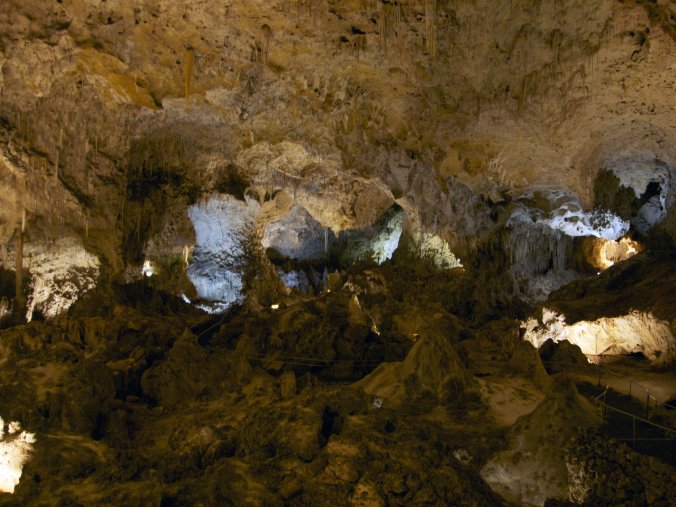
Carlsbad Caverns Photo by Tim GillerCarlsbad Caverns Photo by Tim Giller

Carlsbad Caverns Photo by Tim Giller

Rachael and I have been traveling through a world that has long since past and was much different from the one we all live in now. I don’t mean the rural cowboy world and down-home hospitality of West Texas. That world is alive and well and we were lucky enough to share Jell-O shots and a few beers at a tiny, small town pizza joint with some of these folks on Super Bowl Sunday. I’m thinking of a world that is much older and even more exotic.

From the Prehistoric Trackways in Las Cruces, to lakes formed in limestone sinkholes near Roswell and past the Guadalupe Mountains into the bootheel of Texas the landscape has been dominated by a biosphere that almost entirely died out a quarter billion years ago. Humans have already visited another planet. When paleontologists scratched into these layers of fossils they became the first visitors to a world full of strange creatures and plants, most of which have no relation to the one ones we share the planet with today. Scientists are still trying to pin down why, but at the end of this period as much as 90% of all species on Earth had been extinguished.

The Earth really has been any number of different planets over time and towards the end of the Permian period more than 250 million years ago, almost all land was bunched into the supercontinent Pangea. The ground I’m on now was down south of the equator and California wouldn’t even rise into existence for millions of years. This ground I’m on now actually spent much of its time submerged as a shallow sea, parts of which formed a reef composed of fanciful marine life. Unlike the coral reefs we are familiar with on Earth now, these reefs were built up by sponges and algae producing the building material for limestone and a rich organic layer that later became hydrocarbon. As the Earth shifted and the sea dried all this was deeply buried.

The puzzle pieces that form the Earth’s crust shifted around and parts of those reefs were pushed upward shedding the layers that had been covering them for ages and forming ridges and mountain ranges. In the meantime as surface water percolated into the rising limestone it mixed with the hydrocarbons creating sulfuric acid that carved elaborate caves and sinkholes. A new underground world was created. Later, a weak carbonic acid dripped into these caves creating, over hundreds of thousands of years, an infinite variety of mystifying shapes and formations in places like Carlsbad Caverns. Surface creatures found their way into these pitch-black regions evolving into sightless and colorless beasties. Sharing this space and extending much deeper under the earth are whole classes of extremophiles, microbes that live in places and in ways that we had thought impossible just a few decades ago, deriving energy without the sun using chemical processes. A whole fantastical ecosystem of bizarre creatures and shapes that could never be seen, unless an entrance was formed and someone was lucky enough to find it. It has recently been suggested that half of the Earth’s total biomass may exist deep underground and is nearly unknown to science.

El Capitan and the Salt Basin from Guadalupe Pk - Photo by Tim GillerEl Capitan and the Salt Basin from Guadalupe Pk - Photo by Tim Giller

El Capitan and the Salt Basin from Guadalupe Pk – Photo by Tim Giller

We made the effort of hiking to “The Top of Texas” at Guadalupe Peak, climbing the reef with fossil evidence at our feet as we traveled millions of years per mile of steep trail. Surrounded by the Chihuahuan Desert you have to use your imagination that this was once an equatorial sea. Our imaginations were overwhelmed the next day as we wandered the bowels of these mountains, fortunate enough to have the winding paths of Carlsbad Caverns nearly to ourselves. It was as if time didn’t exist and we literally lost a couple hours mesmerized by the elegant forms created drop by drop, one spec of calcified deposit at a time.

107in Struve Telescope, MacDonald Observatory - Photo by Tim Giller107in Struve Telescope, MacDonald Observatory - Photo by Tim Giller

107in Struve Telescope, MacDonald Observatory – Photo by Tim Giller

Exiting the caves into the fading daylight, looking for a place to sleep on the wide flat expanse of public land that spreads out to the East of the Guadalpues, yet another world revealed itself. This one was an industrialized landscape out of a dark science fiction imagination. Across the horizon were the flares of oil wells, pumpjacks working at those ancient hydrocarbons embedded in stone, the fracking boom in full effect. Having camped in this area in the mid 90’s I was expecting the clear unobstructed night skies that West Texas is famous for. Instead the air had a grim haze and the cumulative lights of hundreds of wells overwhelmed the Milky Way. Stopping in at the prestigious MacDonald Observatory a couple days later we learned that this new development is a severe issue for the astronomical research they do. I was struck at the far reaching the effects of our thirst for oil. We dig into the distant past for this resource pushing off the bulk of the consequences onto those in the future, forcing a top secret mélange of toxic ingredients into an ecosystem deep underground before we’ve have had any chance to learn anything about it while obscuring the vision of those who would teach us about the most distant mysterious worlds we have yet to see in the vastness of the universe.

Cave Sasquatch? - Photo by Tim GillerCave Sasquatch? - Photo by Tim Giller

Cave Sasquatch? – Photo by Tim Giller

Who knows what creatures we may never find because we didn’t care to look in the first place.

Strange Worlds


Carlsbad Caverns Photo by Tim Giller

Carlsbad Caverns Photo by Tim Giller

Rachael and I have been traveling through a world that has long since past and was much different from the one we all live in now. I don’t mean the rural cowboy world and down-home hospitality of West Texas. That world is alive and well and we were lucky enough to share Jell-O shots and a few beers at a tiny, small town pizza joint with some of these folks on Super Bowl Sunday. I’m thinking of a world that is much older and even more exotic.

From the Prehistoric Trackways in Las Cruces, to lakes formed in limestone sinkholes near Roswell and past the Guadalupe Mountains into the bootheel of Texas the landscape has been dominated by a biosphere that almost entirely died out a quarter billion years ago. Humans have already visited another planet. When paleontologists scratched into these layers of fossils they became the first visitors to a world full of strange creatures and plants, most of which have no relation to the one ones we share the planet with today. Scientists are still trying to pin down why, but at the end of this period as much as 90% of all species on Earth had been extinguished.

The Earth really has been any number of different planets over time and towards the end of the Permian period more than 250 million years ago, almost all land was bunched into the supercontinent Pangea. The ground I’m on now was down south of the equator and California wouldn’t even rise into existence for millions of years. This ground I’m on now actually spent much of its time submerged as a shallow sea, parts of which formed a reef composed of fanciful marine life. Unlike the coral reefs we are familiar with on Earth now, these reefs were built up by sponges and algae producing the building material for limestone and a rich organic layer that later became hydrocarbon. As the Earth shifted and the sea dried all this was deeply buried.

The puzzle pieces that form the Earth’s crust shifted around and parts of those reefs were pushed upward shedding the layers that had been covering them for ages and forming ridges and mountain ranges. In the meantime as surface water percolated into the rising limestone it mixed with the hydrocarbons creating sulfuric acid that carved elaborate caves and sinkholes. A new underground world was created. Later, a weak carbonic acid dripped into these caves creating, over hundreds of thousands of years, an infinite variety of mystifying shapes and formations in places like Carlsbad Caverns. Surface creatures found their way into these pitch-black regions evolving into sightless and colorless beasties. Sharing this space and extending much deeper under the earth are whole classes of extremophiles, microbes that live in places and in ways that we had thought impossible just a few decades ago, deriving energy without the sun using chemical processes. A whole fantastical ecosystem of bizarre creatures and shapes that could never be seen, unless an entrance was formed and someone was lucky enough to find it. It has recently been suggested that half of the Earth’s total biomass may exist deep underground and is nearly unknown to science.


El Capitan and the Salt Basin from Guadalupe Pk - Photo by Tim Giller

El Capitan and the Salt Basin from Guadalupe Pk – Photo by Tim Giller

We made the effort of hiking to “The Top of Texas” at Guadalupe Peak, climbing the reef with fossil evidence at our feet as we traveled millions of years per mile of steep trail. Surrounded by the Chihuahuan Desert you have to use your imagination that this was once an equatorial sea. Our imaginations were overwhelmed the next day as we wandered the bowels of these mountains, fortunate enough to have the winding paths of Carlsbad Caverns nearly to ourselves. It was as if time didn’t exist and we literally lost a couple hours mesmerized by the elegant forms created drop by drop, one spec of calcified deposit at a time.


107in Struve Telescope, MacDonald Observatory - Photo by Tim Giller

107in Struve Telescope, MacDonald Observatory – Photo by Tim Giller

Exiting the caves into the fading daylight, looking for a place to sleep on the wide flat expanse of public land that spreads out to the East of the Guadalpues, yet another world revealed itself. This one was an industrialized landscape out of a dark science fiction imagination. Across the horizon were the flares of oil wells, pumpjacks working at those ancient hydrocarbons embedded in stone, the fracking boom in full effect. Having camped in this area in the mid 90’s I was expecting the clear unobstructed night skies that West Texas is famous for. Instead the air had a grim haze and the cumulative lights of hundreds of wells overwhelmed the Milky Way. Stopping in at the prestigious MacDonald Observatory a couple days later we learned that this new development is a severe issue for the astronomical research they do. I was struck at the far reaching the effects of our thirst for oil. We dig into the distant past for this resource pushing off the bulk of the consequences onto those in the future, forcing a top secret mélange of toxic ingredients into an ecosystem deep underground before we’ve have had any chance to learn anything about it while obscuring the vision of those who would teach us about the most distant mysterious worlds we have yet to see in the vastness of the universe.


Cave Sasquatch? - Photo by Tim Giller

Cave Sasquatch? – Photo by Tim Giller

Who knows what creatures we may never find because we didn’t care to look in the first place.

A Walk in the Desert

Ocotillo SpikesOcotillo Spikes

Ocotillo Spikes

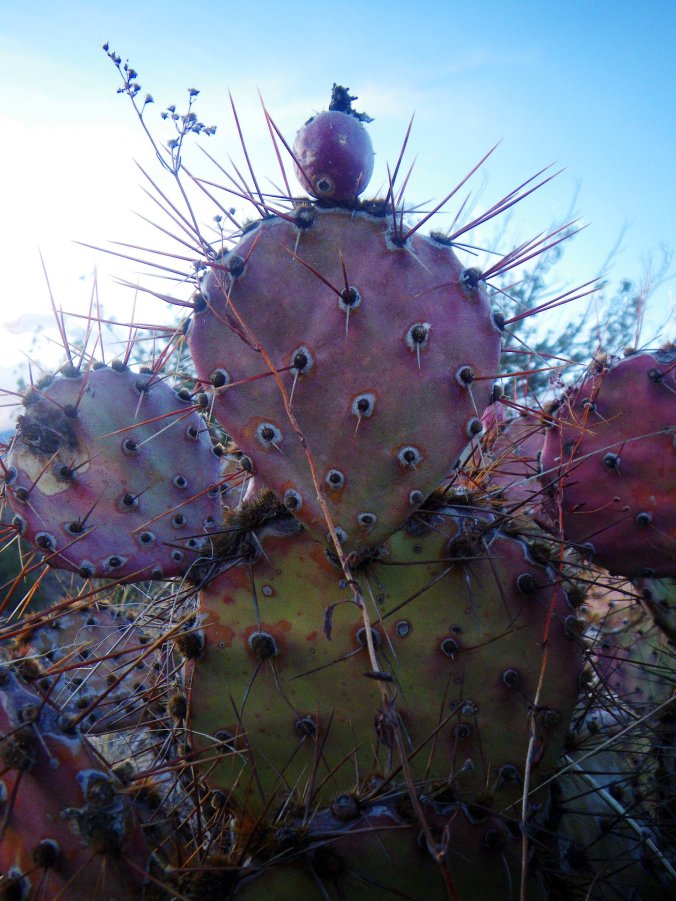
Commonly when folks talk about the desert the words formidable, harsh, dry and dull come into the conversation. And sure, it can those things but, the desert is also breathtakingly beautiful and I have the utmost respect for those that call the desert home. On a clear day in the desert the horizon is the only thing stopping your eyes from seeing further. Once one gets to know the desert it’s anything but dull. It’s a land of creative evolution. A desert is defined as a place that receives less than ten inches of water (on average) per year. So the birds, animals and plants had to adapt to get and store water as best as possible as soon as it comes and then make it last as long as possible. Birds, like the roadrunner, often only get water from what they eat. This is the same for the kangaroo rat who also doesn’t sweat in order to keep as much water as possible. Birds and animals are usually active at night when temperatures are cooler. This is also true many of the plants that call the desert home. In order for photosynthesis to take place plants need sun light, carbon dioxide and water. However, the sun is also very drying. Some plants wait until night to absorb carbon dioxide (CAM photosynthesis). They can also “idle” in that they can go for periods of time with no photosynthesis production during very dry times. Plants will have protective waxy leaves and some lean into the sun so as little as possible will be exposed during the day. Many of the plants employ roots that spread out along the desert floor so that when it rains they can soak up the water where it lands. Others have long roots deep into the ground or only grow by seasonal streams. The creosote bush has both deep roots and long shallow roots. The hard part for these plants is not necessarily waiting for the rains it’s protecting the stored water from thirsty predators. Shrubs, like creosote, tend to taste very bad and don’t get munched on unless animals are feeling pretty desperate. Other plants, a good many other plants, developed spikes, spines and claws. Walking through the desert there is no avoiding them try as we might. As your probably read poor Tim really got it good. After spending the last four weeks in the desert I have gotten my fair share of pokes, stabs and grabs. Even the trees have thorns. One fella we met back at our volunteer day at Saguaro mentioned how he could tell it was a mesquite tree that got him while walking in the dark by the way it stabbed him. Reading the Big Bend park paper a quote from an old rancher on the mesquite went like this “It’s the devil with roots. It scabs my cows, spooks my horses and gives little shade”. On a couple of our walks Tim could tell where I was simply by where the direction of my “ow f@*#!” was coming. Whether it was a cholla, a prickly or the very grabby cat’s claw shrub (also known as the wait-a-minute) poking at me. I thought I’d best this little sticky shrub by wearing jeans instead of hiking pants and all I managed to do was give it more to grab onto. Some yuccas have serrated leaves like a saw and agaves that have us both convinced that it kill ya if you landed on it. I also read that while spikes are an obvious protection against predation, some spikes are so thick they help shade the plant as well. Many barrel shaped cacti spikes squeeze together as the plant loses it’s water and so the spikes offer a thicker armor in a time of need.
This doesn’t really stop predation though, in fact the Javalina’s hard palate make prickly pear refreshing snack. Many birds can get between the spikes to both nibble away at and nest in a cactus. The cactus wren can even remove spikes as needed to be able to fly in and out of their home cholla with ease. Tim and I even saw a cow nipping at a cholla. For Native Americans living off the desert they not only ate many of the plants they used their fibers for weaving and sewing, roots for soap, saps for medicines, and flowers for teas. The Mescalero Apache take their name after a sweet, fibrous treat called mescal made from baking parry’s agave. They made a beer like drink from it and a liquor (fondly known as tequila now). When they weren’t eating or drinking from the plant they dipped their spears and arrowheads in its juices. The juices can cause extreme and immediate dermatitis. As long as there was a known water source the desert was a place of abundance for those willing to be intimate with its subtleties and appreciate its extremes.

Driving from the Mojave, to the Sonoran and now into the Chihuahuan deserts we’ve seen the sometimes slight and sometimes great differences. From low desert to high desert to up into the juniper and oak forests and back down again, even in winter, the desert is hardly dull and I’m a little sad we’ll be leaving it behind soon.

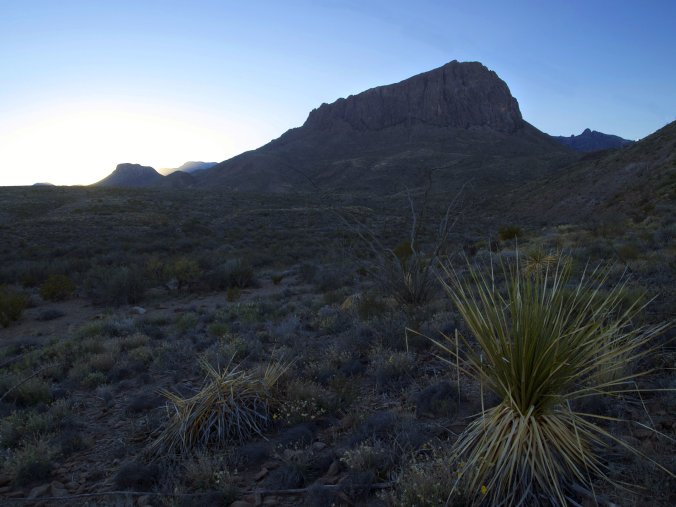
DesertDesert

Desert

A Walk in the Desert

Commonly when folks talk about the desert the words formidable, harsh, dry and dull come into the conversation. And sure, it can those things but, the desert is also breathtakingly beautiful and I have the utmost respect for those that call the desert home. On a clear day in the desert the horizon is the only thing stopping your eyes from seeing further. Once one gets to know the desert it’s anything but dull. It’s a land of creative evolution. A desert is defined as a place that receives less than ten inches of water (on average) per year. So the birds, animals and plants had to adapt to get and store water as best as possible as soon as it comes and then make it last as long as possible. Birds, like the roadrunner, often only get water from what they eat. This is the same for the kangaroo rat who also doesn’t sweat in order to keep as much water as possible. Birds and animals are usually active at night when temperatures are cooler. This is also true many of the plants that call the desert home. In order for photosynthesis to take place plants need sun light, carbon dioxide and water. However, the sun is also very drying. Some plants wait until night to absorb carbon dioxide (CAM photosynthesis). They can also “idle” in that they can go for periods of time with no photosynthesis production during very dry times. Plants will have protective waxy leaves and some lean into the sun so as little as possible will be exposed during the day. Many of the plants employ roots that spread out along the desert floor so that when it rains they can soak up the water where it lands. Others have long roots deep into the ground or only grow by seasonal streams. The creosote bush has both deep roots and long shallow roots. The hard part for these plants is not necessarily waiting for the rains it’s protecting the stored water from thirsty predators. Shrubs, like creosote, tend to taste very bad and don’t get munched on unless animals are feeling pretty desperate. Other plants, a good many other plants, developed spikes, spines and claws. Walking through the desert there is no avoiding them try as we might. As your probably read poor Tim really got it good. After spending the last four weeks in the desert I have gotten my fair share of pokes, stabs and grabs. Even the trees have thorns. One fella we met back at our volunteer day at Saguaro mentioned how he could tell it was a mesquite tree that got him while walking in the dark by the way it stabbed him. Reading the Big Bend park paper a quote from an old rancher on the mesquite went like this “It’s the devil with roots. It scabs my cows, spooks my horses and gives little shade”. On a couple of our walks Tim could tell where I was simply by where the direction of my “ow f@*#!” was coming. Whether it was a cholla, a prickly or the very grabby cat’s claw shrub (also known as the wait-a-minute) poking at me. I thought I’d best this little stiOcotillo Spikescky shrub by wearing jeans instead of hiking pants and all I managed to do was give it more to grab onto. Some yuccas have serrated leaves like a saw and agaves that have us both convinced that it kill ya if you landed on it. I also read that while spikes are an obvious protection against predation, some spikes are so thick they help shade the plant as well. Many barrel shaped cacti spikes squeeze together as the plant loses it’s water and so the spikes offer a thicker armor in a time of need.

This doesn’t really stop predation though, in fact the Javalina’s hard palate make prickly pear refreshing snack. Many birds can get between the spikes to both nibble away at and nest in a cactus. The cactus wren can even remove spikes as needed to be able to fly in and out of their home cholla with ease. Tim and I even saw a cow nipping at a cholla. For Native Americans living off the desert they not only ate many of the plants they used their fibers for weaving and sewing, roots for soap, saps for medicines, and flowers for teas. The Mescalero Apache take their name after a sweet, fibrous treat called mescal made from baking parry’s agave. They made a beer like drink from it and a liquor (fondly known as tequila now). When they weren’t eating or drinking from the plant they dipped their spears and arrowheads in its juices. The juices can cause extreme and immediate dermatitis. As long as there was a known water source the desert was a place of abundance for those willing to be intimate with its subtleties and appreciate its extremes.

Driving from the Mojave, to the Sonoran and now into the Chihuahuan deserts we’ve seen the sometimes slight and sometimes great differences. From low desert to high desert to up into the juniper and oak forests and back down again, even in winter, the desert is hardly dull and I’m a little sad we’ll be leaving it behind soon.

Desert

Landscape that speaks

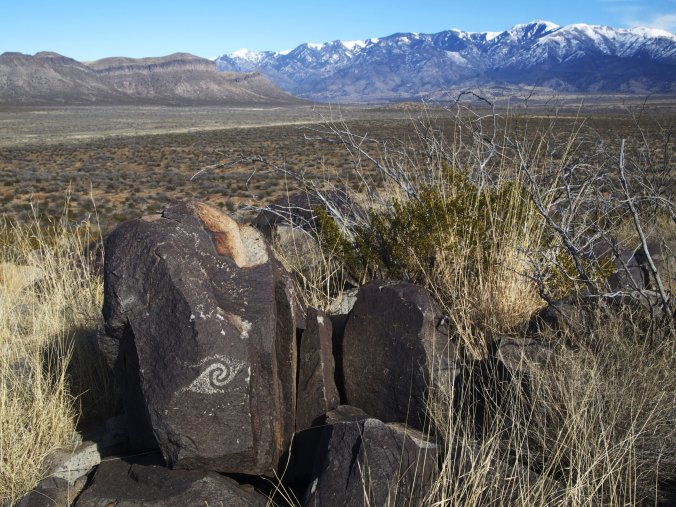
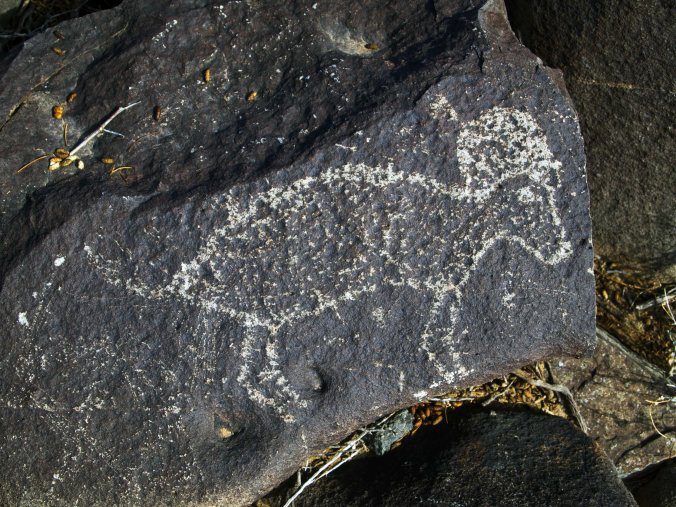
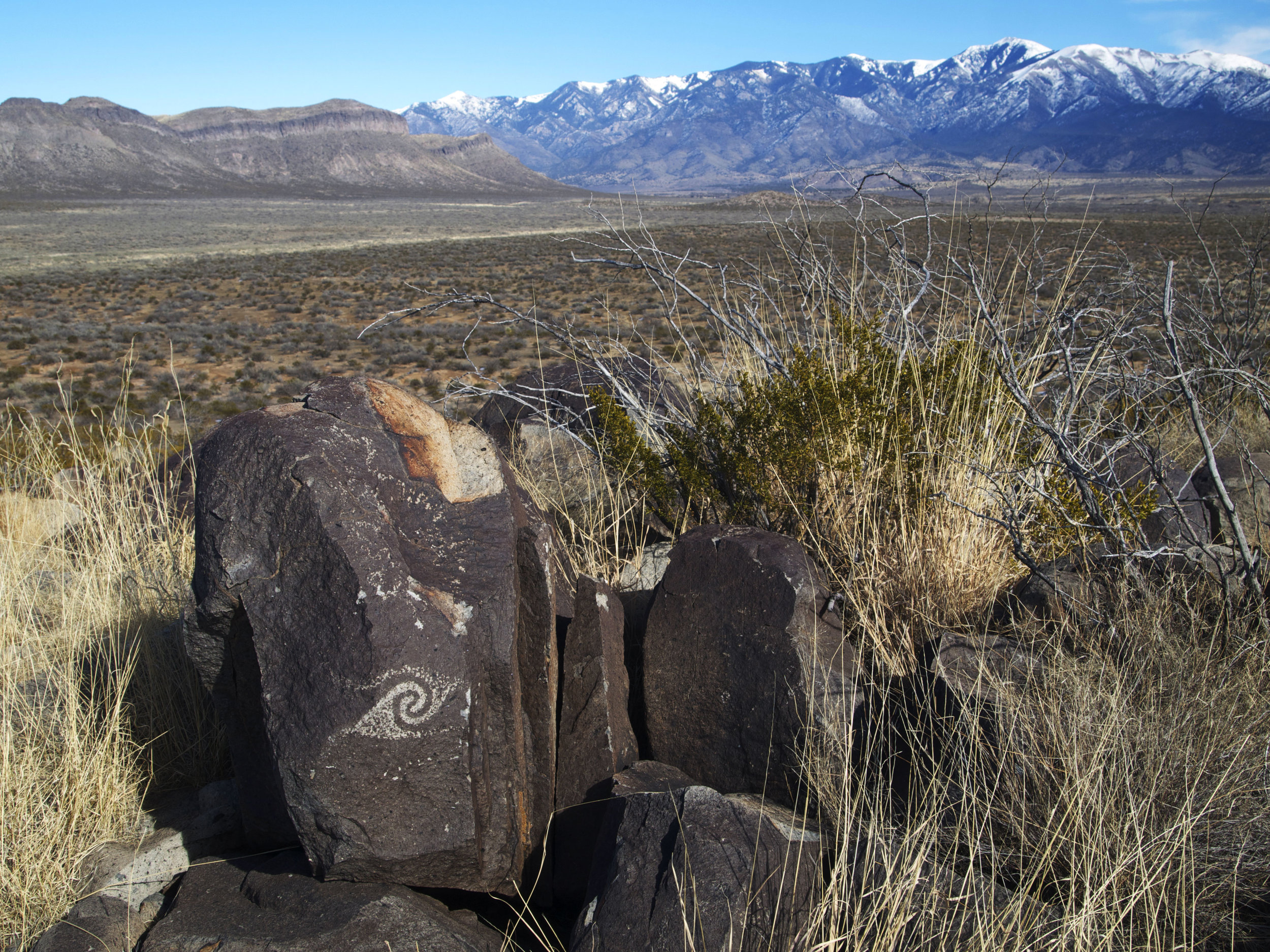
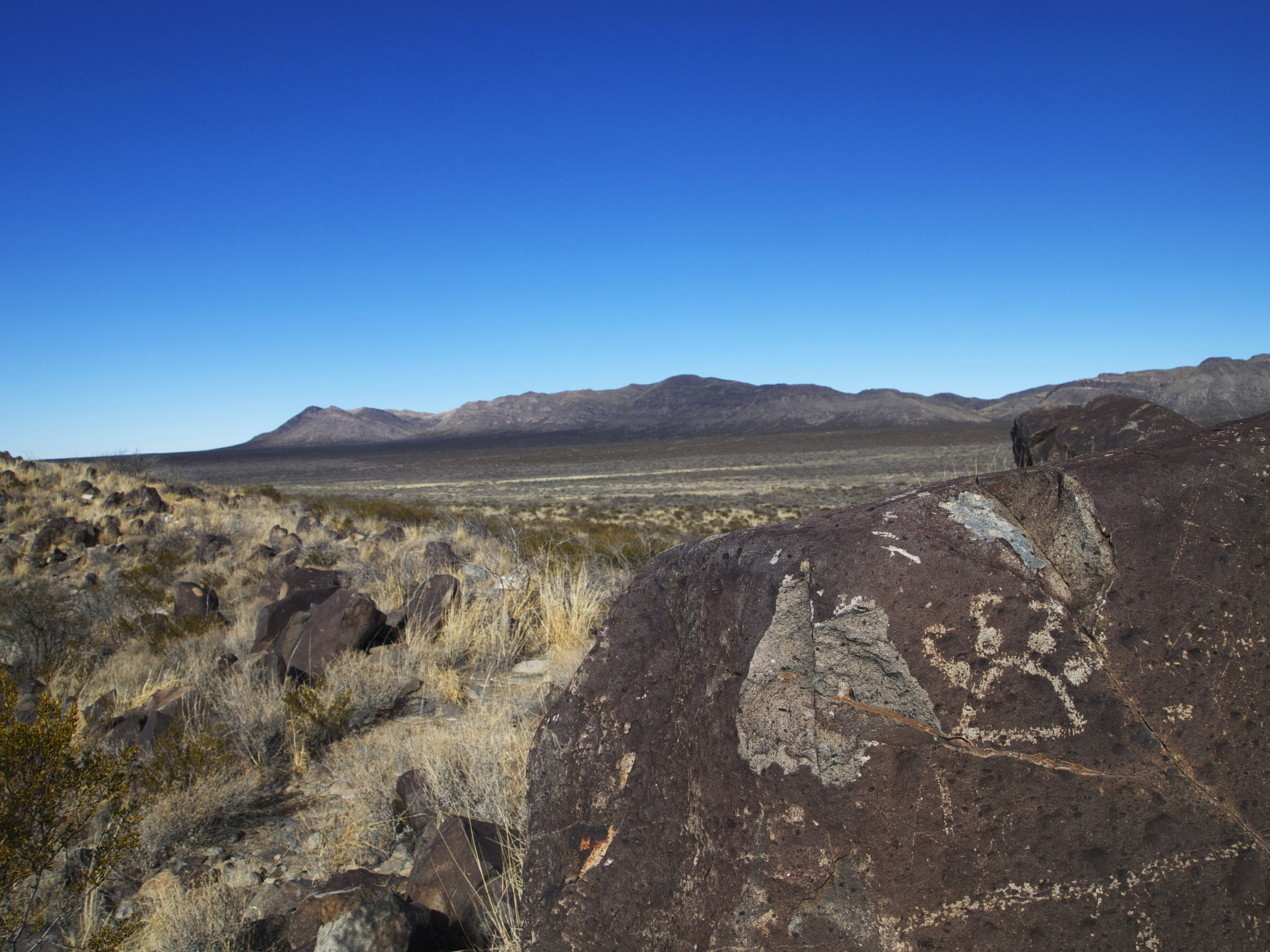
Three Rivers Petroglyph Site -Photo by TIm GillerThree Rivers Petroglyph Site -Photo by TIm Giller

Three Rivers Petroglyph Site -Photo by TIm Giller

The colors of the desert are subtle but there is plenty of color if you take time to look. Except sometimes it can be black or white. That is what you’ll find on the two ends of the Tularosa Basin in southern New Mexico. On the south end are sands of pure white gypsum covering 275 square miles and creeping northward with the prevailing winds. Towards the north end is a 44 mile tongue of lava field that poured southward down valley. These two disparate features are relative newcomers to a sprawling basin out of which no water flows to the ocean.

The sand is a product of this fact, the mountains ringing the basin are rich in gypsum from ancient uplifted seabeds and waters draining from them deposit the dissolved mineral in the low southern end. As the shallow lake formed by this runoff evaporates into a playa the deposits form soft crystals easily eroded by the strong winds, the resulting grains piling up into otherworldly bright white dunes. This process has been going on a mere 25,000 years. This is plenty of time however for plants and animals to adapt to a new landscape. Yucca plants try to outgrow the rising dunes by stretching their stems. Grasses have a quick life cycle, spreading their seed before being engulfed. A species of lizard has evolved from its darker cousins to a nearly white color that blends into the sand.

About 5000 years ago vents on the higher north end began extruding the lava that reached southward eventually covering 127 square miles. Cooling into a nearly black basalt it is the newest land to be found in the region. Still there are creatures that have adapted, including a similar lizard that in the ensuing years has become very dark skinned to blend into its contrary landscape.

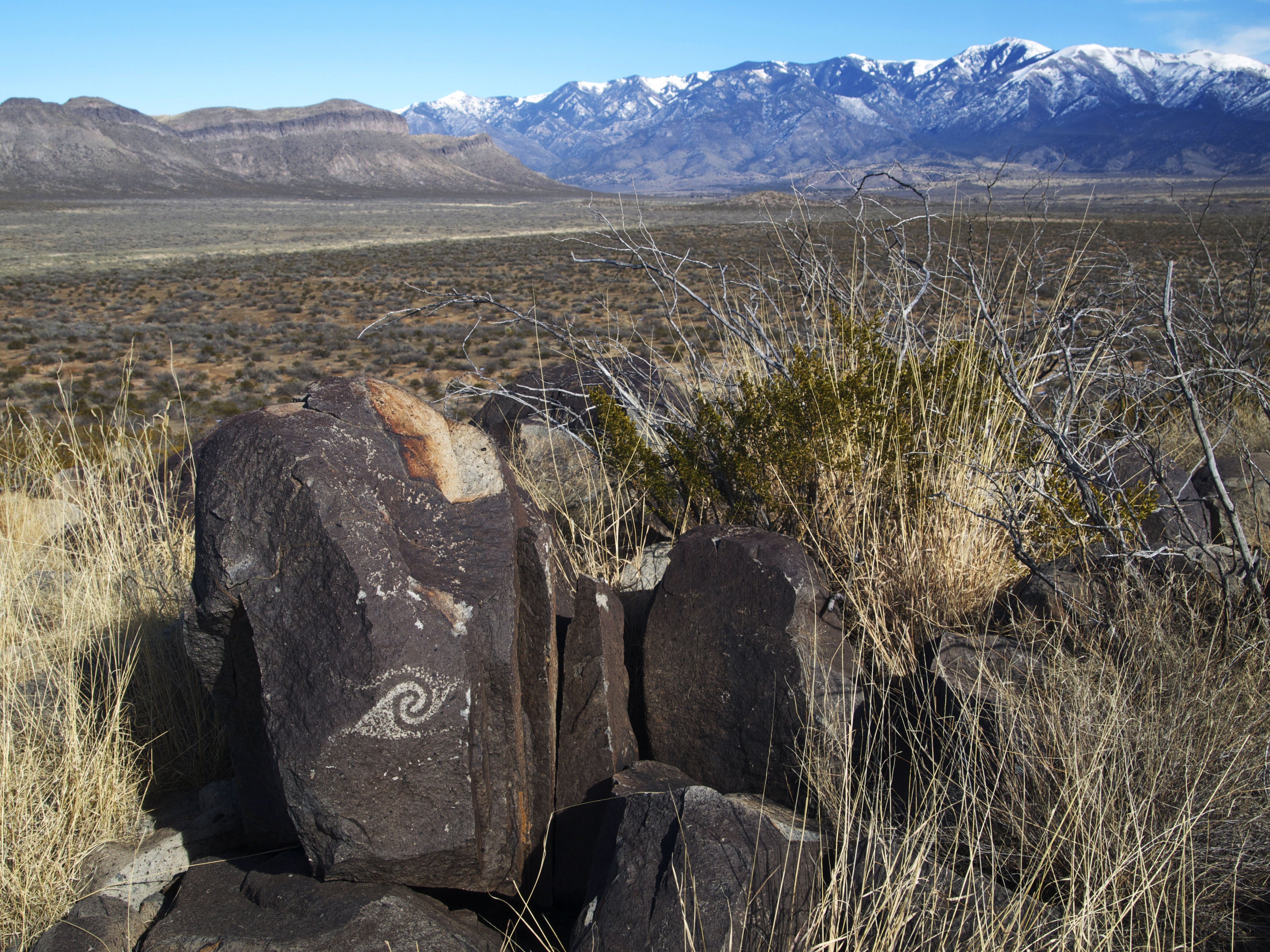
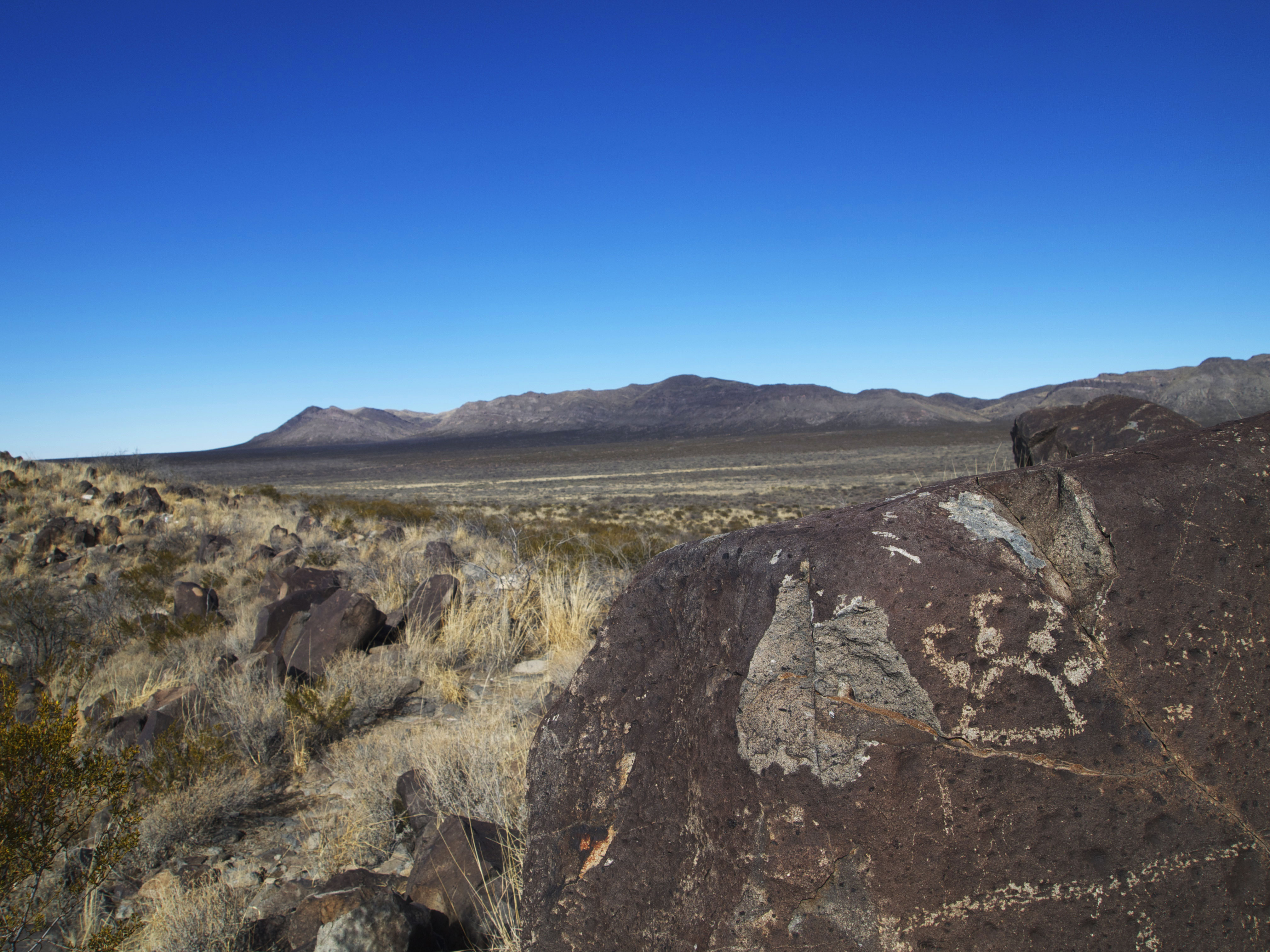
There were surely people on hand to witness the birth of this black landscape, possibly during the early days of the white sands as well. No clues as to what this all might have meant to them remain. Their successors some millennia later left us cryptic messages in a spot nearly halfway between these contrasting landscapes. The Three Rivers Petroglyph site has an incredible amount of rock art, but again we can only speculate about the specific message. And folks speculate wildly from nonsense graffiti to evidence of extraterrestrial contact. What is clear from the hillside full of inscribed images is a commitment to art and a strong relationship to the landscape over generations.

Three Rivers Petroglyph Site -Photo by TIm GillerThree Rivers Petroglyph Site -Photo by TIm Giller

Three Rivers Petroglyph Site -Photo by TIm Giller

Some time later the Apache made a stronghold here first against the furthest outpost of Spanish empire, then for raids on Mexican pioneers before the land was commandeered by the United States. American ranchers came next denuding the grassland, altering most of the basin into a creosote scrubland.

The most dramatic new edition is an increased radiation level. The first glowing plume of the atomic age was seen here on July 16, 1945 when frantic theory became awesome fact in the first mushroom cloud rising from the Trinity site on the basin’s northwest corner.

3rivers13rivers1

3rivers1

The contrasts are compelling. The ephemeral landscape of shifting white and the hardened river of black stone, two opposing features in a gesture of connection, their trajectories striving to meet somewhere in an inhospitable basin. A basin that has seen the pastoral hands of people living softly with the land and witnessed the blinding force of absolute will frighteningly manifested.

Landscape that speaks

Three Rivers Petroglyph Site -Photo by TIm Giller

Three Rivers Petroglyph Site -Photo by TIm Giller

The colors of the desert are subtle but there is plenty of color if you take time to look. Except sometimes it can be black or white. That is what you’ll find on the two ends of the Tularosa Basin in southern New Mexico. On the south end are sands of pure white gypsum covering 275 square miles and creeping northward with the prevailing winds. Towards the north end is a 44 mile tongue of lava field that poured southward down valley. These two disparate features are relative newcomers to a sprawling basin out of which no water flows to the ocean.

The sand is a product of this fact, the mountains ringing the basin are rich in gypsum from ancient uplifted seabeds and waters draining from them deposit the dissolved mineral in the low southern end. As the shallow lake formed by this runoff evaporates into a playa the deposits form soft crystals easily eroded by the strong winds, the resulting grains piling up into otherworldly bright white dunes. This process has been going on a mere 25,000 years. This is plenty of time however for plants and animals to adapt to a new landscape. Yucca plants try to outgrow the rising dunes by stretching their stems. Grasses have a quick life cycle, spreading their seed before being engulfed. A species of lizard has evolved from its darker cousins to a nearly white color that blends into the sand.

About 5000 years ago vents on the higher north end began extruding the lava that reached southward eventually covering 127 square miles. Cooling into a nearly black basalt it is the newest land to be found in the region. Still there are creatures that have adapted, including a similar lizard that in the ensuing years has become very dark skinned to blend into its contrary landscape.

There were surely people on hand to witness the birth of this black landscape, possibly during the early days of the white sands as well. No clues as to what this all might have meant to them remain. Their successors some millennia later left us cryptic messages in a spot nearly halfway between these contrasting landscapes. The Three Rivers Petroglyph site has an incredible amount of rock art, but again we can only speculate about the specific message. And folks speculate wildly from nonsense graffiti to evidence of extraterrestrial contact. What is clear from the hillside full of inscribed images is a commitment to art and a strong relationship to the landscape over generations.

Three Rivers Petroglyph Site -Photo by TIm Giller

Three Rivers Petroglyph Site -Photo by TIm Giller

Some time later the Apache made a stronghold here first against the furthest outpost of Spanish empire, then for raids on Mexican pioneers before the land was commandeered by the United States. American ranchers came next denuding the grassland, altering most of the basin into a creosote scrubland.

The most dramatic new edition is an increased radiation level. The first glowing plume of the atomic age was seen here on July 16, 1945 when frantic theory became awesome fact in the first mushroom cloud rising from the Trinity site on the basin’s northwest corner.

The contrasts are compelling. The ephemeral landscape of shifting white and the hardened river of black stone, two opposing features in a gesture of connection, their trajectories striving to meet somewhere in an inhospitable basin. A basin that has seen the pastoral hands of people living softly with the land and witnessed the blinding force of absolute will frighteningly manifested.3rivers1

Vagabond Volunteers

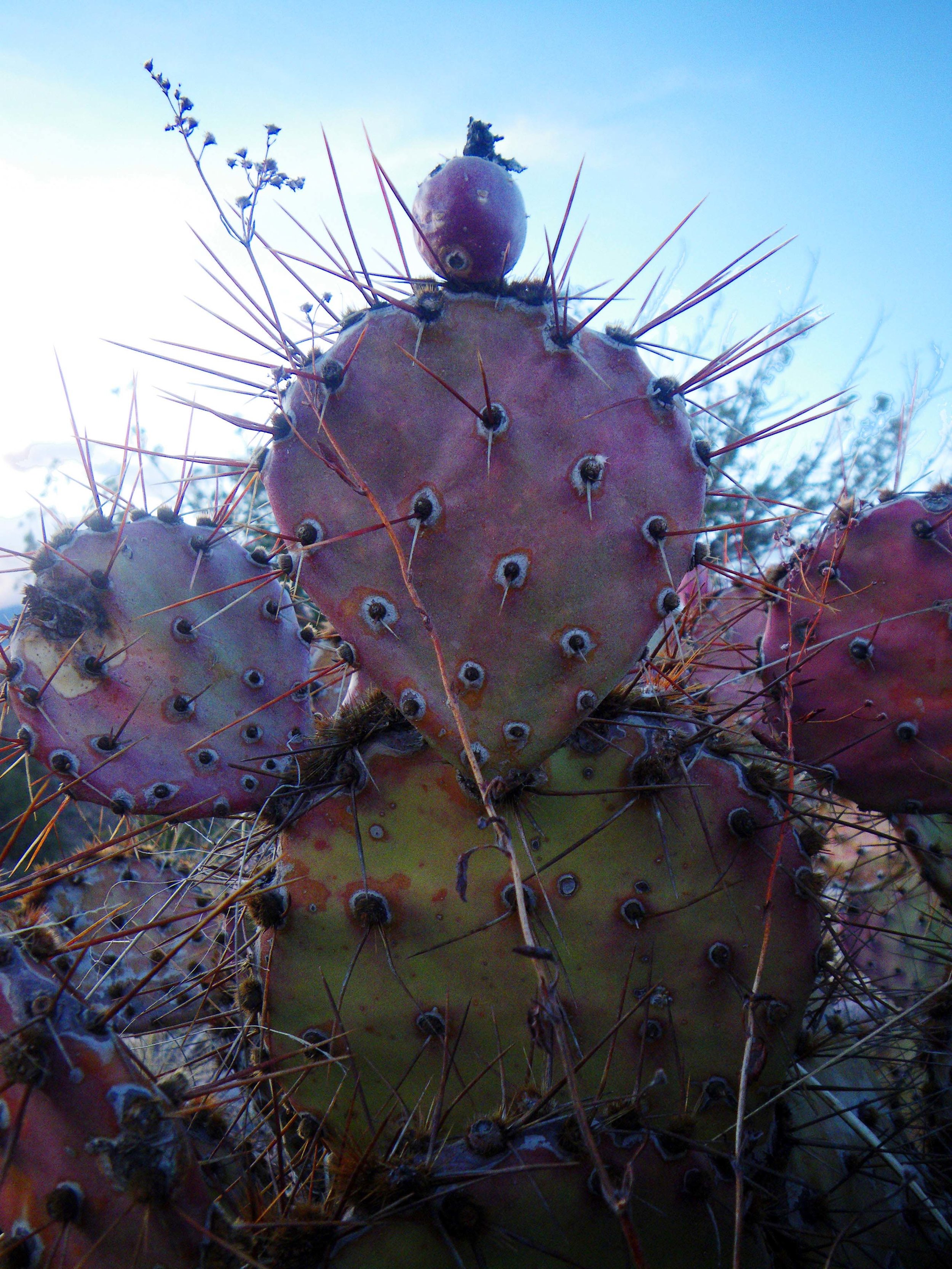
PricklyPearPricklyPear

PricklyPear

As I bent forward to look at a strange bit of Saguaro skeleton I felt a sharp sensation that quickly flashed me back to my earliest memory. I had to be less than 2 years old and my walking skills must have been mighty wobbly because as I was stumbling around outside our mobile home in the Mojave desert I promptly sat into a prickly pear cactus. My mom spent an hour plucking the needles out of my rear. This time around I only gave Rachael 10 minutes because we needed to come out from behind the mesquite tree and rejoin our fellow volunteers. Most deserts have a variety of foliage that endeavor to stab you, a successful defense mechanism for plants growing in a harsh environment with scarce food sources. The Sonoran desert however is greener and has more biomass than you’d expect for such a hot and dry place. This is largely the result of having two wet seasons; saturating winter rains and dramatic summer monsoon downpours. This doesn’t mean a lot of water but in a place where life waits out the dry in order to flourish with the wet the Sonoran in known for a higher variety and density of life. Life that is more than happy to fill my unobservant butt with barbed spines.
The good thing is we were here to get in close contact with the land and we were fortunate enough to find a drop in volunteer opportunity at Saguaro National Park. Though unfamiliar to us Californians, buffelgrass has become a widespread invasive plant in the deserts and rangelands of the Southwest an all to common example of a plant introduced as cattle feed that got out of hand. A fiend for water it can cheat the locals, tapping the scarce resource before it ever gets an inch into the soil. Removing exotic plants can appear futile. They come back with the repetitiveness of a bad horror movie villain. However native plants are intimately adapted to their environments and I’ve seen first hand that given a chance they can hold their own. This committed group of volunteers is trying to give the park that chance. By focusing on specific areas and with persistent effort the hope is to remove the invader and allow the native plant community to keep it at bay.

Hemmed in by suburban Tucson, Saguaro National Park has a lot of folks who spend time there on a regular basis. A number of the people we worked with had literally, while hiking or riding bikes through the park, stumbled upon the chance give back to a place they care about. After being mostly to ourselves in the desert for several days I think Rachael and I were in need of some social interaction and camaraderie. Getting a bit sweaty and dusty with these good folks was just what we needed. I don’t even hold any resentment toward my prickly pear friend. It was a good reminder to pay attention and be present in the moment.

Volunteers at Saguaro N.P.Volunteers at Saguaro N.P.

Volunteers at Saguaro N.P.

Endangered, to be or not to be?

Would you visit a National Monument if the most foreign thing you saw was people on ladders painting the flowers with pollen?
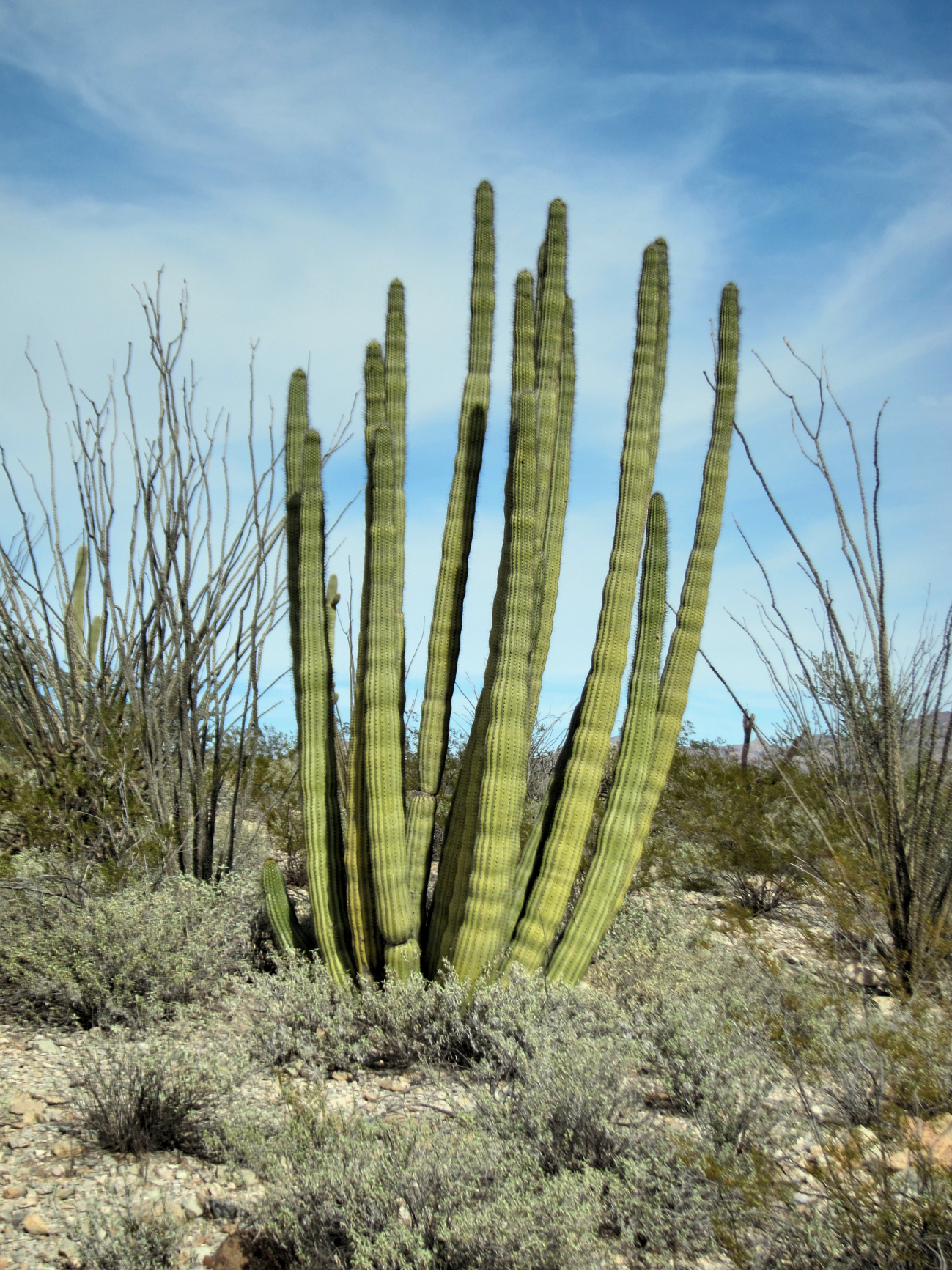
On our recent visit to Organ Pipe Cactus National Monument we could not help to be taken aback at just how lush, green and full of life this desert forest is. As most know, or think of, the desert as a dry dusty place where there is abundant sun, little rain and is short on bio-diversity. The Sonoran is the exception, especially within the park. In just a short walk we saw saguaro, organ pipe, hedgehog, and coleville’s cactus, desert ironwood, palo verde trees, quail, flickers, gila woodpeckers, cactus wren, jack rabbits, cottontails and much to my surprise deer! This is a desert rich in variety. One can only imagine that this continues to the south since this park is at the northern range of many of these plants and trees.

After only spending a couple of days there it seemed incredible that this little pocket has even survived all that has been thrown at it over the last 200 years. At a time when ranching was just about the only way to make a living in the west a few tough souls attempted to do just that however failed due to lack of year round water sources. Not surprisingly the cattle severely damaged the natural eco system. Over the years since grazing the desert has had a nice bounce back. Driving in from the north west we passed a large mine outside of the town of Ajo, AZ. This mine was so large the tailings create their own mountain plateau. Shortly after passing the mine driving towards Why, AZ you start to pass signs for the Barry Goldwater air force bombing range. The American military bombs the desert because there is “nothing out there”. It was not unusual to hear the jets flying past the park even in just our short visit. To the south, about 7 miles from the entrance to the park, is the Mexican/American border. I’m not going to cover the politics here but, due to several factors this means that the open desert is an opportunistic place for those seeking better pay or good money trafficking into America. Human and vehicle traffic through the park created roads and damaged the eco system in several places. Fairly recently the park put in a 30 mile stretch of vehicle barricades that still allows for animals, including the endangered Sonoran Pronghorn to still pass through. Due to these immigration attempts and trafficking the presence of border patrol is to be expected. Within the park there is border patrol unit with horses, ATVs, drones and a helicopter to patrol the park itself. All of this is just to give you an idea of what this little plot of land is up against.

It’s easy to put all that out of your mind when you look at this beautiful place, especially the pictures of the desert in full bloom. A majority of the plants take the monsoon rains of the summer to blossom. This includes the namesake Organ Pipe Cactus. These cacti can live up to 150 years and their first blossom shows up at around 35 years of age. This has been an interesting fact to mull over because I myself am 35 years old. The organ pipe cactus has white flowers and blooms only at night giving off a sweet scent. Come mid morning the next day and the flower is closing up its pollen shop. The lesser long nose bat uses this time in the summer to travel north to have and grow their babies at a roost in the park. Feeding on the pollen and fruit of both the Saguaro and the Organ Pipe cactus while cross pollinating the plants. There is an excellent graph showing this relationship found in the park newspaper here: http://www.nps.gov/orpi/planyourvisit/upload/http___imrcms-nps-doi-net_orpi_planyourvisit_loader.pdf .  The Organ Pipe is not listed as endangered but the bat is. Like the good and wise John Muir is quoted “When we try to pick out anything by itself, we find it hitched to everything else in the Universe.”. If there is no bat to do the heavy lifting of pollinating the cactus how long will it take the cactus to die off? I heard a story about an apple growing region in China where they use such toxic pesticides it killed all the bees. No bees, no apples? Nope, instead there are people who are now employed to take to the trees with cups filled with pollen and paint brushes to do the pollinating the bees did for free. In true Chinese diligence they pollinate all the flowers of every tree. The human pollination process is said to have increased the production of apples by 30%. Can the trees sustain that heavy of production? What if there are subtleties that the bees and bats can smell that makes them skip over less ideal flowers? Just like a female bird selects for health and vitality in her male suitors perhaps the bats select the best flowers. The fact is that these plants and bats co evolved and most likely need each other to survive. Human interference might temporarily improve upon nature but, will alter it in ways that we cannot foresee. This is a common story throughout the world and this is only one example. However, I can’t help feel that my take away from this particular story is the connection between our bombing practice just north and the desperation of our neighbors to the south. It’s hard for me to decide who causes more damage to this sensitive desert eco-system. It’s important to remember that nature is not something that happens “over there” while we lives our lives “over here”. Our tax dollars both own the open land of the federal government and the military that is tasked to protect it. Americans have bought the gift that is large tracks of land set aside for our enjoyment but, nature does not begin and end at their borders.

OPC_OPCNMOPC_OPCNM

OPC_OPCNM