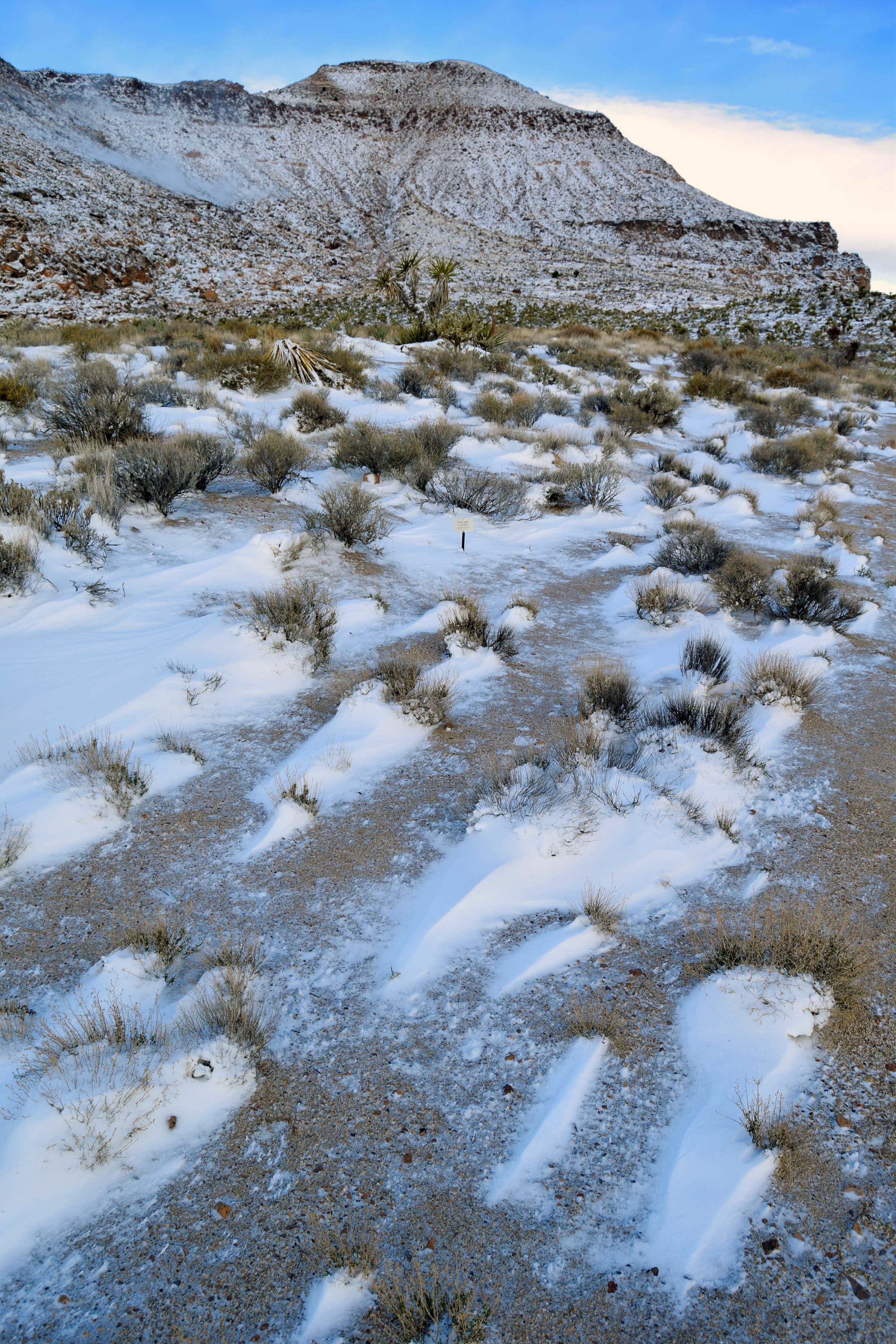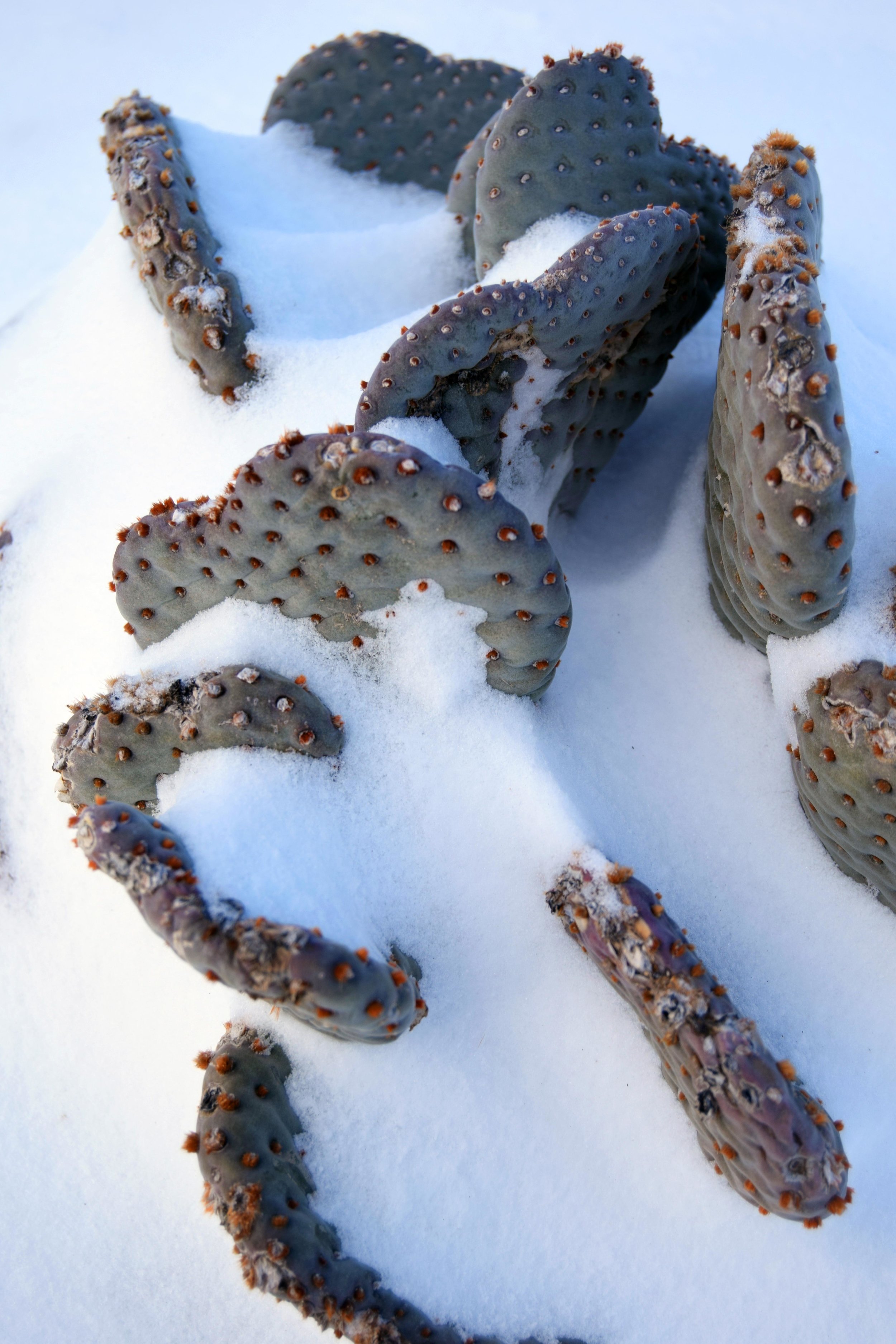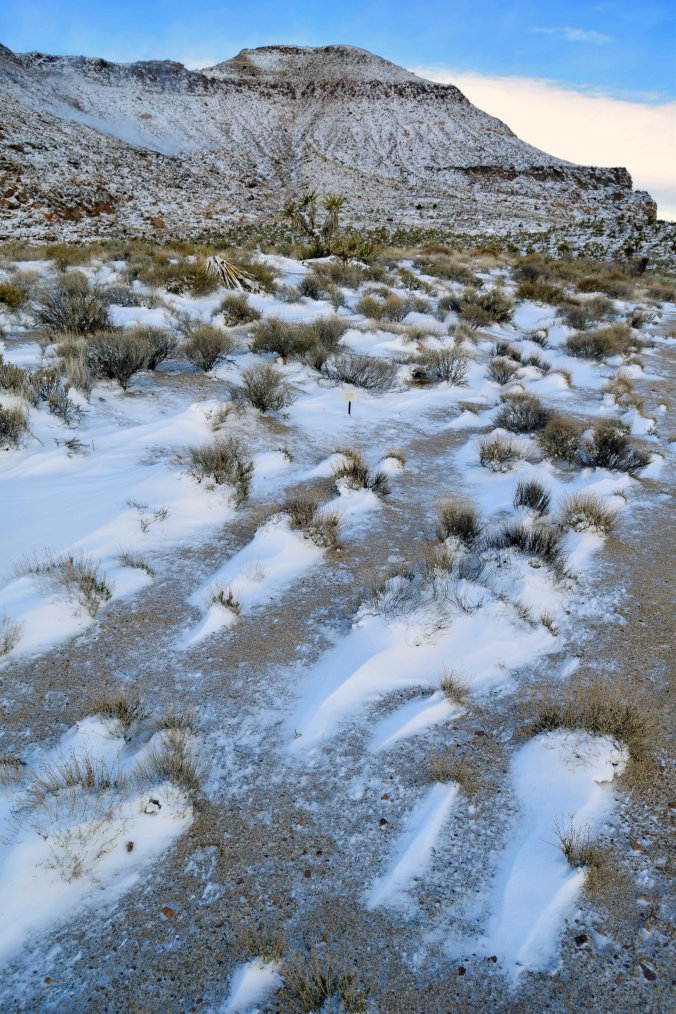
The hottest and desert in North America seemed like a great place to spend the winter in our tiny house that has scant insulation and no central heat or actually any heat to speak of. We soon learned that while some parts of the Mojave can hit 120 degrees in the summer, this is a diverse landscape of mountains and broad valleys. The cold north wind pushing snowdrifts against our tires and creeping in through the numerous gaps in our walls as we were being buffeted by the 50mph gusts which rattled our “stick and staple” construction was a tangible reminder that in the higher portions of this desert there is plenty of winter.
After weaving our way through a surprising amount of Federal bureaucracy, Rachael and I landed a remote and extended volunteer posting in the Mojave National Preserve. The National Park Service (NPS) uses over two-dozen acronyms to differentiate the more than 400 units in its system. When we imagine a National Park many of us envision the stunning scenery of Yosemite or Southern Utah, or the wildlife and exotic thermal features of Yellowstone, maybe glaciers and grizzly bears in Alaska. These are certainly the heart and soul of the system but as a great physical representation of our democracy the idea has evolved to include an invaluable collection of historic and cultural resources. There are National Seashores (NS) and Lakeshores (NL), National Scenic Trails (NST), National Wild and Scenic Rivers (NWSR) and National Historic Battlefields (NHB) and all kinds of other bits and pieces.

There was hope that this section of the Eastern Mojave would be designated as a National Park, however a lot of people in the area were opposed to the greater restrictions and a compromise was made to designate it a Preserve. This means that many historic uses of the land are still allowed. There are a few cattle grazing allotments that remain active, some small mining claims are still recognized and limited hunting is permitted. The nomenclature also seems to limit the number of folks who visit. Even though this is one of the largest properties in the NPS this big green blob on the map gets only a small fraction of the people that visit Joshua Tree or Death Valley, the two Parks that bookend the Preserve.
The marks of human activity are well evident throughout the Preserve. Some have argued that this was reason enough to disqualify it as a National Park. It hasn’t taken me long to come to learn the value of this place. It is tempting, even for me, to use words like desolate, barren, forsaken or inhospitable when describing our great deserts, if only for dramatic effect. However even the smallest effort to look more closely reveals a place that is not only rich in life and natural wonders but one that amazes us for it adaptations to adversity and its exotic forms of survival. There are chuckwalla lizards that wedge into crevices and inflate their bodies, preventing predators from pulling them out. Many animals can go months if not years without drinking a sip of water. Plants might die off after spreading prolific seeds that will wait a decade for the rainfall that inspires them to grow once again.
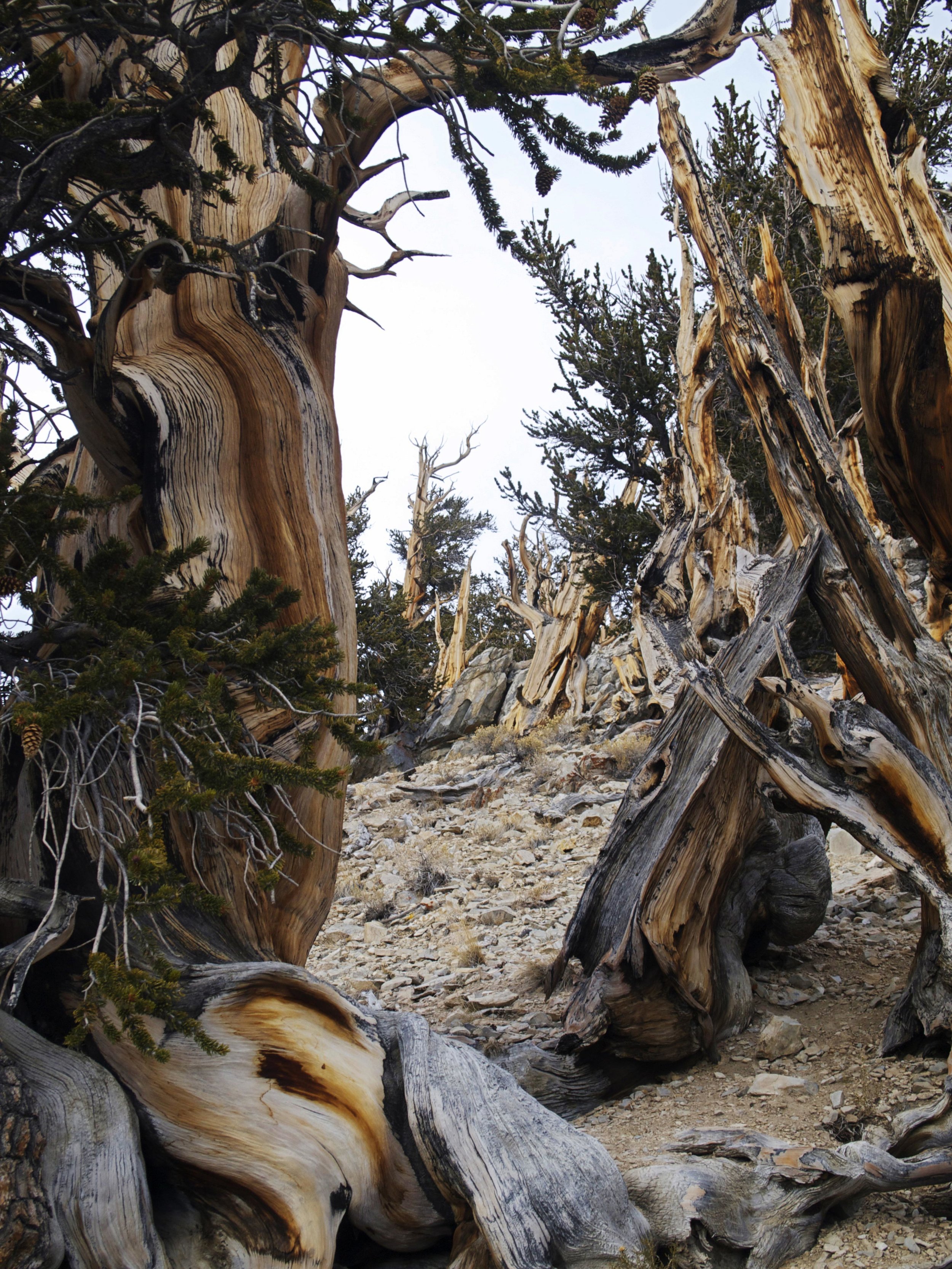
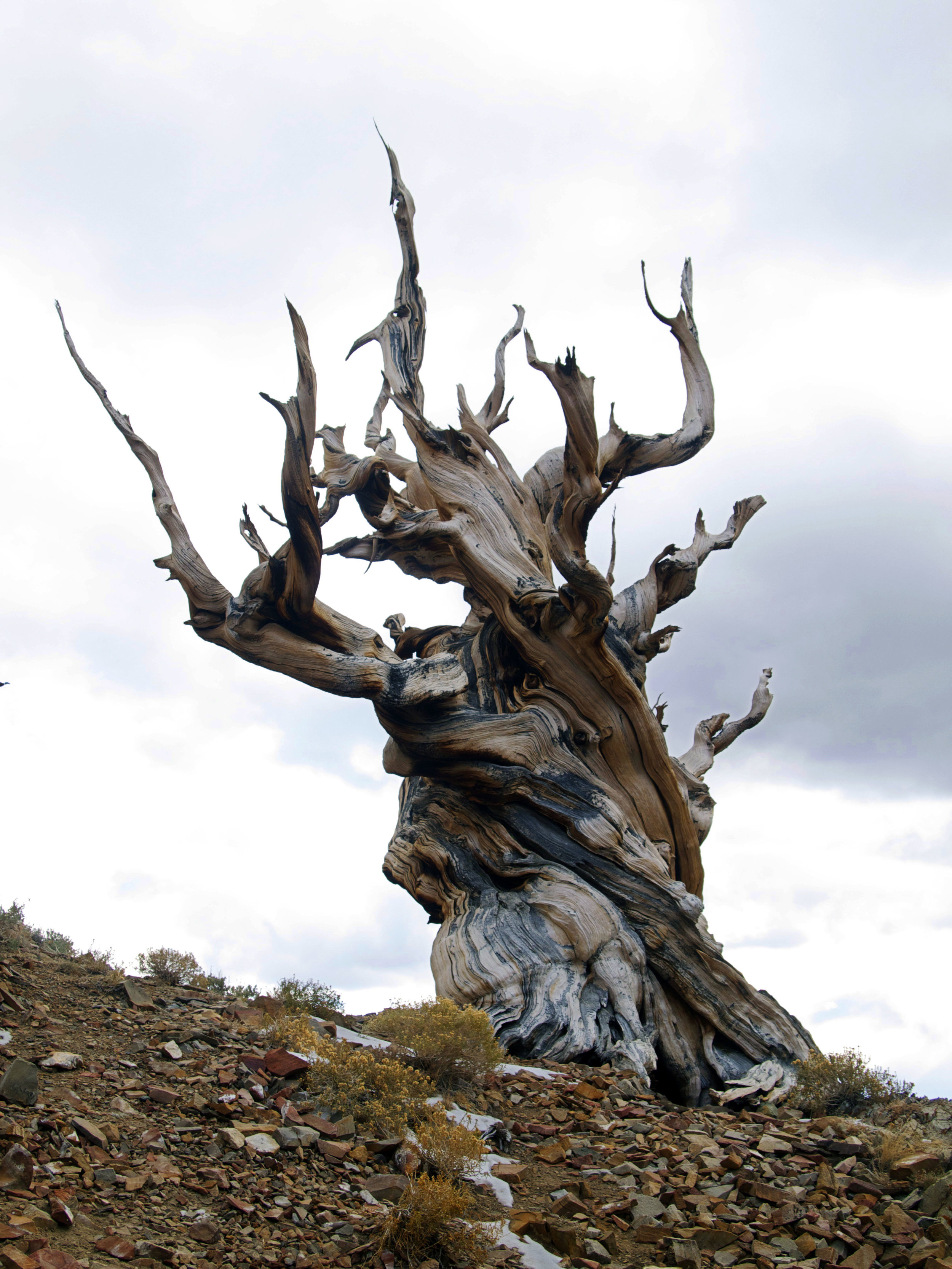
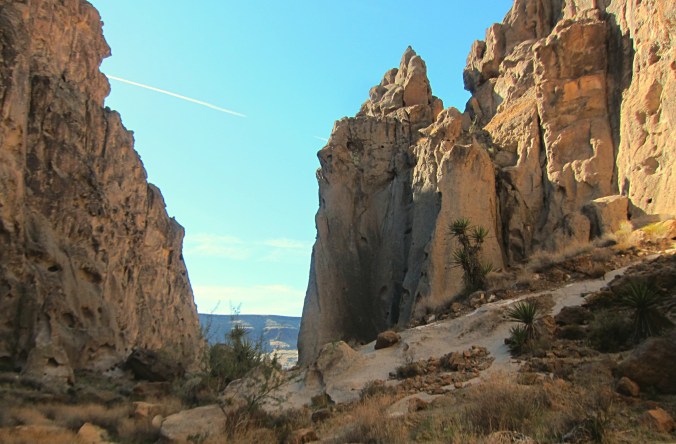
The physical landscape here is full of its own wonders. From a mineral encrusted dry lake bed that once fed the massive sand dune field that remains from over 20,000 years ago to the peaks over 7000 feet that have remnant forests which tell of a wetter time, this is far from the monotonous waste that travelers drawn to the glow of Las Vegas moan about. A 30-minute detour from the interstate could put them on a lunar landscape of cinder cones and lava beds or into the bizarre arms of the densest Joshua Tree forest.
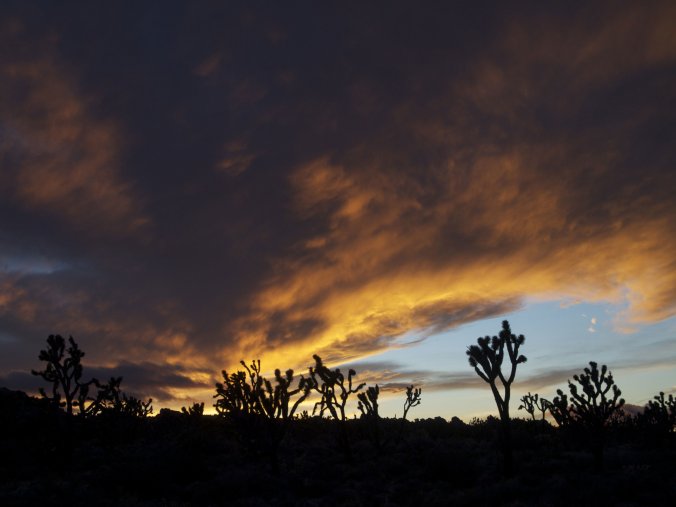
Because of the former and continuing uses of the land the Mojave Preserve is in many ways the ideal place to test our willingness to save wild and natural places, to give lands a chance to heal from our many wounds and continue to be wild. That this place is less visited and has subtler joys is a resource in itself, a place to find a bit of solitude and discover on your own. Over the next few months we intend to listen to what this place can teach us. Some of the human markings here date back thousands of years. Though we can only guess as to what ancient petroglyphs and artifacts are saying we can see that people once lived here with humility. Our modern scars are at times the evidence of modern hubris. Over time, if we are willing they could become symbols of how we relearned humility and restraint.








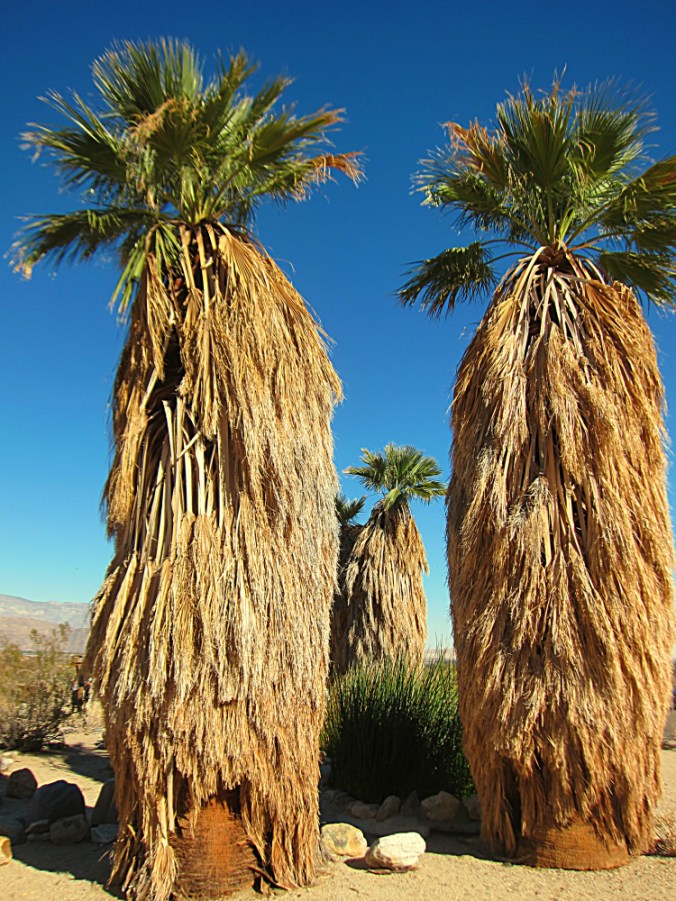


 Never use a palm frond to pull yourself up. I learned this the hard way when I was 9 or 10 years old. I had become separated from my dad and siblings and, since they were up ahead, I needed to get up a large step on my own. Turns out palm fronds are sharply barbed and instead of lifting myself up I managed to slice my own palm as it slid down the frond. To be perfectly honest I don’t remember much of what happened after that. Such are my memories of the great many hikes I have done in Palm Canyon.
 ch is in the Colorado Desert, which in turn is part of the greater Sonoran Desert. The California Fan Palm is rare, found only in a handful of canyons in the Mojave and Sonoran deserts. The only native palm in western North America was a source of food Native Americans and its berries are still for Orioles and Coyotes. The dead fronds that fall about the trunk like a layered hula skirt protect the trunk and create a protective roost for small birds.
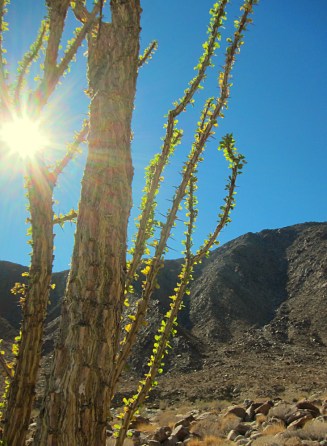 Palm Canyon was such a wonderland and sacred place for my family that we never really explored Anza-Borrego beyond its walls. How could you not be drawn to the cool pools of water in the heat of summer? In 2004 a flash flood completely reshaped the canyon trail and the oasis. In my youth there was a deep pool a little ways before the Palm Oasis that one only wanted to swim in on the hottest of days. The large boulders that created the pool blocked most of the sun and the water always stayed chilly. The Palm Canyon of my childhood has been scoured and filled in and is gone forever but the specialness of the place remains.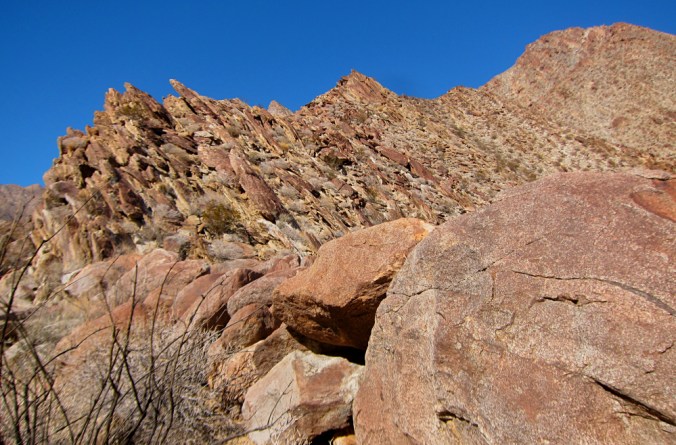
 Vagabond Naturalists