Volunteer Day: Louisiana Coast

With access to wifi at the Grand Isle State Park we’d been watching the weather hawkishly. With all Tim’s years as a messenger he’s got his weather favorites and I tend to find his readings to be more accurate that what the computerized meteorologists spit out. Our morning ride to the restroom and back was a lovely partly cloudy sunrise and comfortable enough for just t-shirts. No sooner had we’d put our lips to our cups then the sky turned black and the wind began to rock Squatch with massive gusts. It couldn’t have been five minutes more before an e-mail popped up; subject line: WE’RE STILL ON! Having just thawed out over the day and half of nice weather we weren’t too eager to get back outside where the temperature had just dropped 25 degrees (not counting wind chill). However, we’d been looking forward to today for almost two weeks.
Back in Port Aransas Texas I searched Louisiana Coast and habitat restoration. A few clicks later and we were signing up to plant marsh grass off Port Fourchon, LA on March 5th. We’ve done many a plantings so we knew pretty much what to expect. Ha! We had no idea. I’m not sure this is an experience we are likely to duplicate.

First let me explain that coast is a loose word in these parts. The ecologically rich marsh areas are where land is a mixture of mud, sand, fresh and salt waters that extends almost as north as it does east and west. As Tim mentioned subsidence is a huge problem (for more in depth, but good reading see: http://www.americaswetlandresources.com/background_facts/detailedstory/causes.html). While it’s most pronounced in Louisiana this issue is happening on all our coasts due to America’s over zealous building of dams (recommending the documentary Dam Nation, on netflix, very well done and ends on a high note). Marshes  are also huge carbon sinks. Meaning they bring in much more carbon dioxide from the air then they put out. The extra carbon dioxide goes into the mud and is trapped there for hundreds of years.

crcl2crcl2

crcl2

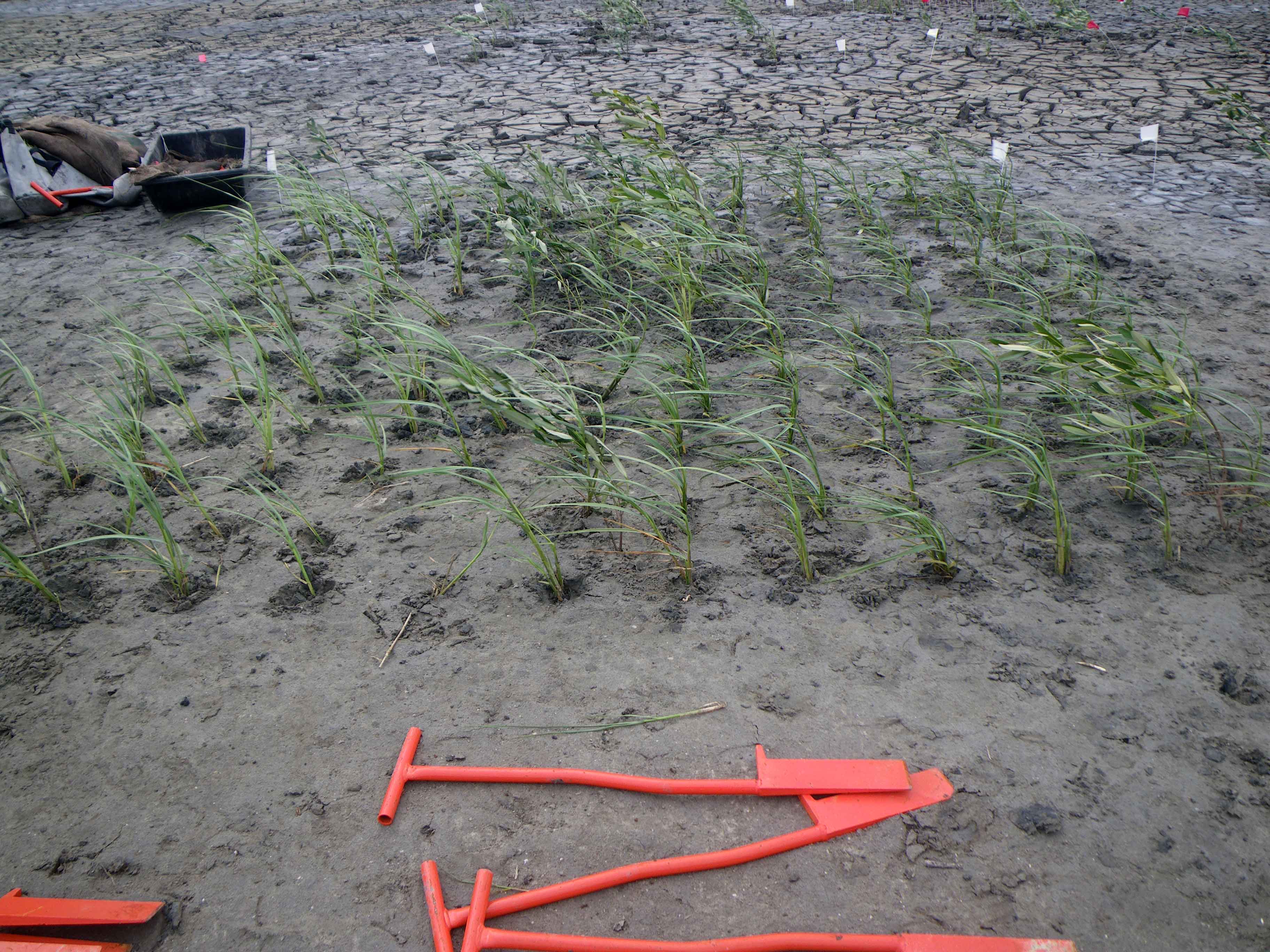
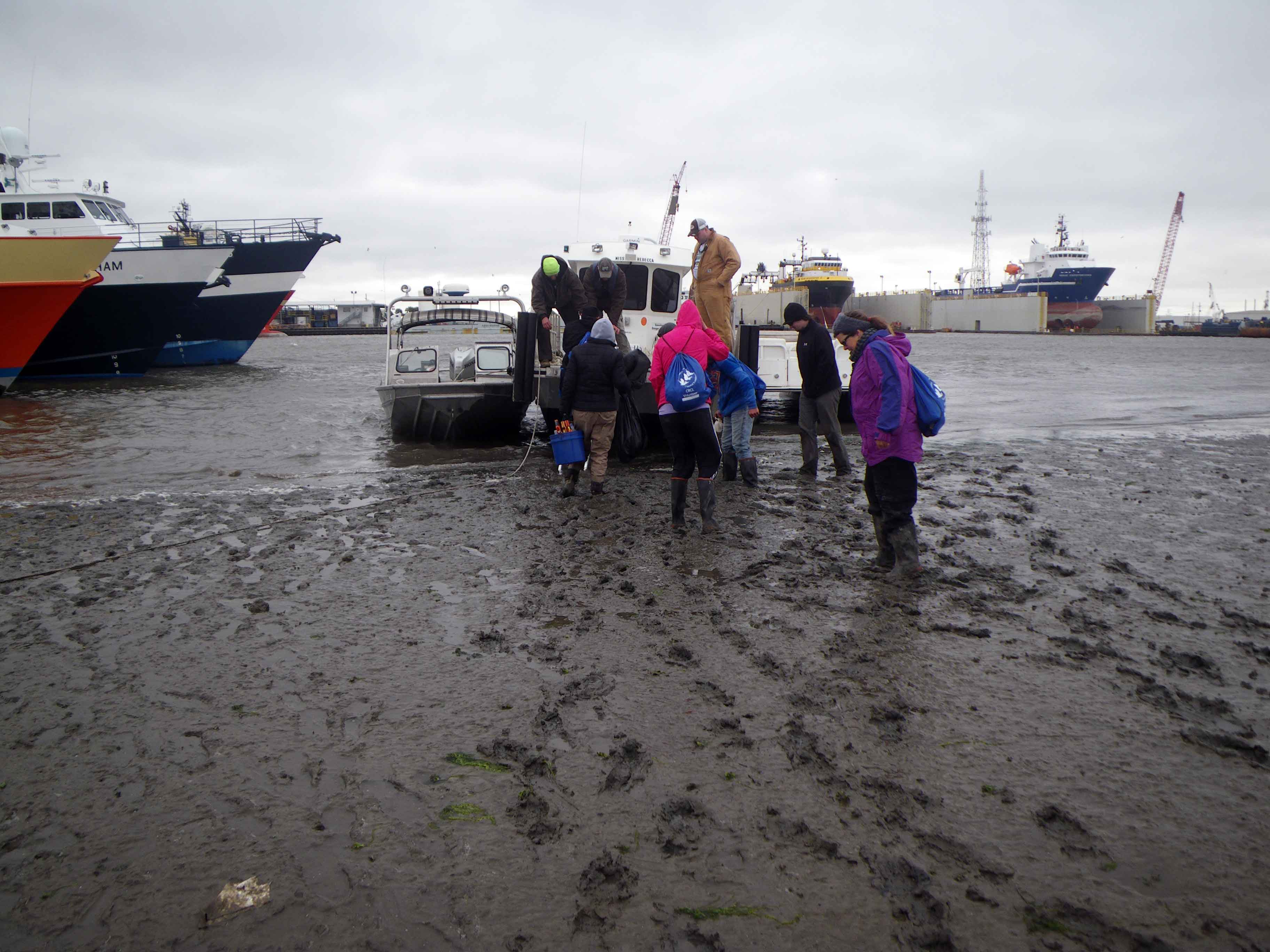
Bundled up and caffeinated we arrived at the Port Fourchon marina right on time. We signed in, packed our lunches in our sweet new Coalition to Restore Coastal Louisiana swag bag, got some knee high rubber boots and a pep talk. Then it was off to the boats! Today was a special day too. We were lucky enough to be helping to plant Smooth Blade Cordgrass (Spartina alterniflora), which we normally pull in California, and Black Mangrove (Avicennia germinans) that is being studied by three students from University of Louisiana Lafayette. The students Eric, Taylor and Laura had laid out several plots at varying elevations and densities in order to see which plots are more successful. Current restoration plantings are at approximately a 5′ plant spread. The restoration crew learned the hard way that some plants also don’t do quite as well at certain elevations and they we needing to replant the area. Other volunteers for the day included many college students, a couple of retired friends who were pretty experienced in restoration and a few fellas from Conoco Phillips who is a also financial contributor to this project. The three boats that got us to our destination, as well as the air boat that brought the sacks of plants to the site are hired hands. Add all the food, drinks, bags, boots etc and you realize that this effort needs financial fairies as much as it needs volunteers.
crcl1crcl1

crcl1

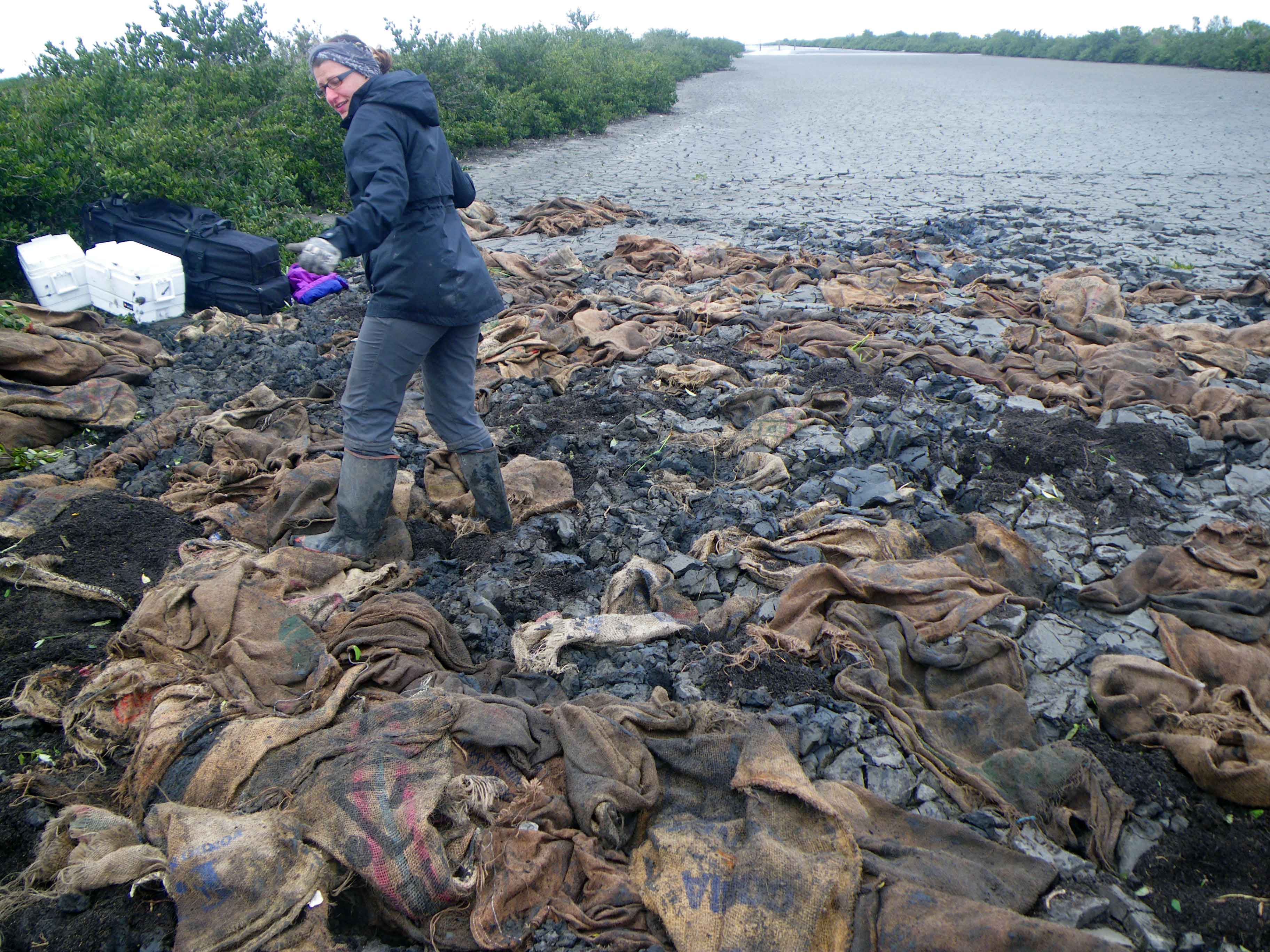
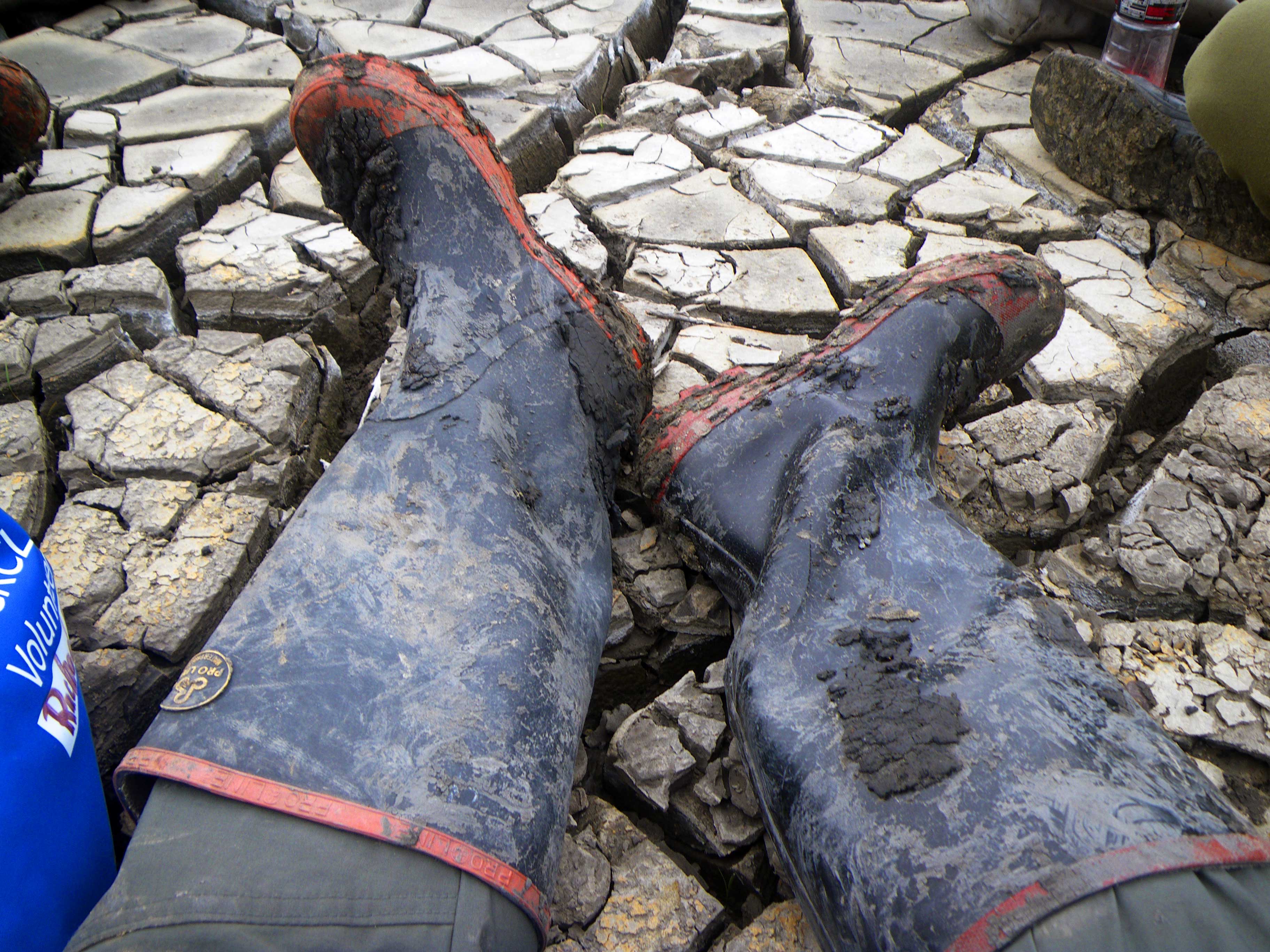
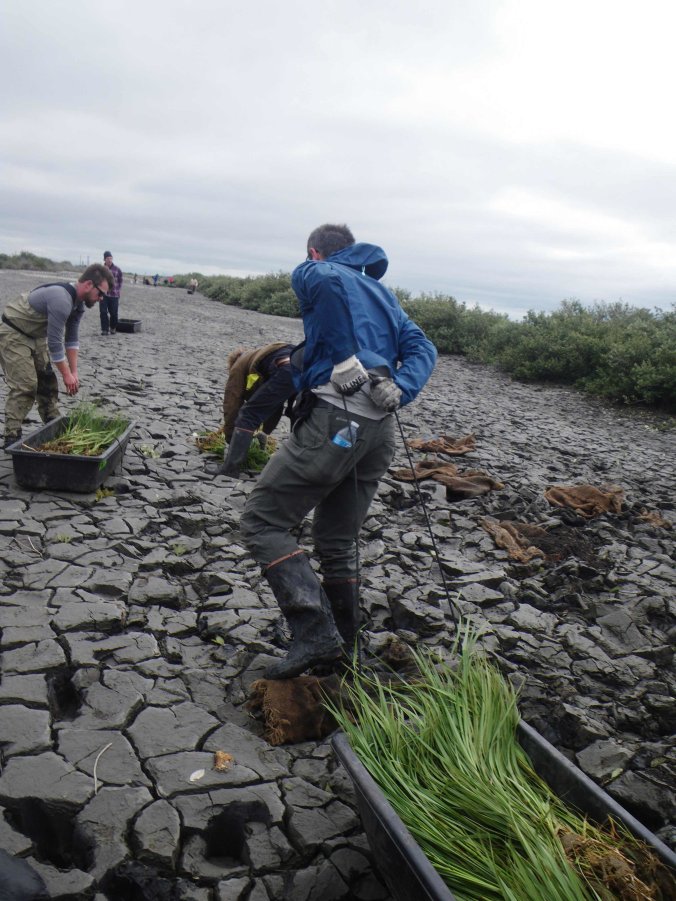
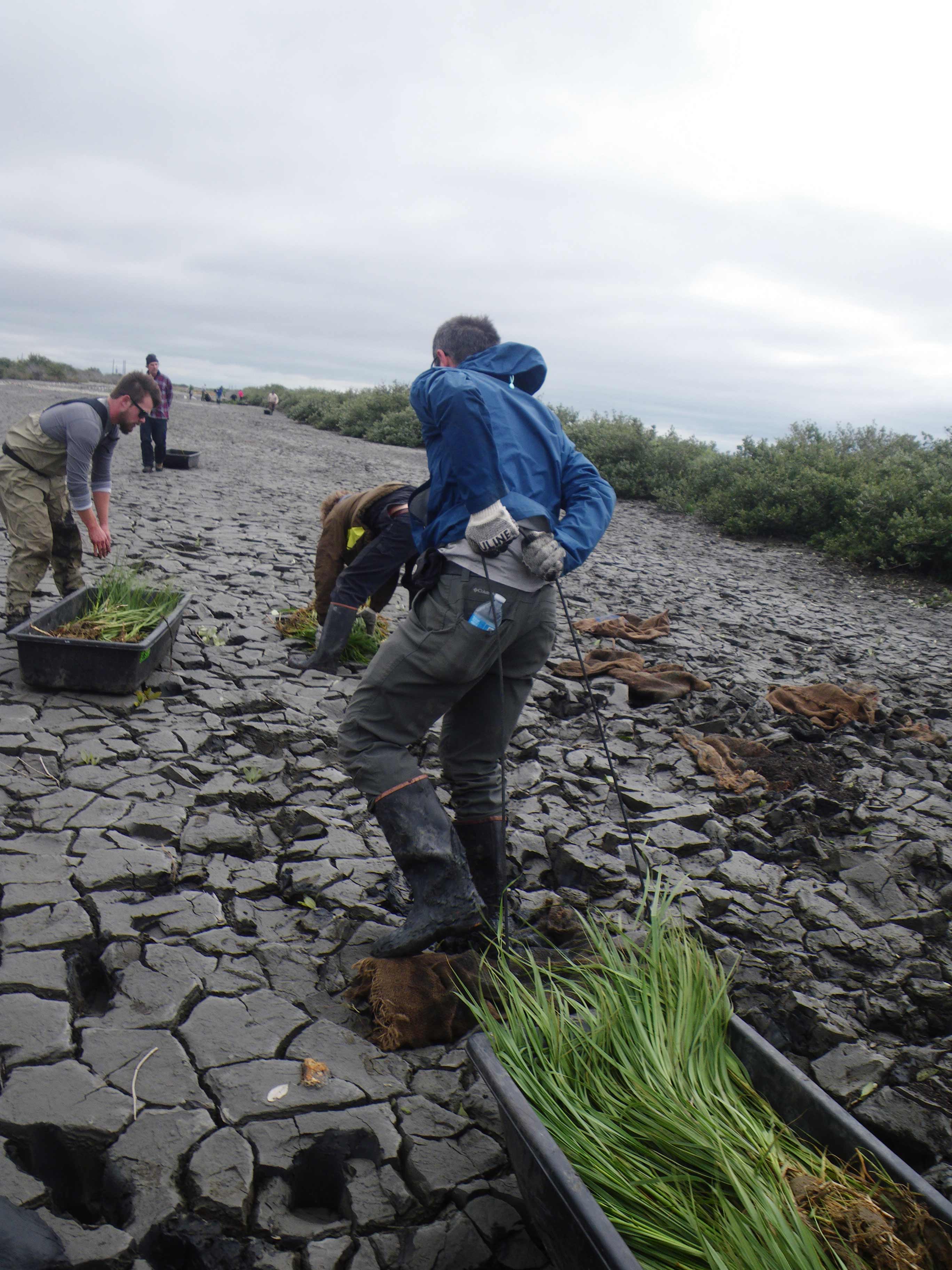
Once off the boats we walked out to our destination, a previously cut pipeline channel that had been filled back in with dredge material from the local bayous. Some of this material includes oyster shells, nails, hammers, pipes and rumoredly a still good roll of duct tape. The heavier matter falling close to where the pipe pumped it in. Mostly though it’s a mixture of mud and sand. Having been raining recently the mud on top was dried and broken in polygon fractures. Walking on it gives one a new idea of what solid ground is and added to the other worldly aura of the day. The students had laid out several planting spots with flags where we needed to insert the plant plugs. But we still needed to get the plants from where they’d been air boated in some 200 yards down the channel, most still behind a small hedge of mangroves in burlap sacks weighing some 20-25lbs each. While Tim and several others hauled sleds full of plants and other necessities I got to work with my new friend Shae and one of the students to try and get the rest of the bags out from behind the hedge.

crcl3crcl3

crcl3

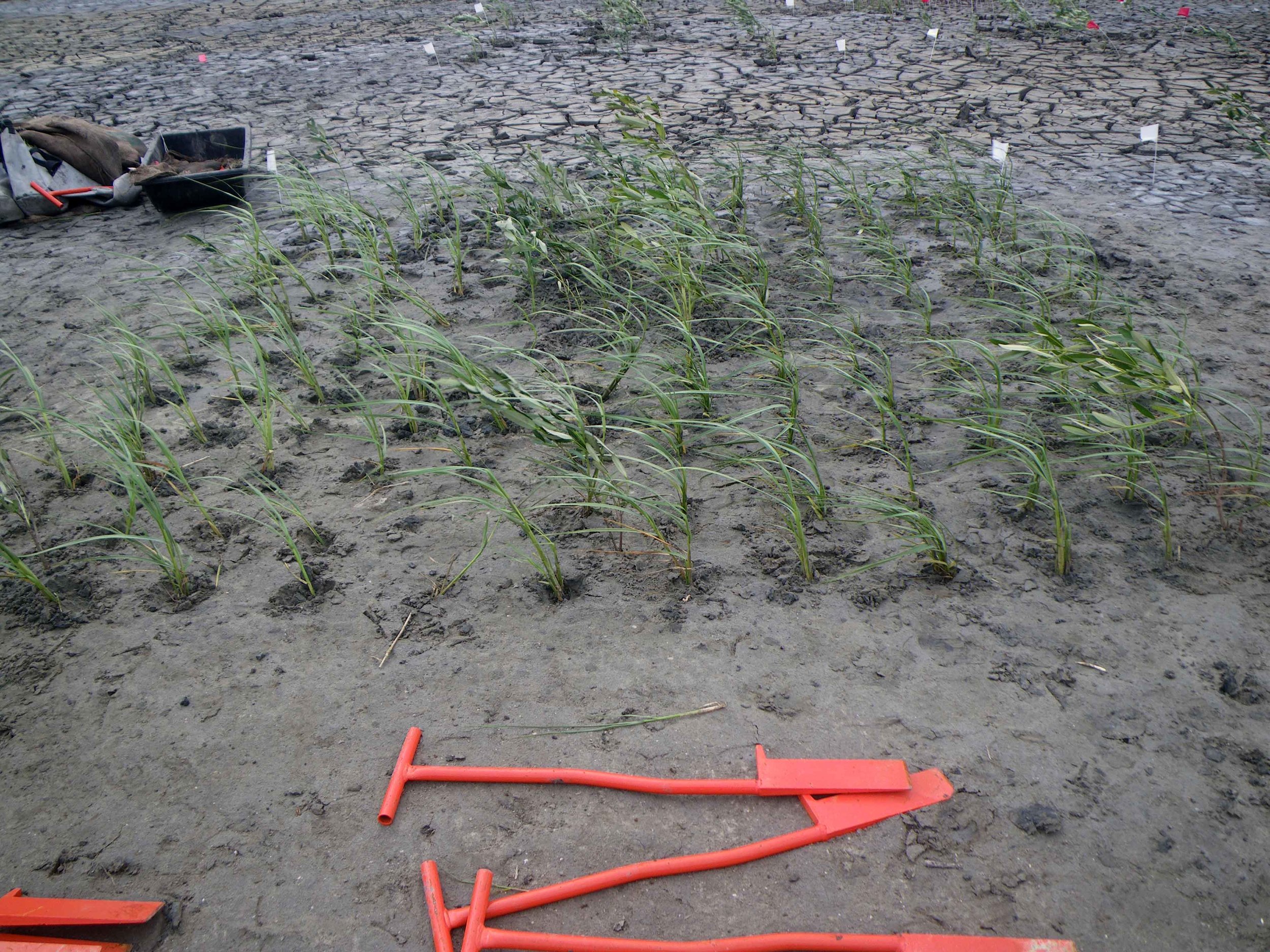
As I trudged back and forth along the quickly softening mud I was getting deeper and deeper in it. So I thought I’d stand still while the ladies brought the sacks to me and I tossed them out to be picked up. This was genius until I realized that I was over ankle deep in mud within minutes and needed to crawl forward in order to extract my boots. Shae was also falling over and had to get into deep mud to get the sacks further back. The next time the sled crew showed up I hollered out and we quickly chained ganged the sacks of plants out from the hedged area. Occasionally needing to stop the machine so that one of us could crawl out of the mud they’d inevitably sunk into. We started taking the plants out of the sacks and placing the sacks on top of the mud. Eventually with so many sacks laid out it made the area begin to feel more like trying to walk in a jump house but at least we weren’t sinking anymore. Meanwhile the wind was getting stronger and the temp dropping with every gust. By the time we started planting everyone was caked in mud and well chilled. Here’s what I love about habitat restoration volunteers though, no one complains. It’s hard dirty work yet people either love it as much as we do or don’t want to seem like they weren’t up for it. Stopping only for a quick lunch we planted a respectable amount of plants before heading back to the boats.

crcl4crcl4

crcl4

crcl6crcl6

crcl6

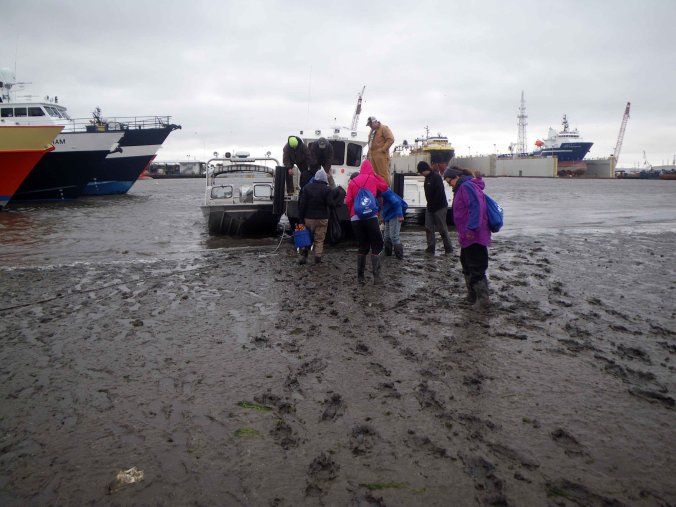
Sitting on the boat listening to the busy harbor radio chatter of captains and controllers, shooting the shit a bit with the students and our fellow volunteers we smiled in the comradery of the day’s work. I looked at the mud under my too long nails and looked at Tim and felt…happy.
crcl7crcl7

crcl7

Volunteer Day: Louisiana Coast

With access to wifi at the Grand Isle State Park we’d been watching the weather hawkishly. With all Tim’s years as a messenger he’s got his weather favorites and I tend to find his readings to be more accurate that what the computerized meteorologists spit out. Our morning ride to the restroom and back was a lovely partly cloudy sunrise and comfortable enough for just t-shirts. No sooner had we’d put our lips to our cups then the sky turned black and the wind began to rock Squatch with massive gusts. It couldn’t have been five minutes more before an e-mail popped up; subject line: WE’RE STILL ON! Having just thawed out over the day and half of nice weather we weren’t too eager to get back outside where the temperature had just dropped 25 degrees (not counting wind chill). However, we’d been looking forward to today for almost two weeks.

Back in Port Aransas Texas I searched Louisiana Coast and habitat restoration. A few clicks later and we were signing up to plant marsh grass off Port Fourchon, LA on March 5th. We’ve done many a plantings so we knew pretty much what to expect. Ha! We had no idea. I’m not sure this is an experience we are likely to duplicate.

First let me explain that coast is a loose word in these parts. The ecologically rich marsh areas are where land is a mixture of mud, sand, fresh and salt waters that extends almost as north as it does east and west. As Tim mentioned subsidence is a huge problem (for more in depth, but good reading see: http://www.americaswetlandresources.com/background_facts/detailedstory/causes.html). While it’s most pronounced in Louisiana this issue is happening on all our coasts due to America’s over zealous building of dams (recommending the documentary Dam Nation, on netflix, very well done and ends on a high note). Marshes  are also huge carbon sinks. Meaning they bring in much more carbon dioxide from the air then they put out. The extra carbon dioxide goes into the mud and is trapped there for hundreds of years.

Bundled up and caffeinated we arrived at the Port Fourchon marina right on time. We signed in, packed our lunches in our sweet new Coalition to Restore Coastal Louisiana swag bag, got some knee high rubber boots and a pep talk. Then it was off to the boats! Today was a special day too. We were lucky enough to be helping to plant Smooth Blade Cordgrass (Spartina alterniflora), which we normally pull in California, and Black Mangrove (Avicennia germinans) that is being studied by three students from University of Louisiana Lafayette. The students Eric, Taylor and Laura had laid out several plots at varying elevations and densities in order to see which plots are more successful. Current restoration plantings are at approximately a 5′ plant spread. The restoration crewcrcl2 learned the hard way that some plants also don’t do quite as well at certain elevations and they we needing to replant the area. Other volunteers for the day included many college students, a couple of retired friends who were pretty experienced in restoration and a few fellas from Conoco Phillips who is a also financial contributor to this project. The three boats that got us to our destination, as well as the air boat that brought the sacks of plants to the site are hired hands. Add all the food, drinks, bags, boots etc and you realize that this effort needs financial fairies as much as it needs volunteers.

crcl1Once off the boats we walked out to our destination, a previously cut pipeline channel that had been filled back in with dredge material from the local bayous. Some of this material includes oyster shells, nails, hammers, pipes and rumoredly a still good roll of duct tape. The heavier matter falling close to where the pipe pumped it in. Mostly though it’s a mixture of mud and sand. Having been raining recently the mud on top was dried and broken in polygon fractures. Walking on it gives one a new idea of what solid ground is and added to the other worldly aura of the day. The students had laid out several planting spots with flags where we needed to insert the plant plugs. But we still needed to get the plants from where they’d been air boated in some 200 yards down the channel, most still behind a small hedge of mangroves in burlap sacks weighing some 20-25lbs each. While Tim and several others hauled sleds full of plants and other necessities I got to work with my new friend Shae and one of the students to try and get the rest of the bags out from behind the hedge.

crcl3As I trudged back and forth along the quickly softening mud I was getting deeper and deeper in it. So I thought I’d stand still while the ladies brought the sacks to me and I tossed them out to be picked up. This was genius until I realized that I was over ankle deep in mud within minutes and needed to crawl forward in order to extract my boots. Shae was also falling over and had to get into deep mud to get the sacks further back. The next time the sled crew showed up I hollered out and we quickly chained ganged the sacks of plants out from the hedged area. Occasionally needing to stop the machine so that one of us could crawl out of the mud they’d inevitably sunk into. We started taking the plants out of the sacks and placing the sacks on top of the mud. Eventually with so many sacks laid out it made the area begin to feel more like trying to walk in a jump house but at least we weren’t sinking anymore. Meanwhile the wind was getting stronger and the temp dropping with every gust. By the time we started planting everyone was caked in mud and well chilled. Here’s what I love about habitat restoration volunteers though, no one complains. It’s hard dirty work yet people either love it as much as we do or don’t want to seem like they weren’t up for it. Stopping only for a quick lunch we planted a respectable amount of plants before heading back to the boats.

crcl4crcl6

Sitting on the boat listening to the busy harbor radio chatter of captains and controllers, shooting the shit a bit with the students and our fellow volunteers we smiled in the comradery of the day’s work. I looked at the mud under my too long nails and looked at Tim and felt…happy.
crcl7

Mud Moving

TruckTruck

Truck

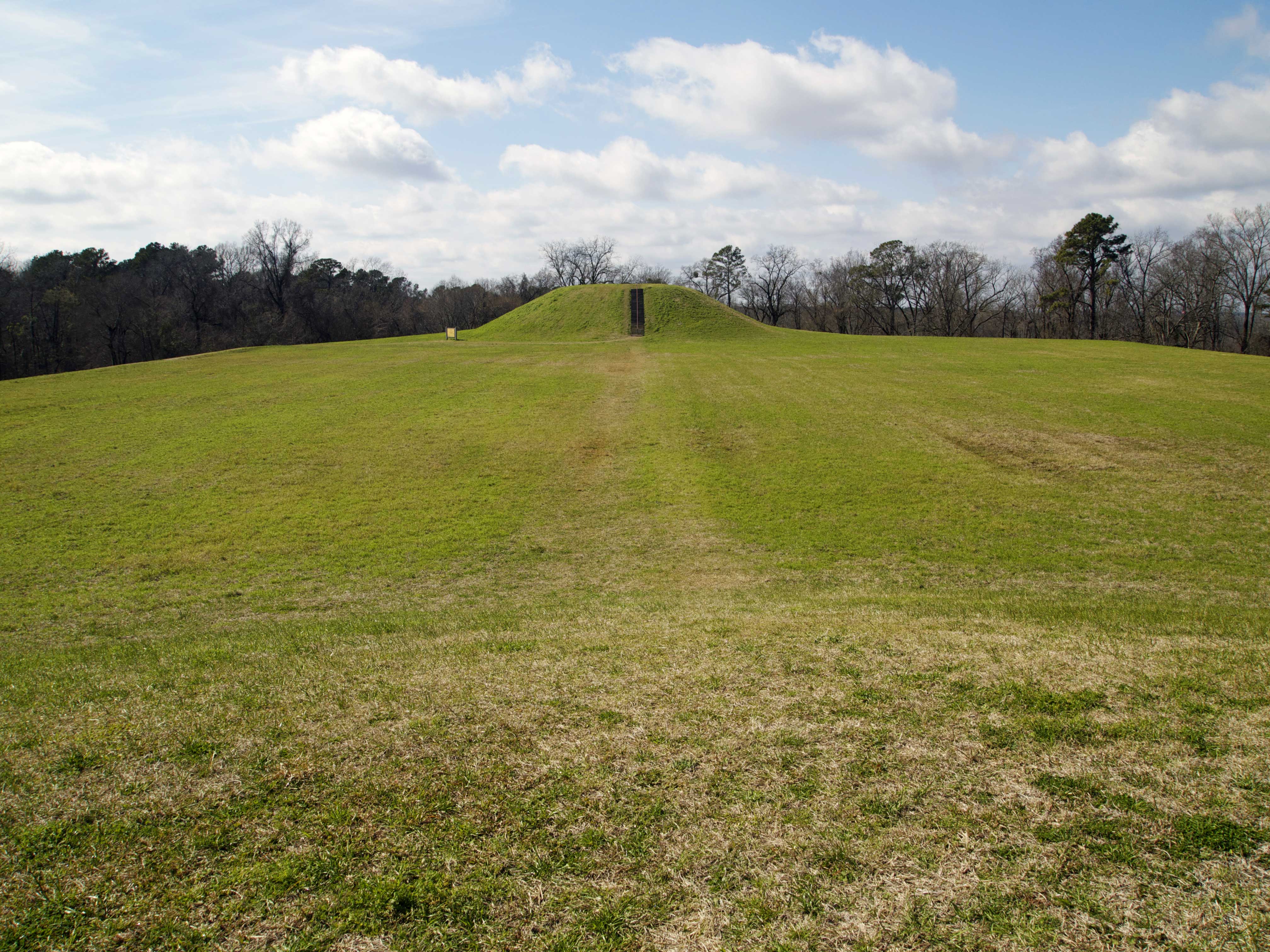
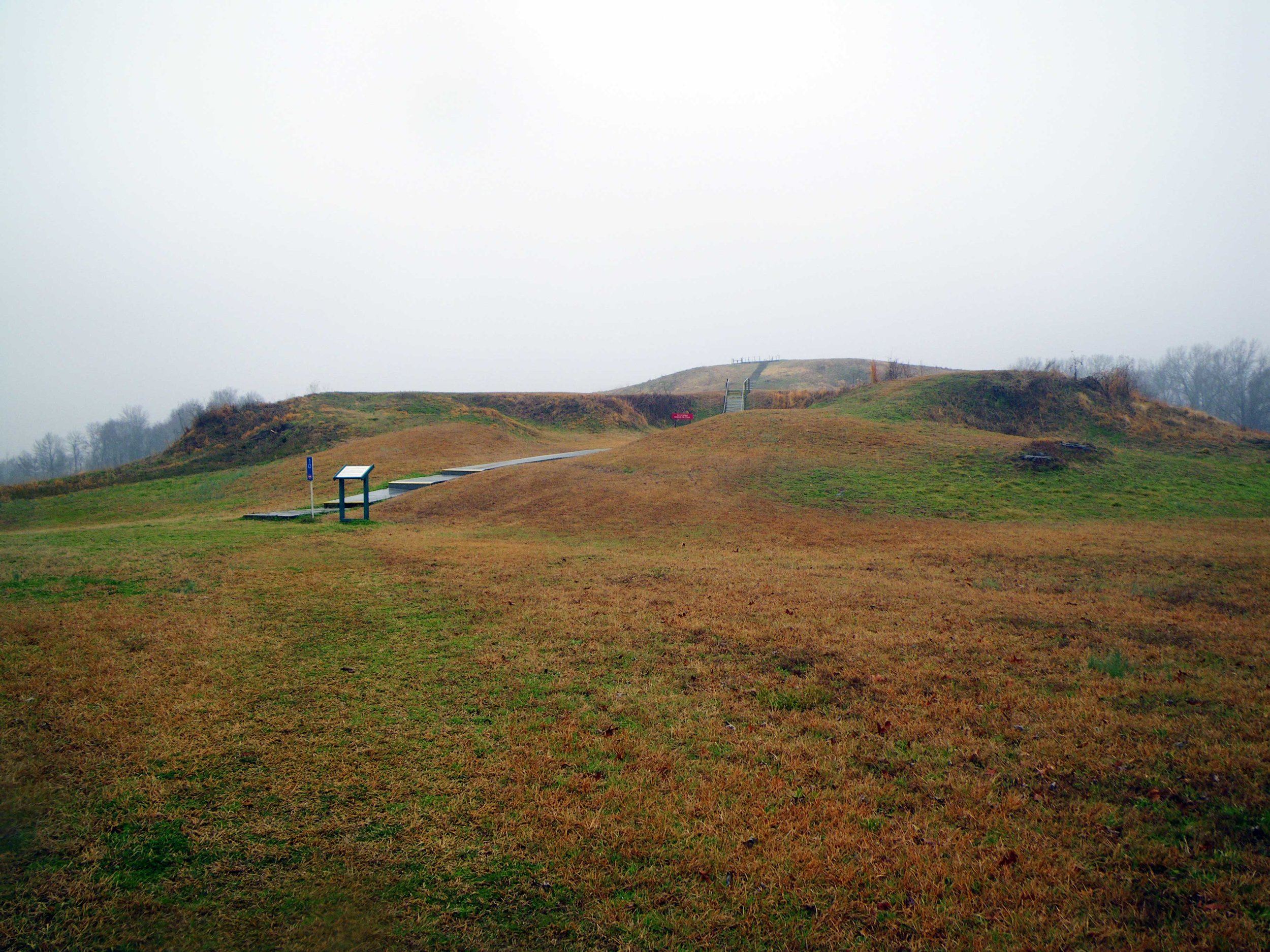
Poverty Point - Photo by Tim GillerPoverty Point - Photo by Tim Giller

Poverty Point – Photo by Tim Giller

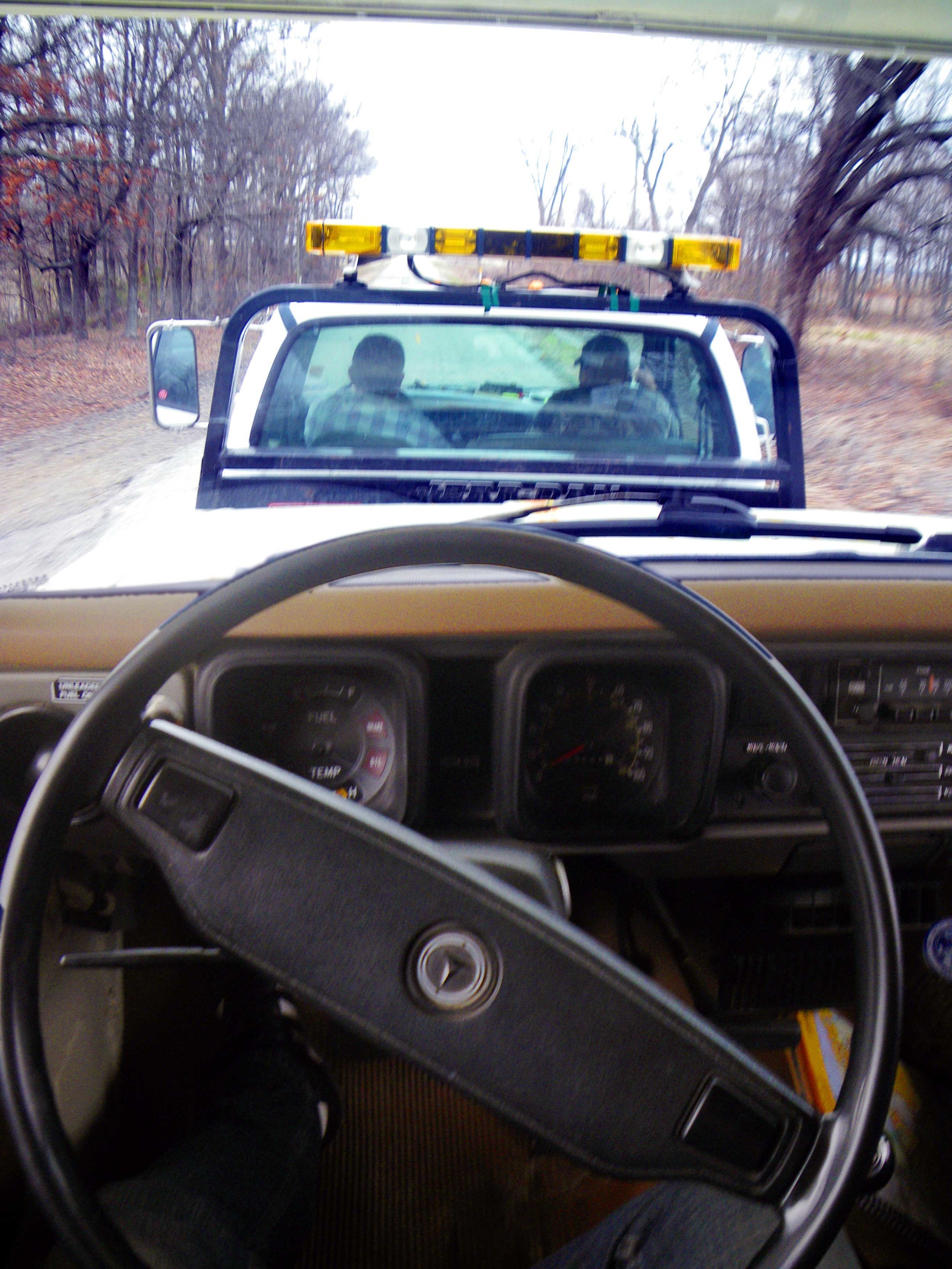
“Do you think Lloyd has ever accidentally dumped a vehicle into one of these farm ditches?” I asked Rachael.   I reached for the steering wheel and my foot was searching for the brake pedal even though I knew it was pointless. We had put our faith in the fact that Lloyd and his assistant Darren knew what they were doing out on these patched and potholed backcountry Louisiana farm roads, however my equilibrium had taken a lot of hours getting used to the suspension on Lil’ Squatch and being an extra five feet off the ground made going into an bumpy, off-camber turn feel more dangerous than a county fair rollercoaster that was missing a few cotter pins. And almost as fun. “I don’t think this is legal in California” said Rachael. “Uh-uh. Bet it ain’t legal here either, but here we are.” I had to admit that not only was it kind of pleasant to be sitting back and letting someone else cart us along but also the view was pretty great being this high off the ground. Unfortunately we were up on the back of Lloyd’s truck because Squatch’s water pump had seized about 3 miles from the Poverty Point archaeological site (a name that caused the truck dispatcher to chuckle unsympathetically) and we were being taken into his small town shop to fix it.

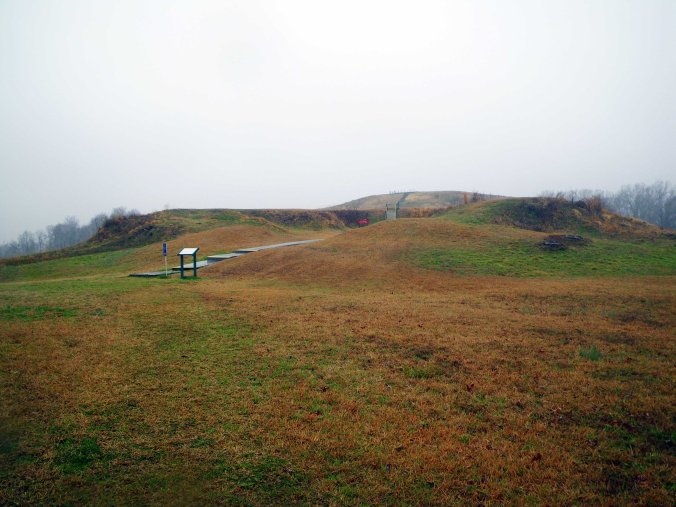
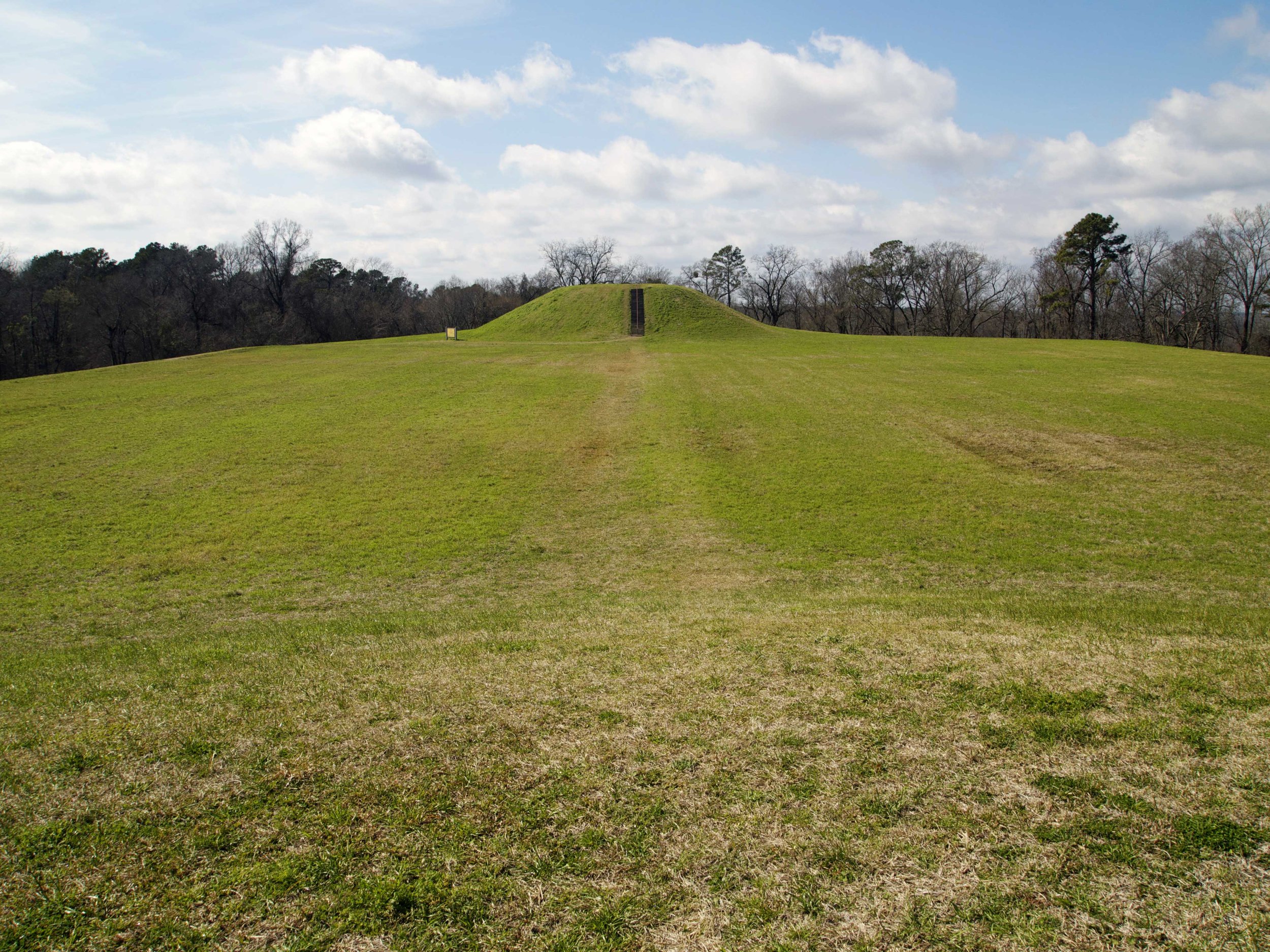
Poverty Point has one of the tallest and most ancient of the mounds built in the Mississippi river drainage and it is flanked by rows of semicircular ridges constructed around a huge plaza. With the higher vantage we had from the cab I started wondering if they moved around those incredible quantities of dirt just so they could get a better view of the landscape. A couple days earlier we had climbed Emerald mound on the other side of the Mississippi River. I knew that these two structures at over 65 feet tall traded claims of being the second largest pre-Columbian mounds but what I hadn’t yet learned was that the culture at Poverty Point had begun construction 1000 years before the Pyramids in Egypt had been built while Emerald mound had been created much later and was still in active use when Spanish and French explorers ventured into the region. These two sites are sort of bookends of a cultural phenomenon that spanned several thousand years, most of the length of the largest river on the continent and began with hunter-gatherers in what is now Louisiana. The fecund landscape provided by the flows of the Mississippi and the rich Southeastern forests offered foods from fish and crawdads out of the bayous to nuts, plants deer and bear in the woodlands.

Emerald Mound - Photo by Tim GillerEmerald Mound - Photo by Tim Giller

Emerald Mound – Photo by Tim Giller

These town sites and ceremonial structures have survived in an ever-morphing landscape of shifting river channels, mysterious and languid bayous and massive and regular flooding. They were built by people who respected the power of water and recognized the abundance that came from the replenishment provided by the Mississippi River. This civilization was comparable to the Aztecs or Mayans further south and had towns larger than any Colonial city would achieve until the 19th century, yet by the time that frontiersmen were settling in the region the population had fallen dramatically, most likely ravaged by European diseases acquired from those first visitors. Without advocates for the land and culture it was literally plowed under. Mounds and platforms are abundant in the region but often hidden in forest groves, covered by crops or with pioneer homes built atop them, a recognition of the value of higher ground.

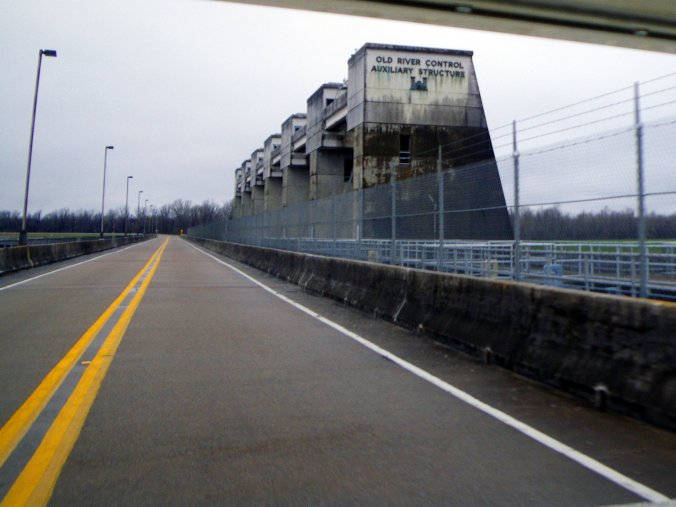
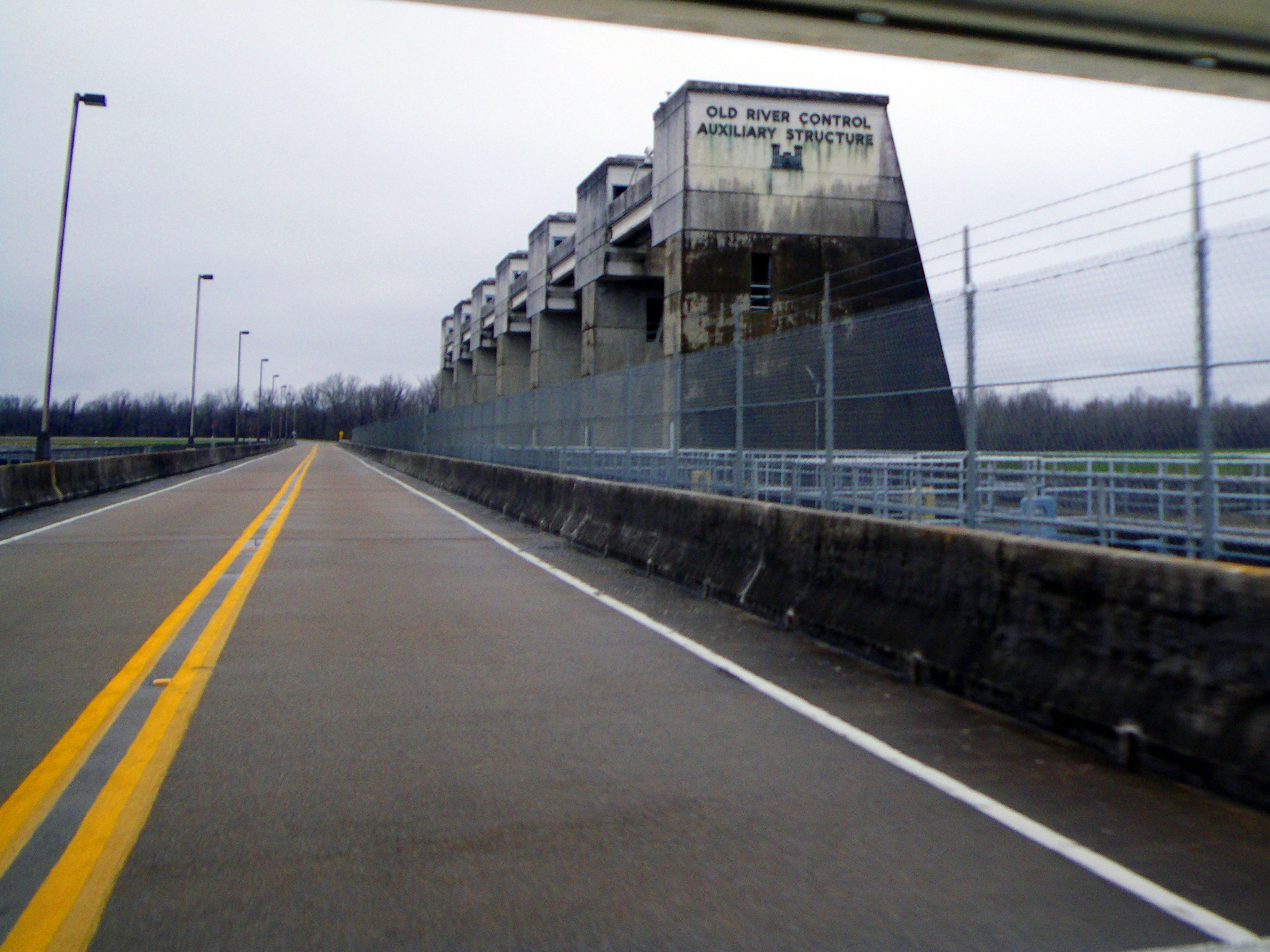
Army Corp Dam, Louisiana - Photo Bt Tim GillerArmy Corp Dam, Louisiana - Photo Bt Tim Giller

Army Corp Dam, Louisiana – Photo Bt Tim Giller

BootsBoots

Boots

With our little guy patched up Rachael and I had an engagement to get to on the tenuous southern edge of Louisiana. I suppose after walking among the remnants of mysterious earthworks my eyes had become sensitive to the altered shapes of the landscape. However, it would have been hard to miss the massive plumbing that the Army Corp of Engineers and others have created in this flood prone environment and it was startling in contrast. Moving south along the Mississippi you can find yourself on a road high atop a berm that extends hundreds of miles in an attempt to keep this workhorse of a river just where we want it. Then upon descending the levees we found ourselves skirting back basins and crossing the channels, dams and locks of a vast system of flood control and navigation infrastructure. This monumental yoking of nature was exactly why we found ourselves at the once expanding foot of the continent. It is likely we are asking too much of these waters. Our mixed purposes of large-scale transportation and protecting fertile and populated farmland have stifled the regenerative system that brought this abundance to the region. The river system wants to spill out chaotically. It needs too. Those silt-laden waters of the “The Big Muddy” created half of the state over the past few thousand years. Today Louisiana loses two football fields an hour. The causes of this loss are multi-faceted but it is clear that human activity is the major culprit. Those sediment rich Mississippi waters are flushed out to the deep Gulf through the channelized waterway. A vast number of channels for the oil and gas industry have created saltwater intrusion pathways that spread erosion. Even an invasive South American rodent called nutria, brought here to produce furs, have exploded in numbers consuming a large amount of vegetation that would otherwise contribute to soil build up. This ethereal Gulf Coast edge of sandy barrier islands and once sprawling marshland is also what protects the region from hurricanes and their storm surges so a lot of players have a stake in this. Fishermen, lowland farmers, coastal dwellers and even the shipping and petroleum industries see the value in regenerating this natural buffer. Projected sea level rise only makes this more urgent. This is how we found ourselves lucky enough to spend a cold, windy day getting knee deep in boot swallowing mud with a motley bunch of people. Volunteers are not only trying to put a dent in the loss of these wetlands but we also hope that studying this work will teach us to do it most effectively. As I dragged a hundred pound sled loaded with mangrove and cordgrass along an old pipeline channel I couldn’t help feeling some connection to the long lost people who piled baskets full by the millions into elaborate and now mysterious mounds.

Mud Moving

“Do you think Lloyd has ever accidentally dumped a vehicle into one of these farm ditches?” I asked Rachael. Truck  I reached for the steering wheel and my foot was searching for the brake pedal even though I knew it was pointless. We had put our faith in the fact that Lloyd and his assistant Darren knew what they were doing out on these patched and potholed backcountry Louisiana farm roads, however my equilibrium had taken a lot of hours getting used to the suspension on Lil’ Squatch and being an extra five feet off the ground made going into an bumpy, off-camber turn feel more dangerous than a county fair rollercoaster that was missing a few cotter pins. And almost as fun. “I don’t think this is legal in California” said Rachael. “Uh-uh. Bet it ain’t legal here either, but here we are.” I had to admit that not only was it kind of pleasant to be sitting back and letting someone else cart us along but also the view was pretty great being this high off the ground. Unfortunately we were up on the back of Lloyd’s truck because Squatch’s water pump had seized about 3 miles from the Poverty Point archaeological site (a name that caused the truck dispatcher to chuckle unsympathetically) and we were being taken into his small town shop to fix it.

Poverty Point - Photo by Tim Giller

Poverty Point – Photo by Tim Giller

Poverty Point has one of the tallest and most ancient of the mounds built in the Mississippi river drainage and it is flanked by rows of semicircular ridges constructed around a huge plaza. With the higher vantage we had from the cab I started wondering if they moved around those incredible quantities of dirt just so they could get a better view of the landscape. A couple days earlier we had climbed Emerald mound on the other side of the Mississippi River. I knew that these two structures at over 65 feet tall traded claims of being the second largest pre-Columbian mounds but what I hadn’t yet learned was that the culture at Poverty Point had begun construction 1000 years before the Pyramids in Egypt had been built while Emerald mound had been created much later and was still in active use when Spanish and French explorers ventured into the region. These two sites are sort of bookends of a cultural phenomenon that spanned several thousand years, most of the length of the largest river on the continent and began with hunter-gatherers in what is now Louisiana. The fecund landscape provided by the flows of the Mississippi and the rich Southeastern forests offered foods from fish and crawdads out of the bayous to nuts, plants deer and bear in the woodlands.

Emerald Mound - Photo by Tim Giller

Emerald Mound – Photo by Tim Giller

These town sites and ceremonial structures have survived in an ever-morphing landscape of shifting river channels, mysterious and languid bayous and massive and regular flooding. They were built by people who respected the power of water and recognized the abundance that came from the replenishment provided by the Mississippi River. This civilization was comparable to the Aztecs or Mayans further south and had towns larger than any Colonial city would achieve until the 19th century, yet by the time that frontiersmen were settling in the region the population had fallen dramatically, most likely ravaged by European diseases acquired from those first visitors. Without advocates for the land and culture it was literally plowed under. Mounds and platforms are abundant in the region but often hidden in forest groves, covered by crops or with pioneer homes built atop them, a recognition of the value of higher ground.

Army Corp Dam, Louisiana - Photo Bt Tim Giller

Army Corp Dam, Louisiana – Photo Bt Tim Giller

With our little guy patched up Rachael and I had an engagement to get to on the tenuous southern edge of Louisiana. I suppose after walking among the remnants of mysterious earthworks my eyes had become sensitive to the altered shapes of the landscape. However, it would have been hard to miss the massive plumbing that the Army Corp of Engineers and others have created in this flood prone environment and it was startling in contrast. Moving south along the Mississippi you can find yourself on a road high atop a berm that extends hundreds of miles in an attempt to keep this workhorse of a river just where we want it. Then upon descending the levees we found ourselves skirting back basins and crossing the channels, dams and locks of a vast system of flood control and navigation infrastructure. This monumental yoking of nature was exactly why we found ourselves at the once expanding foot of the continent. It is likely we are asking too much of these waters. Our mixed purposes of large-scale transportation and protecting fertile and populated farmland have stifled the regenerative system that brought this abundance to the region. The river system wants to spill out chaotically. It needs too. Those silt-laden waters of the “The Big Muddy” created half of the state over the past few thousand years. Today Louisiana loses two football fields an hour. The causes of this loss are multi-faceted but it is clear that human activity is the major culprit. Those sediment rich Mississippi waters are flushed out to the deep Gulf through the channelized waterway. A vast number of channels for the oil and gas industry have created saltwater intrusion pathways that spread erosion. Even an invasive South American rodent called nutria, brought here to produce furs, have exploded in numbers consuming a large amount of vegetation that would otherwise contribute to soil build up. BootsThis ethereal Gulf Coast edge of sandy barrier islands and once sprawling marshland is also what protects the region from hurricanes and their storm surges so a lot of players have a stake in this. Fishermen, lowland farmers, coastal dwellers and even the shipping and petroleum industries see the value in regenerating this natural buffer. Projected sea level rise only makes this more urgent. This is how we found ourselves lucky enough to spend a cold, windy day getting knee deep in boot swallowing mud with a motley bunch of people. Volunteers are not only trying to put a dent in the loss of these wetlands but we also hope that studying this work will teach us to do it most effectively. As I dragged a hundred pound sled loaded with mangrove and cordgrass along an old pipeline channel I couldn’t help feeling some connection to the long lost people who piled baskets full by the millions into elaborate and now mysterious mounds.

Little Armored Ones

Taking advantage of a few days before a volunteer commitment on the coast of Louisiana we decided to drive up the Natchez Trace Parkway in Mississippi.  The weather turned bitter cold making it difficult for us to want to leave the warm confines of Lil’Squatch’s cab. So it seemed the a drive was a good way to pass the time anyway.  Starting the trip from Natchez we took in what we could of the historic town, most noted for it’s wealth prior to the civil war.
The “Trace” is a popular drive in the spring when the magnolias are in bloom or in autumn when the leaves are adding a different kind of color to the drive. Being winter there was hardly anyone on the road for long stretches. It’s also possibly the best paved road in MS. Making this stretch the ideal drive for our little guy. Even though the speed limit is 50 we dawdled around 35. This speed was perfect for taking in the bare wooded surroundings. Several people mentioned how they enjoy woods in the winter because you can see back into what is otherwise a well vegetated stand of trees and vines. There are many stops on the Trace that highlight Native American life, plantation life and famous civil war battles. The parkway itself highlights the old dirt route used regularly from 1800-1820 but was most likely in use long before that as a Native American trading route. I kept seeing fluttering in the woods but when I looked harder nothing was there. There is a lot of residual energy in these old woods, a lot of stories to tell and histories to haunt them.

20150225_Armadillo20150225_Armadillo

20150225_Armadillo

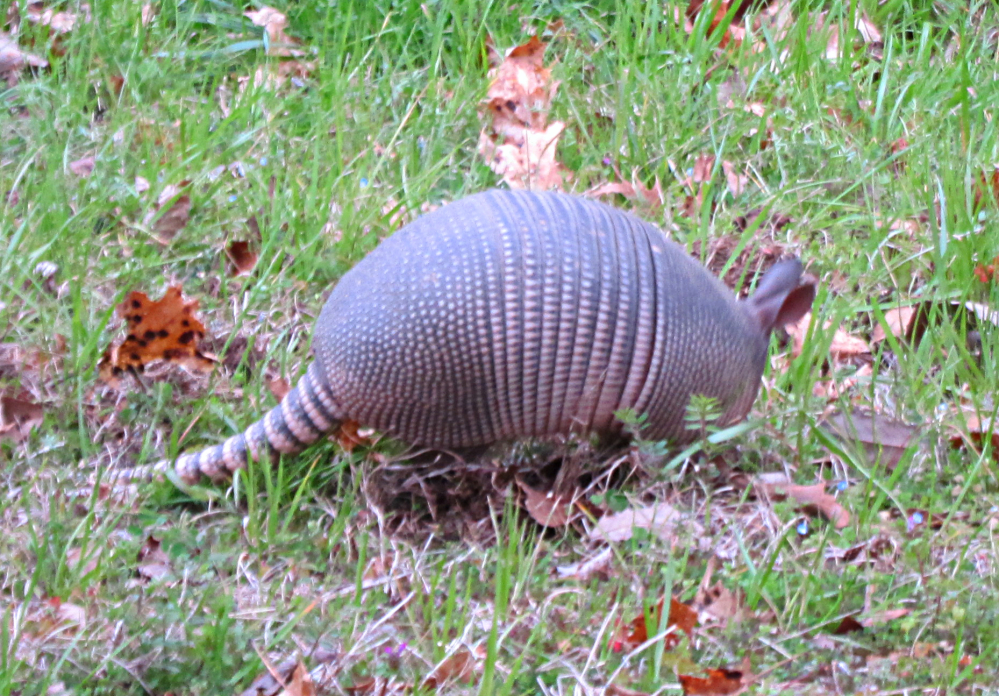
However, there is a relative new comer here too and we saw some right on the side of the road. Armadillos! I’ve only seen Armadillos on the road in another capacity and it wasn’t as cute as what I saw before me rummaging in the soils looking for bugs to eat. The one we stopped next to paid us no nevermind as we giggled and took pictures. Such silly animals grunting and shuffling along. The nine banded armadillo, the only kind in the US, has made its way up through Texas from central America only in the last 200 years and they are slowly expanding their range upwards. Roadways have actually helped them expand their range even if they do call them a “Texas Speed Bumps”. These animals breed at a healthy rate producing four identical quadruplets almost every litter and can have up to 15 litters in a lifetime.   Contrary to popular belief these particular armadillos don’t roll up into a ball (only the three banded species do) but their armor does protect their soft undersides.

While some people think they are a pest because they tear up their lawns others think they are a tasty pork like meat. However, it turns out they also can carry leprosy and you’re more likely to catch it from eating them than from just touching them. Personally I just think they are cute and am glad that I finally got to see one in its element instead of just being a poor little critter in the road.

Little Armored Ones

Taking advantage of a few days before a volunteer commitment on the coast of Louisiana we decided to drive up the Natchez Trace Parkway in Mississippi.  The weather turned bitter cold making it difficult for us to want to leave the warm confines of Lil’Squatch’s cab. So it seemed the a drive was a good way to pass the time anyway.  Starting the trip from Natchez we took in what we could of the historic town, most noted for it’s wealth prior to the civil war.

The “Trace” is a popular drive in the spring when the magnolias are in bloom or in autumn when the leaves are adding a different kind of color to the drive. Being winter there was hardly anyone on the road for long stretches. It’s also possibly the best paved road in MS. Making this stretch the ideal drive for our little guy. Even though the speed limit is 50 we dawdled around 35. This speed was perfect for taking in the bare wooded surroundings. Several people mentioned how they enjoy woods in the winter because you can see back into what is otherwise a well vegetated stand of trees and vines. There are many stops on the Trace that highlight Native American life, plantation life and famous civil war battles. The parkway itself highlights the old dirt route used regularly from 1800-1820 but was most likely in use long before that as a Native American trading route. I kept seeing fluttering in the woods but when I looked harder nothing was there. There is a lot of residual energy in these old woods, a lot of stories to tell and histories to haunt them.

However, there is a relative new comer here too and we saw some right on the side of the road. Armadillos! I’ve only seen Armadillos on the road in another capacity and it wasn’t as cute as what I saw before me rummaging in the soils looking for bugs to eat. The one we stopped next to paid us no nevermind as we giggled and took pictures. Such silly animals grunting and shuffling along. The nine banded armadillo, the only kind in the US, has made its way up through Texas from central 20150225_ArmadilloAmerica only in the last 200 years and they are slowly expanding their range upwards. Roadways have actually helped them expand their range even if they do call them a “Texas Speed Bumps”. These animals breed at a healthy rate producing four identical quadruplets almost every litter and can have up to 15 litters in a lifetime.   Contrary to popular belief these particular armadillos don’t roll up into a ball (only the three banded species do) but their armor does protect their soft undersides.

While some people think they are a pest because they tear up their lawns others think they are a tasty pork like meat. However, it turns out they also can carry leprosy and you’re more likely to catch it from eating them than from just touching them. Personally I just think they are cute and am glad that I finally got to see one in its element instead of just being a poor little critter in the road.

I Swear I’m Not A Birder

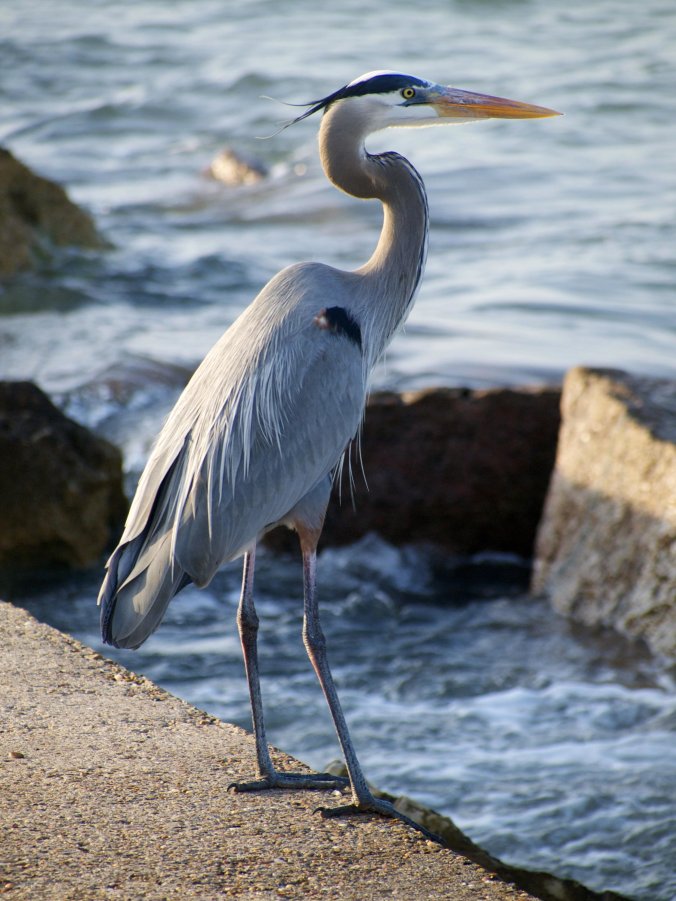
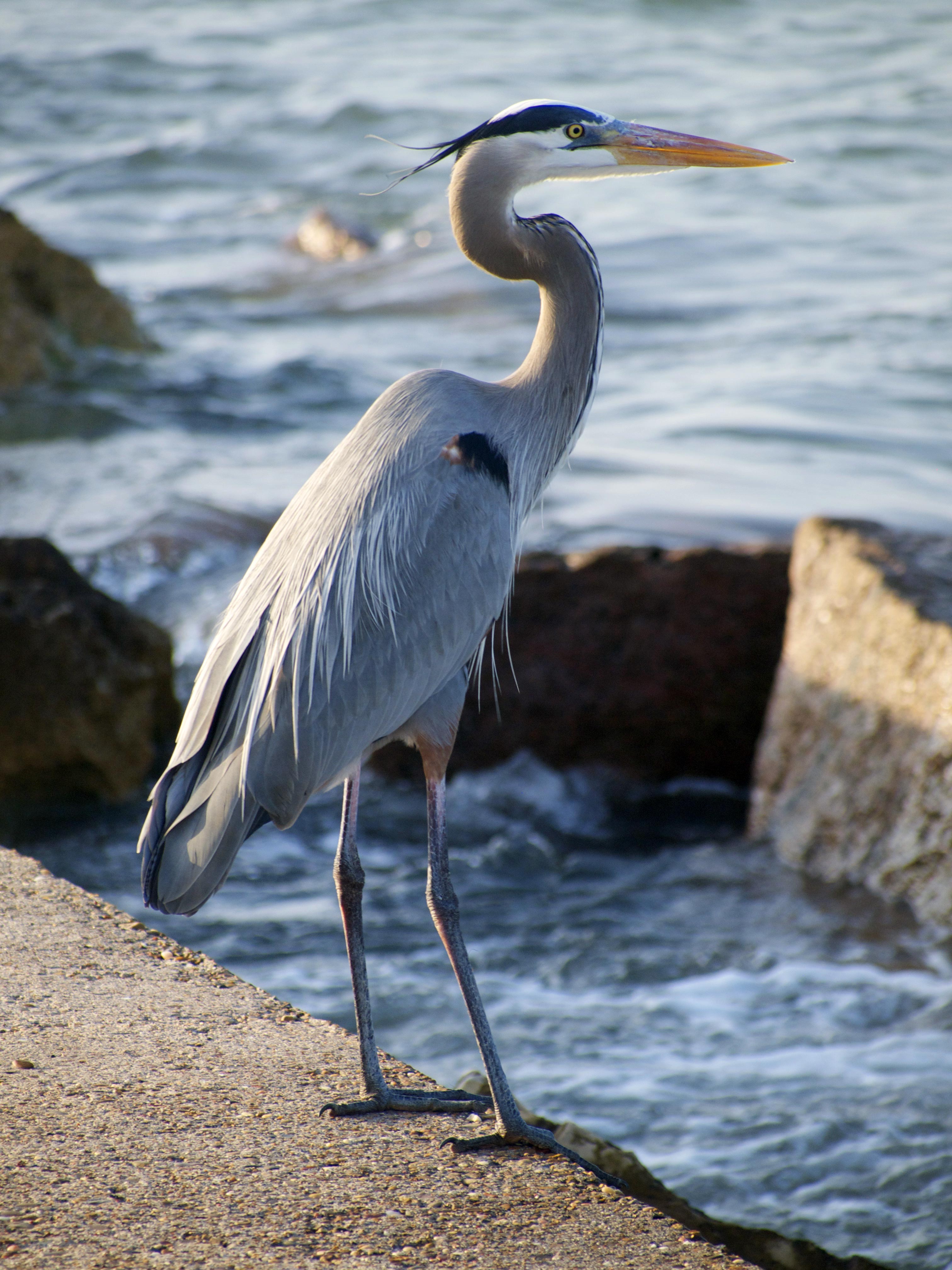
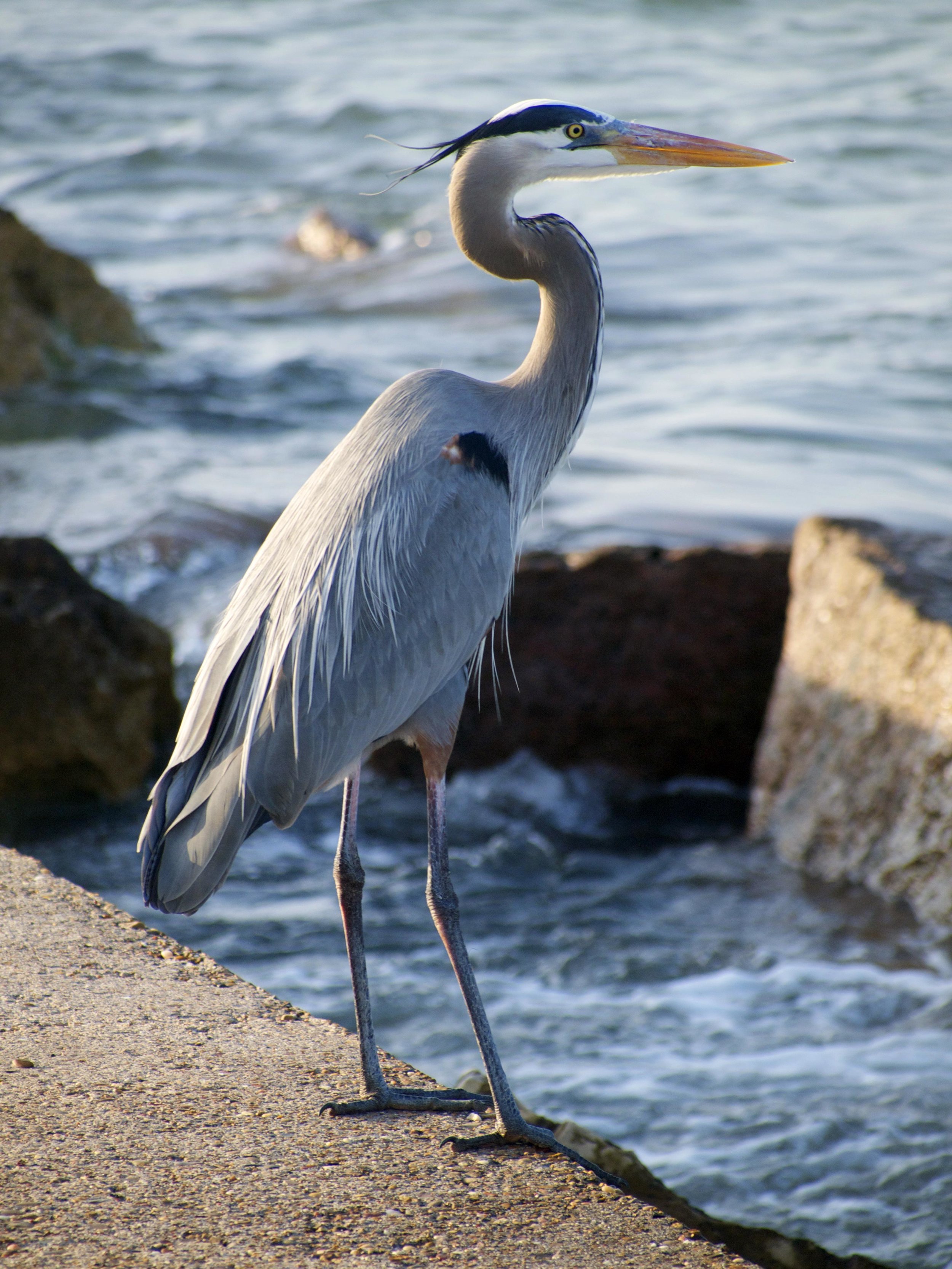
Great Blue Heron - Photo by Tim GillerGreat Blue Heron - Photo by Tim Giller

Great Blue Heron – Photo by Tim Giller

There have been a number of clues in these pages that I might have more than a casual interest in birds. I suppose I should just own up to the label of being a birder just as I got attached to my bike messenger nickname, “nice tim”. Neither of these titles will do much for my gritty urban street cred, but I guess I won’t worry about that because even though I’m feeling a whole new kind of roadtrip gritty, I’m not currently urban. So yes I’ll admit that I do a lot of bird watching. However I don’t really go out “birding”. I spend a lot of time outdoors for many reasons and the chance to see wildlife is one of the most important. Birds simply make themselves the most available and I imagine this is what attracts people to bird watching. You don’t even have to go outside to observe birds; by just looking out almost any window most of us can spot one within minutes. They are possibly the most animated and vocal expression of the fact that nature is always at hand.

Being able to fly they inspire our admiration and envy bringing us stories from afar with their songs. And, like the two of us, many do travel far to spend time in Texas. Because of it’s size, shape and diverse habitats an impressive variety of birds spend time here. It creates a sort of funnel for exotic birds that move north from the tropics or from even farther into South America. In summer, a number of birds go no further than the Rio Grande Valley or the Chisos Mountains in Big Bend. Wintertime brings birds that have nested and raised young in the far north. These travelers, north and south are remarkable survivors and for millennia have had no reason to concern themselves with political boundaries. Today their ancient flyways have become gauntlets with safe havens harder to come by as development has reduced and degraded their rest stops.

In Port Aransas we got the chance to participate in The Whooping Crane Festival, a celebration of a species that tells this story well. The tallest bird on the continent, a bird that needs a little bit of space, it was nearly wiped out, down to a couple dozen birds in the 1940’s. This animal is definitely walking the edge of survival. We’ve set aside some space for it on both ends of it’s migration and done breeding programs that have brought their numbers up but we have to hope that we haven’t pushed it to far. Nature can’t often respect our limited boundaries.

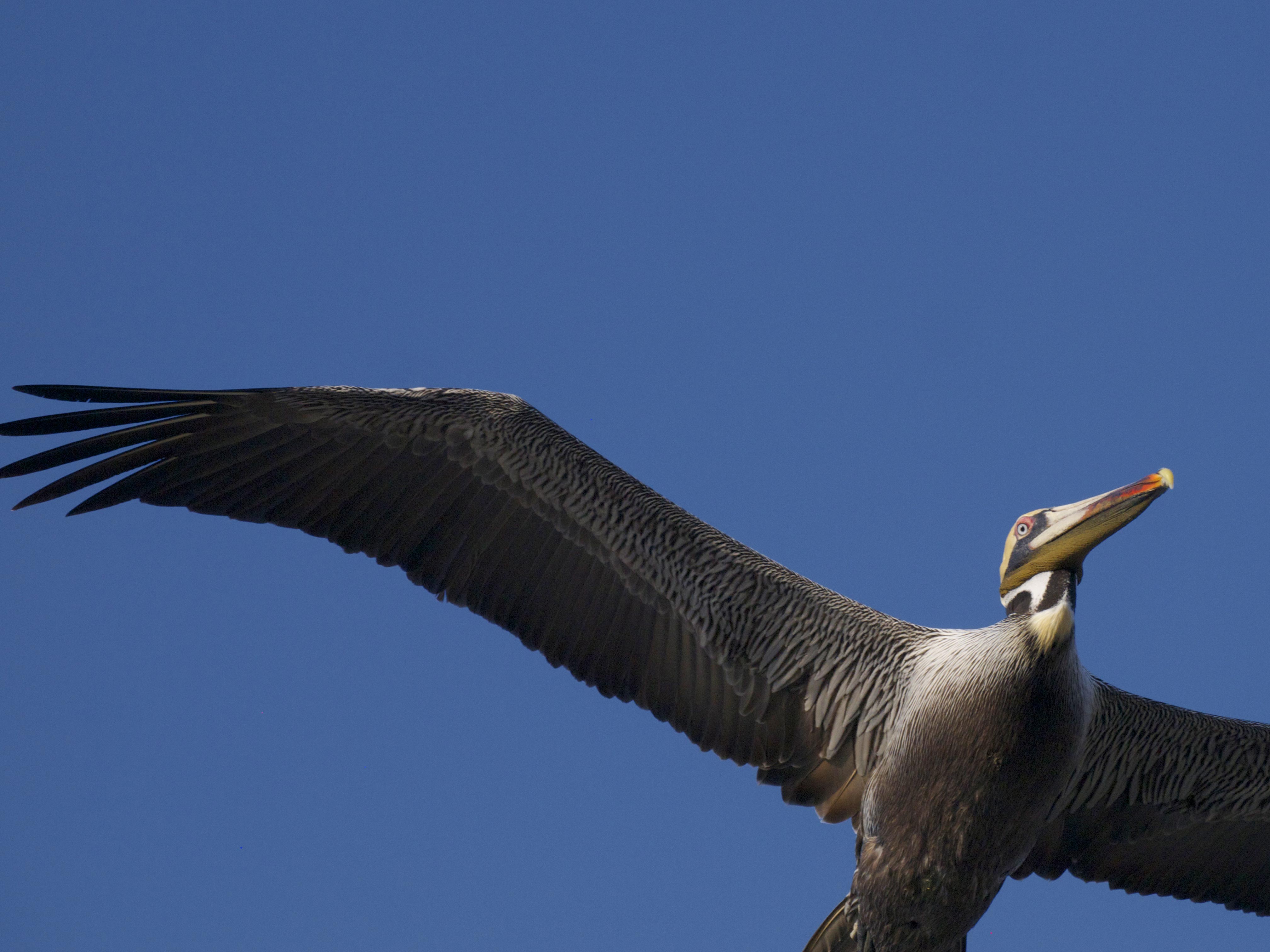
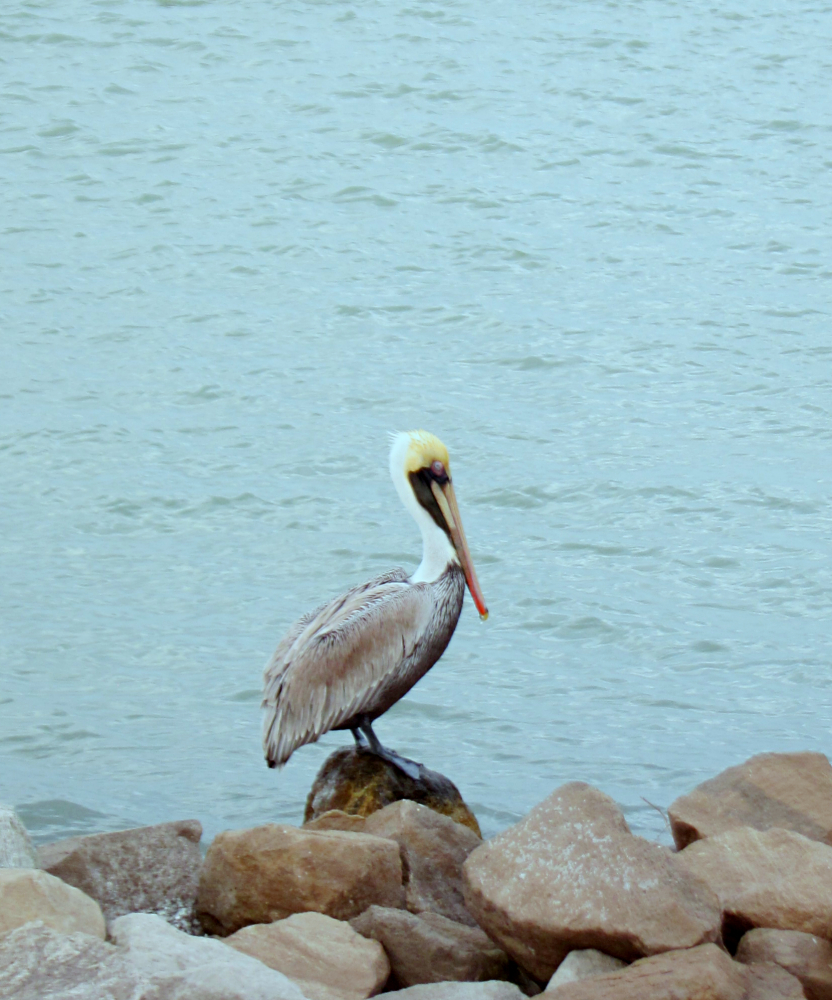
Brown Pelican - Photo by Tim GillerBrown Pelican - Photo by Tim Giller

Brown Pelican – Photo by Tim Giller

There is a sacrifice I suppose for the gift of flight; a certain vulnerability of body, a dependence on the larger world to be intact when you decide to come down to land. At a desert lake in Nevada I once held a recently dead barn owl. It was a beautiful creature, it’s feathers and body still possessed the lithe and tight smoothness that allowed it to silently traverse the night sky. In my hands though the body felt too insubstantial. It was as if only part of its form existed in the same world with me, but that there was another more substantial aspect that was held in some other universe.

I Swear I’m Not A Birder

Great Blue Heron - Photo by Tim Giller

Great Blue Heron – Photo by Tim Giller

There have been a number of clues in these pages that I might have more than a casual interest in birds. I suppose I should just own up to the label of being a birder just as I got attached to my bike messenger nickname, “nice tim”. Neither of these titles will do much for my gritty urban street cred, but I guess I won’t worry about that because even though I’m feeling a whole new kind of roadtrip gritty, I’m not currently urban. So yes I’ll admit that I do a lot of bird watching. However I don’t really go out “birding”. I spend a lot of time outdoors for many reasons and the chance to see wildlife is one of the most important. Birds simply make themselves the most available and I imagine this is what attracts people to bird watching. You don’t even have to go outside to observe birds; by just looking out almost any window most of us can spot one within minutes. They are possibly the most animated and vocal expression of the fact that nature is always at hand.

Being able to fly they inspire our admiration and envy bringing us stories from afar with their songs. And, like the two of us, many do travel far to spend time in Texas. Because of it’s size, shape and diverse habitats an impressive variety of birds spend time here. It creates a sort of funnel for exotic birds that move north from the tropics or from even farther into South America. In summer, a number of birds go no further than the Rio Grande Valley or the Chisos Mountains in Big Bend. Wintertime brings birds that have nested and raised young in the far north. These travelers, north and south are remarkable survivors and for millennia have had no reason to concern themselves with political boundaries. Today their ancient flyways have become gauntlets with safe havens harder to come by as development has reduced and degraded their rest stops.

In Port Aransas we got the chance to participate in The Whooping Crane Festival, a celebration of a species that tells this story well. The tallest bird on the continent, a bird that needs a little bit of space, it was nearly wiped out, down to a couple dozen birds in the 1940’s. This animal is definitely walking the edge of survival. We’ve set aside some space for it on both ends of it’s migration and done breeding programs that have brought their numbers up but we have to hope that we haven’t pushed it to far. Nature can’t often respect our limited boundaries.

Brown Pelican - Photo by Tim Giller

Brown Pelican – Photo by Tim Giller

There is a sacrifice I suppose for the gift of flight; a certain vulnerability of body, a dependence on the larger world to be intact when you decide to come down to land. At a desert lake in Nevada I once held a recently dead barn owl. It was a beautiful creature, it’s feathers and body still possessed the lithe and tight smoothness that allowed it to silently traverse the night sky. In my hands though the body felt too insubstantial. It was as if only part of its form existed in the same world with me, but that there was another more substantial aspect that was held in some other universe.

Conversations worth having

We’ve got a library on Squatch. These are books that Tim selected before we left. It’s a good selection that should go well with the theme of our trip. When I finished a John Muir book I picked Rachel Carson’s Silent Spring. I wanted a female author and the book is so famous in it’s tale. I knew it’d be heavy but I wasn’t prepared for just how wounded I would feel when reading about the effects of DDT and other broad spectrum organochlorides. At first glance it might seem that it should be a read of how we learned from our mistakes and in a way it is. On the other hand when we look at the list of herbicides and insecticides currently in play it’s easy to see that we really really didn’t.
And I’m getting double dose. We’ve been listening to a podcast called Best of Natural History Radio from BBC radio. They did a series where a man named Brent Westwood reads from his diaries that he’s kept for the last 40 years about wildlife he’s seen and recorded in his local patch (of land). This patch is in North Worcestershire and he’s lived near it his whole life. The series is broken down in the different sections of the patch and it usually goes something like this; he reads from his diary an early passage and then perhaps a second time later in life and then follows up with what he’s seeing most recently. Sadly they all almost play out the same way. He sees several of a kind of bird is excited about it and then over the course of the last 40 years they disappear. He often states that he doesn’t expect to ever see that particular bird ever again. I’m not one to shy away from heavy topics but this double whammy is a bit much, even for me. I don’t plan to cover heavy topics here too often however, I can’t help but think about how if the US stopped using DDT in 1972 and we have all these good stories to tell because of it (pelicans, bald eagles, peregrine falcons, robins etc) then why has this man recorded massive declines in birds at his local patch in the last 15 years? Nine times out of ten you can look no farther than habitat loss. But what is habitat? Or rather what three things make a “habitat”? We were recently asked this very question on a birding van tour on Padre Island National Seashore. I answered correctly when I said “food, water, shelter” but I hadn’t actually thought of habitat as three things until that very moment. I always thought in terms of shelter. Loss of chaparral, rain forest, open desert, coral reefs. These are places. They are three dimensional places though. They go up and down. From the fungus on the roots to the bears up above they create a chain of creatures. Creatures that all rely on each other for food, water and sometimes shelter. Growing up we were taught the “food chain” and now they call it more accurately the “food web”. I call it ecological Jenga. It’s easy to say well we’re cutting out habitat to build homes and have more land to farm but what of the land around the home and the farms themselves? What are we farming now that wasn’t as much of an issue when Brent started his data diary? Neonicotinoids. Specifically seeds that are coated with them before planting. The whole plant from roots to pollen is a toxic buffet for anything that tries to eat it. The problem is that birds eating the insects that ate the poisoned plant then suffer. As do the bees that visit these plants with pollens. Even worse for birds is when they eat the seeds directly. Study after study is showing that this is becoming a huge problem. Like I said I’m not afraid to read and talk about these heavy issues.

20150221_Pelican_PtAransas20150221_Pelican_PtAransas

20150221_Pelican_PtAransas

However, this time I needed a lift and I got one this last weekend at the Whooping Crane Festival in Port Aransas. In Silent Spring Rachel Carson refers to different people who contacted her about the effects of DDT. They weren’t scientists or farmers or birders or any kind of specialist. These were just folks who noticed that the birds from their backyards were gone. They didn’t sing the song of spring and the silence was deafening. I’m mean we all kind of notice birds don’t we? From herons and seagulls to hawks and doves. People notice birds whether or not they are “into” birds. So when they’re gone something seems amiss.

At the Whooping Crane Festival people come from all over the world. It’s not a giant turn out but it’s good. Here is a bird that was down to just 15 birds in 1960 and now there are almost 600. It’s been a big effort between two countries and a whole migratory path. We were able to volunteer in a very small way for the festival   sure that folks made it to their van tour for two morning tours. We had also toured the trade show. It was during this time that I was reminded that there is not just a conversation going but there is action because of these conversations. One table at the trade show I stopped to chat with a fellow from Texas forestry who has a passion for helping Port Aransas deal with the Brazilian Pepper tree invasions. They’ve come up with a plan to try and eradicate them from Port Aransas (and hopefully beyond) that will be a lot of work but should be easy to implement. Before I chatted with him he was talking to a woman from Michigan who listed off a few of her local invasives. Our first volunteer opportunity on the trip was pulling the invasive bufflegrass from Saguaro National Park and before that Tim and I put our backs into pulling invasives out of San Francisco. Invasives are a hot topic and people are working hard (sweat and all) to deal with them as best we can. In between van tours we talked with a woman who works at the Chamber of Commerce who has gone through Texas Naturalist Program. We chatted briefly on how nice the wildlife viewing is in Port Aransas and the National Sea shore further south. It was nice to be reminded that eco tourism is not just for Chile and Costa Rica but right here in the states we still have good patches of land that people come from all over to partake in. And folks seem to be really understanding that we need to keep patches connected or try to reconnect them through corridors that help maintain healthy populations. And I know that there is some talk about pesticides and that the Neonicotinoids are not just being used on big Ag but that we can buy them at our local hardware store and may not even realize how harmful they are to the very things we’re probably trying to attract to our yards. It may take a law to get these harmful pesticides off farms but, we have choices in our yards and in our neighborhoods to avoid pesticides, herbicides and invasives. Keeping these things out of our yards creates (keeps?) habitat. There are whole migration paths where folks have planted specific plants for birds and butterflies that have kept these creatures from extinction. We can work with our local communities and figure out ways to grow our towns and cities in efforts that work with the natural areas in and around them. And while my thoughts on us being on the verge of an ecological revolution might be a bit too hopeful it does seem possible if we keep these topics, and how we can help, on the tips of our tongues.

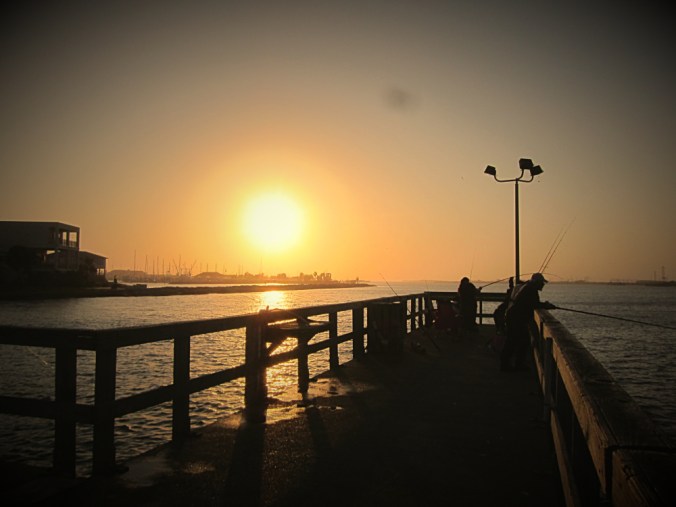
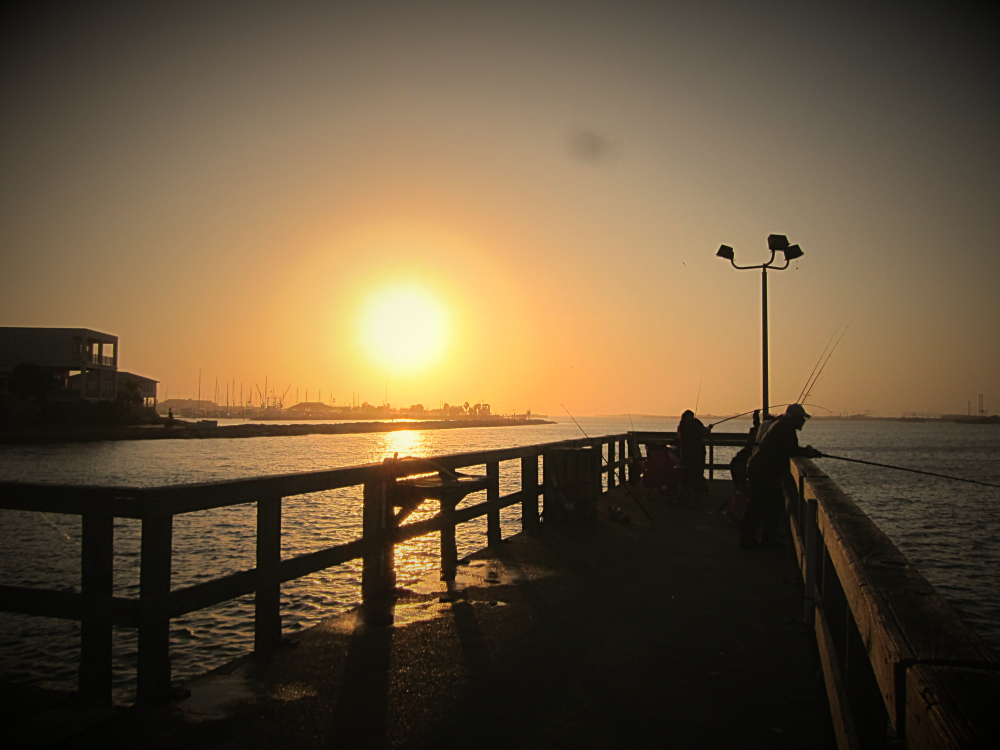
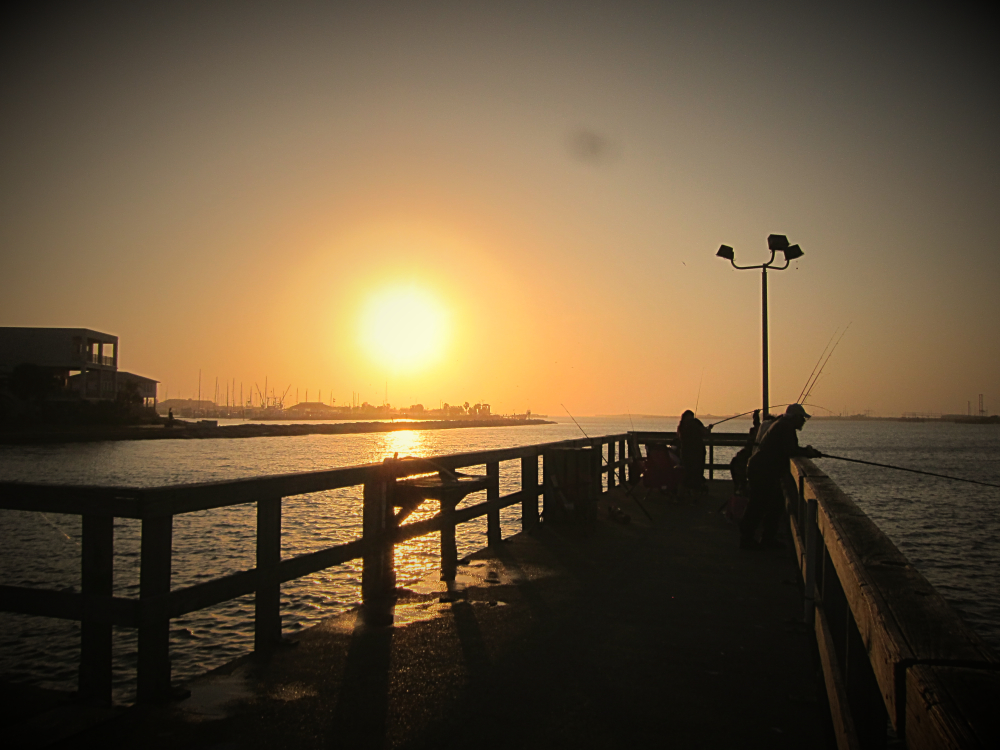
Pier SunsetPier Sunset

Pier Sunset

Conversations worth having

We’ve got a library on Squatch. These are books that Tim selected before we left. It’s a good selection that should go well with the theme of our trip. When I finished a John Muir book I picked Rachel Carson’s Silent Spring. I wanted a female author and the book is so famous in it’s tale. I knew it’d be heavy but I wasn’t prepared for just how wounded I would feel when reading about the effects of DDT and other broad spectrum organochlorides. At first glance it might seem that it should be a read of how we learned from our mistakes and in a way it is. On the other hand when we look at the list of herbicides and insecticides currently in play it’s easy to see that we really really didn’t.

And I’m getting double dose. We’ve been listening to a podcast called Best of Natural History Radio from BBC radio. They did a series where a man named Brent Westwood reads from his diaries that he’s kept for the last 40 years about wildlife he’s seen and recorded in his local patch (of land). This patch is in North Worcestershire and he’s lived near it his whole life. The series is broken down in the different sections of the patch and it usually goes something like this; he reads from his diary an early passage and then perhaps a second time later in life and then follows up with what he’s seeing most recently. Sadly they all almost play out the same way. He sees several of a kind of bird is excited about it and then over the course of the last 40 years they disappear. He often states that he doesn’t expect to ever see that particular bird ever again. I’m not one to shy away from heavy topics but this double whammy is a bit much, even for me. I don’t plan to cover heavy topics here too often however, I can’t help but think about how if the US stopped using DDT in 1972 and we have all these good stories to tell because of it (pelicans, bald eagles, peregrine falcons, robins etc) then why has this man recorded massive declines in birds at his local patch in the last 15 years? Nine times out of ten you can look no farther than habitat loss. But what is habitat? Or rather what three things make a “habitat”? We were recently asked this very question on a birding van tour on Padre Island National Seashore. I answered correctly when I said “food, water, shelter” but I hadn’t actually thought of habitat as three things until that very moment. I always thought in terms of shelter. Loss of chaparral, rain forest, open desert, coral reefs. These are places. They are three dimensional places though. They go up and down. From the fungus on the roots to the bears up above they create a chain of creatures. Creatures that all rely on each other for food, water and sometimes shelter. Growing up we were taught the “food chain” and now they call it more accurately the “food web”. I call it ecological Jenga. It’s easy to say well we’re cutting out habitat to build homes and have more land to farm but what of the land around the home and the farms themselves? What are we farming now that wasn’t as much of an issue when Brent started his data diary? Neonicotinoids. Specifically seeds that are coated with them before planting. The whole plant from roots to pollen is a toxic buffet for anything that tries to eat it. The problem is that birds eating the insects that ate the poisoned plant then suffer. As do the bees that visit these plants with pollens. Even worse for birds is when they eat the seeds directly. Study after study is showing that this is becoming a huge problem. Like I said I’m not afraid to read and talk about these heavy issues.

20150221_Pelican_PtAransasHowever, this time I needed a lift and I got one this last weekend at the Whooping Crane Festival in Port Aransas. In Silent Spring Rachel Carson refers to different people who contacted her about the effects of DDT. They weren’t scientists or farmers or birders or any kind of specialist. These were just folks who noticed that the birds from their backyards were gone. They didn’t sing the song of spring and the silence was deafening. I’m mean we all kind of notice birds don’t we? From herons and seagulls to hawks and doves. People notice birds whether or not they are “into” birds. So when they’re gone something seems amiss.

At the Whooping Crane Festival people come from all over the world. It’s not a giant turn out but it’s good. Here is a bird that was down to just 15 birds in 1960 and now there are almost 600. It’s been a big effort between two countries and a whole migratory path. We were able to volunteer in a very small way for the festival   sure that folks made it to their van tour for two morning tours. We had also toured the trade show. It was during this time that I was reminded that there is not just a conversation going but there is action because of these conversations. One table at the trade show I stopped to chat with a fellow from Texas forestry who has a passion for helping Port Aransas deal with the Brazilian Pepper tree invasions. They’ve come up with a plan to try and eradicate them from Port Aransas (and hopefully beyond) that will be a lot of work but should be easy to implement. Before I chatted with him he was talking to a woman from Michigan who listed off a few of her local invasives. Our first volunteer opportunity on the trip was pulling the invasive bufflegrass from Saguaro National Park and before that Tim and I put our backs into pulling invasives out of San Francisco. Invasives are a hot topic and people are working hard (sweat and all) to deal with them as best we can. In between van tours we talked with a woman who works at the Chamber of Commerce who has gone through Texas Naturalist Program. We chatted briefly on how nice the wildlife viewing is in Port Aransas and the National Sea shore further south. It was nice to be reminded that eco tourism is not just for Chile and Costa Rica but right here in the states we still have good patches of land that people come from all over to partake in. And folks seem to be really understanding that we need to keep patches connected or try to reconnect them through corridors that help maintain healthy populations. And I know that there is some talk about pesticides and that the Neonicotinoids are not just being used on big Ag but that we can buy them at our local hardware store and may not even realize how harmful they are to the very things we’re probably trying to attract to our yards. It may take a law to get these harmful pesticides off farms but, we have choices in our yards and in our neighborhoods to avoid pesticides, herbicides and invasives. Keeping these things out of our yards creates (keeps?) habitat. There are whole migration paths where folks have planted specific plants for birds and butterflies that have kept these creatures from extinction. We can work with our local communities and figure out ways to grow our towns and cities in efforts that work with the natural areas in and around them. And while my thoughts on us being on the verge of an ecological revolution might be a bit too hopeful it does seem possible if we keep these topics, and how we can help, on the tips of our tongues.

Pier Sunset