Protecting the Ephemeral

Dunes3Dunes3

Dunes3

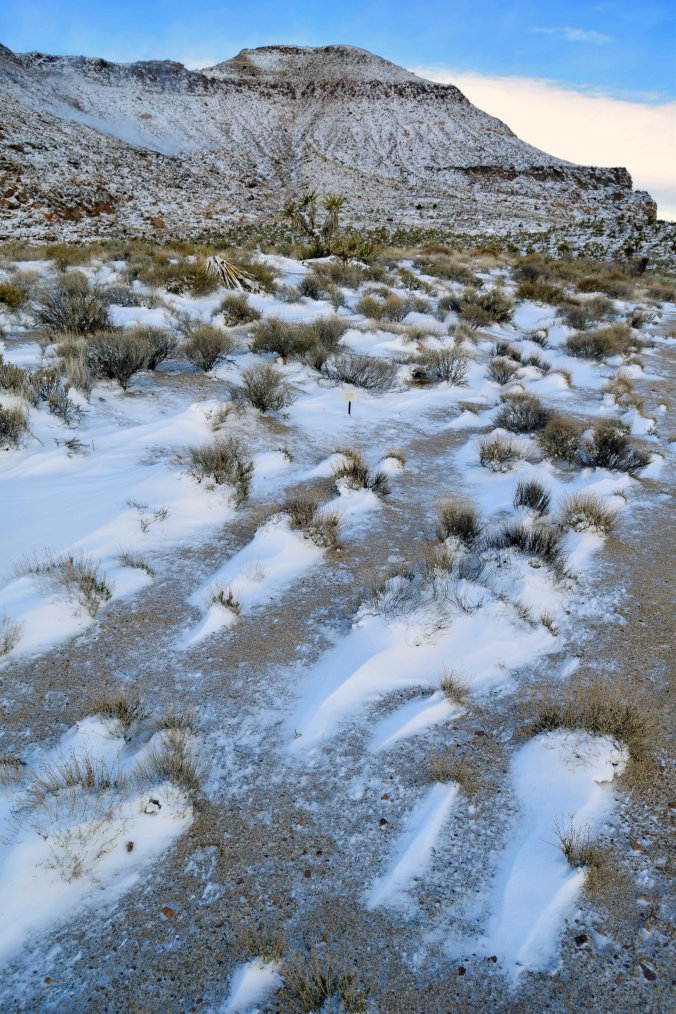
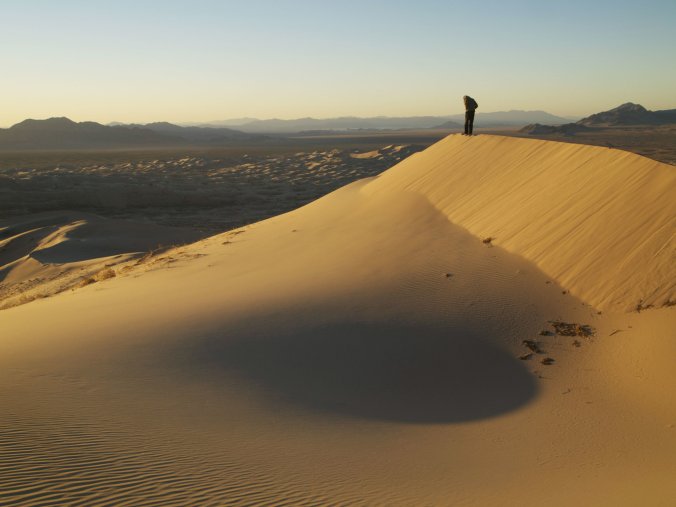
Earlier this week we took a break from our eastern side of the Mojave National Preserve to spend some time exploring the western portion of the place, specifically the Kelso Dunes. Spanning 45 square miles the dunes stand out from all the surrounding mountains with their soft brown peaks. Extending up from a skirt of creosote plains to approximately 600 feet at their tallest peak the dunes will catch your eye long before you get to them. Even though the previous week brought a rare dusting of snow to the dunes I had hoped that the recent heat wave might bring out some critters. I am hoping to one day catch a sidewinder doing its dance on the sands but I’ll spare you the suspense and tell you now there was no such luck this time.

Dunes2Dunes2

Dunes2

Geologically young, Kelso Dunes started forming roughly 25,000 years ago. The fine grains of sand have blown over from the Mojave river sink and Soda Dry Lake to the northwest having been lifted and carried for miles by the prevailing winds. Dunes sort of march forward by having steep peaks that topple forward in a lift and fall repetition, stopping only when they meet a force greater usually in the form of a mountain range. In the case of the Kelso Dunes they stopped just north of the Granite Mountains. These are the Granite Mountains within the Preserve, not to be confused by the other two sets of Granite Mountains within a hundred miles of these Granite Mountains. These dunes have been stabilized in this location long enough with not much new sand accumulation to be pretty well covered in vegetation. The plants adapted to live with the ever changing dunes tend to have more stabilizing root systems and can withstand being partially covered from time to time. Although it’s not uncommon for them to be so buried that they suffocate and die. Even creosote growing in the sandy dunes skirts will adapt to have more roots than neighboring creosote in rocky soils. Other plants grow quickly spreading many seeds then die off before letting the dunes have a chance to change too much on them. We saw one such plant beginning to sprout, the endemic Borrego Locoweed. It only rains about 4 inches a year here. When it does rain the water percolates straight down. The fine sand is a tight filter so one does not have to dig deep to find moisture. Much like shimming your feet under the beach sand on a hot day.

DuneBugsDuneBugs

DuneBugs

Of course the best part of the sand is that animal tracks show so well. And because the wind is constantly sweeping tracks clean they are usually relatively fresh. Although it’s not always easy to know just who left the tracks you’re looking at it is a fun game to try and guess. A friend and her family visited us at the park and she took a picture that made me think immediately of ravens. However, comparing her boot next to the tracks in the picture makes one think it would be one big raven! There are kit foxes, coyotes, cottontail and jack rabbits, beetles, lizards and the world’s cutest rodent…the Kangaroo Rat.

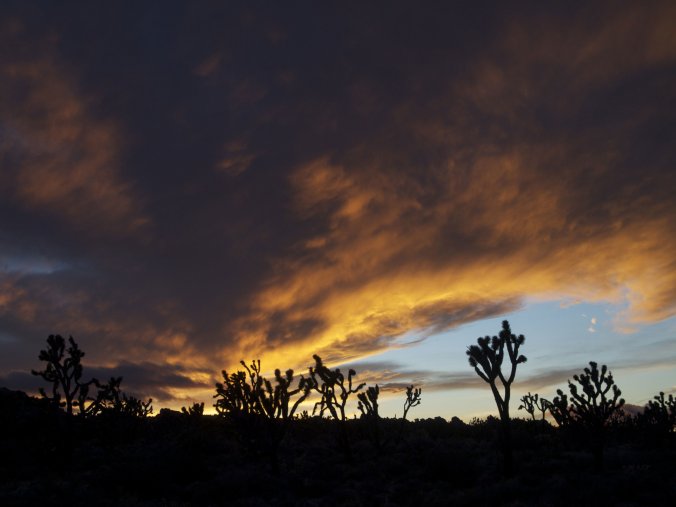
As luck would have it Tim caught something small moving in a hole as we made our trek towards the top of the dunes. We sat quietly, Tim with a camera and me with the binoculars, while about 50 feet away emerged a Kangaroo Rat beginning his/her nightly duties of sweeping the entrances to at least four holes, taking stock of the plants nearby and occasionally stopping for a scratch. We giggled, took pictures and sat in gratitude for its willingness to share this time with us for about 15 minutes. After one last dramatic flip into its home again we moved on to our original intent. Slipping in the soft steep sand we made it to the top of the highest peak just in time for sunset. A moment shared with a few others who’d made the trek from the other side of the hill. Heading back down towards camp we ran down the untrodden portion of the hill and managed to make the dunes boom with each step. Kelso Dunes and the Eureka Dunes of Death Valley National Park are known for this booming sound as air escapes between the sand when it is disturbed. It brought a child like joy to the end of our evening.

Here’s a link to the video Tim took of the Kangaroo Rat: https://youtu.be/TecgDGdkqE8

Protecting the Ephemeral

Dunes3

Sunset – Photo by Tim Giller

Earlier this week we took a break from our eastern side of the Mojave National Preserve to spend some time exploring the western portion of the place, specifically the Kelso Dunes. Spanning 45 square miles the dunes stand out from all the surrounding mountains with their soft brown peaks. Extending up from a skirt of creosote plains to approximately 600 feet at their tallest peak the dunes will catch your eye long before you get to them. Even though the previous week brought a rare dusting of snow to the dunes I had hoped that the recent heat wave might bring out some critters. I am hoping to one day catch a sidewinder doing its dance on the sands but I’ll spare you the suspense and tell you now there was no such luck this time.

Dunes2

Wind Rings – Photo by Tim Giller

Geologically young, Kelso Dunes started forming roughly 25,000 years ago. The fine grains of sand have blown over from the Mojave river sink and Soda Dry Lake to the northwest having been lifted and carried for miles by the prevailing winds. Dunes sort of march forward by having steep peaks that topple forward in a lift and fall repetition, stopping only when they meet a force greater usually in the form of a mountain range. In the case of the Kelso Dunes they stopped just north of the Granite Mountains. These are the Granite Mountains within the Preserve, not to be confused by the other two sets of Granite Mountains within a hundred miles of these Granite Mountains. These dunes have been stabilized in this location long enough with not much new sand accumulation to be pretty well covered in vegetation. The plants adapted to live with the ever changing dunes tend to have more stabilizing root systems and can withstand being partially covered from time to time. Although it’s not uncommon for them to be so buried that they suffocate and die. Even creosote growing in the sandy dunes skirts will adapt to have more roots than neighboring creosote in rocky soils. Other plants grow quickly spreading many seeds then die off before letting the dunes have a chance to change too much on them. We saw one such plant beginning to sprout, the endemic Borrego Locoweed. It only rains about 4 inches a year here. When it does rain the water percolates straight down. The fine sand is a tight filter so one does not have to dig deep to find moisture. Much like shimming your feet under the beach sand on a hot day.

DuneBugs

Beetle Tracks – Photo by Tim Giller

Of course the best part of the sand is that animal tracks show so well. And because the wind is constantly sweeping tracks clean they are usually relatively fresh. Although it’s not always easy to know just who left the tracks you’re looking at it is a fun game to try and guess. A friend and her family visited us at the park and she took a picture that made me think immediately of ravens. However, comparing her boot next to the tracks in the picture makes one think it would be one big raven! There are kit foxes, coyotes, cottontail and jack rabbits, beetles, lizards and the world’s cutest rodent…the Kangaroo Rat.

As luck would have it Tim caught something small moving in a hole as we made our trek towards the top of the dunes. We sat quietly, Tim with a camera and me with the binoculars, while about 50 feet away emerged a Kangaroo Rat beginning his/her nightly duties of sweeping the entrances to at least four holes, taking stock of the plants nearby and occasionally stopping for a scratch. We giggled, took pictures and sat in gratitude for its willingness to share this time with us for about 15 minutes. After one last dramatic flip into its home again we moved on to our original intent. Slipping in the soft steep sand we made it to the top of the highest peak just in time for sunset. A moment shared with a few others who’d made the trek from the other side of the hill. Heading back down towards camp we ran down the untrodden portion of the hill and managed to make the dunes boom with each step. Kelso Dunes and the Eureka Dunes of Death Valley National Park are known for this booming sound as air escapes between the sand when it is disturbed. It brought a child like joy to the end of our evening.

Here’s a link to the video Tim took of the Kangaroo Rat: https://youtu.be/TecgDGdkqE8


Desert Home

Barber Peak, Mojave National Preserve - Photo by Tim GillerBarber Peak, Mojave National Preserve - Photo by Tim Giller

Barber Peak, Mojave National Preserve – Photo by Tim Giller

The hottest and desert in North America seemed like a great place to spend the winter in our tiny house that has scant insulation and no central heat or actually any heat to speak of. We soon learned that while some parts of the Mojave can hit 120 degrees in the summer, this is a diverse landscape of mountains and broad valleys. The cold north wind pushing snowdrifts against our tires and creeping in through the numerous gaps in our walls as we were being buffeted by the 50mph gusts which rattled our “stick and staple” construction was a tangible reminder that in the higher portions of this desert there is plenty of winter.

After weaving our way through a surprising amount of Federal bureaucracy, Rachael and I landed a remote and extended volunteer posting in the Mojave National Preserve. The National Park Service (NPS) uses over two-dozen acronyms to differentiate the more than 400 units in its system. When we imagine a National Park many of us envision the stunning scenery of Yosemite or Southern Utah, or the wildlife and exotic thermal features of Yellowstone, maybe glaciers and grizzly bears in Alaska. These are certainly the heart and soul of the system but as a great physical representation of our democracy the idea has evolved to include an invaluable collection of historic and cultural resources. There are National Seashores (NS) and Lakeshores (NL), National Scenic Trails (NST), National Wild and Scenic Rivers (NWSR) and National Historic Battlefields (NHB) and all kinds of other bits and pieces.

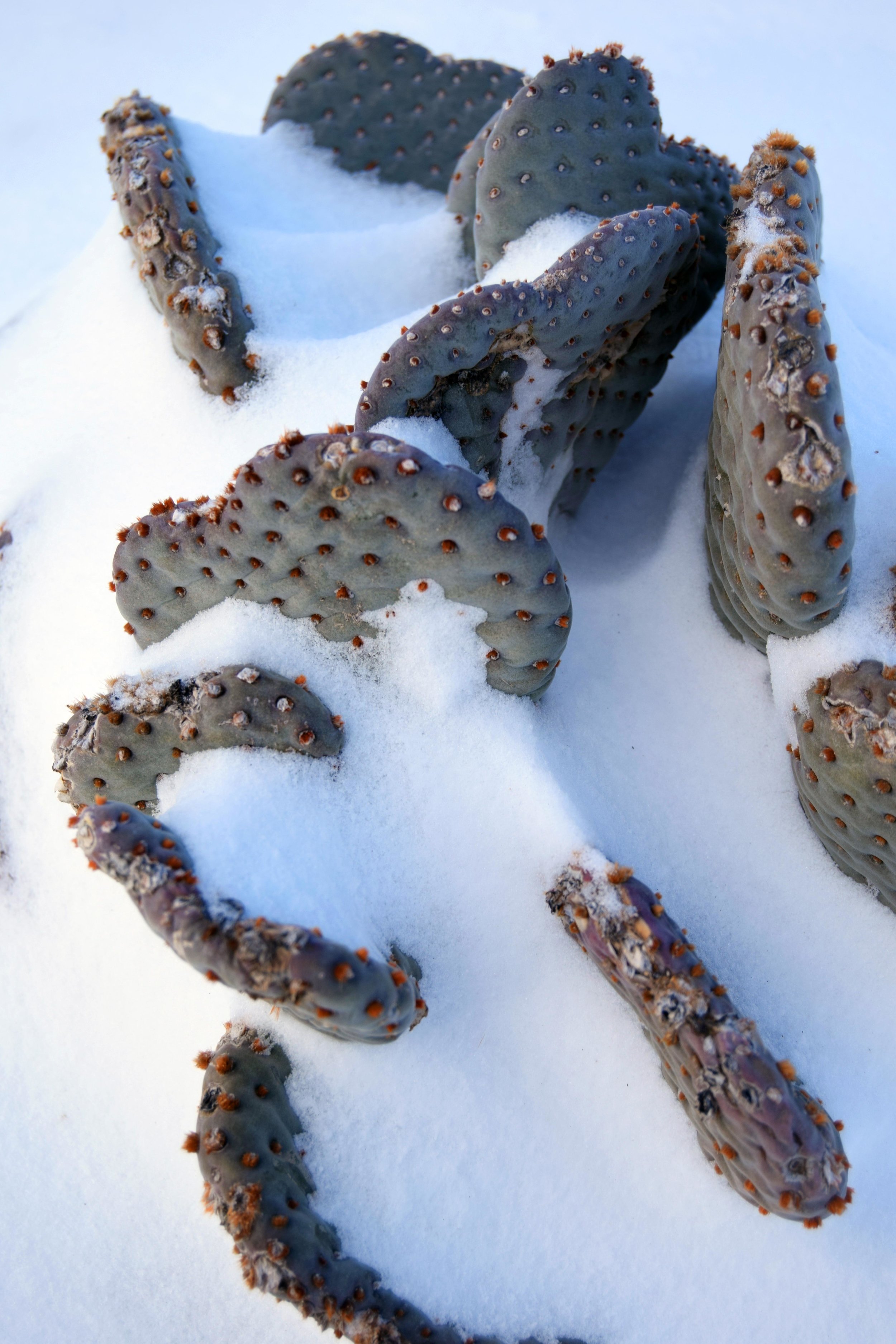
Beavertail Cactus - Photo by Tim GillerBeavertail Cactus - Photo by Tim Giller

Beavertail Cactus – Photo by Tim Giller

There was hope that this section of the Eastern Mojave would be designated as a National Park, however a lot of people in the area were opposed to the greater restrictions and a compromise was made to designate it a Preserve. This means that many historic uses of the land are still allowed. There are a few cattle grazing allotments that remain active, some small mining claims are still recognized and limited hunting is permitted. The nomenclature also seems to limit the number of folks who visit. Even though this is one of the largest properties in the NPS this big green blob on the map gets only a small fraction of the people that visit Joshua Tree or Death Valley, the two Parks that bookend the Preserve.

The marks of human activity are well evident throughout the Preserve. Some have argued that this was reason enough to disqualify it as a National Park. It hasn’t taken me long to come to learn the value of this place. It is tempting, even for me, to use words like desolate, barren, forsaken or inhospitable when describing our great deserts, if only for dramatic effect. However even the smallest effort to look more closely reveals a place that is not only rich in life and natural wonders but one that amazes us for it adaptations to adversity and its exotic forms of survival. There are chuckwalla lizards that wedge into crevices and inflate their bodies, preventing predators from pulling them out. Many animals can go months if not years without drinking a sip of water. Plants might die off after spreading prolific seeds that will wait a decade for the rainfall that inspires them to grow once again.

The physical landscape here is full of its own wonders. From a mineral encrusted dry lake bed that once fed the massive sand dune field that remains from over 20,000 years ago to the peaks over 7000 feet that have remnant forests which tell of a wetter time, this is far from the monotonous waste that travelers drawn to the glow of Las Vegas moan about. A 30-minute detour from the interstate could put them on a lunar landscape of cinder cones and lava beds or into the bizarre arms of the densest Joshua Tree forest.

Teutonia Peak, Mojave National Preserve - Photo by Tim GillerTeutonia Peak, Mojave National Preserve - Photo by Tim Giller

Teutonia Peak, Mojave National Preserve – Photo by Tim Giller

Because of the former and continuing uses of the land the Mojave Preserve is in many ways the ideal place to test our willingness to save wild and natural places, to give lands a chance to heal from our many wounds and continue to be wild. That this place is less visited and has subtler joys is a resource in itself, a place to find a bit of solitude and discover on your own. Over the next few months we intend to listen to what this place can teach us. Some of the human markings here date back thousands of years. Though we can only guess as to what ancient petroglyphs and artifacts are saying we can see that people once lived here with humility. Our modern scars are at times the evidence of modern hubris. Over time, if we are willing they could become symbols of how we relearned humility and restraint.

Desert Home

Barber Peak, Mojave National Preserve - Photo by Tim Giller

Barber Peak, Mojave National Preserve – Photo by Tim Giller

The hottest and desert in North America seemed like a great place to spend the winter in our tiny house that has scant insulation and no central heat or actually any heat to speak of. We soon learned that while some parts of the Mojave can hit 120 degrees in the summer, this is a diverse landscape of mountains and broad valleys. The cold north wind pushing snowdrifts against our tires and creeping in through the numerous gaps in our walls as we were being buffeted by the 50mph gusts which rattled our “stick and staple” construction was a tangible reminder that in the higher portions of this desert there is plenty of winter.

After weaving our way through a surprising amount of Federal bureaucracy, Rachael and I landed a remote and extended volunteer posting in the Mojave National Preserve. The National Park Service (NPS) uses over two-dozen acronyms to differentiate the more than 400 units in its system. When we imagine a National Park many of us envision the stunning scenery of Yosemite or Southern Utah, or the wildlife and exotic thermal features of Yellowstone, maybe glaciers and grizzly bears in Alaska. These are certainly the heart and soul of the system but as a great physical representation of our democracy the idea has evolved to include an invaluable collection of historic and cultural resources. There are National Seashores (NS) and Lakeshores (NL), National Scenic Trails (NST), National Wild and Scenic Rivers (NWSR) and National Historic Battlefields (NHB) and all kinds of other bits and pieces.

Beavertail Cactus - Photo by Tim Giller

Beavertail Cactus – Photo by Tim Giller

There was hope that this section of the Eastern Mojave would be designated as a National Park, however a lot of people in the area were opposed to the greater restrictions and a compromise was made to designate it a Preserve. This means that many historic uses of the land are still allowed. There are a few cattle grazing allotments that remain active, some small mining claims are still recognized and limited hunting is permitted. The nomenclature also seems to limit the number of folks who visit. Even though this is one of the largest properties in the NPS this big green blob on the map gets only a small fraction of the people that visit Joshua Tree or Death Valley, the two Parks that bookend the Preserve.

The marks of human activity are well evident throughout the Preserve. Some have argued that this was reason enough to disqualify it as a National Park. It hasn’t taken me long to come to learn the value of this place. It is tempting, even for me, to use words like desolate, barren, forsaken or inhospitable when describing our great deserts, if only for dramatic effect. However even the smallest effort to look more closely reveals a place that is not only rich in life and natural wonders but one that amazes us for it adaptations to adversity and its exotic forms of survival. There are chuckwalla lizards that wedge into crevices and inflate their bodies, preventing predators from pulling them out. Many animals can go months if not years without drinking a sip of water. Plants might die off after spreading prolific seeds that will wait a decade for the rainfall that inspires them to grow once again.

The physical landscape here is full of its own wonders. From a mineral encrusted dry lake bed that once fed the massive sand dune field that remains from over 20,000 years ago to the peaks over 7000 feet that have remnant forests which tell of a wetter time, this is far from the monotonous waste that travelers drawn to the glow of Las Vegas moan about. A 30-minute detour from the interstate could put them on a lunar landscape of cinder cones and lava beds or into the bizarre arms of the densest Joshua Tree forest.

Teutonia Peak, Mojave National Preserve - Photo by Tim Giller

Teutonia Peak, Mojave National Preserve – Photo by Tim Giller

Because of the former and continuing uses of the land the Mojave Preserve is in many ways the ideal place to test our willingness to save wild and natural places, to give lands a chance to heal from our many wounds and continue to be wild. That this place is less visited and has subtler joys is a resource in itself, a place to find a bit of solitude and discover on your own. Over the next few months we intend to listen to what this place can teach us. Some of the human markings here date back thousands of years. Though we can only guess as to what ancient petroglyphs and artifacts are saying we can see that people once lived here with humility. Our modern scars are at times the evidence of modern hubris. Over time, if we are willing they could become symbols of how we relearned humility and restraint.

New Vagabonding

I wasn’t surprised that this adventure would become a creative project that Rachael and I would dive into together. I was pleasantly surprised though by how rich and inspiring it has become. There are plenty of stories from the past year that still beg to be told. There are plenty more to come and possibly new ways to tell them as well. We intend to continue to be Vagabond Naturalists, no matter where we are, and that we can bring our experiences to others in a creative and constructive way.
We met many folks along the way that encouraged us that our adventures and insights were worth while, that we had something of value to share. One of these people planted a seed about crowdfunding and led me to Patreon.

I have reservations about dipping into the well of support that we’ve already gotten from people here. It has been motivating to know that a lot of wonderful people have spent some time with our journey.  We thought we could put this further out into the Universe and see where it can go.

New Vagabonding

I wasn’t surprised that this adventure would become a creative project that Rachael and I would dive into together. I was pleasantly surprised though by how rich and inspiring it has become. There are plenty of stories from the past year that still beg to be told. There are plenty more to come and possibly new ways to tell them as well. We intend to continue to be Vagabond Naturalists, no matter where we are, and that we can bring our experiences to others in a creative and constructive way.

We met many folks along the way that encouraged us that our adventures and insights were worth while, that we had something of value to share. One of these people planted a seed about crowdfunding and led me to Patreon.

I have reservations about dipping into the well of support that we’ve already gotten from people here. It has been motivating to know that a lot of wonderful people have spent some time with our journey.  We thought we could put this further out into the Universe and see where it can go.

Good News for the New Year

Visiting so many of our National Parks this year we were inspired to look more at the possibility of spending some time as park volunteers. It seemed like a bit of a pipe dream but, we looked anyway and eventually landed on the Mojave Preserve (http://www.nps.gov/moja/index.htm). With some interesting twists of fate we were officially offered the position and start on January 20th, 2016. We plan to stay on until the end of April. With all this rain we might just be in the right place for an epic desert bloom in spring.
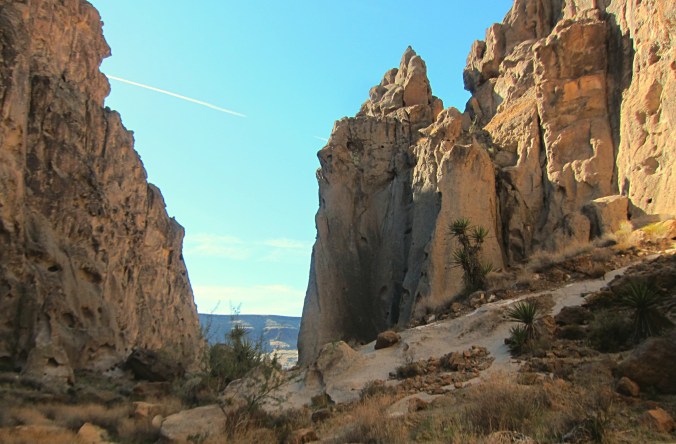
We’ll be spending most of our time at the remote campground and visitor center at Hole in the Wall. The preserve has only a few paved roads and a handful more dirt roads. While the lights of Vegas are as clear as day on the horizon the skies above are wide open. With this in mind we’ve ditched our kayaks and packed our new telescope.

Of course traveling around this year was a dream come true and we are so grateful that we took the risk and did it. Well, mostly a dream come true. Living on the road, especially covering the miles that we did, is not the same as a vacation. We thought we’d have more downtime that we think we’ll finally get over the next few months. We expect to be plenty busy on our working days but are very much looking forward to being in one place. Considering that the Mojave preserve is 1.6 million acres we’ll still have lots of exploring to do.

Thanks everyone for following along in 2015. Your words of support meant everything to us. Happy 2016!

Hole in the WallHole in the Wall

Hole in the Wall

Good News for the New Year

Visiting so many of our National Parks this year we were inspired to look more at the possibility of spending some time as park volunteers. It seemed like a bit of a pipe dream but, we looked anyway and eventually landed on the Mojave Preserve (http://www.nps.gov/moja/index.htm). With some interesting twists of fate we were officially offered the position and start on January 20th, 2016. We plan to stay on until the end of April. With all this rain we might just be in the right place for an epic desert bloom in spring.

We’ll be spending most of our time at the remote campground and visitor center at Hole in the Wall. The preserve has only a few paved roads and a handful more dirt roads. While the lights of Vegas are as clear as day on the horizon the skies above are wide open. With this in mind we’ve ditched our kayaks and packed our new telescope.

Of course traveling around this year was a dream come true and we are so grateful that we took the risk and did it. Well, mostly a dream come true. Living on the road, especially covering the miles that we did, is not the same as a vacation. We thought we’d have more downtime that we think we’ll finally get over the next few months. We expect to be plenty busy on our working days but are very much looking forward to being in one place. Considering that the Mojave preserve is 1.6 million acres we’ll still have lots of exploring to do.

Thanks everyone for following along in 2015. Your words of support meant everything to us. Happy 2016!

Hole in the Wall

Hole in the Wall

How Old is Old?

Photo by Tim GillerPhoto by Tim Giller

Photo by Tim Giller

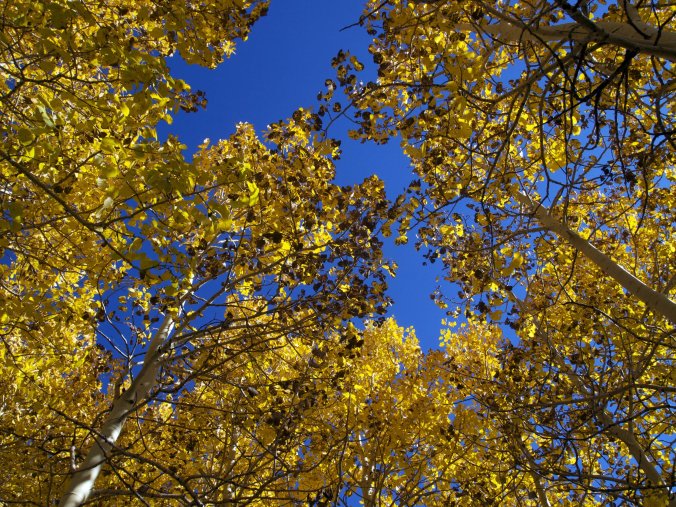
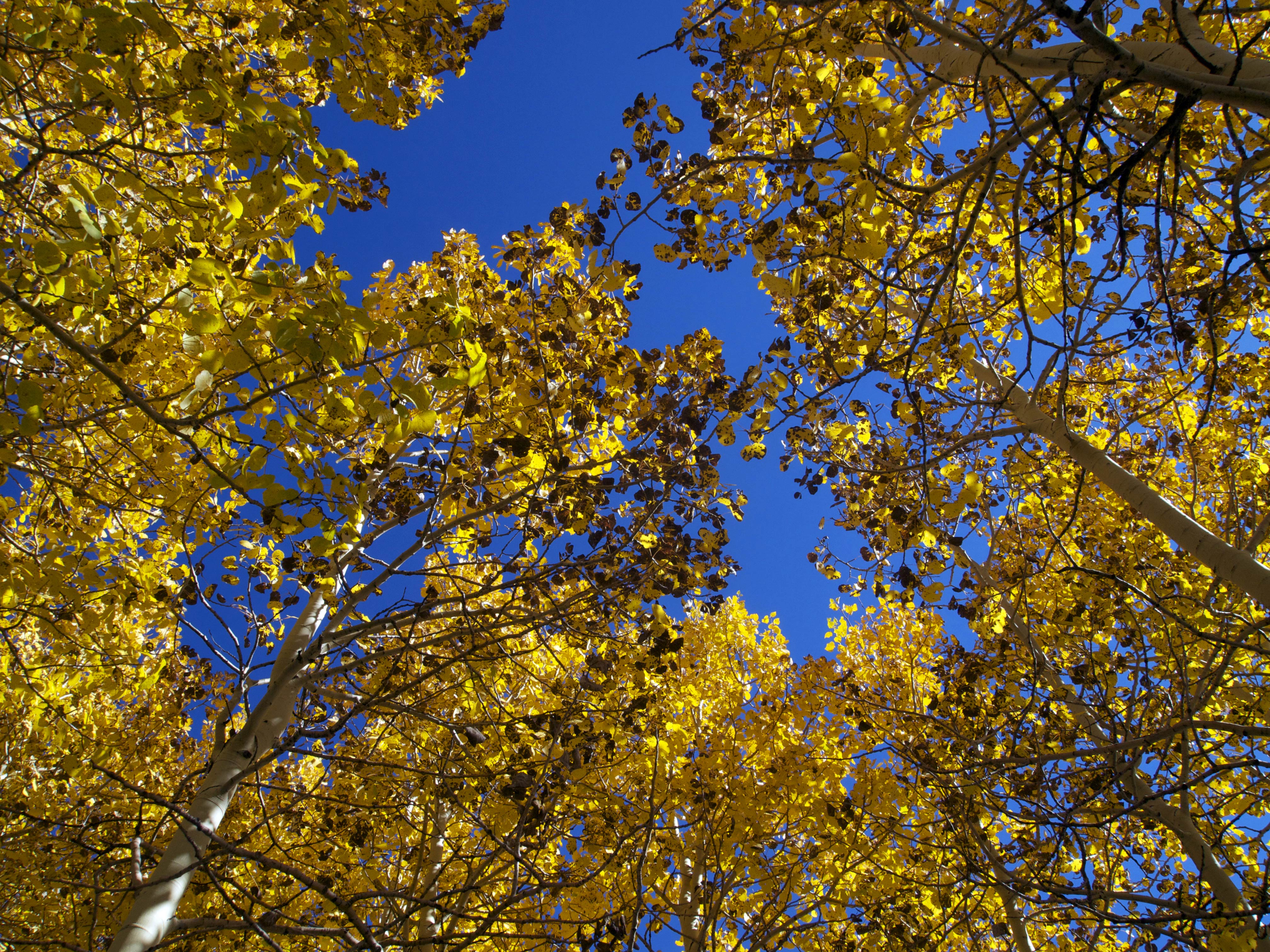
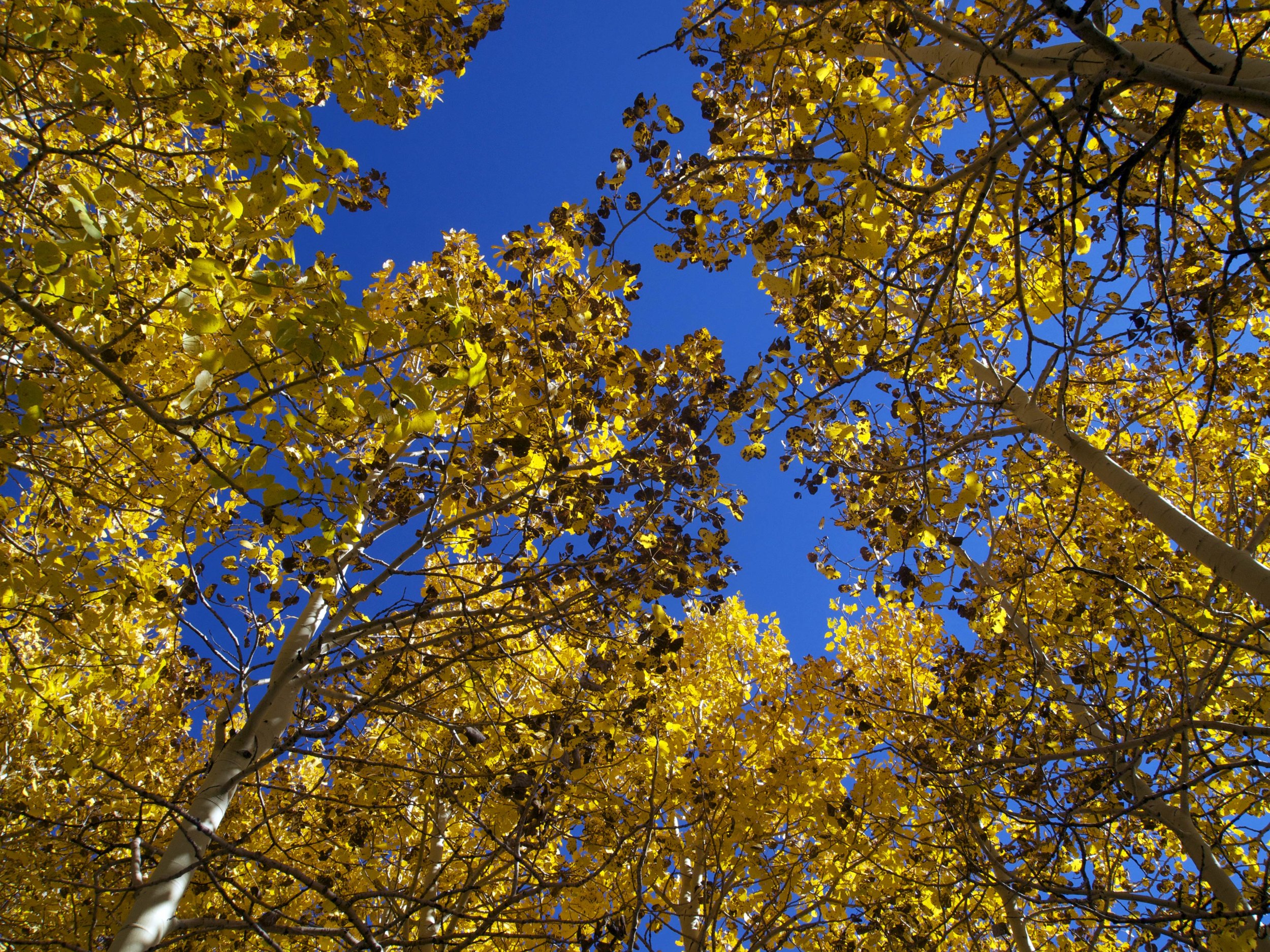
How much would you experience if you lived to be 80,000 years old? The year that Rachael and I spent circumnavigating the continent and all that we saw would barely register for an aspen colony in Southern Utah that researchers have nicknamed “Pando”( Populus tremuloides). 80,000 years is the conservative guess on how long these genetically identical clones have been around, some biologists believe it might be closer to a million years old. Pando is considered a single organism because it shares a massive underground root system that propagates by spreading and sending up new trees to the point that this one system now covers roughly 106 acres. It is the genetic continuity that establishes it as possibly the best candidate for oldest living thing. It is also one of the biggest. All that biomass of root and trunks and leaves adds up. Because no individual tree lives more that a couple hundred years it is difficult to be precise in determining Pando’s age. Aspens benefit from the periodic fires common in the Intermountain West, the root system normally surviving burns that can clear the entire forest. The individual trees have been replaced innumerable times while the integrity of the colony has remained intact, new shoots sprouting quickly after each fire. Biologists use clues from its environment and have examined its genetic code to estimate the age. What is certain is that these trees have seen a lot during their time on earth. Ice ages have come and gone. It was many millennia before the first humans wandered into the region and walked under the leafy canopy. Many fantastic mammals flourished then went extinct in Pando’s presence. While traveling through Utah this October we skirted the flank of the Aquarius Plateau, immersed in the golden light of autumn aspen leaves. Each grove changing in unison to create a subtle patchwork of warm hues, a vivid annual show repeated through the ages.

Aspens, Utah - Photo by Tim GillerAspens, Utah - Photo by Tim Giller

Aspens, Utah – Photo by Tim Giller

At perhaps 8600 years the “Humongous Fungus” specimen of Armillaria solidipes in Eastern Oregon can’t compete in age with Pando and is arguably less charming. However, covering almost 2400 acres and weighing as much as 35,000 tons it has taken the lead in overall size and mass for a known living organism. Almost none of it is normally visible. The mushrooms that many of us think of as fungus are only the fruiting bodies of much larger life forms. Underground or in the tissues of trees, plants and other organic matter the real life of a fungus takes place in the mycelium and for this species it is spread throughout the soil and wood of a remote section of National Forest. Fungi quietly do a hefty share of the work of ecosystem function. Alongside bacterial cohorts they break down the detritus of any landscape into usable nutrients making lifeless dirt into rich soil. They also form symbiotic partnerships with other organisms, especially plants. Almost all trees and other plants have a specific fungal relationship in the soil that is necessary for them to thrive.

Creosote bushes, Death Valley - Photo by Tim GillerCreosote bushes, Death Valley - Photo by Tim Giller

Creosote bushes, Death Valley – Photo by Tim Giller

The last quarter of our yearlong exploration brought us back to the western deserts and Eastern California. In the Mojave is another unassuming member of the list of very long living things, the fragrant creosote bush (Larrea tridentata). A single specimen has been dated to 11,700 years old and it is likely that others could be older. This is another life form that persists and garners little attention, a modest plant well adapted to one of our harshest environments. Having a dual set of roots, one deep to find groundwater, the other shallow and spreading to soak up the rare and fleeting rains before they evaporate, this is one of the most dry tolerant plants in North America. This competitive advantage allows creosote to exclude many other plants and it often grows in large evenly spaced patches. Spreading outward, older stems dying out, the plant forms rings that can be roughly aged by diameter, the oldest, like “King Clone” living as irregular 70 foot circles. The record-breaking drought that we may be coming out of is certainly nothing new to this scraggly plant and it has likely seen much worse. In the driest and hottest areas of the continent a sudden downpour can release an oily scent that is evocative to many desert dwellers as synonymous with

Creosote Leaves - Photo by Tim GillerCreosote Leaves - Photo by Tim Giller

Creosote Leaves – Photo by Tim Giller

rain. Simply plucking a couple waxy leaves and rubbing them between your fingers can conjure thoughts of moisture.

We seem to enjoy pitting creatures against one another in contests over what’s oldest, biggest, tallest, etc. As we look more closely at some of the more obscure places and organisms on our planet we are likely to find older and bigger life forms. These species are of course indifferent to all this but our debate is an interesting one. Where or when does one individual end and another begin. Intuitively we are more comfortable thinking of a living individual as something distinct and continuous over time and clones like aspens and fungus strain our concept of a single entity. I’m perfectly willing entertain these ideas but if I had to pick a favorite participant in our abstract contest I’d have to choose the Bristlecone pine. It once held the throne as oldest living thing and a tree in the White Mountains on the California/Nevada border continues to be considered the oldest individual living specimen.

Bristlecones, White Mountains, CA - Photo by Tim GillerBristlecones, White Mountains, CA - Photo by Tim Giller

Bristlecones, White Mountains, CA – Photo by Tim Giller

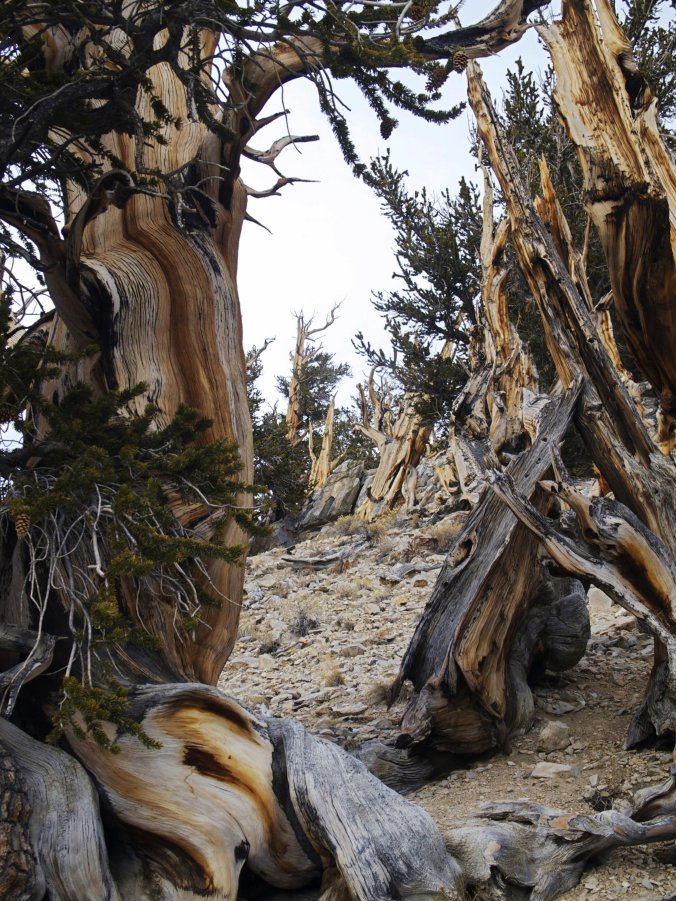
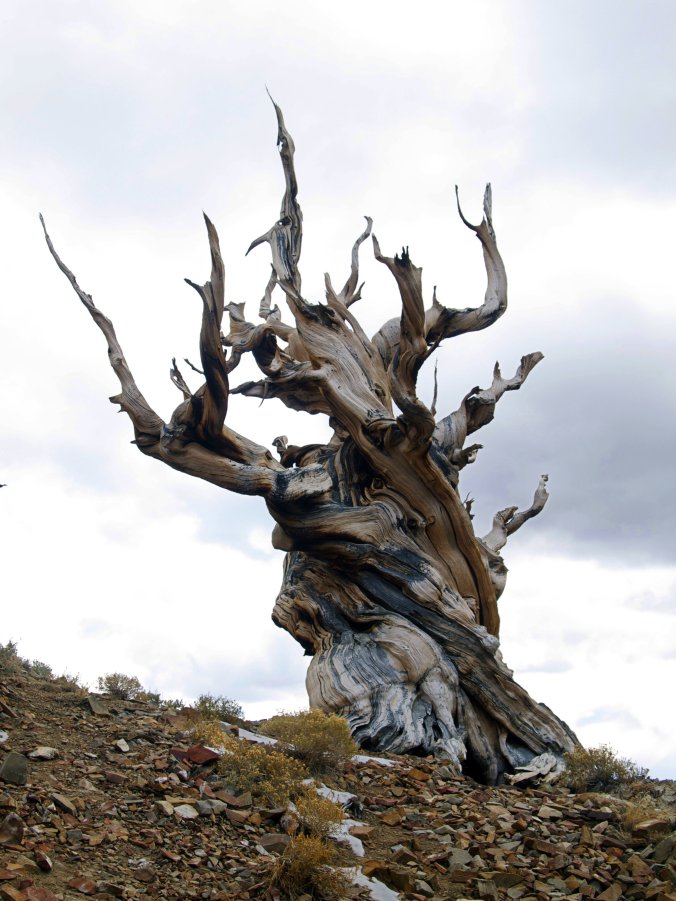
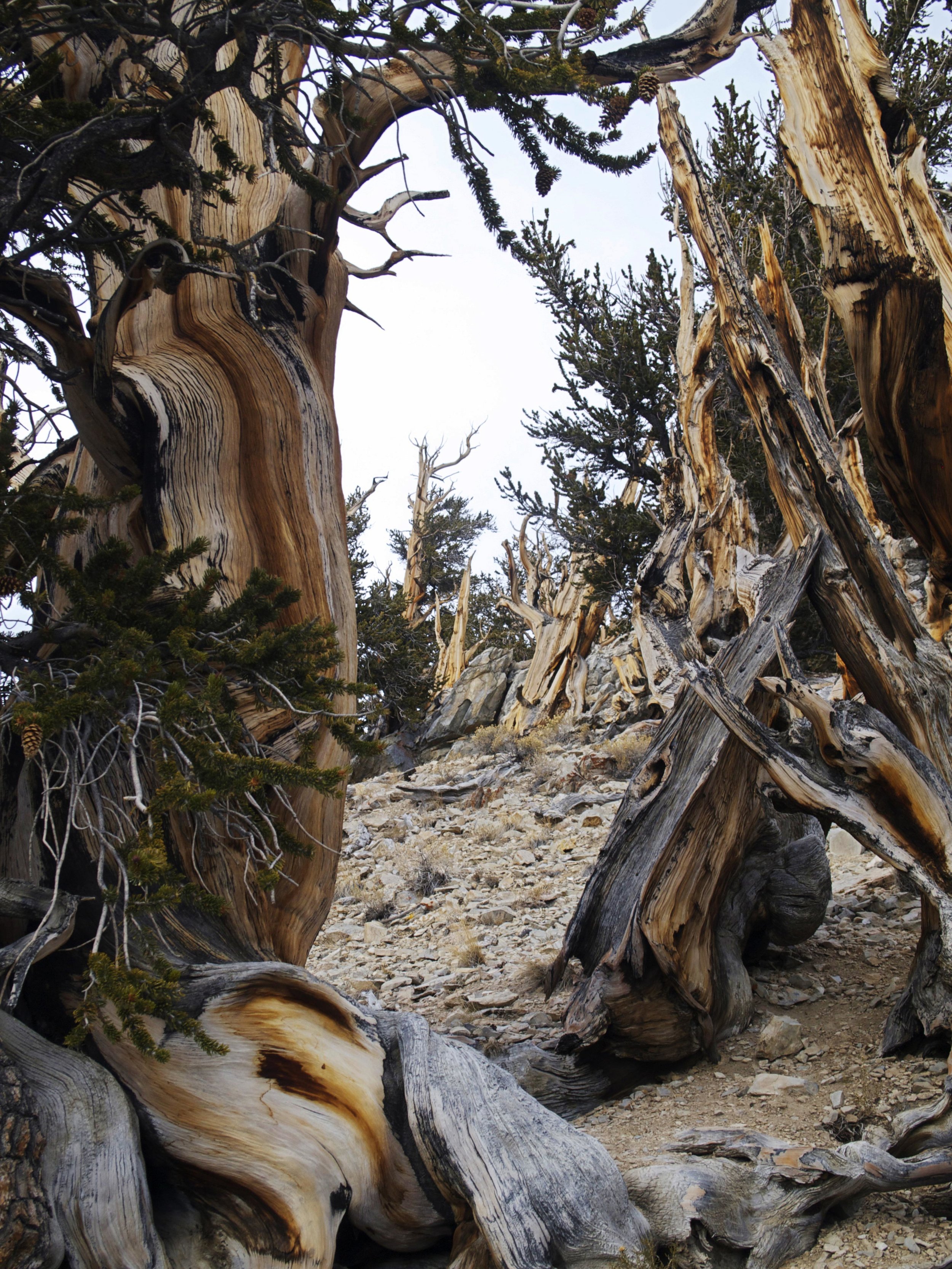
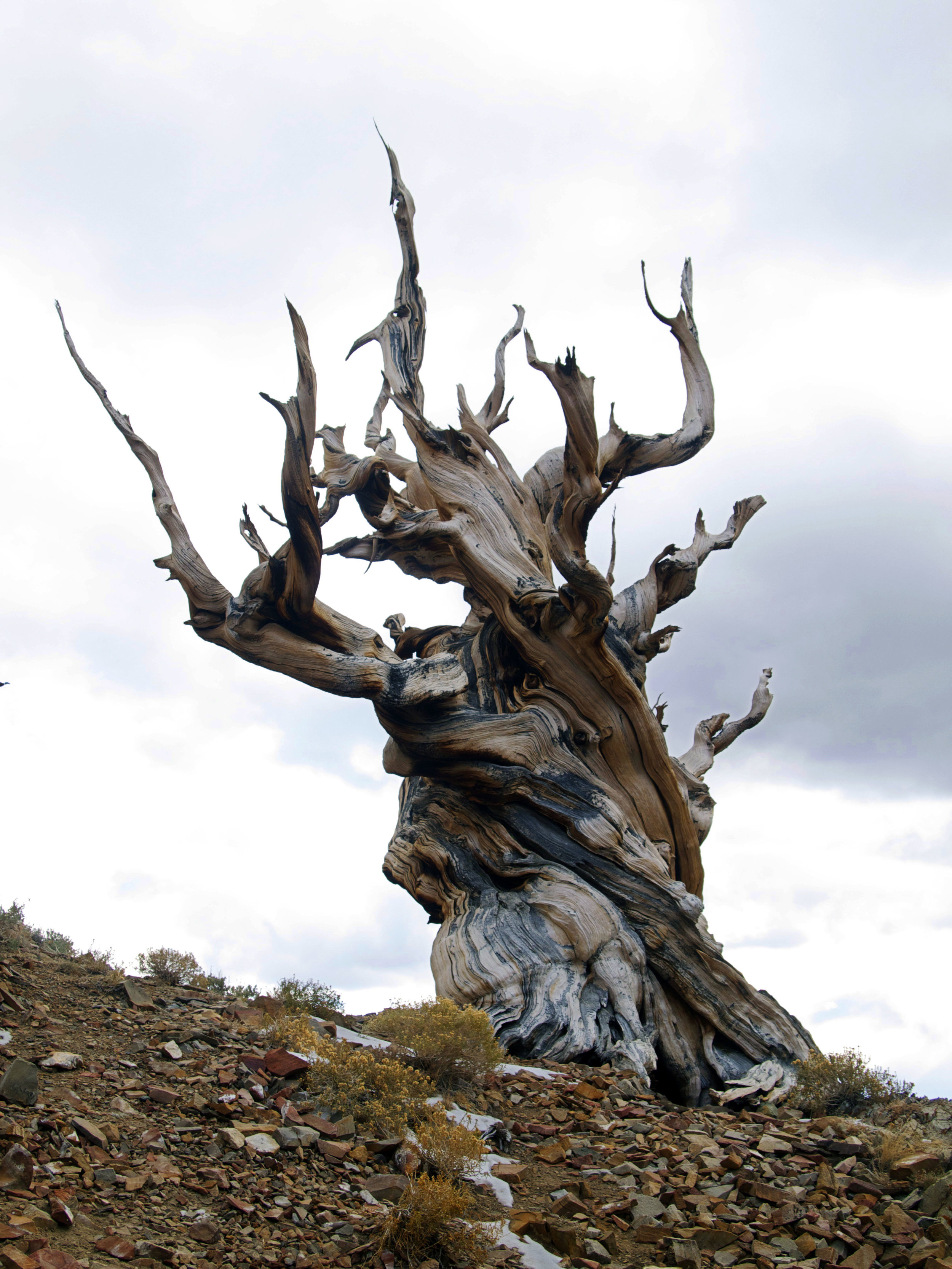
In November on a cold day accentuated by light snow flurries, Rachael and I joined some old friends to visit these old trees, though the exact spot of the 5065-year-old champion is a closely guarded secret unavailable to us. These are high and windswept mountains that sit in the rain shadow of the slightly taller Sierra crest just to the west. The Great Basin bristlecone pine (Pinus longaeva) found its niche in rugged locations like this and in marginal soils that other species struggle in. It is actually these challenging conditions that produce the oldest trees. In more favorable locations the bristlecones grow well but are eventually out competed by other trees and don’t live nearly as long. The oldest trees also look much different from their coddled counterparts. Weathering droughts and wind and unpredictable conditions for many generations they have adapted by funneling nutrients to the healthy parts and allowing portions of the trunk and branches to die off. The dense and resinous wood maintains its strength and structure for many decades after dying. Any one tree is an intertwined pattern of tough lifeless wood and live tissue twisted into elegant and bizarre forms. When we ask the story of what these old beings have seen in their lifetimes these trees offer us a language we can understand. Examining the annual growth rings in living trees and very old downed wood scientists have built an accurate record of the regional climate for the past 9000 years or more.

Photo by Tim GillerPhoto by Tim Giller

Photo by Tim Giller

Written in lines of wood grain and sculpted into magnificent shapes is the story of countless snowstorms, wind, rain and drought, all the natural forces producing a beautiful and fluent expression.

How Old is Old?

Photo by Tim Giller

Photo by Tim Giller

How much would you experience if you lived to be 80,000 years old? The year that Rachael and I spent circumnavigating the continent and all that we saw would barely register for an aspen colony in Southern Utah that researchers have nicknamed “Pando”( Populus tremuloides). 80,000 years is the conservative guess on how long these genetically identical clones have been around, some biologists believe it might be closer to a million years old. Pando is considered a single organism because it shares a massive underground root system that propagates by spreading and sending up new trees to the point that this one system now covers roughly 106 acres. It is the genetic continuity that establishes it as possibly the best candidate for oldest living thing. It is also one of the biggest. All that biomass of root and trunks and leaves adds up. Because no individual tree lives more that a couple hundred years it is difficult to be precise in determining Pando’s age. Aspens benefit from the periodic fires common in the Intermountain West, the root system normally surviving burns that can clear the entire forest. The individual trees have been replaced innumerable times while the integrity of the colony has remained intact, new shoots sprouting quickly after each fire. Biologists use clues from its environment and have examined its genetic code to estimate the age. What is certain is that these trees have seen a lot during their time on earth. Ice ages have come and gone. It was many millennia before the first humans wandered into the region and walked under the leafy canopy. Many fantastic mammals flourished then went extinct in Pando’s presence. While traveling through Utah this October we skirted the flank of the Aquarius Plateau, immersed in the golden light of autumn aspen leaves. Each grove changing in unison to create a subtle patchwork of warm hues, a vivid annual show repeated through the ages.

Aspens, Utah - Photo by Tim Giller

Aspens, Utah – Photo by Tim Giller

At perhaps 8600 years the “Humongous Fungus” specimen of Armillaria solidipes in Eastern Oregon can’t compete in age with Pando and is arguably less charming. However, covering almost 2400 acres and weighing as much as 35,000 tons it has taken the lead in overall size and mass for a known living organism. Almost none of it is normally visible. The mushrooms that many of us think of as fungus are only the fruiting bodies of much larger life forms. Underground or in the tissues of trees, plants and other organic matter the real life of a fungus takes place in the mycelium and for this species it is spread throughout the soil and wood of a remote section of National Forest. Fungi quietly do a hefty share of the work of ecosystem function. Alongside bacterial cohorts they break down the detritus of any landscape into usable nutrients making lifeless dirt into rich soil. They also form symbiotic partnerships with other organisms, especially plants. Almost all trees and other plants have a specific fungal relationship in the soil that is necessary for them to thrive.

Creosote bushes, Death Valley - Photo by Tim Giller

Creosote bushes, Death Valley – Photo by Tim Giller

The last quarter of our yearlong exploration brought us back to the western deserts and Eastern California. In the Mojave is another unassuming member of the list of very long living things, the fragrant creosote bush (Larrea tridentata). A single specimen has been dated to 11,700 years old and it is likely that others could be older. This is another life form that persists and garners little attention, a modest plant well adapted to one of our harshest environments. Having a dual set of roots, one deep to find groundwater, the other shallow and spreading to soak up the rare and fleeting rains before they evaporate, this is one of the most dry tolerant plants in North America. This competitive advantage allows creosote to exclude many other plants and it often grows in large evenly spaced patches. Spreading outward, older stems dying out, the plant forms rings that can be roughly aged by diameter, the oldest, like “King Clone” living as irregular 70 foot circles. The record-breaking drought that we may be coming out of is certainly nothing new to this scraggly plant and it has likely seen much worse. In the driest and hottest areas of the continent a sudden downpour can release an oily scent that is evocative to many desert dwellers as synonymous with

Creosote Leaves - Photo by Tim Giller

Creosote Leaves – Photo by Tim Giller

rain. Simply plucking a couple waxy leaves and rubbing them between your fingers can conjure thoughts of moisture.

We seem to enjoy pitting creatures against one another in contests over what’s oldest, biggest, tallest, etc. As we look more closely at some of the more obscure places and organisms on our planet we are likely to find older and bigger life forms. These species are of course indifferent to all this but our debate is an interesting one. Where or when does one individual end and another begin. Intuitively we are more comfortable thinking of a living individual as something distinct and continuous over time and clones like aspens and fungus strain our concept of a single entity. I’m perfectly willing entertain these ideas but if I had to pick a favorite participant in our abstract contest I’d have to choose the Bristlecone pine. It once held the throne as oldest living thing and a tree in the White Mountains on the California/Nevada border continues to be considered the oldest individual living specimen.

Bristlecones, White Mountains, CA - Photo by Tim Giller

Bristlecones, White Mountains, CA – Photo by Tim Giller

In November on a cold day accentuated by light snow flurries, Rachael and I joined some old friends to visit these old trees, though the exact spot of the 5065-year-old champion is a closely guarded secret unavailable to us. These are high and windswept mountains that sit in the rain shadow of the slightly taller Sierra crest just to the west. The Great Basin bristlecone pine (Pinus longaeva) found its niche in rugged locations like this and in marginal soils that other species struggle in. It is actually these challenging conditions that produce the oldest trees. In more favorable locations the bristlecones grow well but are eventually out competed by other trees and don’t live nearly as long. The oldest trees also look much different from their coddled counterparts. Weathering droughts and wind and unpredictable conditions for many generations they have adapted by funneling nutrients to the healthy parts and allowing portions of the trunk and branches to die off. The dense and resinous wood maintains its strength and structure for many decades after dying. Any one tree is an intertwined pattern of tough lifeless wood and live tissue twisted into elegant and bizarre forms. When we ask the story of what these old beings have seen in their lifetimes these trees offer us a language we can understand. Examining the annual growth rings in living trees and very old downed wood scientists have built an accurate record of the regional climate for the past 9000 years or more.

Photo by Tim Giller

Photo by Tim Giller

Written in lines of wood grain and sculpted into magnificent shapes is the story of countless snowstorms, wind, rain and drought, all the natural forces producing a beautiful and fluent expression.