Loose Roots

Spider hole in "sugar sand"Spider hole in "sugar sand"

Spider hole in “sugar sand”

There are many worlds within our world that are right there and yet completely out of reach. The ocean is an obvious one. Yes we can dive and now even send down robotic cameras that can handle the pressure of the deep ocean yet we are constantly learning and finding new creatures. This trip has allowed me many opportunities to find and learn, even about things and places I thought I knew. This has become all that more true now that I am firmly in un-charted territory. A quick couple of visits to New York many moons ago means I hardly know this northeast corner of the country. And yet I’ve got roots here. My mother spent here grade school years in Long Island, her mother is from Rhode Island and her grandmother from New Hampshire. My maternal grandfather was from Ozone Park, Queens. My paternal grandmother grew up in Philadelphia and many distant family members still live there. All those roots and I know nothing of this region’s ecology beyond that it snows in the winter. This is the mindset I’m in when we arrived in the Pine Barrens of New Jersey.

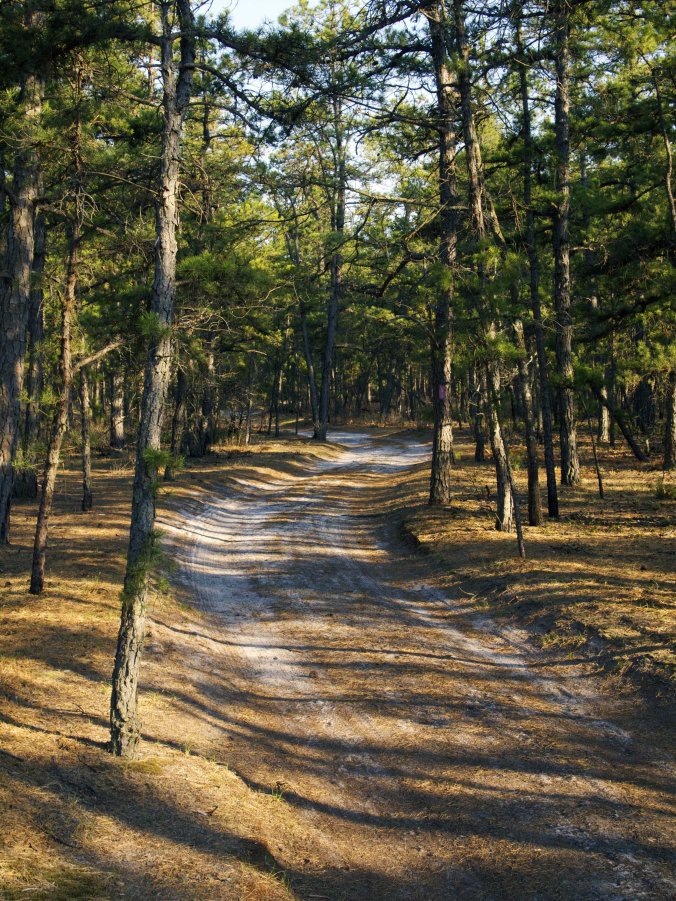
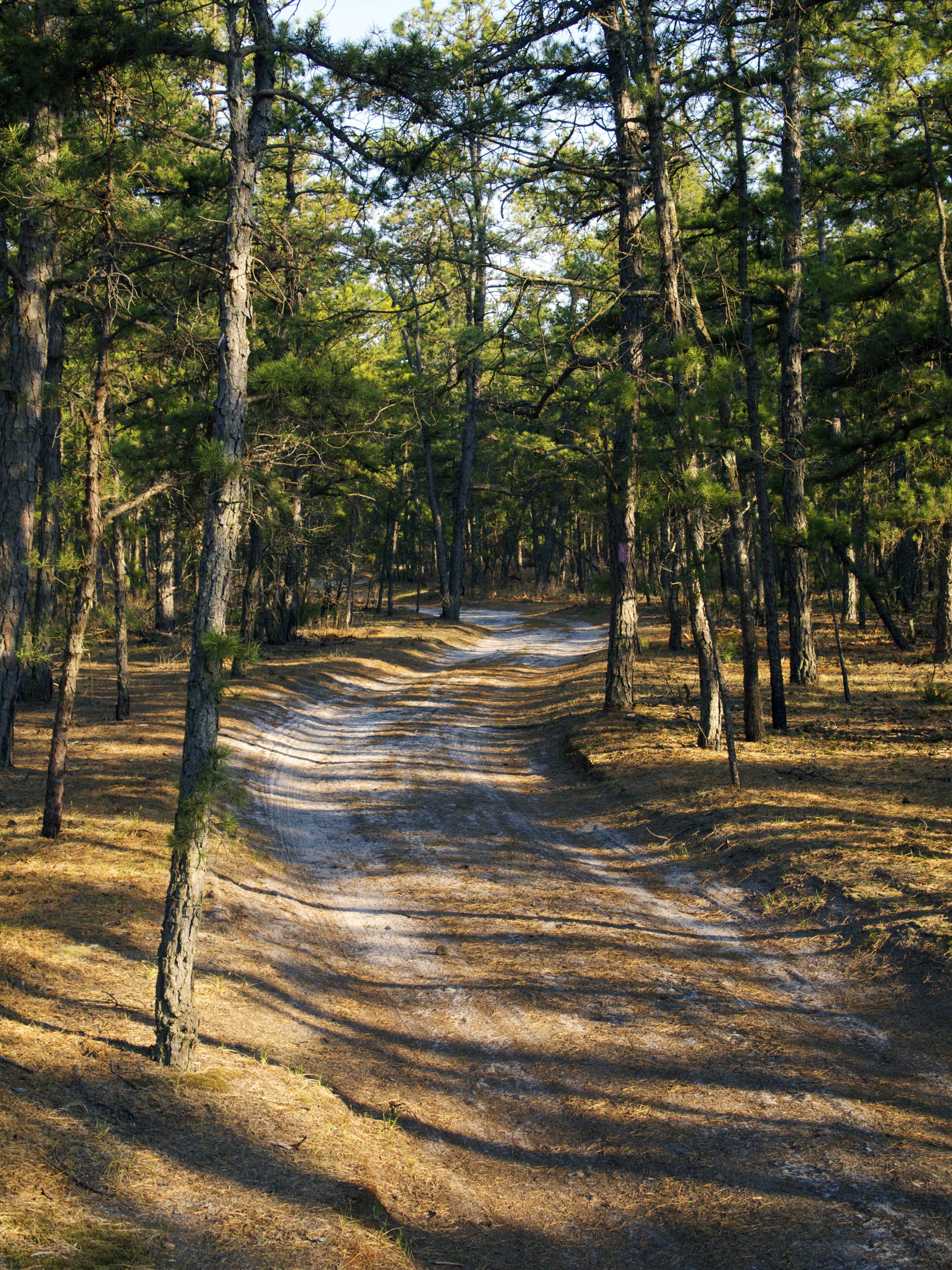
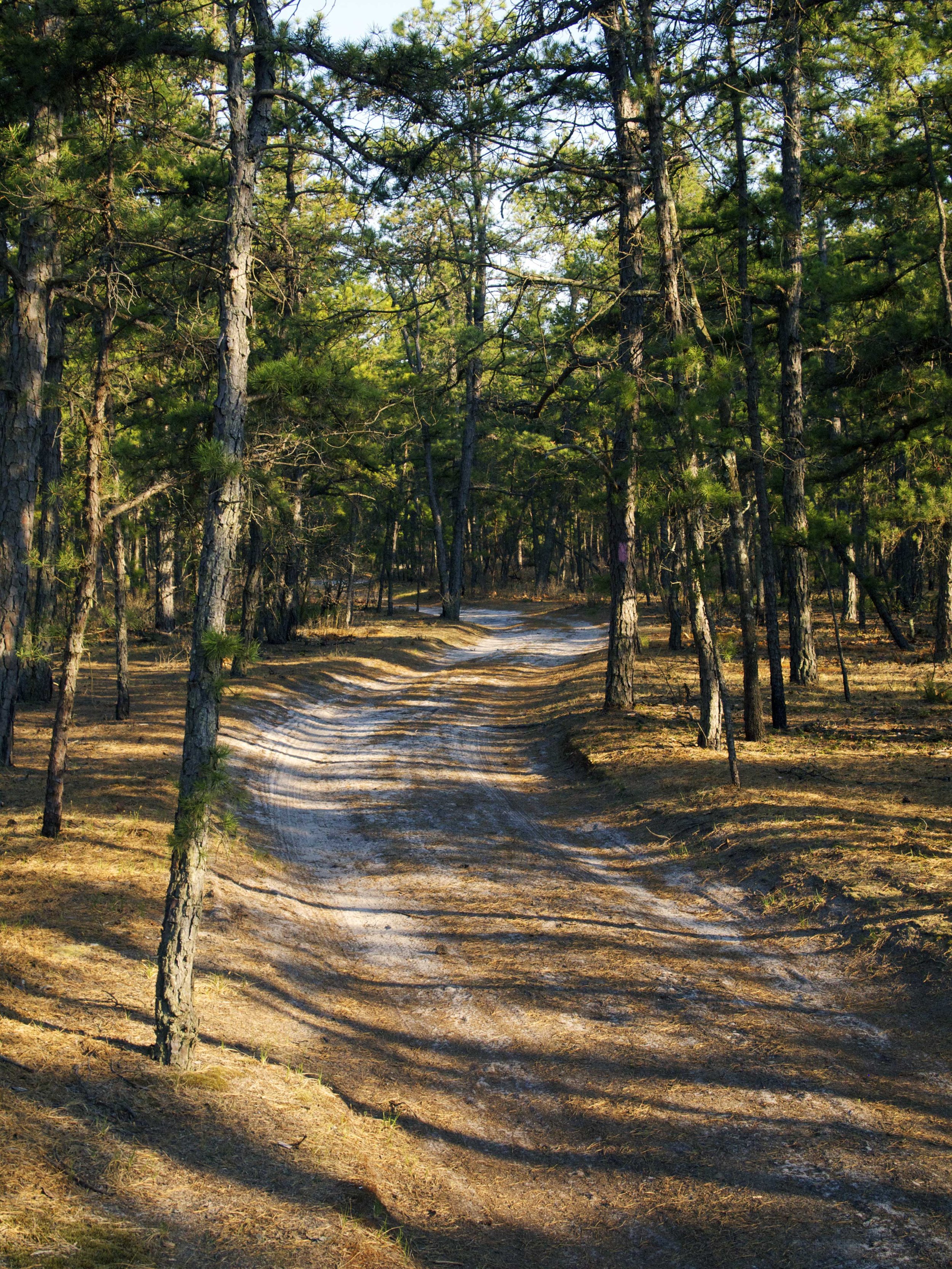
The first time hearing about the Pine Barrens was from Tim all of a month ago when looking into our travel route after our planned visit to DC. One doesn’t have to dig into the pages on the internet to find all the easy complaints about the place. It’s flat, sandy, nothing but pine trees and ticks everywhere. Everyone one of these “complaints” are true. The pinelands of New Jersey are, save for a couple of small oaks and white cypress, almost exclusively pitch pine trees. The soil, other than some silty bogs is quite sandy. The soft white “sugar sand” deposited here from both having been under ocean waters in previous warm spells to having glacial till and melt deposition from the last ice age. The lack of topographic relief can also be attributed to the areas previous life under water with little to no opportunity for uplift since. While we haven’t encountered ticks here I do believe that they can be prolific in the area. I suppose it’s one’s perspective that decides whether or not these facts are “boring”. The pine forest in the general sense is the first time a place has felt familiar to me in months. The smell and the sound of the wind through their spiked leaves is much more like the forests of California. The black tea colored bogs and streams rich in acids and tannins not so familiar. The acidic bogs of the area are perfect for growing cranberries, one of the largest food crops of South Jersey.

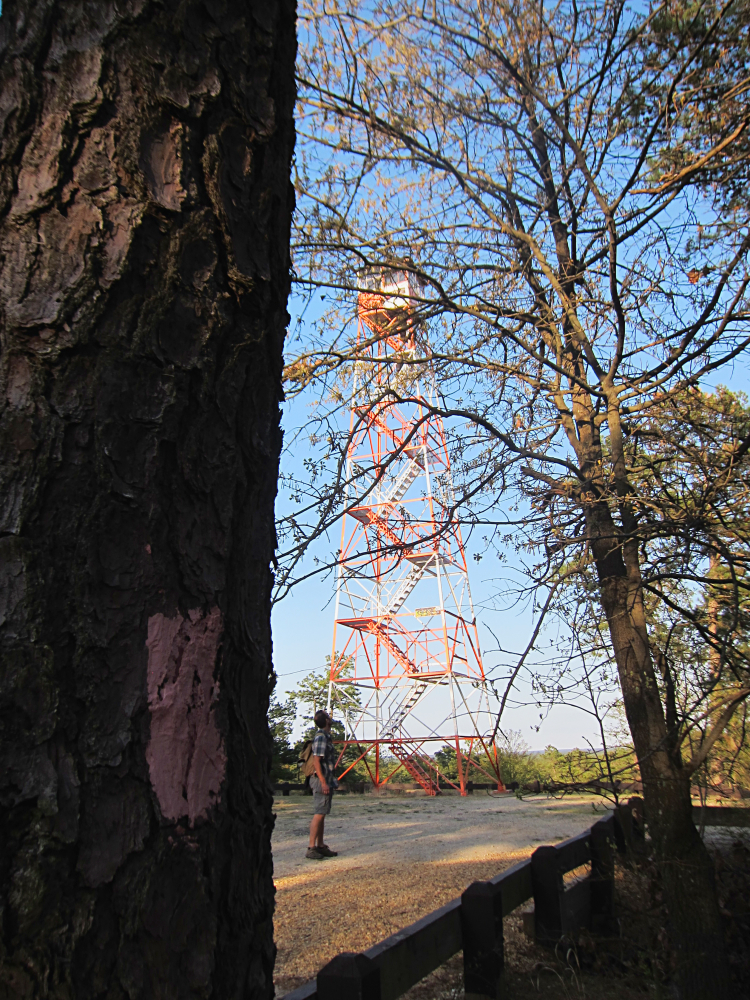
Apple Pie Hill Tower, tree with pink blaze of the Batona trailApple Pie Hill Tower, tree with pink blaze of the Batona trail

Apple Pie Hill Tower, tree with pink blaze of the Batona trail

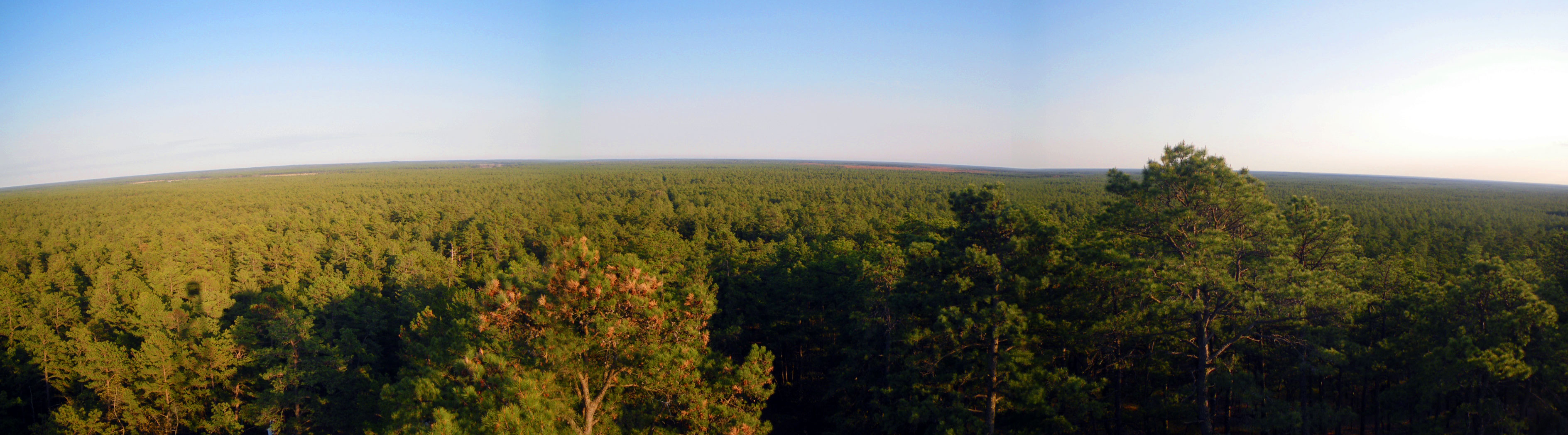
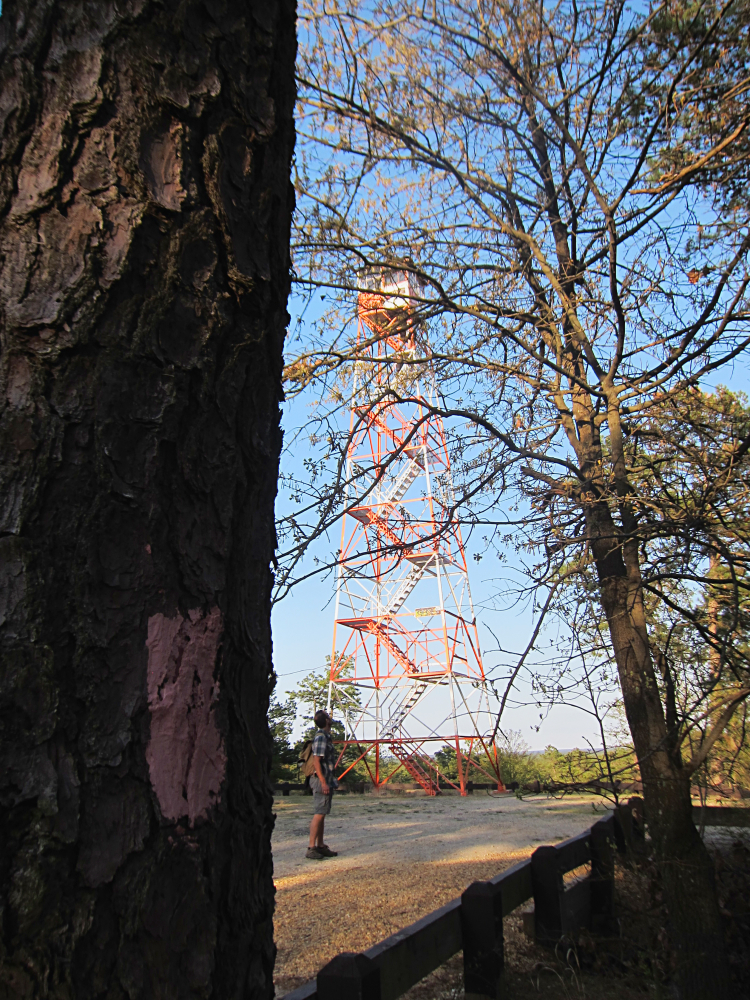
I love the feeling of being enveloped in a forest but have listened as Tim described his discomfort with not being about to get the lay of the land. This is a sentiment that he’s expressed not just here but in many of these eastern forests. Even in the the naked winter the forests are so thick with trees that one can be on a hillside and not be able to discern much from the “view”. There seems to be an innate human need to be able to see what’s around them, or even better what’s coming. Which is most likely why the single most popular thing in the Pine Barrens is not the pines but the view from the Apple Pie Hill fire tower. Put in place for safety precautions it’s now a place where kids go to party and scribble (petty and uninspired) tags. We walked 3.6 miles of the 50-ish miles that the Batona Trail, which cuts through the length of the park, has to offer to get to the tower from our campsite. The view from the top shows the full expanse of the pine forest and it’s an impressive 360 degrees of pine forest. But I also think it just makes people feel more comfortable to see where they are in relation to the more familiar. A common comment of the view being that one can see Philly and Atlantic City on a clear day (or the lights at night).

Personally I can relate to this in that while I love looking at bodies of water I am often reluctant to get fully submerged because I don’t know what’s down there. This might also be why I’m scared of the dark. Most especially in a place I am unfamiliar with. There are entire societies of creatures that live their whole existence in the cover of darkness. My experience of this only scratches the surface and is often heard rather than seen. This was true in the pinelands when I heard the tell tell Whip-puurrrrr-whew of the Eastern Whip-poor-will (Antrostomus vociferus). A night time hunter, they rest on the ground or low branches where their camouflaging feathers help them to pluck unsuspecting insects passing overhead. The initial thought was that this was a strange sounding owl but once I really listened to the call there was no second guessing my bird. And this forest is FULL of them. The calls range in distance with one usually sounding within a few feet of the RV. Much the way other diurnal birds sing themselves to sleep with the setting of the sun the whip-poor-will seems to do the same with the coming dawn, only in a hurried and repetitive shrill. These wee hour alarms have us reaching for our ear plugs and giggling at the birds seeming anxiety.

A cool refreshing drinkA cool refreshing drink

A cool refreshing drink

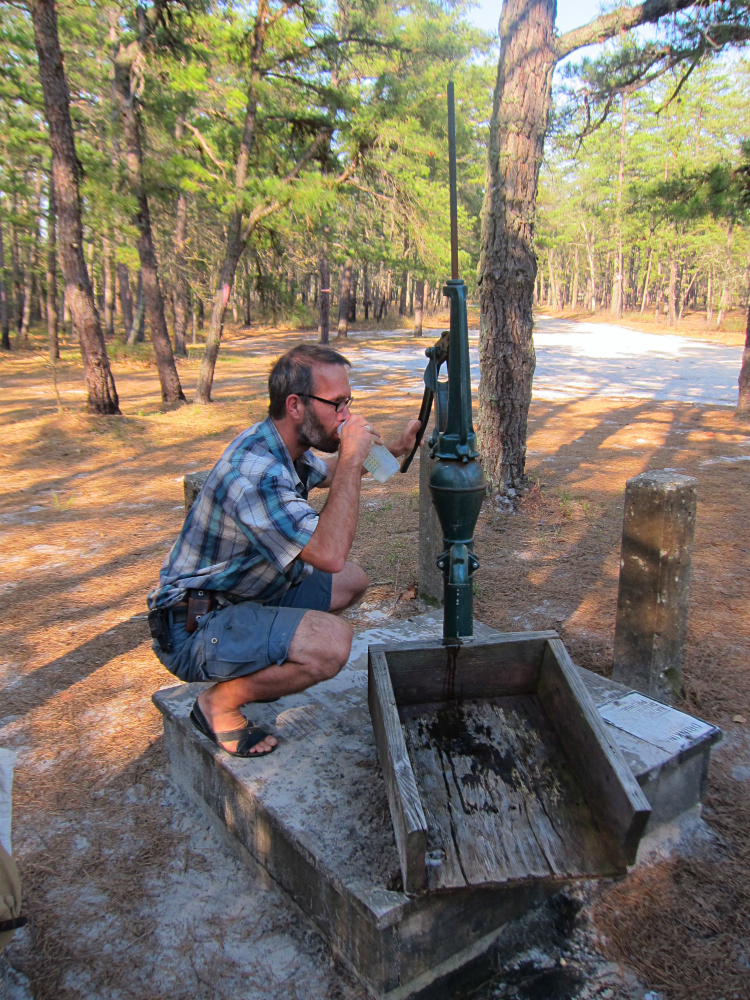
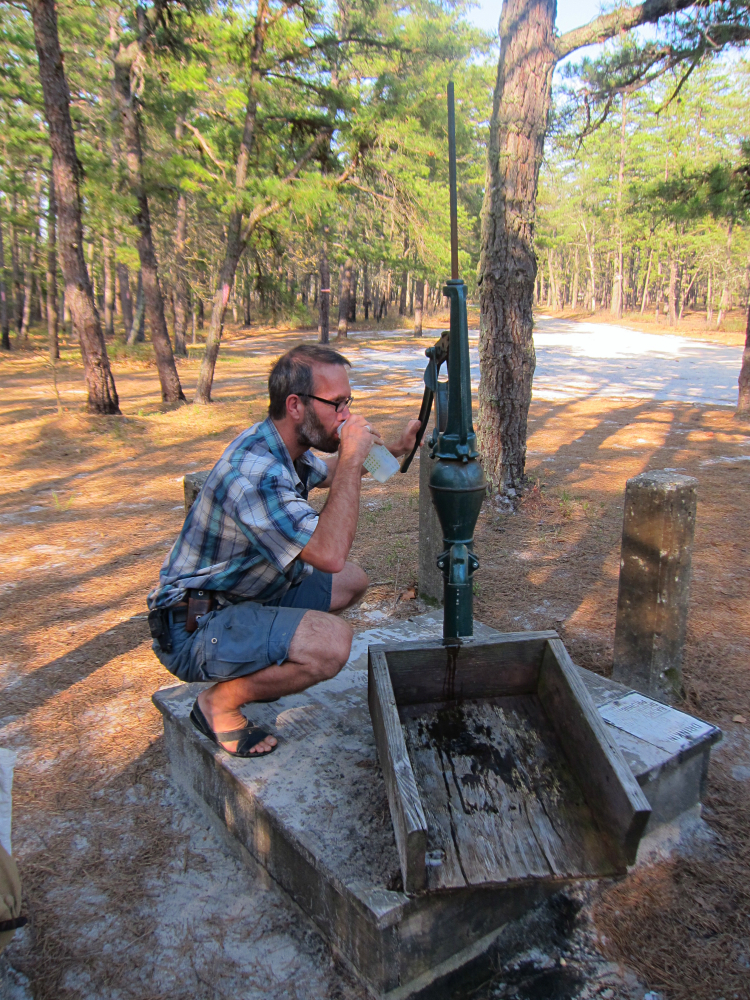
Another part of this forest’s ecosystem that no one can see but all should know about is the 17 trillion gallon aquifer below. The sandy forest above makes for an exceptional filter and this is some of the cleanest fresh water to be found. It’s likely the single most convincing reason that made it possible to save this unique ecosystem from over development and/or continual over harvesting. When taking a cool drink straight from the well pump at the campground I’m reminded that the forest is always so much more than just the trees.

Loose Roots

There are many worlds within our world that are right there and yet completely out of reach. The ocean is an obvious one. Yes we can dive and now even send down robotic cameras that can handle the pressure of the deep ocean yet we are constantly learning and finding new creatures. This trip has allowed me many opportunities to find and learn, even about things and places I thought I knew. This has become all that more true now that I am firmly in un-charted territory. A quick couple of visits to New York many moons ago means I hardly know this northeast corner of the country. And yet I’ve got roots here. My mother spent here grade school years in Long Island, her mother is from Rhode Island and her grandmother from New Hampshire. My maternal grandfather was from Ozone Park, Queens. My paternal grandmother grew up in Philadelphia and many distant family members still live there. All those roots and I know nothing of this region’s ecology beyond that it snows in the winter. This is the mindset I’m in when we arrived in the Pine Barrens of New Jersey.

Spider hole in "sugar sand"

Spider hole in “sugar sand”

The first time hearing about the Pine Barrens was from Tim all of a month ago when looking into our travel route after our planned visit to DC. One doesn’t have to dig into the pages on the internet to find all the easy complaints about the place. It’s flat, sandy, nothing but pine trees and ticks everywhere. Everyone one of these “complaints” are true. The pinelands of New Jersey are, save for a couple of small oaks and white cypress, almost exclusively pitch pine trees. The soil, other than some silty bogs is quite sandy. The soft white “sugar sand” deposited here from both having been under ocean waters in previous warm spells to having glacial till and melt deposition from the last ice age. The lack of topographic relief can also be attributed to the areas previous life under water with little to no opportunity for uplift since. While we haven’t encountered ticks here I do believe that they can be prolific in the area. I suppose it’s one’s perspective that decides whether or not these facts are “boring”. The pine forest in the general sense is the first time a place has felt familiar to me in months. The smell and the sound of the wind through their spiked leaves is much more like the forests of California. The black tea colored bogs and streams rich in acids and tannins not so familiar. The acidic bogs of the area are perfect for growing cranberries, one of the largest food crops of South Jersey.

Apple Pie Hill Tower, tree with pink blaze of the Batona trail

Apple Pie Hill Tower, tree with pink blaze of the Batona trail

I love the feeling of being enveloped in a forest but have listened as Tim described his discomfort with not being about to get the lay of the land. This is a sentiment that he’s expressed not just here but in many of these eastern forests. Even in the the naked winter the forests are so thick with trees that one can be on a hillside and not be able to discern much from the “view”. There seems to be an innate human need to be able to see what’s around them, or even better what’s coming. Which is most likely why the single most popular thing in the Pine Barrens is not the pines but the view from the Apple Pie Hill fire tower. Put in place for safety precautions it’s now a place where kids go to party and scribble (petty and uninspired) tags. We walked 3.6 miles of the 50-ish miles that the Batona Trail, which cuts through the length of the park, has to offer to get to the tower from our campsite. The view from the top shows the full expanse of the pine forest and it’s an impressive 360 degrees of pine forest. But I also think it just makes people feel more comfortable to see where they are in relation to the more familiar. A common comment of the view being that one can see Philly and Atlantic City on a clear day (or the lights at night).

Personally I can relate to this in that while I love looking at bodies of water I am often reluctant to get fully submerged because I don’t know what’s down there. This might also be why I’m scared of the dark. Most especially in a place I am unfamiliar with. There are entire societies of creatures that live their whole existence in the cover of darkness. My experience of this only scratches the surface and is often heard rather than seen. This was true in the pinelands when I heard the tell tell Whip-puurrrrr-whew of the Eastern Whip-poor-will (Antrostomus vociferus). A night time hunter, they rest on the ground or low branches where their camouflaging feathers help them to pluck unsuspecting insects passing overhead. The initial thought was that this was a strange sounding owl but once I really listened to the call there was no second guessing my bird. And this forest is FULL of them. The calls range in distance with one usually sounding within a few feet of the RV. Much the way other diurnal birds sing themselves to sleep with the setting of the sun the whip-poor-will seems to do the same with the coming dawn, only in a hurried and repetitive shrill. These wee hour alarms have us reaching for our ear plugs and giggling at the birds seeming anxiety.

A cool refreshing drink

A cool refreshing drink

Another part of this forest’s ecosystem that no one can see but all should know about is the 17 trillion gallon aquifer below. The sandy forest above makes for an exceptional filter and this is some of the cleanest fresh water to be found. It’s likely the single most convincing reason that made it possible to save this unique ecosystem from over development and/or continual over harvesting. When taking a cool drink straight from the well pump at the campground I’m reminded that the forest is always so much more than just the trees.
Well Worn Paths

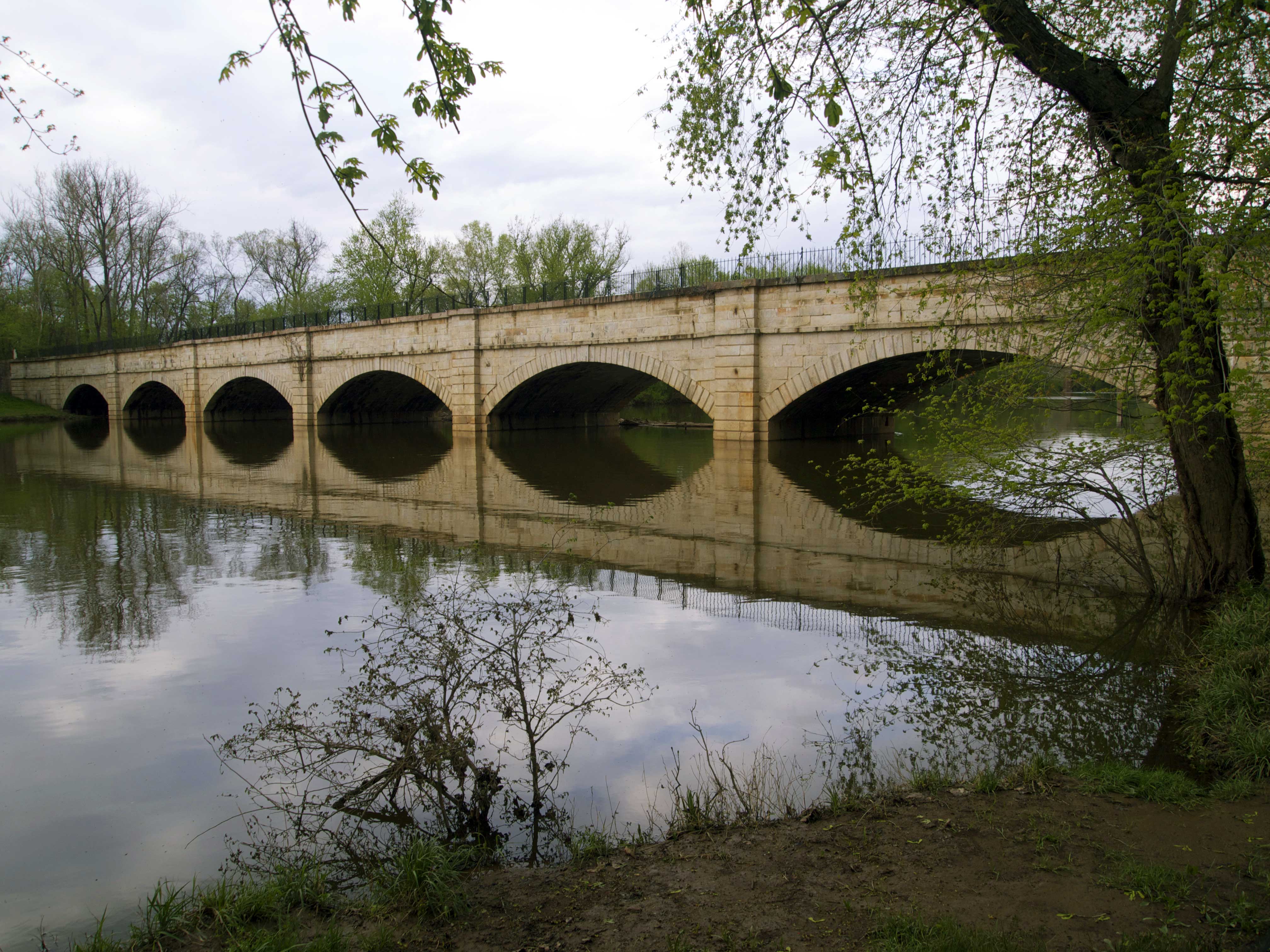
Monocacy AqueductMonocacy Aqueduct

Monocacy Aqueduct

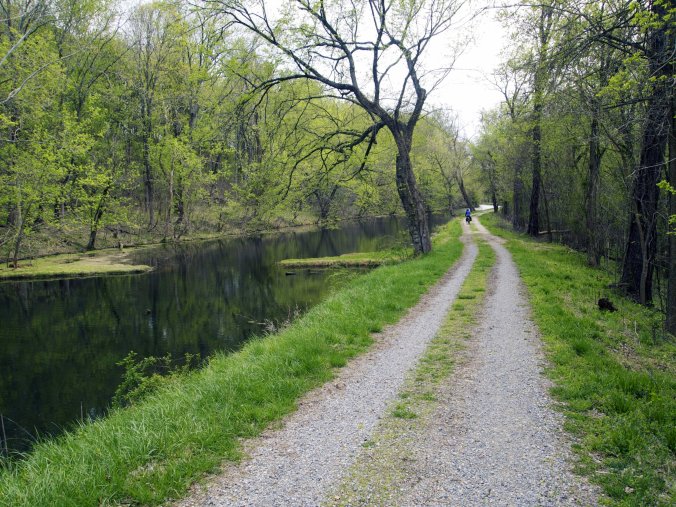
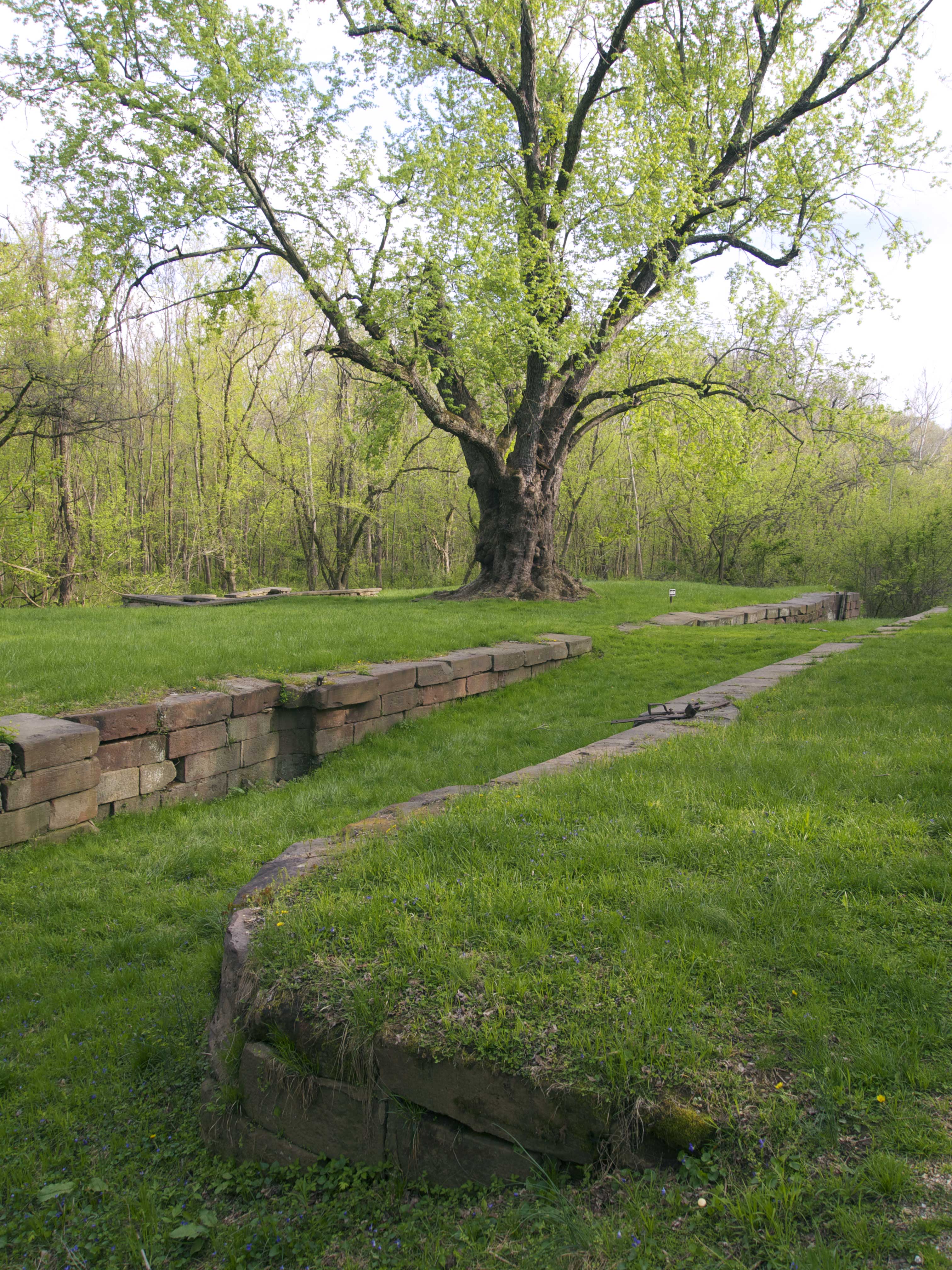
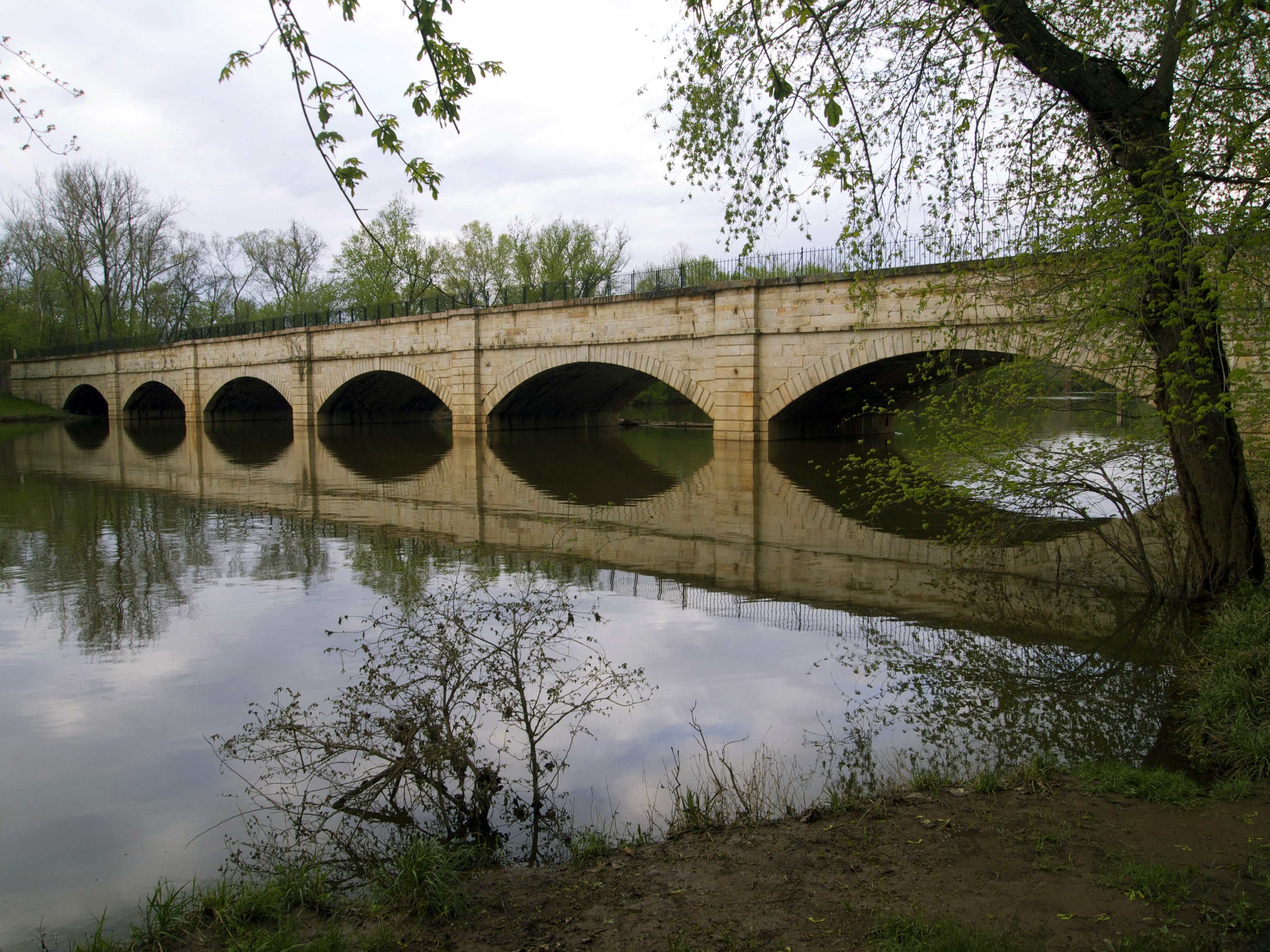
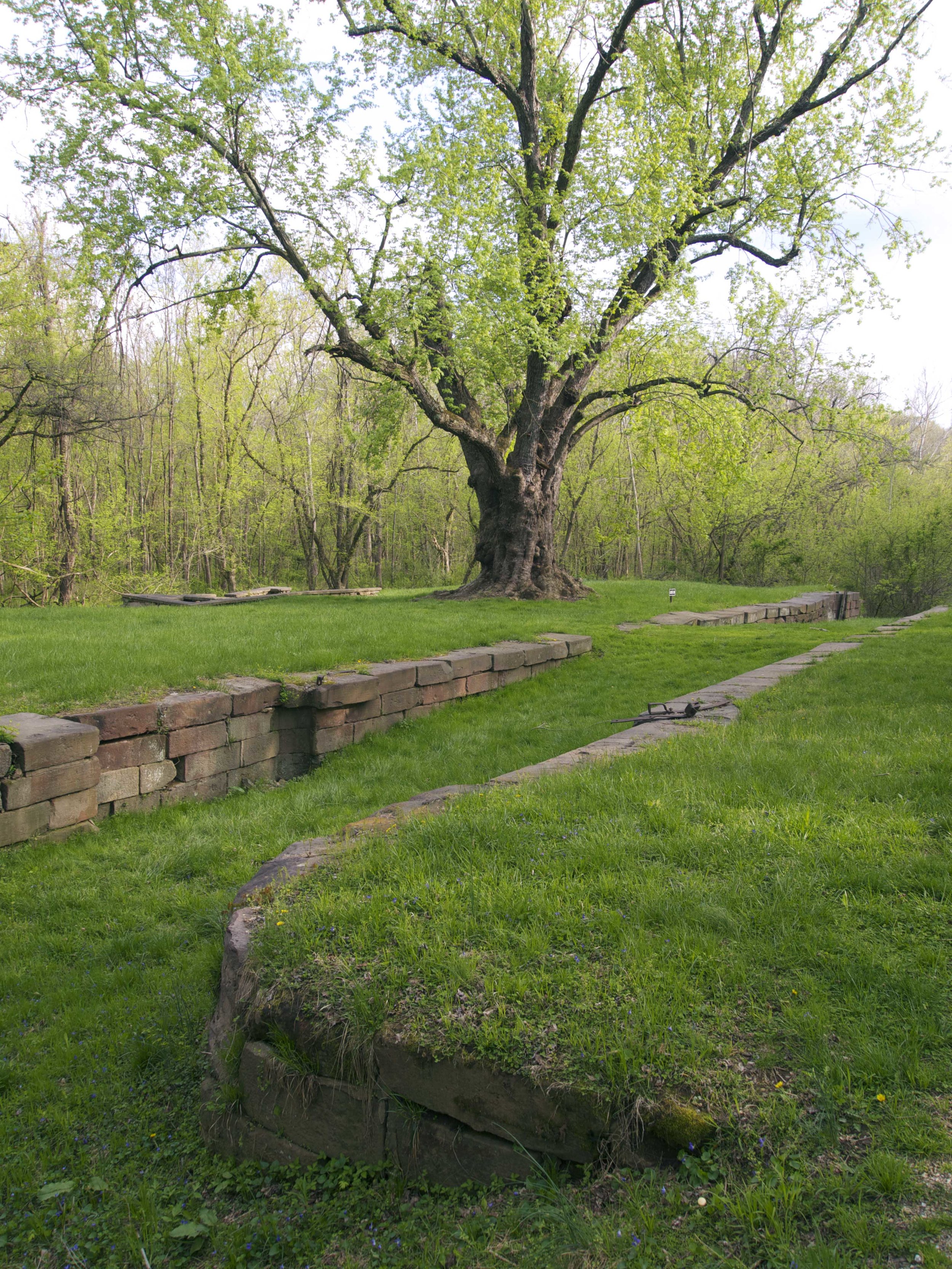
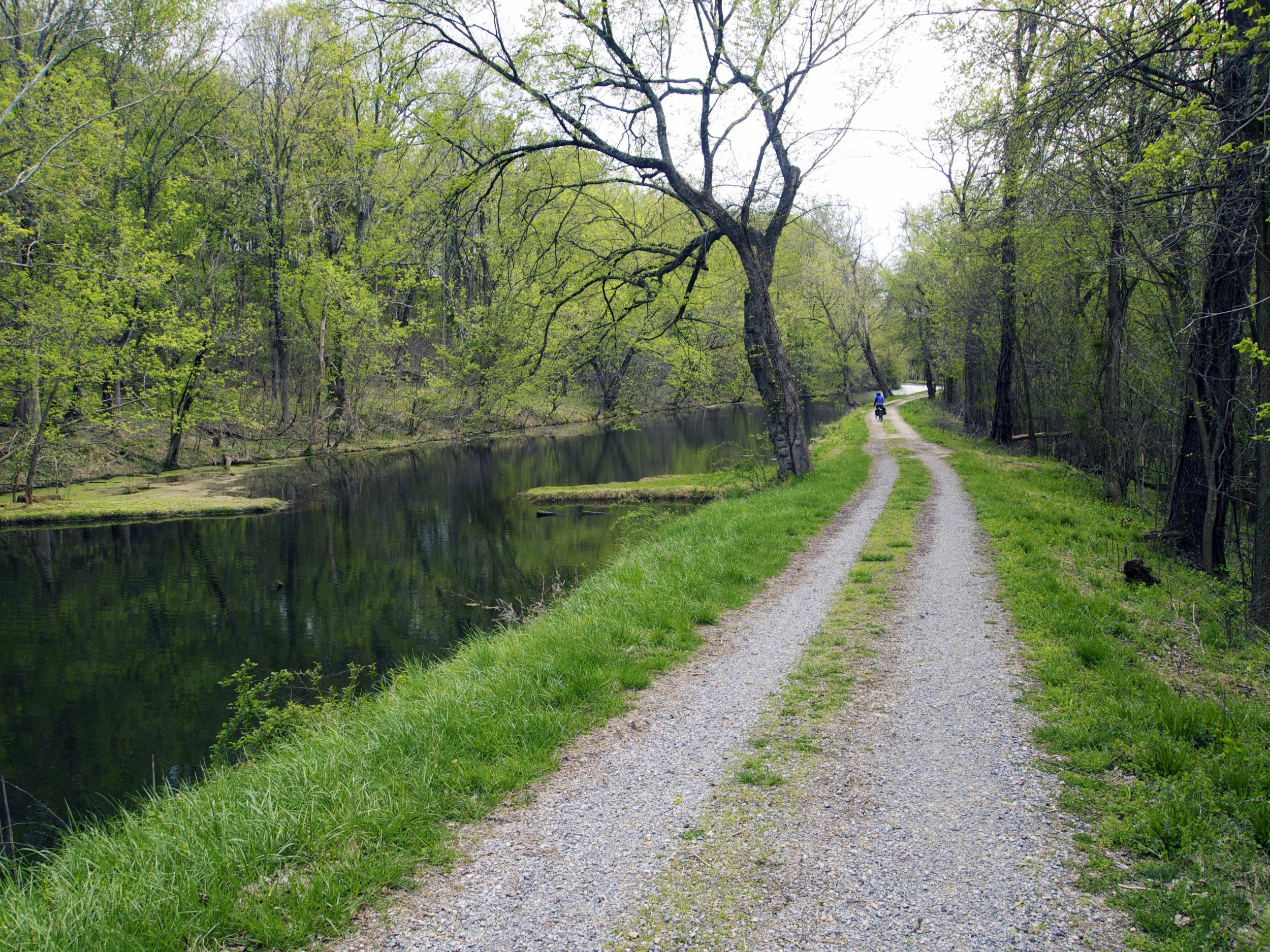
It wasn’t until the next day that I learned that the area we had been camping in is haunted. At the time I was plenty spooked by the thought of ticks so it might have been a welcome distraction to see a 19th Century highwayman with a lantern on the nearby Monocacy Aqueduct and I might have actually followed him in the attempt to find his long lost buried treasure. The place itself is a ghost. We had spent the day riding about twenty miles of towpath to get to our campsite wedged between the Potomac River and what remains of the Chesapeake and Ohio Canal. For it’s time it was a massive engineering undertaking, stretching for 184 miles from Washington DC to Cumberland MD and dug alongside the Potomac channeling the river water into a calm and controlled commercial waterway. With the newer technology of railroads literally on its heels in the form of the B & O laying tracks, sometimes on the same narrow strip of riverbank, the canal was mostly obsolete by the time investment dried up only halfway to its goal of the Ohio River. A lively culture of boat families did manage to carry a fair tonnage of cargo over the 80-some years before floods crippled the canal in 1924 but this ribbon of land has since gone decidedly feral. Except for this towpath that is.

C & O Canal LockC & O Canal Lock

C & O Canal Lock

C & O Canal and TowpathC & O Canal and Towpath

C & O Canal and Towpath

Maintained by the National Park Service is the wide gravel bank on which mules, attached by ropes, once pulled the canal boats. With campsites every 5 miles it makes a great bike tour and if combined with the Great Allegheny Passage rail-trail becomes, in my opinion, the best way to travel the 335 miles from DC to Pittsburgh. Along the way are plenty of remnants of the old thoroughfare, from former lock keeper homes and stonework to elegant aqueducts such as the seven arch span, which in Escher-like fashion elevates this artificial river over the natural Monocacy River. What it also has is habitat. Nature has re-occupied this corridor running from our densely populated National Capitol. The canal has formed ponds where still intact or when drained has become dense with woodland making a great home for shy wildlife such as wood duck and muskrats.

Greenbrier River TrailGreenbrier River Trail

Greenbrier River Trail

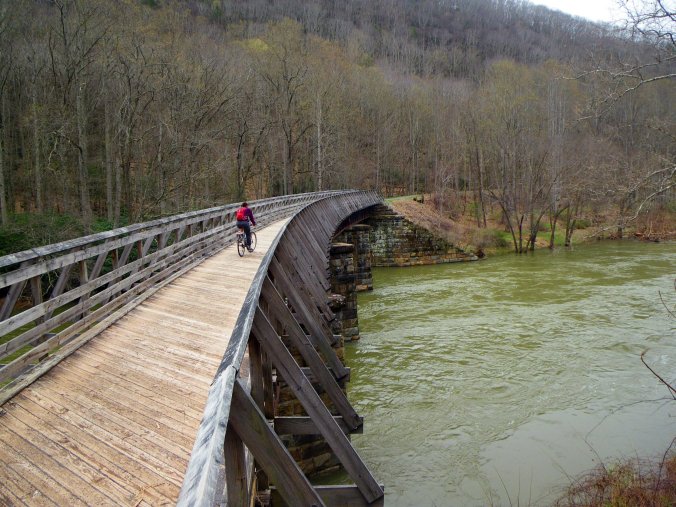
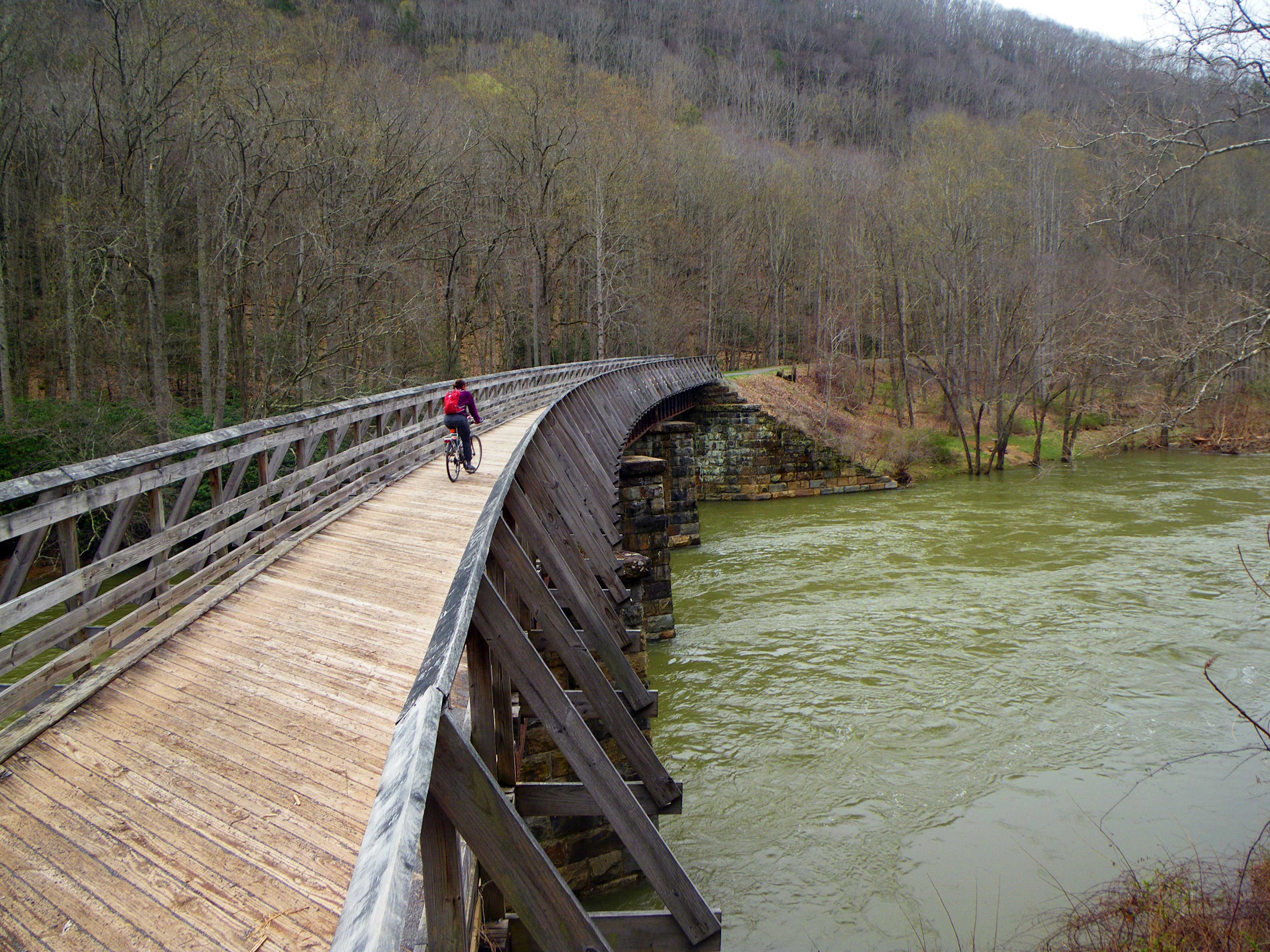
Earlier in West Virginia Rachael and I spent several days riding and camping on another piece of defunct and converted infrastructure. There we found an old railroad grade along the Greenbrier River that travels through a lightly populated valley of forest and farmland. Like the canal path this corridor was once bustling with human activity including the harvesting of much of the forest and an earlier era of less destructive coal mining. The former railroad facilitated the extraction of these resources. The need for that railroad waned as the resources were depleted and when industry moved on the forest recovered somewhat and the long gentle grade up the valley has brought new commerce in the form of travelers on bicycles, on horseback and even on haywagons.

Apple Pie Hill Fire Tower, Pine Barrens, NJApple Pie Hill Fire Tower, Pine Barrens, NJ

Apple Pie Hill Fire Tower, Pine Barrens, NJ

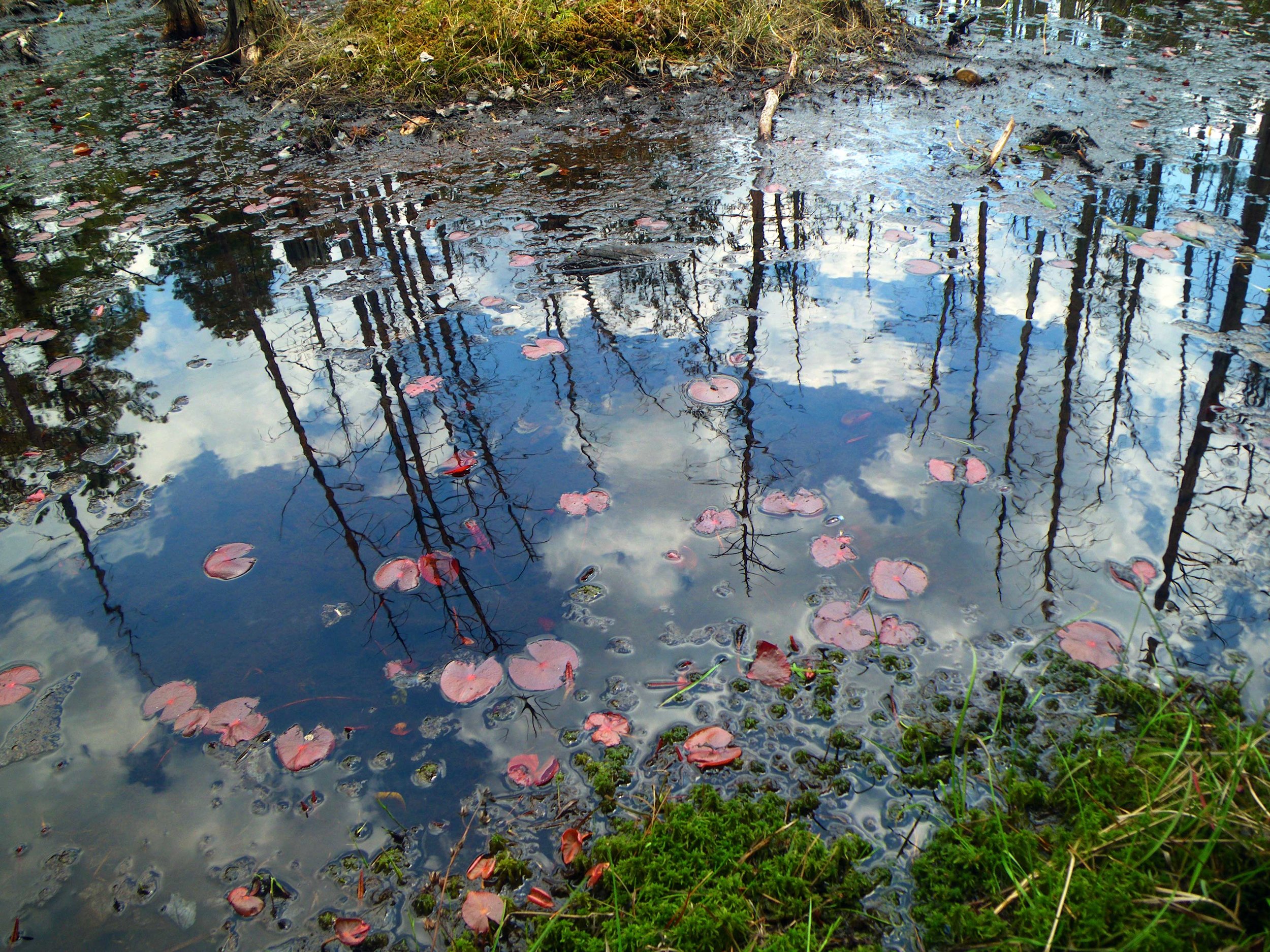
Leaving these winding paths we’ve found ourselves in a distinctly different landscape. After dropping out of the ancient and folded contours of Appalachia we found our way to the sand and low topography of The Pine Barrens in Southern New Jersey. This is a surprisingly wild place of pitch pine forest and remarkably untainted water nestled at the midpoint of the East Coast Megalopolis. What it shares with those previous stopovers is that, in the 20th century it found itself less developed than the century before, reversing the trend of pretty much any place in America. Never terribly populous because the landscape proved impossible to cultivate, it nevertheless saw early attempts at industry with “bog iron” an important source of Revolutionary cannonballs and early American wrought iron items. The pines were converted to charcoal and the sands into glass. These industries moved elsewhere and those places saw the excesses of the industrial revolution leaving “The Pines” to heal. What remains are a self-reliant “Piney” culture and an economy based on blueberry fields and cranberry bogs and tourists drawn to a rare wild place that with any luck will survive the excesses of the 21st century.

Pine Barrens BogPine Barrens Bog

Pine Barrens Bog

Pine BarrensPine Barrens

Pine Barrens

Well Worn Paths


Monocacy Aqueduct

Monocacy Aqueduct

It wasn’t until the next day that I learned that the area we had been camping in is haunted. At the time I was plenty spooked by the thought of ticks so it might have been a welcome distraction to see a 19th Century highwayman with a lantern on the nearby Monocacy Aqueduct and I might have actually followed him in the attempt to find his long lost buried treasure. The place itself is a ghost. We had spent the day riding about twenty miles of towpath to get to our campsite wedged between the Potomac River and what remains of the Chesapeake and Ohio Canal. For it’s time it was a massive engineering undertaking, stretching for 184 miles from Washington DC to Cumberland MD and dug alongside the Potomac channeling the river water into a calm and controlled commercial waterway. With the newer technology of railroads literally on its heels in the form of the B & O laying tracks, sometimes on the same narrow strip of riverbank, the canal was mostly obsolete by the time investment dried up only halfway to its goal of the Ohio River. A lively culture of boat families did manage to carry a fair tonnage of cargo over the 80-some years before floods crippled the canal in 1924 but this ribbon of land has since gone decidedly feral. Except for this towpath that is.

C & O Canal Lock

C & O Canal Lock

C & O Canal and Towpath

C & O Canal and Towpath

Maintained by the National Park Service is the wide gravel bank on which mules, attached by ropes, once pulled the canal boats. With campsites every 5 miles it makes a great bike tour and if combined with the Great Allegheny Passage rail-trail becomes, in my opinion, the best way to travel the 335 miles from DC to Pittsburgh. Along the way are plenty of remnants of the old thoroughfare, from former lock keeper homes and stonework to elegant aqueducts such as the seven arch span, which in Escher-like fashion elevates this artificial river over the natural Monocacy River. What it also has is habitat. Nature has re-occupied this corridor running from our densely populated National Capitol. The canal has formed ponds where still intact or when drained has become dense with woodland making a great home for shy wildlife such as wood duck and muskrats.


Greenbrier River Trail

Greenbrier River Trail

Earlier in West Virginia Rachael and I spent several days riding and camping on another piece of defunct and converted infrastructure. There we found an old railroad grade along the Greenbrier River that travels through a lightly populated valley of forest and farmland. Like the canal path this corridor was once bustling with human activity including the harvesting of much of the forest and an earlier era of less destructive coal mining. The former railroad facilitated the extraction of these resources. The need for that railroad waned as the resources were depleted and when industry moved on the forest recovered somewhat and the long gentle grade up the valley has brought new commerce in the form of travelers on bicycles, on horseback and even on haywagons.

Apple Pie Hill Fire Tower, Pine Barrens, NJ

Apple Pie Hill Fire Tower, Pine Barrens, NJ

Leaving these winding paths we’ve found ourselves in a distinctly different landscape. After dropping out of the ancient and folded contours of Appalachia we found our way to the sand and low topography of The Pine Barrens in Southern New Jersey. This is a surprisingly wild place of pitch pine forest and remarkably untainted water nestled at the midpoint of the East Coast Megalopolis. What it shares with those previous stopovers is that, in the 20th century it found itself less developed than the century before, reversing the trend of pretty much any place in America. Never terribly populous because the landscape proved impossible to cultivate, it nevertheless saw early attempts at industry with “bog iron” an important source of Revolutionary cannonballs and early American wrought iron items. The pines were converted to charcoal and the sands into glass. These industries moved elsewhere and those places saw the excesses of the industrial revolution leaving “The Pines” to heal. What remains are a self-reliant “Piney” culture and an economy based on blueberry fields and cranberry bogs and tourists drawn to a rare wild place that with any luck will survive the excesses of the 21st century.

Pine Barrens Bog

Pine Barrens Bog

Pine Barrens

Pine Barrens

Spring in the east

Red Trillium (Trillium erectum)Red Trillium (Trillium erectum)

Red Trillium (Trillium erectum)

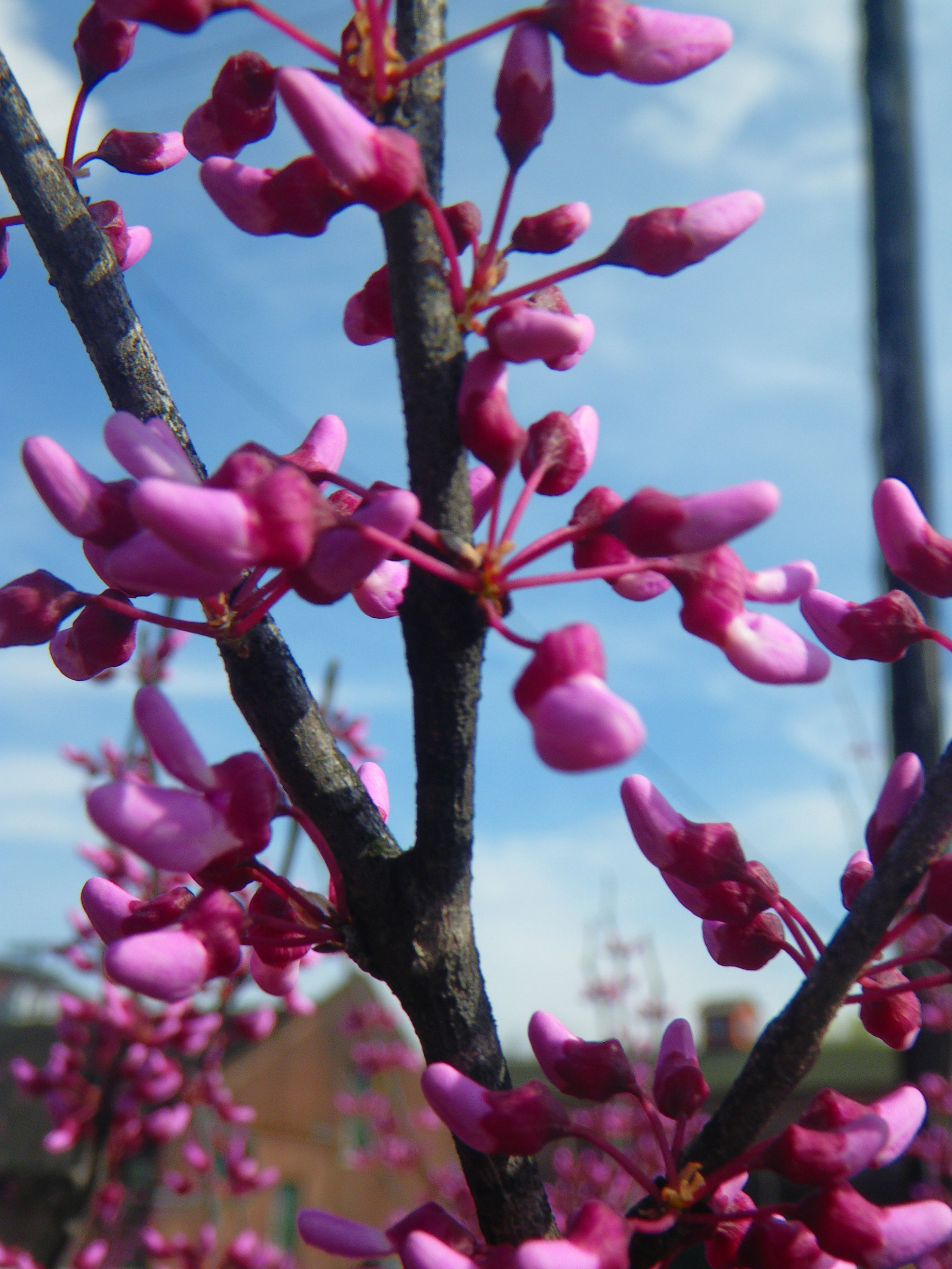
As a coastal California native I’ve learned not only to see but appreciate the subtlety of the change in seasons. These last few weeks have afforded me the opportunity to see a slow progression of the shift into spring where the seasons are much more distinct. First with a ground flower here or there such as the red, white and sessile trilliums. Then we started to see a carpet of green under the still bare forest. Slowly the trees started not only to leaf out but trees like the Eastern Redbud (Cercis canadensis) and the white or pink Flowering Dogwood (Cornus florida) brightened up our paths.

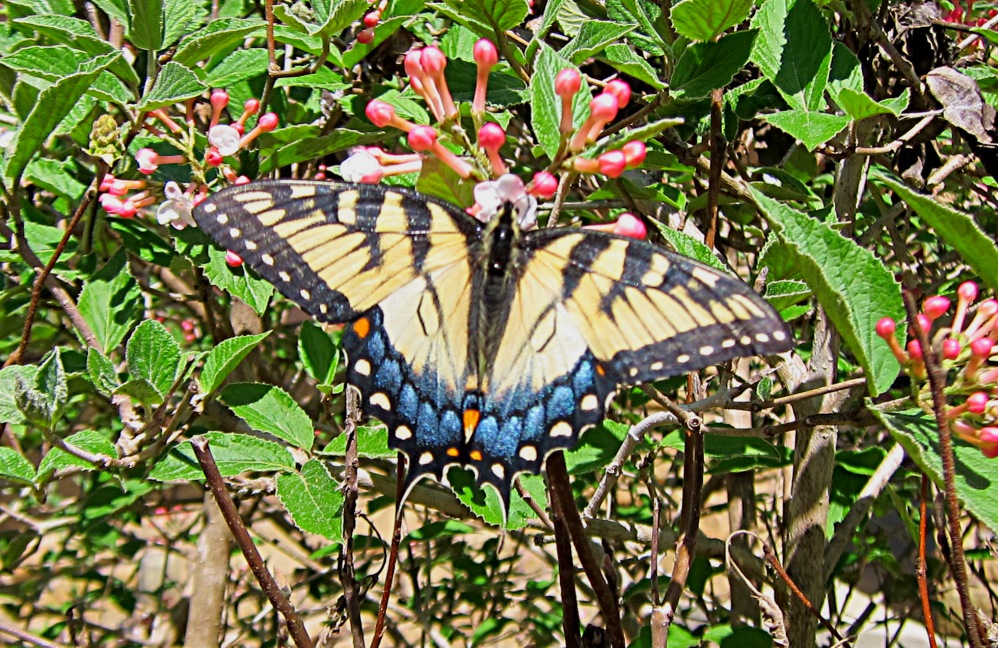
While we have begun our northern migration ahead of many birds the Cardinal, Mockingbird and Robin sing our wake up calls. Red wing black birds trade off singing with the Grackles and Swallows zip by our heads plucking insects from the air. Butterflies have unfurled their wings to meet the early flowers. We’ve seen the Eastern Tiger Swallowtail (Papilio glaucus), Zebra Swallowtail (Protographium marcellus) and beautiful Luna Moth (Actius luna).

Eastern Tiger SwallotailEastern Tiger Swallotail

Eastern Tiger Swallotail

The warm and cold days trade off in a battle of weather fronts. One day it’s tank tops and the next my down jacket. While trees on the mountain tops are still bare the trees in the lower elevations are now beginning to fill out and it’s getting harder to see through the branches. Green is everywhere. If it’s not in the forest then it’s the bright green grasses these states are famous for.

WhalesWhales

Whales

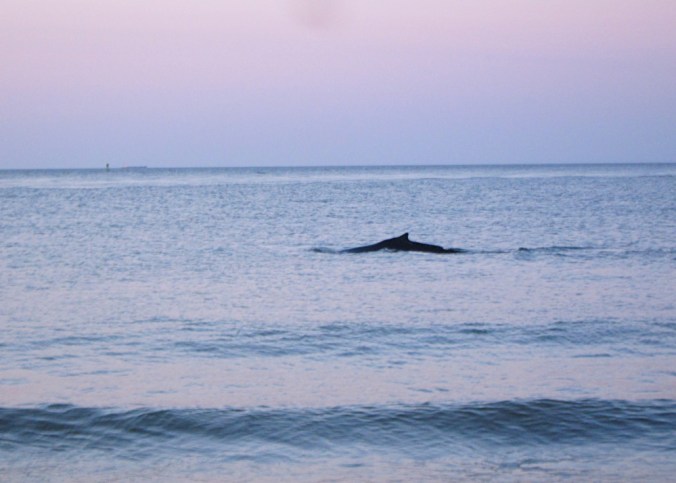
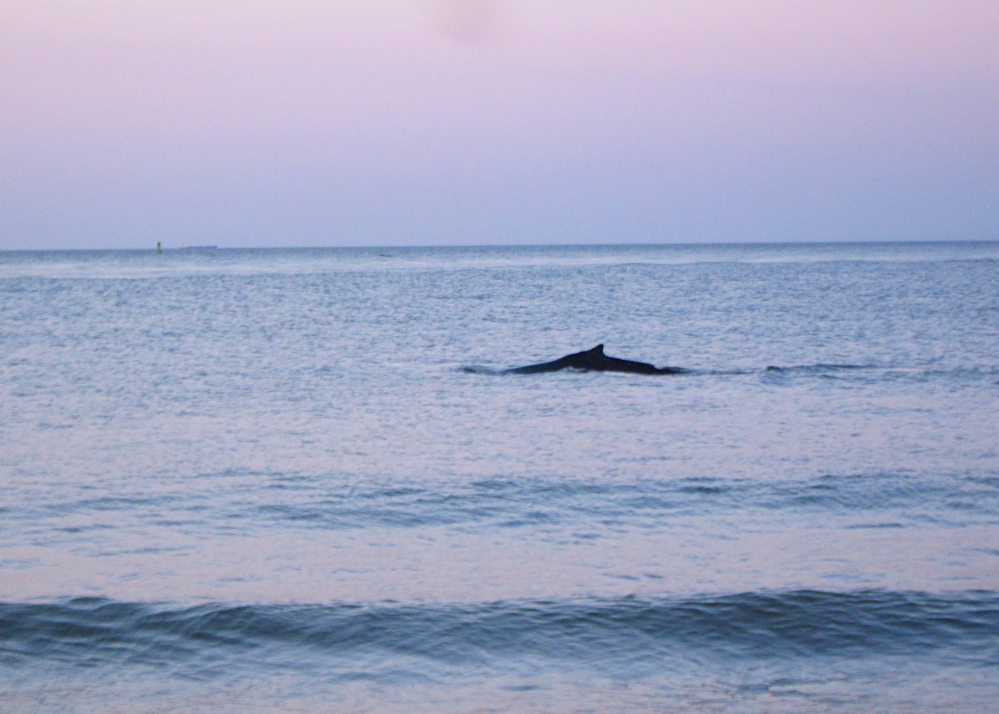
On the coast of Delaware the signs of spring show up in a different way. During a cold but lovely walk along the beach we stopped to notice a beached horseshoe crab. In our delay we not only caught the spring migrating dolphins and local porpoises hunting together but we also saw a humpback whale and it’s baby fishing not 40 yards from where we stood. It was an incredible sight.

Soon we’ll be in DC to explore our nations capital. An experience I am truly excited about. It’s sure to be a whole different kind of ecology than we’ve been seeing these last few months.

Spring in the east

Red Trillium (Trillium erectum)

Red Trillium (Trillium erectum)

As a coastal California native I’ve learned not only to see but appreciate the subtlety of the change in seasons. These last few weeks have afforded me the opportunity to see a slow progression of the shift into spring where the seasons are much more distinct. First with a ground flower here or there such as the red, white and sessile trilliums. Then we started to see a carpet of green under the still bare forest. Slowly the trees started not only to leaf out but trees like the Eastern Redbud (Cercis canadensis) and the white or pink Flowering Dogwood (Cornus florida) brightened up our paths.

While we have begun our northern migration ahead of many birds the Cardinal, Mockingbird and Robin sing our wake up calls. Red wing black birds trade off singing with the Grackles and Swallows zip by our heads plucking insects from the air. Butterflies have unfurled their wings to meet the early flowers. We’ve seen the Eastern Tiger Swallowtail (Papilio glaucus), Zebra Swallowtail (Protographium marcellus) and beautiful Luna Moth (Actius luna).

Eastern Tiger Swallotail

Eastern Tiger Swallowtail

The warm and cold days trade off in a battle of weather fronts. One day it’s tank tops and the next my down jacket. While trees on the mountain tops are still bare the trees in the lower elevations are now beginning to fill out and it’s getting harder to see through the branches. Green is everywhere. If it’s not in the forest then it’s the bright green grasses these states are famous for.

On the coast of Delaware the signs of spring show up in a different way. During a cold but lovely walk along the beach we stopped to notice a beached horseshoe crab. In our delay we not only caught the spring migratingWhales dolphins and local porpoises hunting together but we also saw a humpback whale and it’s baby fishing not 40 yards from where we stood. It was an incredible sight.

Soon we’ll be in DC to explore our nations capital. An experience I am truly excited about. It’s sure to be a whole different kind of ecology than we’ve been seeing these last few months.

Friendly faces in strange places

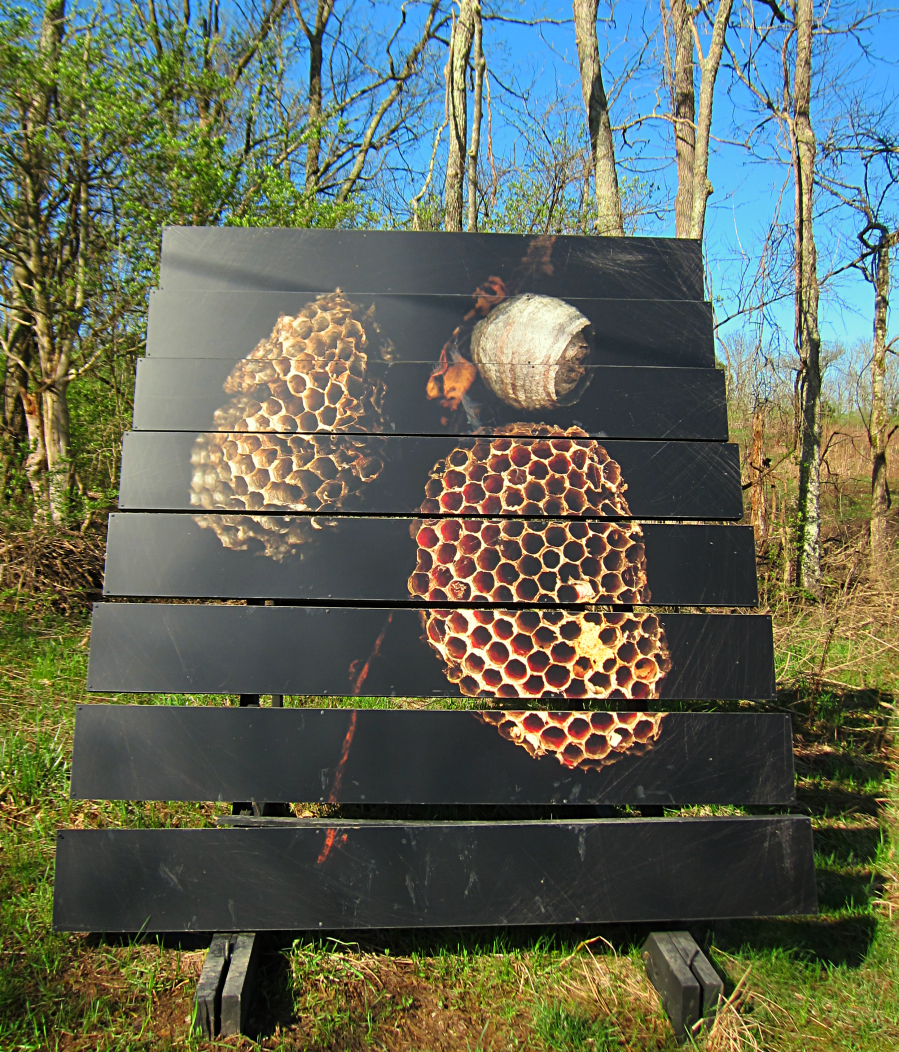
Photo installations at Raven Run by Brian RustPhoto installations at Raven Run by Brian Rust

Photo installations at Raven Run by Brian Rust

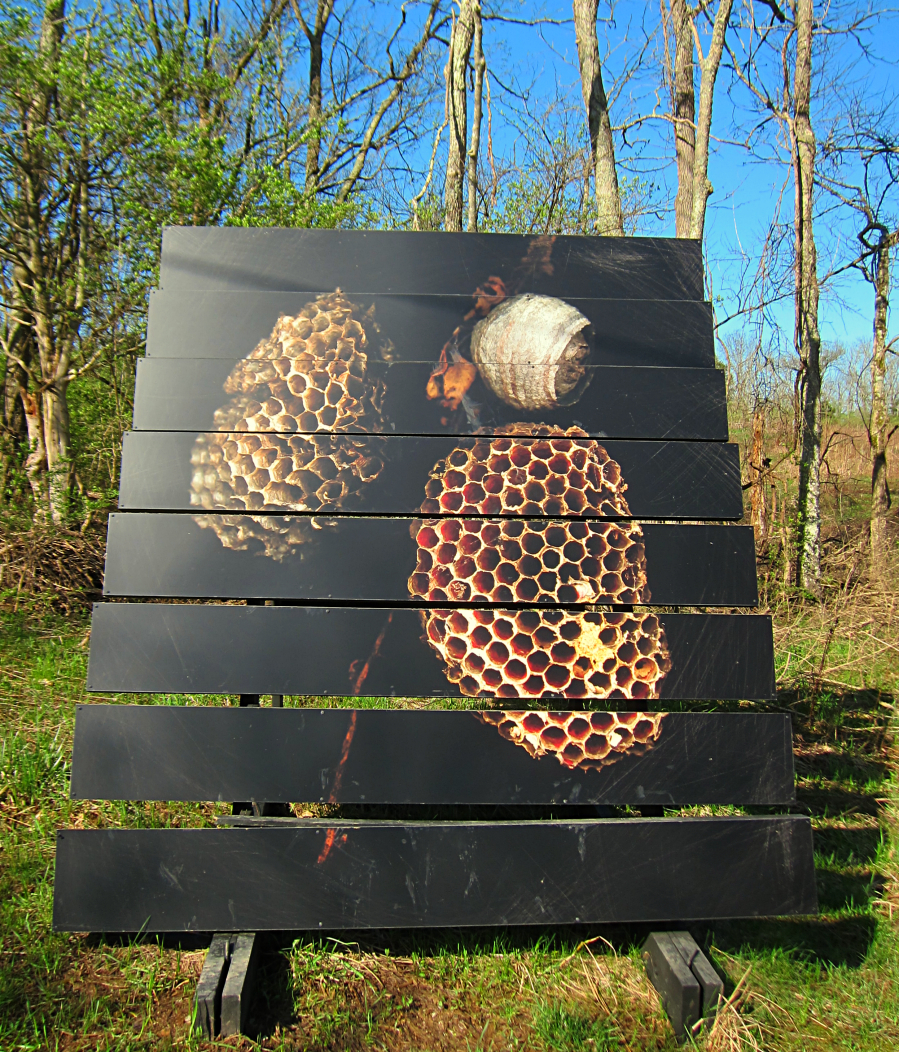
Ol’ Lil’Squatch gets all kinds of attention. Whether it be people in their cars or on the side of the road staring, somewhat slacked jawed, maybe pointing to their buddy and then pointing to Squatch or folks, all men, wanting to chat with Tim about the solar set-up. So this chat with a local on the outskirts of Knoxville was not unusual. When it got towards the end of the conversation though the man explained that he had purchased some flat solar panels from Harbor Freight for when the “Shit hits the fan I’m not bugging out, I’m bugging in, nawmsayin?!” Complete with pointing to the ground while saying bugging iiinnnnnnn. I won’t lie these are the types of people that I have no respect for. While the comment made us chuckle the sentiment does not. It’s like the story where the man is on his roof and the flood waters are rising around him. Many people come by to try and save him from his roof but his response over and over again is that he’s waiting for God to save him. When the waters reach him he says to God why have you forsaken me? God replies I sent you a horse, a boat, a helicopter etc and each time you refused. What more can I do? This is how I feel about people waiting to use something like solar. Does he not understand that the proverbial shit is already hitting the fan? Possibly because as a society we’re unwilling to do anything that might make a difference until it’s way too late.

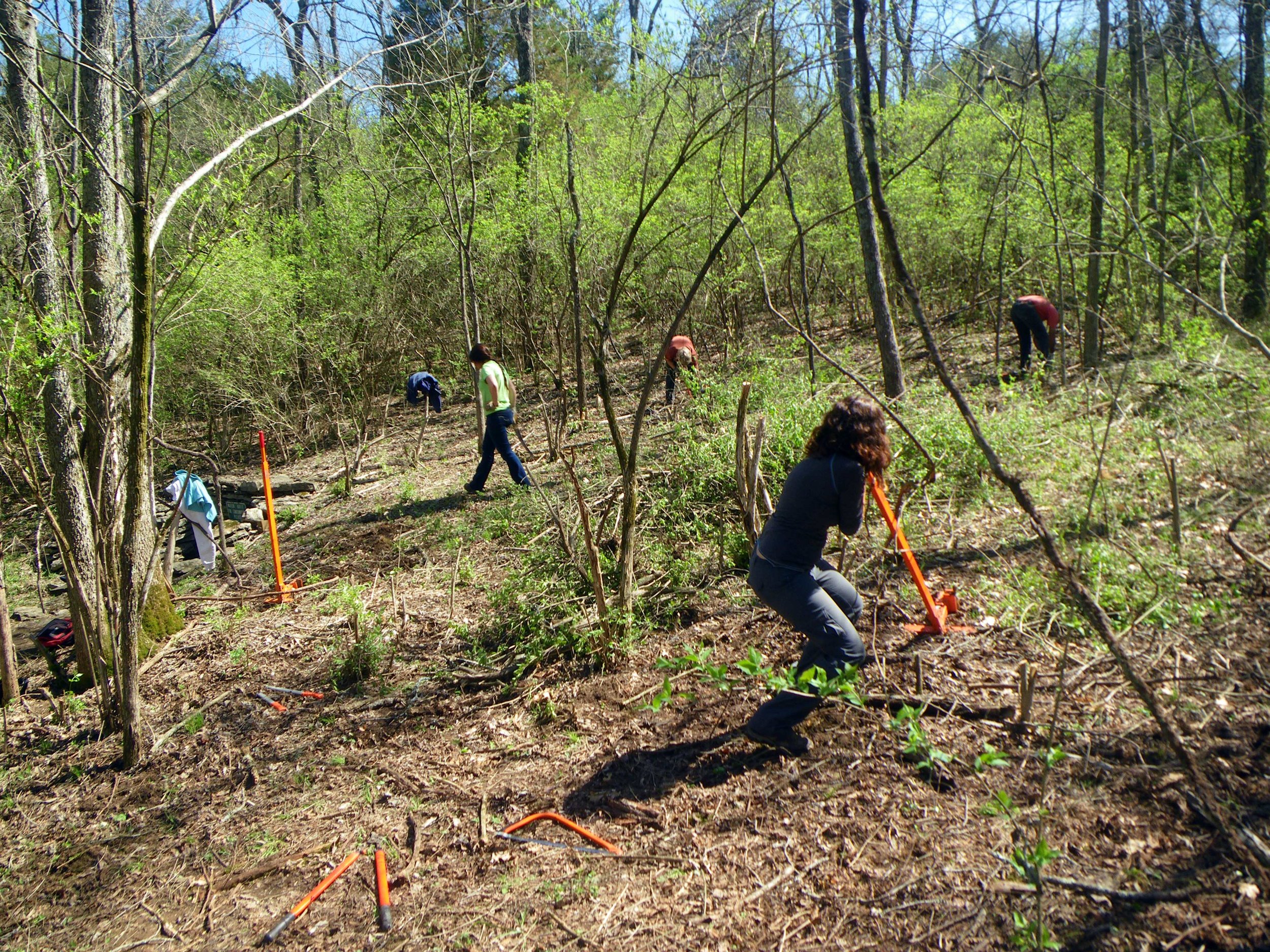
On April the 11th we pulled the invasive Asian honeysuckle from Raven Run Sanctuary outside of Lexington. Tim mentioned this in his last post but it’s worth a revisit. While we ran short on time to really explore the park we couldn’t help but notice what a beloved park it is considering the creative parking folks did once the lot was full that morning. The event was scheduled by a local couple of Sierra Club members. Naturally us nerds all had some interest in both birds and the flowers that have begun to show themselves for spring. There are some downers to the efforts to remove invasive plants and animals and I can understand the sentiment but, I’m in it for two reasons. First, it’s great exercise that I find way more fun than a gym. Second we need places of refuge. Places where we can do our best to keep invasives out and give local plants and animals a place to thrive.

Ten years ago when I moved to SF one of the first volunteer days I did was pulling french broom from Mt Tam. We worked with a ranger who mentioned that they were just now in the position to start planting some local shrubs and grasses in areas where they had made some real headway against french broom. I asked how long she’d been at it and she said 10 years. Very thoughtlessly I replied that I would have given up and the hurt on her face was palpable. It was a learning moment to say the least. I wonder where they are at now 20 years into the project? This came up again when the woman, Anna, who worked at the park casually threw out that perhaps in 10 years they’ll start to see some real progress. There was no defeat in her voice. Maybe in 10 years I’ll go back to Raven’s Run to see the progress for myself and give the place the time it deserved that day. It may seem like a long time and a lot of work but in just a few hours with a crew of nine volunteers we managed to clear a respectable plot of land.

The media might have us all believing that it’s either black or white, red or blue, coal or solar, logging or recreation. And it’s just not. Granted most of our interactions have been with either outdoorsy folks or fellow volunteers. Since we started our trek through Appalachia we’ve heard time and time again that the big “job creator” is work in outdoor adventures. Whether it be hiking, biking, climbing or river running people are getting outdoors. In Tennessee we spent a long time talking to a ranger at a state park who explained how back in the 70’s the TVA had to shutdown a hydro plant. That meant until it was fixed the river ran free. Business boomed. When TVA went to put it back online the backlash was fierce. Eventually they worked out a deal. That river is the Ocoee and was where the river sports for the 1996 Olympics out of Atlanta took place. Nearby is the Hiawasee river noted for it’s constant flow of water (thanks to the TVA). It’s the river of choice for novice boaters. We also chatted up our ranger in the Smokies when getting our backpacking permit, also a river man. The salesman at REI talked to us for the better part of an hour about his love of photography, Napa and his upcoming river trip in Utah. After our volunteer day at Raven Run the folks who got us all together very sweetly took us out to dinner. We could have chatted for several more hours talking of the places we’ve been and where we should all go next.

It seemed only fair that this should all be burned in a giant heap of coal during our days in West Virginia. Coal country in south WV was a strange place stuck in another time. These towns and homes are depressed, the river is clogged with trash. This is not a business that has much life left in it. While coal “keeps the lights on” it’s not keeping people employed. Coals days are most definitely numbered, at least in Appalachia. However, driving further on to an eastern portion of the state for a bike ride along the Greenbrier River Trail we saw a whole other side to West Virginia. It’s not only beautiful it’s also rich in outdoor activities, giving credit to the state’s slogan of “Wild and Wonderful”. We stopped in a cafe for a beer and bite in Marlinton, WV where we got to chatting with a local couple. It was a lovely and informative conversation with folks who very much think like we do.

HoneysuckleHoneysuckle

Honeysuckle

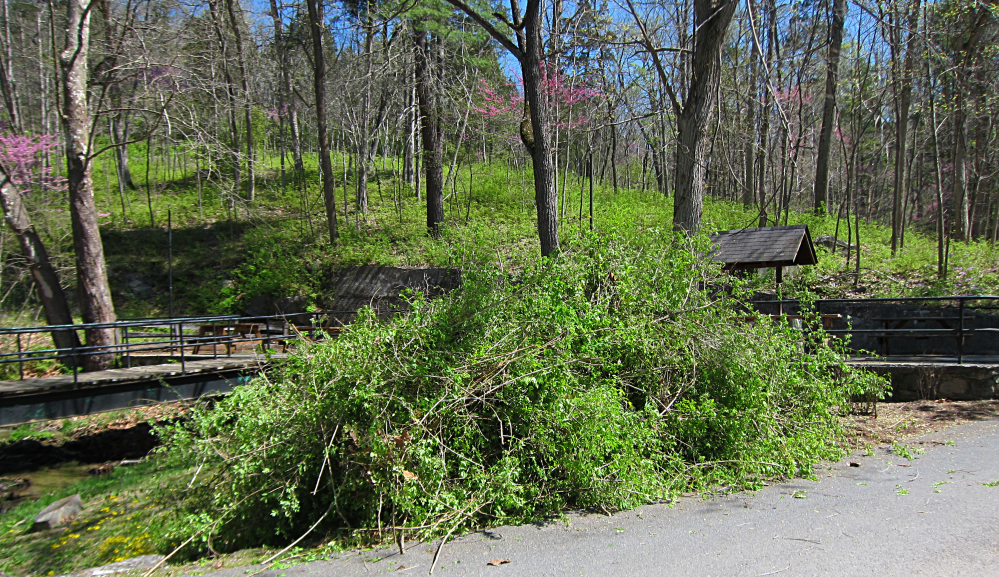
After West Virginia we moved onto Natural Bridge Virginia and yet another volunteer opportunity to pull the invasive honeysuckle. The honeysuckle not only crowds out and thus shades out native plants it’s suspected to produce an allelopathy to keep other plants at bay. This effort was coordinated by the Nature Conservancy for an Earth Day event. There were almost 100 volunteers for the day for both pulling invasive plants and trail building followed by a nice lunch at the historic Natural Bridge Hotel. The event brought in a large group from a nearby college, a local group of AT trail maintainers, staff from both Virginia senator offices and several others just wanting to help make a difference for the day. I hope everyone there that day took a look around at the work that was accomplished and felt good about the day. Even though there is still much work to be done at Raven Run, Natural Bridge and all the other parks, sanctuaries and preserves it will make a difference even if only a handful of people keep chipping away at it each month.

Friendly faces in strange places

Ol’ Lil’Squatch gets all kinds of attention. Whether it be people in their cars or on the side of the road staring, somewhat slacked jawed, maybe pointing to their buddy and then pointing to Squatch or folks, all men, wanting to chat with Tim about the solar set-up. So this chat with a local on the outskirts of Knoxville was not unusual. When it got towards the end of the conversation though the man explained that he had purchased some flat solar panels from Harbor Freight for when the “Shit hits the fan I’m not bugging out, I’m bugging in, nawmsayin?!” Complete with pointing to the ground while saying bugging iiinnnnnnn. I won’t lie these are the types of people that I have no respect for. While the comment made us chuckle the sentiment does not. It’s like the story where the man is on his roof and the flood waters are rising around him. Many people come by to try and save him from his roof but his response over and over again is that he’s waiting for God to save him. When the waters reach him he says to God why have you forsaken me? God replies I sent you a horse, a boat, a helicopter etc and each time you refused. What more can I do? This is how I feel about people waiting to use something like solar. Does he not understand that the proverbial shit is already hitting the fan? Possibly because as a society we’re unwilling to do anything that might make a difference until it’s way too late.

Photo installations at Raven Run by Brian Rust

Photo installations at Raven Run by Brian Rust

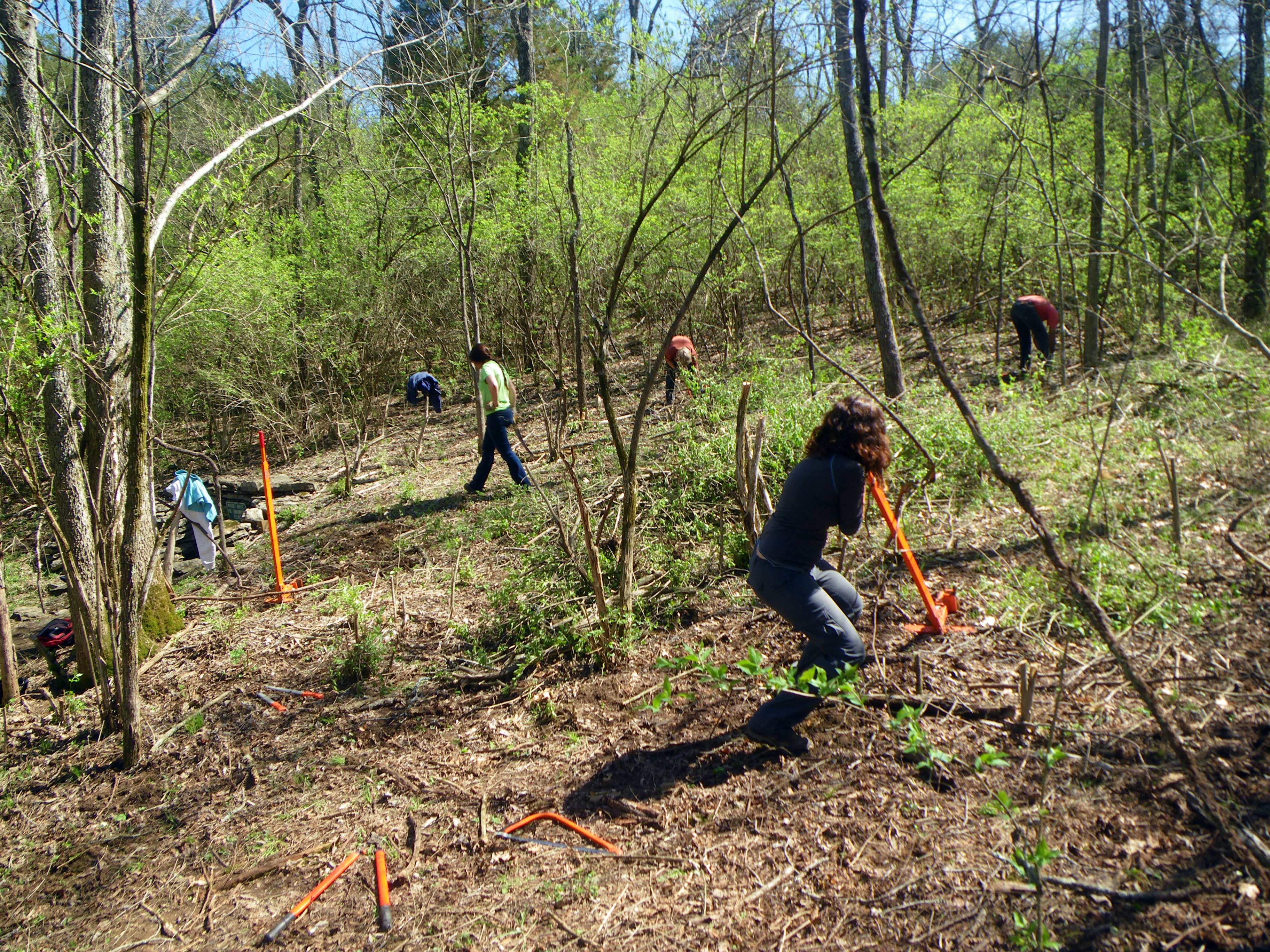
On April the 11th we pulled the invasive Asian honeysuckle from Raven Run Sanctuary outside of Lexington. Tim mentioned this in his last post but it’s worth a revisit. While we ran short on time to really explore the park we couldn’t help but notice what a beloved park it is considering the creative parking folks did once the lot was full that morning. The event was scheduled by a local couple of Sierra Club members. Naturally us nerds all had some interest in both birds and the flowers that have begun to show themselves for spring. There are some downers to the efforts to remove invasive plants and animals and I can understand the sentiment but, I’m in it for two reasons. First, it’s great exercise that I find way more fun than a gym. Second we need places of refuge. Places where we can do our best to keep invasives out and give local plants and animals a place to thrive.

Ten years ago when I moved to SF one of the first volunteer days I did was pulling french broom from Mt Tam. We worked with a ranger who mentioned that they were just now in the position to start planting some local shrubs and grasses in areas where they had made some real headway against french broom. I asked how long she’d been at it and she said 10 years. Very thoughtlessly I replied that I would have given up and the hurt on her face was palpable. It was a learning moment to say the least. I wonder where they are at now 20 years into the project? This came up again when the woman, Anna, who worked at the park casually threw out that perhaps in 10 years they’ll start to see some real progress. There was no defeat in her voice. Maybe in 10 years I’ll go back to Raven’s Run to see the progress for myself and give the place the time it deserved that day. It may seem like a long time and a lot of work but in just a few hours with a crew of nine volunteers we managed to clear a respectable plot of land.

The media might have us all believing that it’s either black or white, red or blue, coal or solar, logging or recreation. And it’s just not. Granted most of our interactions have been with either outdoorsy folks or fellow volunteers. Since we started our trek through Appalachia we’ve heard time and time again that the big “job creator” is work in outdoor adventures. Whether it be hiking, biking, climbing or river running people are getting outdoors. In Tennessee we spent a long time talking to a ranger at a state park who explained how back in the 70’s the TVA had to shutdown a hydro plant. That meant until it was fixed the river ran free. Business boomed. When TVA went to put it back online the backlash was fierce. Eventually they worked out a deal. That river is the Ocoee and was where the river sports for the 1996 Olympics out of Atlanta took place. Nearby is the Hiawasee river noted for it’s constant flow of water (thanks to the TVA). It’s the river of choice for novice boaters. We also chatted up our ranger in the Smokies when getting our backpacking permit, also a river man. The salesman at REI talked to us for the better part of an hour about his love of photography, Napa and his upcoming river trip in Utah. After our volunteer day at Raven Run the folks who got us all together very sweetly took us out to dinner. We could have chatted for several more hours talking of the places we’ve been and where we should all go next.

It seemed only fair that this should all be burned in a giant heap of coal during our days in West Virginia. Coal country in south WV was a strange place stuck in another time. These towns and homes are depressed, the river is clogged with trash. This is not a business that has much life left in it. While coal “keeps the lights on” it’s not keeping people employed. Coals days are most definitely numbered, at least in Appalachia. However, driving further on to an eastern portion of the state for a bike ride along the Greenbrier River Trail we saw a whole other side to West Virginia. It’s not only beautiful it’s also rich in outdoor activities, giving credit to the state’s slogan of “Wild and Wonderful”. We stopped in a cafe for a beer and bite in Marlinton, WV where we got to chatting with a local couple. It was a lovely and informative conversation with folks who very much think like we do.

Honeysuckle

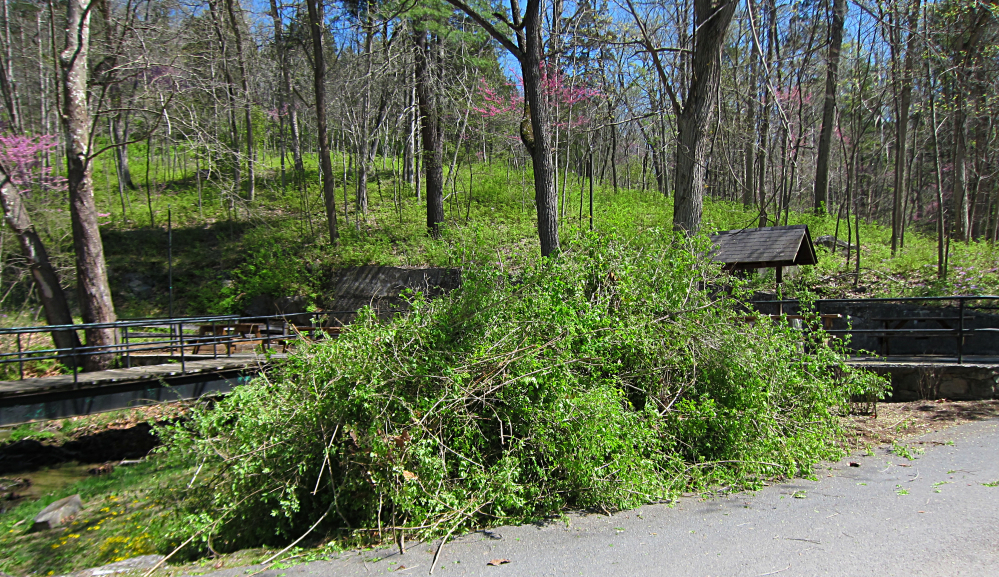
Big pile o’ honeysuckle

After West Virginia we moved onto Natural Bridge Virginia and yet another volunteer opportunity to pull the invasive honeysuckle. The honeysuckle not only crowds out and thus shades out native plants it’s suspected to produce an allelopathy to keep other plants at bay. This effort was coordinated by the Nature Conservancy for an Earth Day event. There were almost 100 volunteers for the day for both pulling invasive plants and trail building followed by a nice lunch at the historic Natural Bridge Hotel. The event brought in a large group from a nearby college, a local group of AT trail maintainers, staff from both Virginia senator offices and several others just wanting to help make a difference for the day. I hope everyone there that day took a look around at the work that was accomplished and felt good about the day. Even though there is still much work to be done at Raven Run, Natural Bridge and all the other parks, sanctuaries and preserves it will make a difference even if only a handful of people keep chipping away at it each month.

Bourbon Country

Rachael at Raven Run Preserve - Photo by Tim GillerRachael at Raven Run Preserve - Photo by Tim Giller

Rachael at Raven Run Preserve – Photo by Tim Giller

Kentucky surely deserved more time. On the back roads that Squatch prefers every curve was a picture postcard of the greenest grass a Nevada boy ever saw and striking black barns each with a unique quilt pattern mounted upon its upper eave and matching black fences curving across the rolling hillsides enclosing well bred horses. We had to start making our way towards Virginia and Washington D.C. but we did manage to make the most of a short visit.

Throughout this well manicured countryside are pockets of preserved native habitat more or less intact. As in many places, our forbearers managed to bring uninvited plant and animal guests some of whom aggressively overcrowd the locals. This is how we found ourselves joining a wonderful group on a Sierra Club outing to hack, pull and lop back as much invasive honeysuckle as we could in Raven Run Nature Preserve on the outskirts of Lexington. Like much of the region this is not primeval wilderness, people homesteaded here and worked the land to make a living. But that was an era when Americans had a generally lighter hand leaving plenty of native ecosystem to be nourished by folks like those we got to share the better part of a beautiful spring day working with.

Yeast vat -Photo by Tim GillerYeast vat -Photo by Tim Giller

Yeast vat -Photo by Tim Giller

To be fair there was another compelling reason to visit Kentucky, our mutual fondness of Bourbon. Some friends might say I have more than a casual interest in whiskey, but there was a bit of ecology to research as we discovered by touring a couple distilleries. Contrary to popular wisdom, bourbon does not need be made in Kentucky, anywhere in the U.S. qualifies but limestone rich aquifers such as you find in Kentucky are necessary. When one guide told of how the distillery shuts down for a couple months during the summer because the cooling river waters get too warm, I decided not to interrupt his polished monologue to ask if he was worried that climate change might give them more months of warm river water. We also learned that fermenting vats and ageing barrels are made with specific woods chosen for the characteristics they impart to the bourbon. Sourcing of these can be challenging, as some of these woods are getting hard to come by due to over harvesting. However, even though an aging barrel can only be used once for bourbon these valuable barrels have a number of secondary uses such as wine, beer and scotch making, and repurposing as furniture and other products. The spent grains are also passed on as livestock feed.

Redbud with blackened stemsRedbud with blackened stems

Redbud with blackened stems

By far the most interesting thing we learned was that trees, shrubs and buildings near a distillery become blackened by the airborne off gassing. When we were told that prohibition agents used this fact to search for hidden backwoods stills, we came up with a theory that the barns of Kentucky were painted black to disguise illegal distilleries, though we couldn’t find anyone who thought this was true. Disappointingly none of the distillery folks seemed to know the actual reason for this blackening. Baudoinia compniacensis, is a black sac fungus that prefers habitat with broad temperature and humidity shifts such as are produced by distilleries, but it especially thrives on the airborne ethanol. They are apparently harmless to the trees and structures that they coat in vast black colonies. Maybe the bourbon producers think that fungus is bad PR for their industry. But I think that the truth of these little alcohol loving microorganisms is more interesting than telling us that the trees are drunk.

Bourbon Country

Kentucky surely deserved more time. On the back roads that Squatch prefers every curve was a picture postcard of the greenest grass a Nevada boy ever saw and striking black barns each with a unique quilt pattern mounted upon its upper eave and matching black fences curving across the rolling hillsides enclosing well bred horses. We had to start making our way towards Virginia and Washington D.C. but we did manage to make the most of a short visit.

Rachael at Raven Run Preserve - Photo by Tim Giller

Rachael at Raven Run Preserve – Photo by Tim Giller

Throughout this well manicured countryside are pockets of preserved native habitat more or less intact. As in many places, our forbearers managed to bring uninvited plant and animal guests some of whom aggressively overcrowd the locals. This is how we found ourselves joining a wonderful group on a Sierra Club outing to hack, pull and lop back as much invasive honeysuckle as we could in Raven Run Nature Preserve on the outskirts of Lexington. Like much of the region this is not primeval wilderness, people homesteaded here and worked the land to make a living. But that was an era when Americans had a generally lighter hand leaving plenty of native ecosystem to be nourished by folks like those we got to share the better part of a beautiful spring day working with.

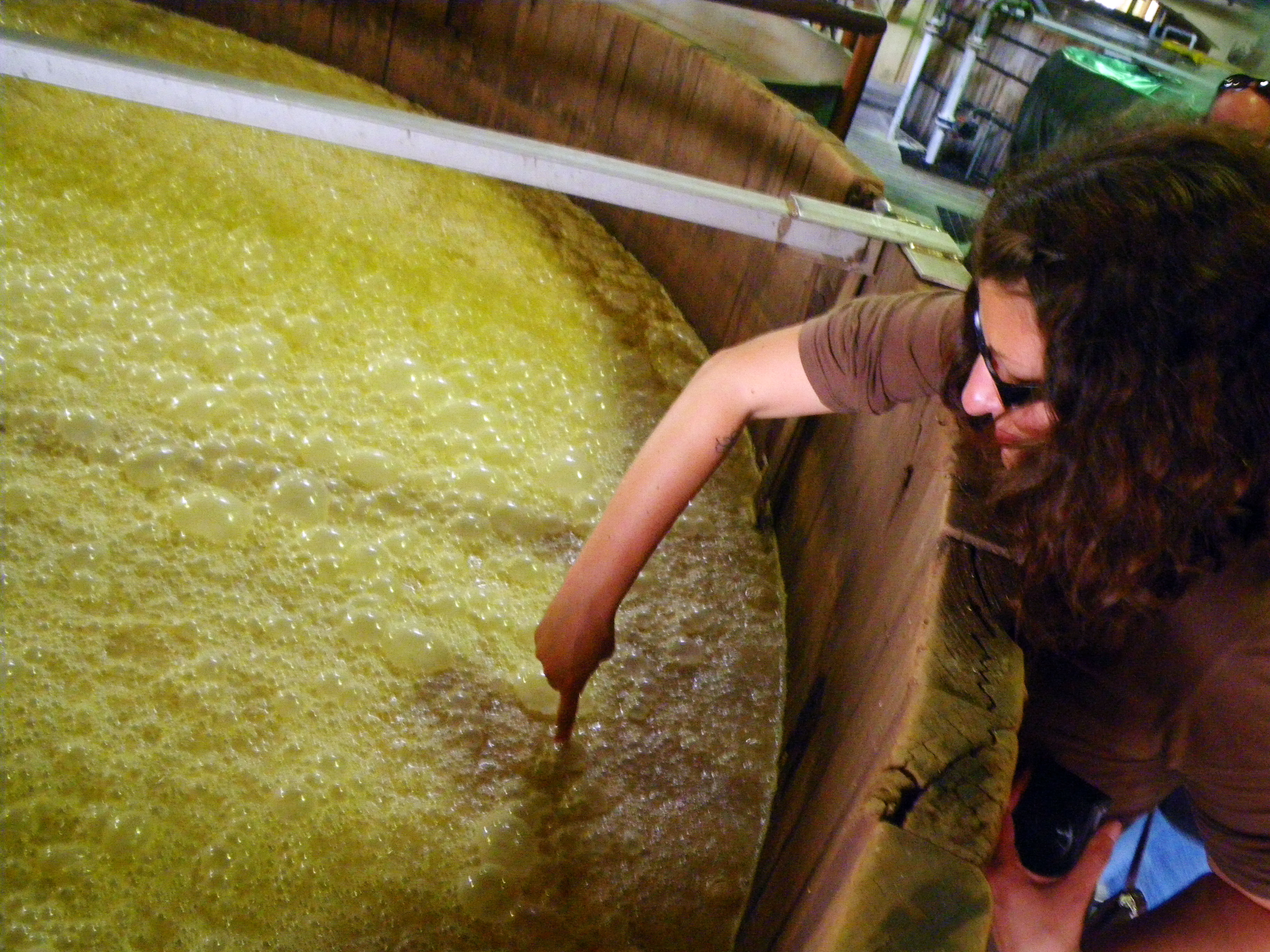
Yeast vat -Photo by Tim Giller

Yeast vat -Photo by Tim Giller

To be fair there was another compelling reason to visit Kentucky, our mutual fondness of Bourbon. Some friends might say I have more than a casual interest in whiskey, but there was a bit of ecology to research as we discovered by touring a couple distilleries. Contrary to popular wisdom, bourbon does not need be made in Kentucky, anywhere in the U.S. qualifies but limestone rich aquifers such as you find in Kentucky are necessary. When one guide told of how the distillery shuts down for a couple months during the summer because the cooling river waters get too warm, I decided not to interrupt his polished monologue to ask if he was worried that climate change might give them more months of warm river water. We also learned that fermenting vats and ageing barrels are made with specific woods chosen for the characteristics they impart to the bourbon. Sourcing of these can be challenging, as some of these woods are getting hard to come by due to over harvesting. However, even though an aging barrel can only be used once for bourbon these valuable barrels have a number of secondary uses such as wine, beer and scotch making, and repurposing as furniture and other products. The spent grains are also passed on as livestock feed.

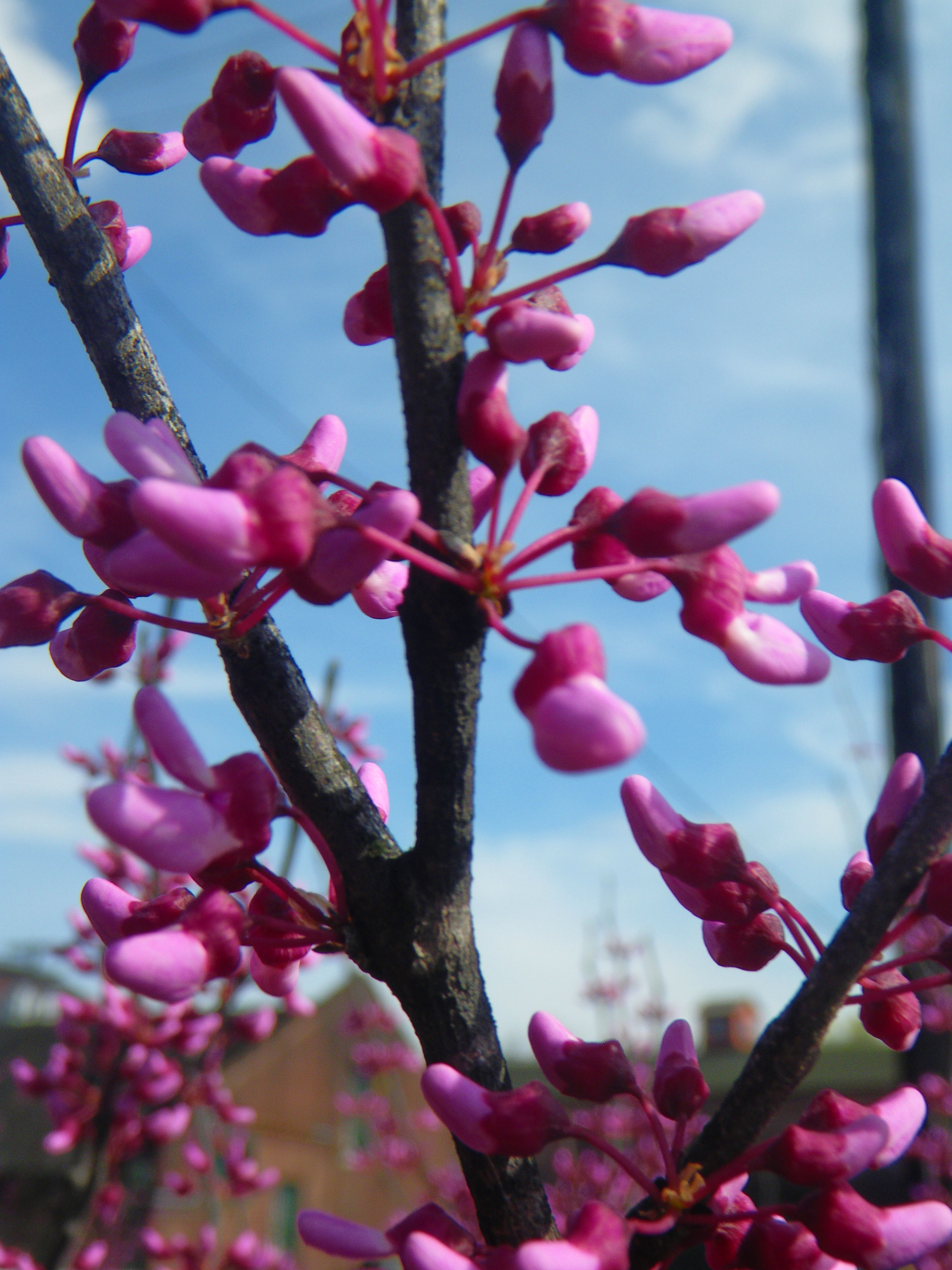
Redbud with blackened stems

Redbud with blackened stems

By far the most interesting thing we learned was that trees, shrubs and buildings near a distillery become blackened by the airborne off gassing. When we were told that prohibition agents used this fact to search for hidden backwoods stills, we came up with a theory that the barns of Kentucky were painted black to disguise illegal distilleries, though we couldn’t find anyone who thought this was true. Disappointingly none of the distillery folks seemed to know the actual reason for this blackening. Baudoinia compniacensis, is a black sac fungus that prefers habitat with broad temperature and humidity shifts such as are produced by distilleries, but it especially thrives on the airborne ethanol. They are apparently harmless to the trees and structures that they coat in vast black colonies. Maybe the bourbon producers think that fungus is bad PR for their industry. But I think that the truth of these little alcohol loving microorganisms is more interesting than telling us that the trees are drunk.