Whiskey & Cranes

If we hadn’t stopped at a bar in Tombstone we probably would have gotten to Whitewater Draw in time to see the massive flocks of cranes coming in for the evening. It was worth it though because where else are you going to find yourself sitting next to a real life gunslinger (reenactor) drinking whiskey? As he left to go to rehearsal we left to camp next to the Sandhill cranes. Even though in was getting dark and most of the birds had settled in, as soon as we shut off Lil’ Squatch’s engine you could hear them. The conversation at the bar was fun but these creatures speak an ancient tongue that is beyond description. It was so compelling that both Rachael and I, without speaking, began walking towards the sound. The cranes rest for the night standing in shallow water as protection from predators and the sound of thousands of their trilling voices carrying across the wetland penetrates you and reaches some primal part of your brain. It’s as if you can feel the thousands of years that this chorus has been raised nightly and it connects you to prehistoric ancestors who surely knew this sound well.
Whitewater Draw is a wildlife management area and one of several seasonal wetlands in the center of Sulphur Springs Valley an expansive example of basin and range country in the southeast corner of Arizona. With prairie and agricultural fields to feed in by day it is the perfect winter home for the cranes. It is also an excellent place to camp and we stayed here two nights, the all night conversations of the birds infiltrating my dreams. With some of the least light polluted skies in the US it is also an amazing place to see the stars, though with a bitter chill it was hard to bundle up enough to enjoy for very long. I was picturing the cranes huddled in together for warmth and gossip.

As dawn approaches the chattering trills begin to escalate. The sound grows to a crescendo as the sun is rising and with the sun the birds rise in groups of 20 or 30, then groups in the hundreds. The horizon fills with long lines of cranes flocked up to go to their chosen feeding sites in the valley. For some hours you can spot the now scattered groups rising and dispersing across the sky. As I said the sound of these magnificent birds is indescribable so even though this recording is also a poor substitution for hearing and feeling it in person, I’ll let the Sandhill cranes speak for themselves in this video I made: https://www.youtube.com/watch?v=WdQETjnDYik&feature=youtu.be


Whiskey & Cranes

If we hadn’t stopped at a bar in Tombstone we probably would have gotten to Whitewater Draw in time to see the massive flocks of cranes coming in for the evening. It was worth it though because where else are you going to find yourself sitting next to a real life gunslinger (reenactor) drinking whiskey? As he left to go to rehearsal we left to camp next to the Sandhill cranes. Even though in was getting dark and most of the birds had settled in, as soon as we shut off Lil’ Squatch’s engine you could hear them. The conversation at the bar was fun but these creatures speak an ancient tongue that is beyond description. It was so compelling that both Rachael and I, without speaking, began walking towards the sound. The cranes rest for the night standing in shallow water as protection from predators and the sound of thousands of their trilling voices carrying across the wetland penetrates you and reaches some primal part of your brain. It’s as if you can feel the thousands of years that this chorus has been raised nightly and it connects you to prehistoric ancestors who surely knew this sound well.

Whitewater Draw is a wildlife management area and one of several seasonal wetlands in the center of Sulphur Springs Valley an expansive example of basin and range country in the southeast corner of Arizona. With prairie and agricultural fields to feed in by day it is the perfect winter home for the cranes. It is also an excellent place to camp and we stayed here two nights, the all night conversations of the birds infiltrating my dreams. With some of the least light polluted skies in the US it is also an amazing place to see the stars, though with a bitter chill it was hard to bundle up enough to enjoy for very long. I was picturing the cranes huddled in together for warmth and gossip.

As dawn approaches the chattering trills begin to escalate. The sound grows to a crescendo as the sun is rising and with the sun the birds rise in groups of 20 or 30, then groups in the hundreds. The horizon fills with long lines of cranes flocked up to go to their chosen feeding sites in the valley. For some hours you can spot the now scattered groups rising and dispersing across the sky. As I said the sound of these magnificent birds is indescribable so even though this recording is also a poor substitution for hearing and feeling it in person, I’ll let the Sandhill cranes speak for themselves in this video I made: https://www.youtube.com/watch?v=WdQETjnDYik&feature=youtu.be


Vagabond Volunteers

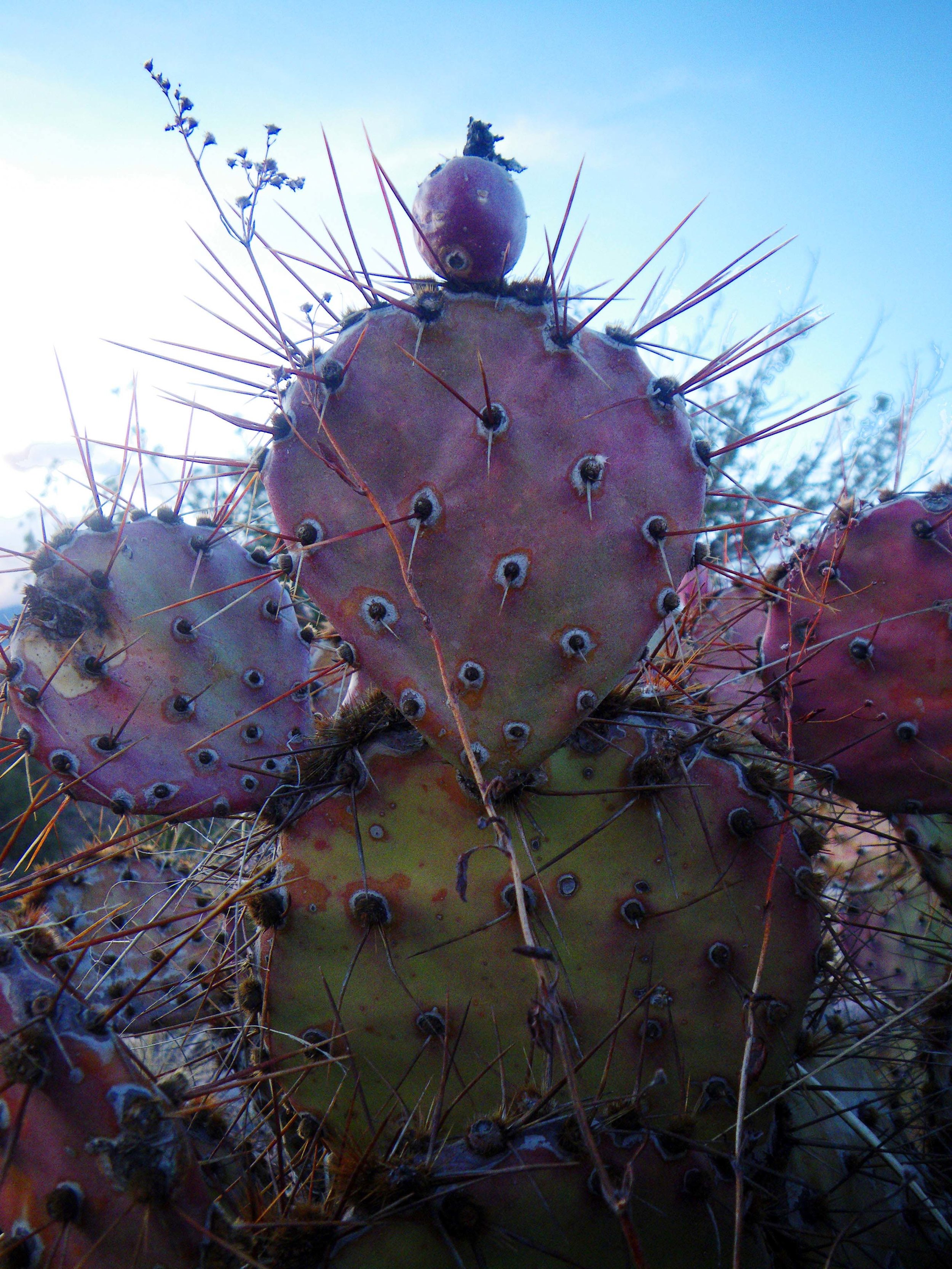
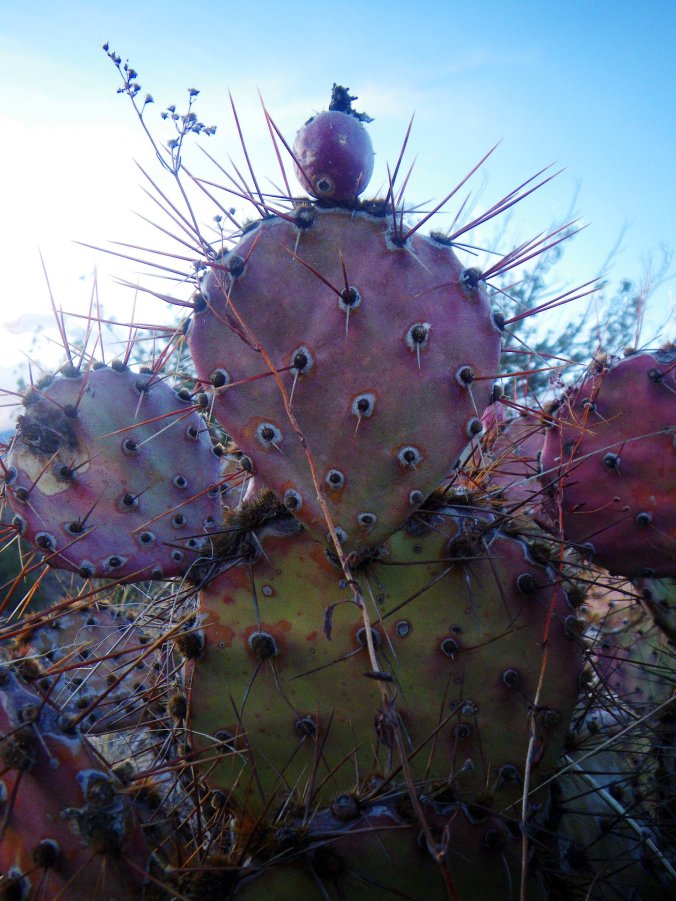
PricklyPearPricklyPear

PricklyPear

As I bent forward to look at a strange bit of Saguaro skeleton I felt a sharp sensation that quickly flashed me back to my earliest memory. I had to be less than 2 years old and my walking skills must have been mighty wobbly because as I was stumbling around outside our mobile home in the Mojave desert I promptly sat into a prickly pear cactus. My mom spent an hour plucking the needles out of my rear. This time around I only gave Rachael 10 minutes because we needed to come out from behind the mesquite tree and rejoin our fellow volunteers. Most deserts have a variety of foliage that endeavor to stab you, a successful defense mechanism for plants growing in a harsh environment with scarce food sources. The Sonoran desert however is greener and has more biomass than you’d expect for such a hot and dry place. This is largely the result of having two wet seasons; saturating winter rains and dramatic summer monsoon downpours. This doesn’t mean a lot of water but in a place where life waits out the dry in order to flourish with the wet the Sonoran in known for a higher variety and density of life. Life that is more than happy to fill my unobservant butt with barbed spines.
The good thing is we were here to get in close contact with the land and we were fortunate enough to find a drop in volunteer opportunity at Saguaro National Park. Though unfamiliar to us Californians, buffelgrass has become a widespread invasive plant in the deserts and rangelands of the Southwest an all to common example of a plant introduced as cattle feed that got out of hand. A fiend for water it can cheat the locals, tapping the scarce resource before it ever gets an inch into the soil. Removing exotic plants can appear futile. They come back with the repetitiveness of a bad horror movie villain. However native plants are intimately adapted to their environments and I’ve seen first hand that given a chance they can hold their own. This committed group of volunteers is trying to give the park that chance. By focusing on specific areas and with persistent effort the hope is to remove the invader and allow the native plant community to keep it at bay.

Hemmed in by suburban Tucson, Saguaro National Park has a lot of folks who spend time there on a regular basis. A number of the people we worked with had literally, while hiking or riding bikes through the park, stumbled upon the chance give back to a place they care about. After being mostly to ourselves in the desert for several days I think Rachael and I were in need of some social interaction and camaraderie. Getting a bit sweaty and dusty with these good folks was just what we needed. I don’t even hold any resentment toward my prickly pear friend. It was a good reminder to pay attention and be present in the moment.

Volunteers at Saguaro N.P.Volunteers at Saguaro N.P.

Volunteers at Saguaro N.P.

Endangered, to be or not to be?

Would you visit a National Monument if the most foreign thing you saw was people on ladders painting the flowers with pollen?
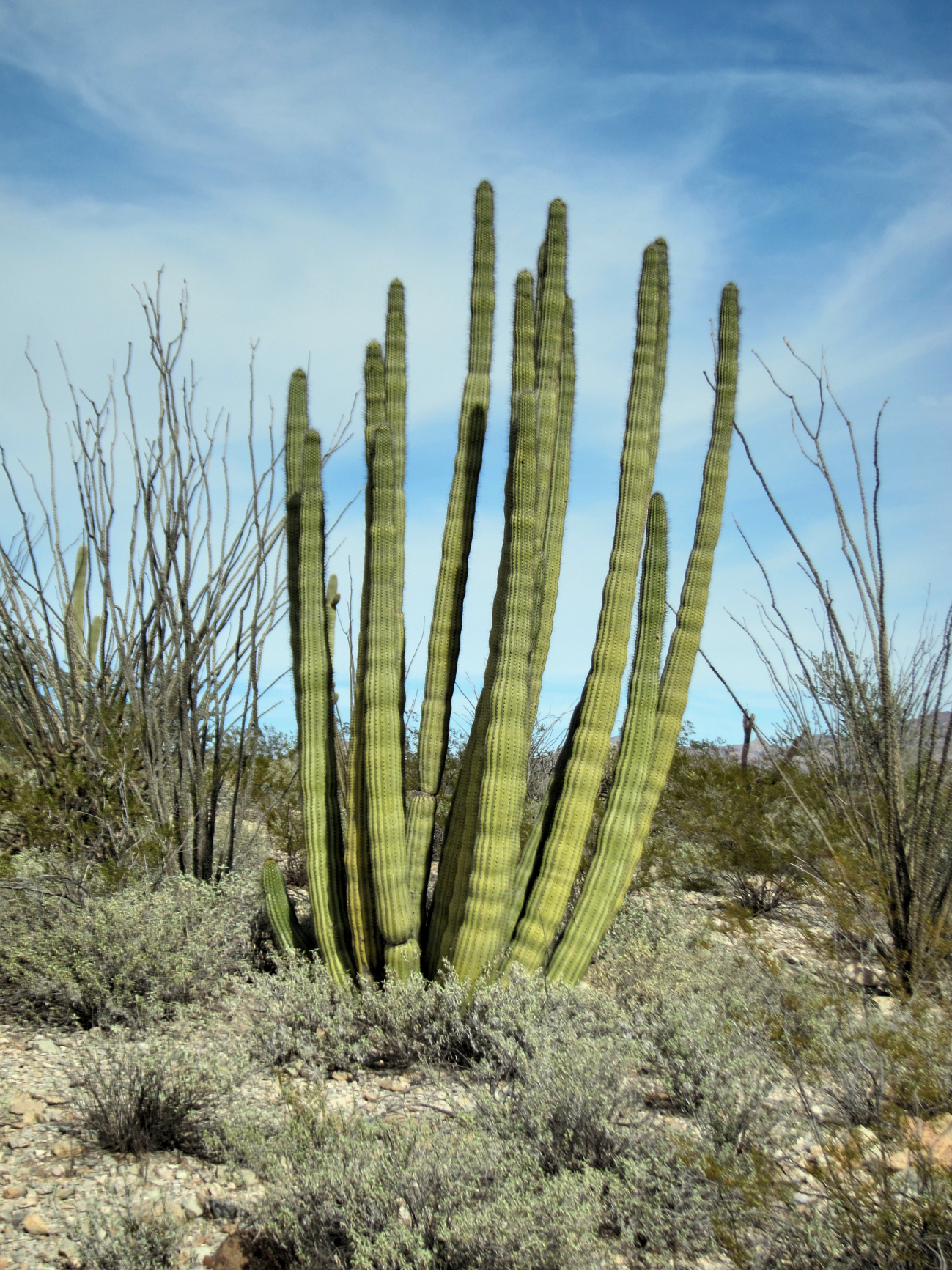
On our recent visit to Organ Pipe Cactus National Monument we could not help to be taken aback at just how lush, green and full of life this desert forest is. As most know, or think of, the desert as a dry dusty place where there is abundant sun, little rain and is short on bio-diversity. The Sonoran is the exception, especially within the park. In just a short walk we saw saguaro, organ pipe, hedgehog, and coleville’s cactus, desert ironwood, palo verde trees, quail, flickers, gila woodpeckers, cactus wren, jack rabbits, cottontails and much to my surprise deer! This is a desert rich in variety. One can only imagine that this continues to the south since this park is at the northern range of many of these plants and trees.

After only spending a couple of days there it seemed incredible that this little pocket has even survived all that has been thrown at it over the last 200 years. At a time when ranching was just about the only way to make a living in the west a few tough souls attempted to do just that however failed due to lack of year round water sources. Not surprisingly the cattle severely damaged the natural eco system. Over the years since grazing the desert has had a nice bounce back. Driving in from the north west we passed a large mine outside of the town of Ajo, AZ. This mine was so large the tailings create their own mountain plateau. Shortly after passing the mine driving towards Why, AZ you start to pass signs for the Barry Goldwater air force bombing range. The American military bombs the desert because there is “nothing out there”. It was not unusual to hear the jets flying past the park even in just our short visit. To the south, about 7 miles from the entrance to the park, is the Mexican/American border. I’m not going to cover the politics here but, due to several factors this means that the open desert is an opportunistic place for those seeking better pay or good money trafficking into America. Human and vehicle traffic through the park created roads and damaged the eco system in several places. Fairly recently the park put in a 30 mile stretch of vehicle barricades that still allows for animals, including the endangered Sonoran Pronghorn to still pass through. Due to these immigration attempts and trafficking the presence of border patrol is to be expected. Within the park there is border patrol unit with horses, ATVs, drones and a helicopter to patrol the park itself. All of this is just to give you an idea of what this little plot of land is up against.

It’s easy to put all that out of your mind when you look at this beautiful place, especially the pictures of the desert in full bloom. A majority of the plants take the monsoon rains of the summer to blossom. This includes the namesake Organ Pipe Cactus. These cacti can live up to 150 years and their first blossom shows up at around 35 years of age. This has been an interesting fact to mull over because I myself am 35 years old. The organ pipe cactus has white flowers and blooms only at night giving off a sweet scent. Come mid morning the next day and the flower is closing up its pollen shop. The lesser long nose bat uses this time in the summer to travel north to have and grow their babies at a roost in the park. Feeding on the pollen and fruit of both the Saguaro and the Organ Pipe cactus while cross pollinating the plants. There is an excellent graph showing this relationship found in the park newspaper here: http://www.nps.gov/orpi/planyourvisit/upload/http___imrcms-nps-doi-net_orpi_planyourvisit_loader.pdf .  The Organ Pipe is not listed as endangered but the bat is. Like the good and wise John Muir is quoted “When we try to pick out anything by itself, we find it hitched to everything else in the Universe.”. If there is no bat to do the heavy lifting of pollinating the cactus how long will it take the cactus to die off? I heard a story about an apple growing region in China where they use such toxic pesticides it killed all the bees. No bees, no apples? Nope, instead there are people who are now employed to take to the trees with cups filled with pollen and paint brushes to do the pollinating the bees did for free. In true Chinese diligence they pollinate all the flowers of every tree. The human pollination process is said to have increased the production of apples by 30%. Can the trees sustain that heavy of production? What if there are subtleties that the bees and bats can smell that makes them skip over less ideal flowers? Just like a female bird selects for health and vitality in her male suitors perhaps the bats select the best flowers. The fact is that these plants and bats co evolved and most likely need each other to survive. Human interference might temporarily improve upon nature but, will alter it in ways that we cannot foresee. This is a common story throughout the world and this is only one example. However, I can’t help feel that my take away from this particular story is the connection between our bombing practice just north and the desperation of our neighbors to the south. It’s hard for me to decide who causes more damage to this sensitive desert eco-system. It’s important to remember that nature is not something that happens “over there” while we lives our lives “over here”. Our tax dollars both own the open land of the federal government and the military that is tasked to protect it. Americans have bought the gift that is large tracks of land set aside for our enjoyment but, nature does not begin and end at their borders.

OPC_OPCNMOPC_OPCNM

OPC_OPCNM

Vagabond Volunteers

PricklyPearAs I bent forward to look at a strange bit of Saguaro skeleton I felt a sharp sensation that quickly flashed me back to my earliest memory. I had to be less than 2 years old and my walking skills must have been mighty wobbly because as I was stumbling around outside our mobile home in the Mojave desert I promptly sat into a prickly pear cactus. My mom spent an hour plucking the needles out of my rear. This time around I only gave Rachael 10 minutes because we needed to come out from behind the mesquite tree and rejoin our fellow volunteers. Most deserts have a variety of foliage that endeavor to stab you, a successful defense mechanism for plants growing in a harsh environment with scarce food sources. The Sonoran desert however is greener and has more biomass than you’d expect for such a hot and dry place. This is largely the result of having two wet seasons; saturating winter rains and dramatic summer monsoon downpours. This doesn’t mean a lot of water but in a place where life waits out the dry in order to flourish with the wet the Sonoran in known for a higher variety and density of life. Life that is more than happy to fill my unobservant butt with barbed spines.

The good thing is we were here to get in close contact with the land and we were fortunate enough to find a drop in volunteer opportunity at Saguaro National Park. Though unfamiliar to us Californians, buffelgrass has become a widespread invasive plant in the deserts and rangelands of the Southwest an all to common example of a plant introduced as cattle feed that got out of hand. A fiend for water it can cheat the locals, tapping the scarce resource before it ever gets an inch into the soil. Removing exotic plants can appear futile. They come back with the repetitiveness of a bad horror movie villain. However native plants are intimately adapted to their environments and I’ve seen first hand that given a chance they can hold their own. This committed group of volunteers is trying to give the park that chance. By focusing on specific areas and with persistent effort the hope is to remove the invader and allow the native plant community to keep it at bay.

Hemmed in by suburban Tucson, Saguaro National Park has a lot of folks who spend time there on a regular basis. A number of the people we worked with had literally, while hiking or riding bikes through the park, stumbled upon the chance give back to a place they care about. After being mostly to ourselves in the desert for several days I think Rachael and I were in need of some social interaction and camaraderie. Getting a bit sweaty and dusty with these good folks was just what we needed. I don’t even hold any resentment toward my prickly pear friend. It was a good reminder to pay attention and be present in the moment.

Volunteers at Saguaro N.P.

Volunteers at Saguaro N.P.

Endangered, to be or not to be?

Would you visit a National Monument if the most foreign thing you saw was people on ladders painting the flowers with pollen?

On our recent visit to Organ Pipe Cactus National Monument we could not help to be taken aback at just how lush, green and full of life this desert forest is. As most know, or think of, the desert as a dry dusty place where there is abundant sun, little rain and is short on bio-diversity. The Sonoran is the exception, especially within the park. In just a short walk we saw saguaro, organ pipe, hedgehog, and coleville’s cactus, desert ironwood, palo verde trees, quail, flickers, gila woodpeckers, cactus wren, jack rabbits, cottontails and much to my surprise deer! This is a desert rich in variety. One can only imagine that this continues to the south since this park is at the northern range of many of these plants and trees.

After only spending a couple of days there it seemed incredible that this little pocket has even survived all that has been thrown at it over the last 200 years. At a time when ranching was just about the only way to make a living in the west a few tough souls attempted to do just that however failed due to lack of year round water sources. Not surprisingly the cattle severely damaged the natural eco system. Over the years since grazing the desert has had a nice bounce back. Driving in from the north west we passed a large mine outside of the town of Ajo, AZ. This mine was so large the tailings create their own mountain plateau. Shortly after passing the mine driving towards Why, AZ you start to pass signs for the Barry Goldwater air force bombing range. The American military bombs the desert because there is “nothing out there”. It was not unusual to hear the jets flying past the park even in just our short visit. To the south, about 7 miles from the entrance to the park, is the Mexican/American border. I’m not going to cover the politics here but, due to several factors this means that the open desert is an opportunistic place for those seeking better pay or good money trafficking into America. Human and vehicle traffic through the park created roads and damaged the eco system in several places. Fairly recently the park put in a 30 mile stretch of vehicle barricades that still allows for animals, including the endangered Sonoran Pronghorn to still pass through. Due to these immigration attempts and trafficking the presence of border patrol is to be expected. Within the park there is border patrol unit with horses, ATVs, drones and a helicopter to patrol the park itself. All of this is just to give you an idea of what this little plot of land is up against.

It’s easy to put all that out of your mind when you look at this beautiful place, especially the pictures of the desert in full bloom. A majority of the plants take the monsoon rains of the summer to blossom. This includes the namesake Organ Pipe Cactus. These cacti can live up to 150 years and their first blossom shows up at around 35 years of age. This has been an interesting fact to mull over because I myself am 35 years old. The organ pipe cactus has white flowers and blooms only at night giving off a sweet scent. Come mid morning the next day and the flower is closing up its pollen shop. The lesser long nose bat uses this time in the summer to travel north to have and grow their babies at a roost in the park. Feeding on the pollen and fruit of both the Saguaro and the Organ Pipe cactus while cross pollinating the plants. There is an excellent graph showing this relationship found in the park newspaper here: http://www.nps.gov/orpi/planyourvisit/upload/http___imrcms-nps-doi-net_orpi_planyourvisit_loader.pdf .  The Organ Pipe is not listed as endangered but the bat is. Like the good and wise John Muir is quoted “When we try to pick out anything by itself, we find it hitched to everything else in the Universe.”. If there is no bat to do the heavy lifting of pollinating the cactus how long will it take the cactus to die off? I heard a story about an apple growing region in China where they use such toxic pesticides it killed all the bees. No bees, no apples? Nope, instead there are people who are now employed to take to the trees with cups filled with pollen and paint brushes to do the pollinating the bees did for free. In true Chinese diligence they pollinate all the flowers of every tree. The human pollination process is said to have increased the production of apples by 30%. Can the trees sustain that heavy of production? What if there are subtleties that the bees and bats can smell that makes them skip over less ideal flowers? Just like a female bird selects for health and vitality in her male suitors perhaps the bats select the best flowers. The fact is that these plants and bats co evolved and most likely need each other to survive. Human interference might temporarily improve upon nature but, will alter it in ways that we cannot foresee. This is a common story throughout the world and this is only one example. However, I can’t help feel that my take away from this particular story is the connection between our bombing practice just north and the desperation of our neighbors to the south. It’s hard for me to decide who causes more damage to this sensitive desert eco-system. It’s important to remember that nature is not something that happens “over there” while we lives our lives “over here”. Our tax dollars both own the open land of the federal government and the military that is tasked to protect it. Americans have bought the gift that is large tracks of land set aside for our enjoyment but, nature does not begin and end at their borders.

OPC_OPCNM

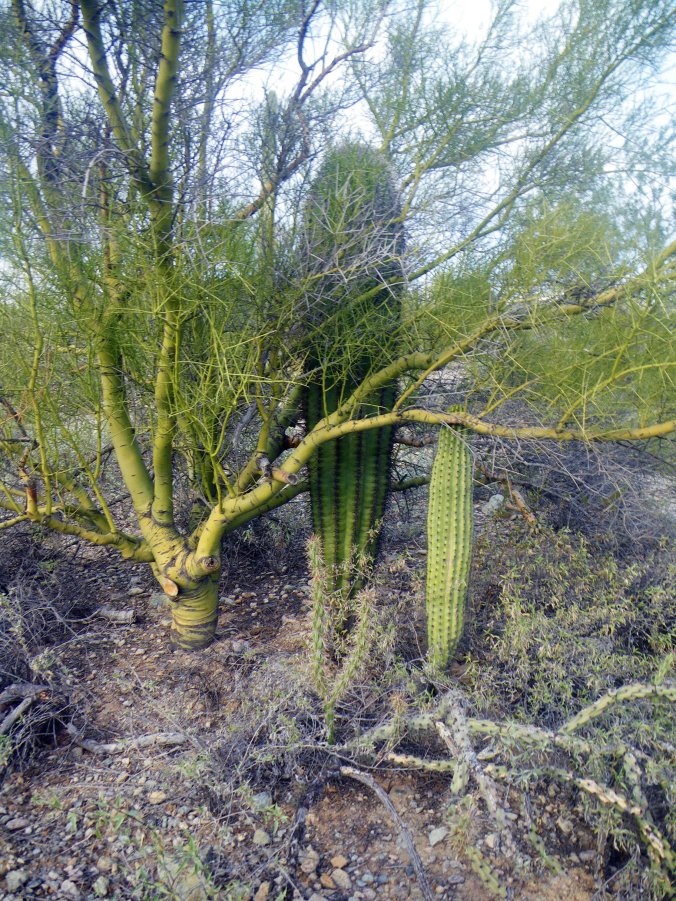
What are we looking at?

Yellow Palo Verde with SaguarosYellow Palo Verde with Saguaros

Yellow Palo Verde with Saguaros

If you really want to follow our progress then there is probably no more accurate way than to check out our posts on iNaturalist. This is a website we’ve been using for a while to record some of the critters, plants and other lifeforms we’ve come across as we’re out in the world and each observation shows exactly where we saw it. iNaturalist is something of a social network where all types of folks, from enthusiastic kids just learning about nature to dedicated biologists in every field, can contribute to a massive database of information on species. What started as a Masters project by some students at UC Berkeley has grown into a worldwide resource. It now has a home and some funding after being adopted by the California Academy of Sciences. Anyone can participate and many people have created projects where others can contribute their observations. It’s kinda wide open as to how it can be used and over time it will surely become an invaluable record of what’s out there and where and how things are changing.

An easy trap that nature lovers, amateur naturalists and especially birders fall into is rote cataloging of sightings; simple checklists of species that bring little depth of knowledge or appreciation. This can definitely be a danger of using iNaturalist. Because you are connected to a huge community of nature observers and each plant or animal on the site has links to extra information, iNaturalist can also be a springboard for getting to know more about the creatures you encounter. Identifying and classifying life on earth has been incredibly valuable to our scientific understanding. This is not without pitfalls though and between the lumpers and the splitters you can find innumerable arguments on the fine points of where one creature ends and another begins. A red-shafted flicker and a yellow-shafted flicker probably don’t lose too much sleep over whether or not they are two separate species, especially since they can interbreed either way.

No species can exist is isolation anyway. Sometimes the interconnection between discreetly defined species is so locked that you have to wonder if they should be considered the same life-form. Most trees coexist with specific root fungi and the health of each is contingent on the other. The cells of our own bodies are outnumbered by a huge variety of microorganisms on and inside of us, the vast majority of which are either harmless or beneficial to our well being. A person is never truly alone.

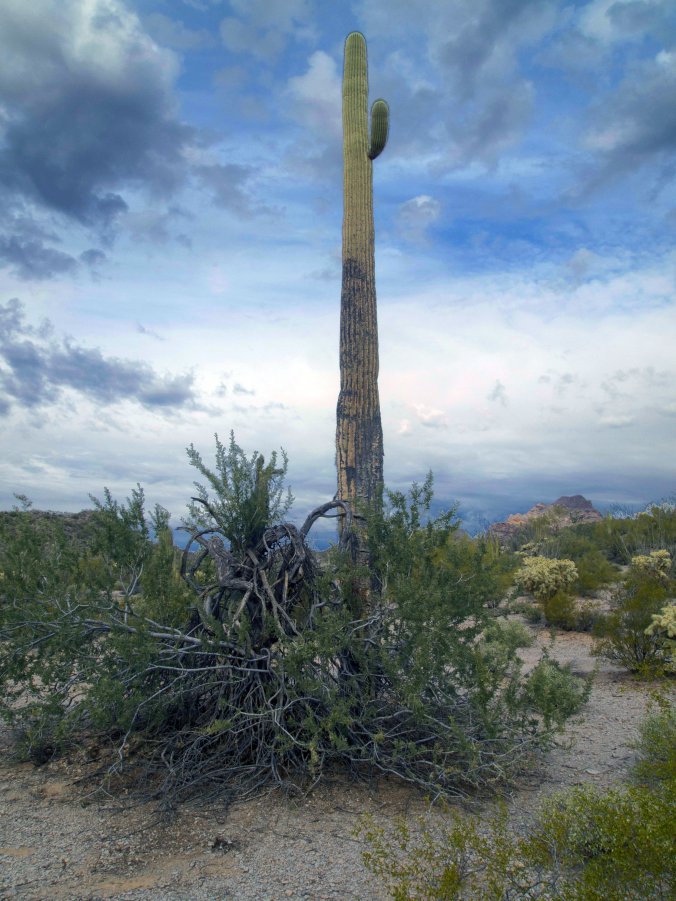
Saguaro & IronwoodSaguaro & Ironwood

Saguaro & Ironwood

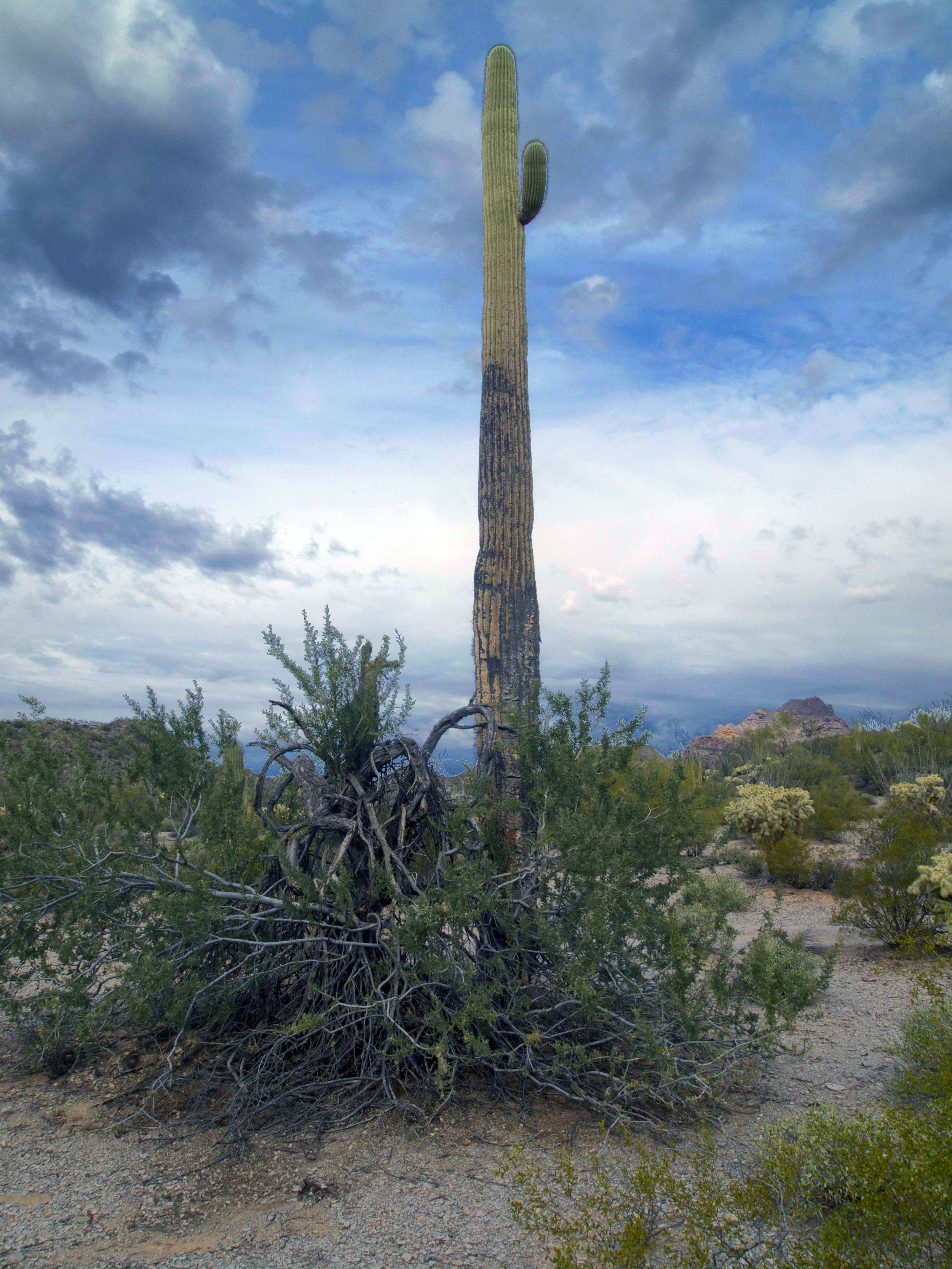
Currently if you click over to my observations you would learn that Rachael and I spent some time in Organ Pipe National Monument. Here I learned of a charming relationship between the Sonoran desert’s iconic Saguaro cactus and its fellow trees and shrubs. In order to grow into the unmistakable towering columns they become, Saguaros must first find shelter under an existing plant that can provide some cover until it has grown big enough to weather the extremes. No sooner had I learned this than I quickly noticed that nearly all the Saguaros are nestled in with one of their desert neighbors. A Saguaro can grow up to 50 feet tall and live over 150 years. I saw one stately elder emerging from an old Ironwood. Because this shorter tree grows slowly and can live to 1500 years, it may have sheltered many generations of the of the other’s ancestors.

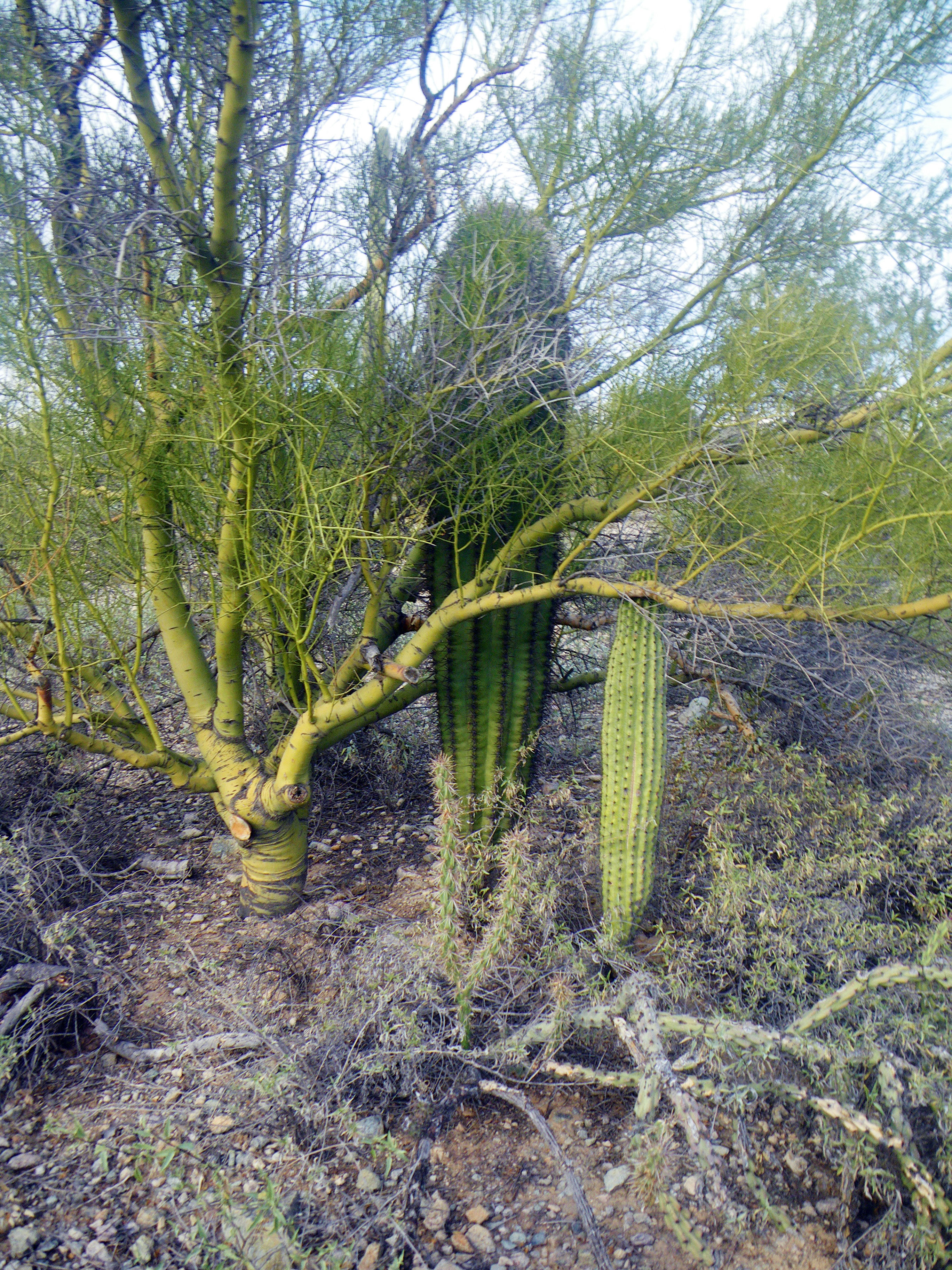
What are we looking at?

Yellow Palo Verde with Saguaros

Yellow Palo Verde with Saguaros

If you really want to follow our progress then there is probably no more accurate way than to check out our posts on iNaturalist. This is a website we’ve been using for a while to record some of the critters, plants and other lifeforms we’ve come across as we’re out in the world and each observation shows exactly where we saw it. iNaturalist is something of a social network where all types of folks, from enthusiastic kids just learning about nature to dedicated biologists in every field, can contribute to a massive database of information on species. What started as a Masters project by some students at UC Berkeley has grown into a worldwide resource. It now has a home and some funding after being adopted by the California Academy of Sciences. Anyone can participate and many people have created projects where others can contribute their observations. It’s kinda wide open as to how it can be used and over time it will surely become an invaluable record of what’s out there and where and how things are changing.

An easy trap that nature lovers, amateur naturalists and especially birders fall into is rote cataloging of sightings; simple checklists of species that bring little depth of knowledge or appreciation. This can definitely be a danger of using iNaturalist. Because you are connected to a huge community of nature observers and each plant or animal on the site has links to extra information, iNaturalist can also be a springboard for getting to know more about the creatures you encounter. Identifying and classifying life on earth has been incredibly valuable to our scientific understanding. This is not without pitfalls though and between the lumpers and the splitters you can find innumerable arguments on the fine points of where one creature ends and another begins. A red-shafted flicker and a yellow-shafted flicker probably don’t lose too much sleep over whether or not they are two separate species, especially since they can interbreed either way.

No species can exist is isolation anyway. Sometimes the interconnection between discreetly defined species is so locked that you have to wonder if they should be considered the same life-form. Most trees coexist with specific root fungi and the health of each is contingent on the other. The cells of our own bodies are outnumbered by a huge variety of microorganisms on and inside of us, the vast majority of which are either harmless or beneficial to our well being. A person is never truly alone.

Saguaro & Ironwood

Saguaro & Ironwood

Currently if you click over to my observations you would learn that Rachael and I spent some time in Organ Pipe National Monument. Here I learned of a charming relationship between the Sonoran desert’s iconic Saguaro cactus and its fellow trees and shrubs. In order to grow into the unmistakable towering columns they become, Saguaros must first find shelter under an existing plant that can provide some cover until it has grown big enough to weather the extremes. No sooner had I learned this than I quickly noticed that nearly all the Saguaros are nestled in with one of their desert neighbors. A Saguaro can grow up to 50 feet tall and live over 150 years. I saw one stately elder emerging from an old Ironwood. Because this shorter tree grows slowly and can live to 1500 years, it may have sheltered many generations of the of the other’s ancestors.

Chaparral – Hidden in plain view

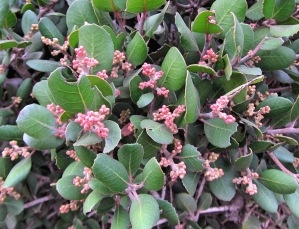
LemonadeberryLemonadeberry

Lemonadeberry

Growing up in Southern California the word “chaparral” was just simply part of the vernacular. Chaparral, the miniature forest, was seemingly everywhere. Chaparral is a shrub community made of many different plants. You will commonly see manzanitas, chamise, ceanothus and sages. I never gave it too much thought other than it was a very dusty, earthy green that was my childhood. I traded it for the coastal redwoods. The richer dank green to the north. I poo pooed the dusty green of Southern California. That is until several ecology classes and nine years later I learned to understand that this hardy shrub ecology was really quite sensitive, special and endangered. This is especially true of the Coastal Sage and Chaparral community. On December 30th I was given the opportunity to do a little exploring of Cabrillo National Monument in San Diego. When my friend mentioned that in San Diego the coastal chaparral is roughly only 1.5% of it’s size before development I felt inspired to look a little harder into the subject. Indeed from Santa Barbara down into Baja the coastal chaparral and sage community is a meager 15% of what it once was. Several of these species are endemic to not just in California but to San Diego itself. All chaparral, not just maritime chaparral, is important habit for many species of birds and small mammals. That sometimes impenetrable pokey shrub is exactly what keeps them safe as well as fed. There are really only a few good pockets of coastal sage and chaparral left in San Diego county; Camp Pendelton, Torrey Pines State Park and Cabrillo National Monument. There were several signs and some ropes asking folks to stay on the trail. I don’t remember any ropes from when I was a kid and my hope is that folks will start to appreciate how sensitive this community is just like I have.

Several plants had bloomed with the recent rains. I snapped a few pics not really knowing what plants I was looking at but, I’m a sucker for flowers. A couple were relatively easy to look up. First was the lemonadeberry (Rhus Integrifolia), a taller shrub with clusters of pretty pink flowers and leaves that look almost like an oak. The Coastal Agave (Agave Shawii) caught my eye with it’s tall flowers protruding from the typical agave base. These flowers had long past bloomed and were brown and dried yet still striking in form. The lemonadeberry almost exclusively grows in southern CA and northern Baja and the Coastal agave only grows in two small locations within San Diego, Cabrillo National Monument and Border Field State Park. Although it grows quite well in northern Baja along the coast the recent development there is quickly degrading it’s habitat.

Cliff SpurgeCliff Spurge

Cliff Spurge

The California Boxthorn (Lycium Californicum), in the flowering portion of the nightshade family, was interesting to me because it seemed a plant between taxonomy. It has strong woody stems with small plump leaves reminiscent of a succulent and small white flowers. I had taken a picture of another flowering shrub that gave me quite a chase as to figuring out what it is. I happened upon this very useful website (http://www.sdplantatlas.org/Ecoregions.aspx) that has all the plants listed in San Diego by ecoregion. As luck would have it’s in the Euphorbiaceae family and so my search didn’t take me too far down the rabbit hole. I clicked on a name that could fit and there is was! Euphorbia Misera or commonly known as Cliff Spurge isn’t necessarily special but the flowers are quite pretty and it was worth the search.

All in all Chaparral while, at first glance, might seem a dull green is worth looking a little closer at and seeing it for the incredibly hardy, fire and drought adaptive, bird and mammal protecting plant community that it is. I’m glad that in my visit to San Diego I was able to give Chaparral a look with new eyes and take the time to read up on it for my first official post to Vagabond Naturalists.

Chaparral – Hidden in plain view

Growing up in Southern California the word “chaparral” was just simply part of the vernacular. Chaparral, the miniature forest, was seemingly everywhere. Chaparral is a shrub community made of many different plants. You will commonly see manzanitas, chamise, ceanothus and sages. I never gave it too much thought other than it was a very dusty, earthy green that was my childhood. I traded it for the coastal redwoods. The richer dank green to the north. I poo pooed the dusty green of Southern California. That is until several ecology classes and nine years later I learned to understand that this hardy shrub ecology was really quite sensitive, special and endangered. This is especially true of the Coastal Sage and Chaparral community. On December 30th I was given the opportunity to do a little exploring of Cabrillo National Monument in San Diego. When my friend mentioned that in San Diego the coastal chaparral is roughly only 1.5% of it’s size before development I felt inspired to look a little harder into the subject. Indeed from Santa Barbara down into Baja the coastal chaparral and sage community is a meager 15% of what it once was. Several of these species are endemic to not just in California but to San Diego itself. All chaparral, not just maritime chaparral, is important habit for many species of birds and small mammals. That sometimes impenetrable pokey shrub is exactly what keeps them safe as well as fed. There are really only a few good pockets of coastal sage and chaparral left in San Diego county; Camp Pendelton, Torrey Pines State Park and Cabrillo National Monument. There were several signs and some ropes asking folks to stay on the trail. I don’t remember any ropes from when I was a kid and my hope is that folks will start to appreciate how sensitive this community is just like I have.

Lemonadeberry

Lemonadeberry

Several plants had bloomed with the recent rains. I snapped a few pics not really knowing what plants I was looking at but, I’m a sucker for flowers. A couple were relatively easy to look up. First was the lemonadeberry (Rhus Integrifolia), a taller shrub with clusters of pretty pink flowers and leaves that look almost like an oak. The Coastal Agave (Agave Shawii) caught my eye with it’s tall flowers protruding from the typical agave base. These flowers had long past bloomed and were brown and dried yet still striking in form. The lemonadeberry almost exclusively grows in southern CA and northern Baja and the Coastal agave only grows in two small locations within San Diego, Cabrillo National Monument and Border Field State Park. Although it grows quite well in northern Baja along the coast the recent development there is quickly degrading it’s habitat.

Cliff Spurge

Cliff Spurge

The California Boxthorn (Lycium Californicum), in the flowering portion of the nightshade family, was interesting to me because it seemed a plant between taxonomy. It has strong woody stems with small plump leaves reminiscent of a succulent and small white flowers. I had taken a picture of another flowering shrub that gave me quite a chase as to figuring out what it is. I happened upon this very useful website (http://www.sdplantatlas.org/Ecoregions.aspx) that has all the plants listed in San Diego by ecoregion. As luck would have it’s in the Euphorbiaceae family and so my search didn’t take me too far down the rabbit hole. I clicked on a name that could fit and there is was! Euphorbia Misera or commonly known as Cliff Spurge isn’t necessarily special but the flowers are quite pretty and it was worth the search.

All in all Chaparral while, at first glance, might seem a dull green is worth looking a little closer at and seeing it for the incredibly hardy, fire and drought adaptive, bird and mammal protecting plant community that it is. I’m glad that in my visit to San Diego I was able to give Chaparral a look with new eyes and take the time to read up on it for my first official post to Vagabond Naturalists.